
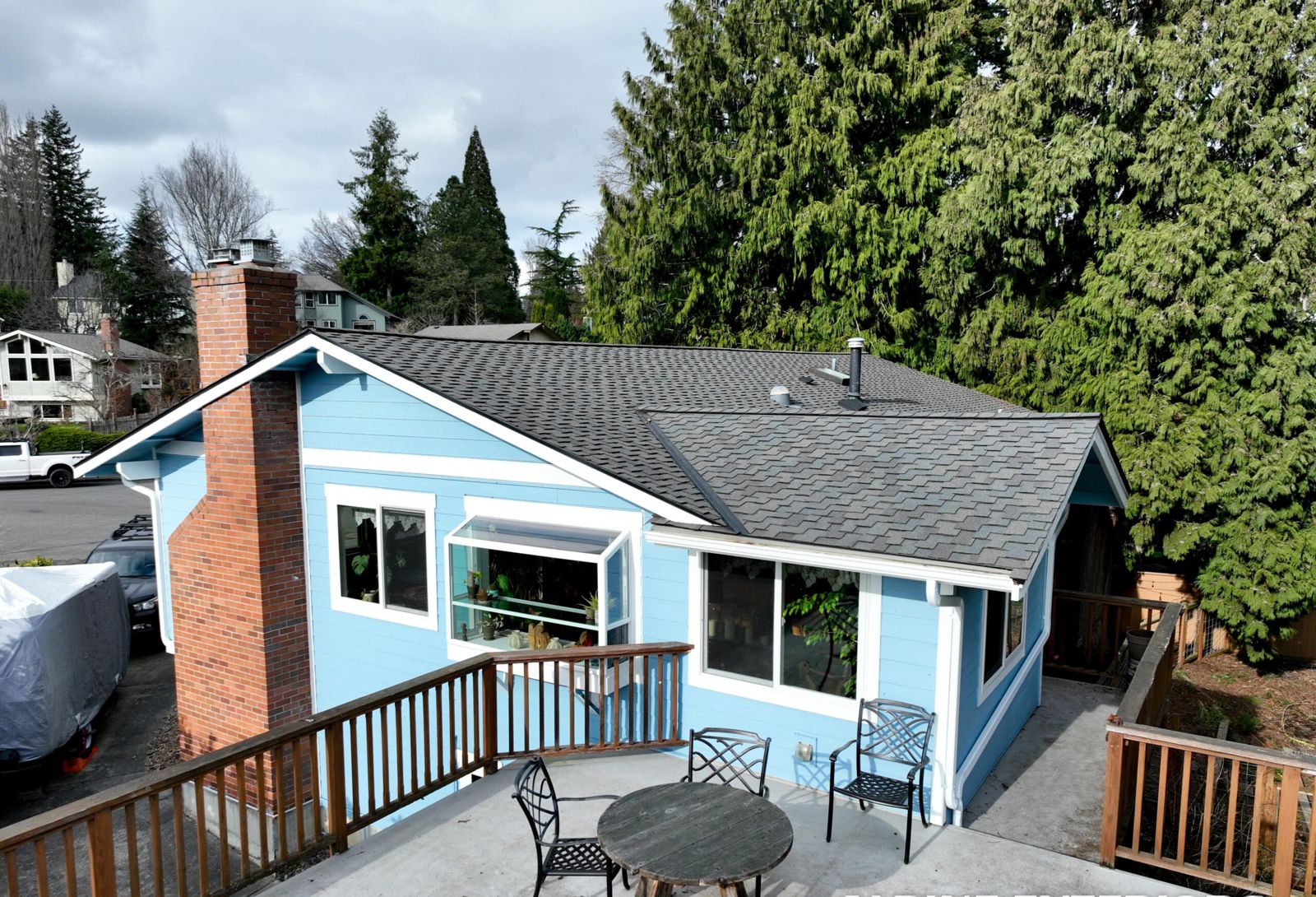
Lummi Island sits apart from the rest of Whatcom County in a way that actually shows up on a siding estimate. There's no bridge — every crew, every dumpster, every pallet of material makes the trip across Hale Passage on the county ferry from Gooseberry Point. Add in a housing stock that ranges from older waterfront cottages to newer builds tucked into the trees, plus direct exposure to wind-driven rain off the Strait of Georgia and Rosario Strait, and you get a siding job that costs a bit differently than the same house would in downtown Bellingham. This page walks through realistic cost ranges, what actually drives them up or down, and how to read a quote so you're comparing apples to apples.
There is no single number that applies to every home on the island, and any contractor who quotes a firm price over the phone without seeing your walls is guessing. What we can offer is a grounded range based on the variables that actually move the needle here: material choice, how much of the old wall assembly has to come off, how much hidden rot is waiting underneath, and the added logistics of getting people and materials onto and off the island. Most full siding replacement projects on Lummi Island land somewhere in the low-to-mid five figures for an average single-family home, with smaller cottages coming in lower and larger or more complex homes running well above that. The table below breaks out the pieces that typically make up that total.
| Cost Factor | Typical Low | Typical High |
|---|---|---|
| Vinyl siding, installed (per sq. ft.) | Lower end of the market | Mid-range, thicker profiles |
| Fiber cement siding, installed (per sq. ft.) | Mid-range | Upper-mid, textured or shiplap profiles |
| Cedar or wood siding, installed (per sq. ft.) | Upper-mid | High end of the range |
| Tear-off and disposal of old siding | Modest add-on if the wall is dry | Significant add-on for layered or wet siding |
| Sheathing and rot repair before re-siding | A few hundred dollars for spot repairs | Several thousand for widespread rot |
| House wrap / weather-resistive barrier upgrade | Modest, bundled into labor | Higher if code compliance requires a full rain-screen assembly |
| Ferry and mobilization logistics for island jobs | A few hundred dollars | A couple thousand for larger crews or multiple trips |
Read that table as a way to understand where your money goes, not as a menu of exact prices. A contractor who has actually worked on the island — Alpine Exteriors has handled projects out here and budgets ferry schedules and material staging into the bid up front — will usually fold the mobilization cost into the overall number rather than surprising you with it as a line item after the fact.
Several conditions specific to Lummi Island and the surrounding Whatcom County waterfront push a project toward the higher or lower end of that range.
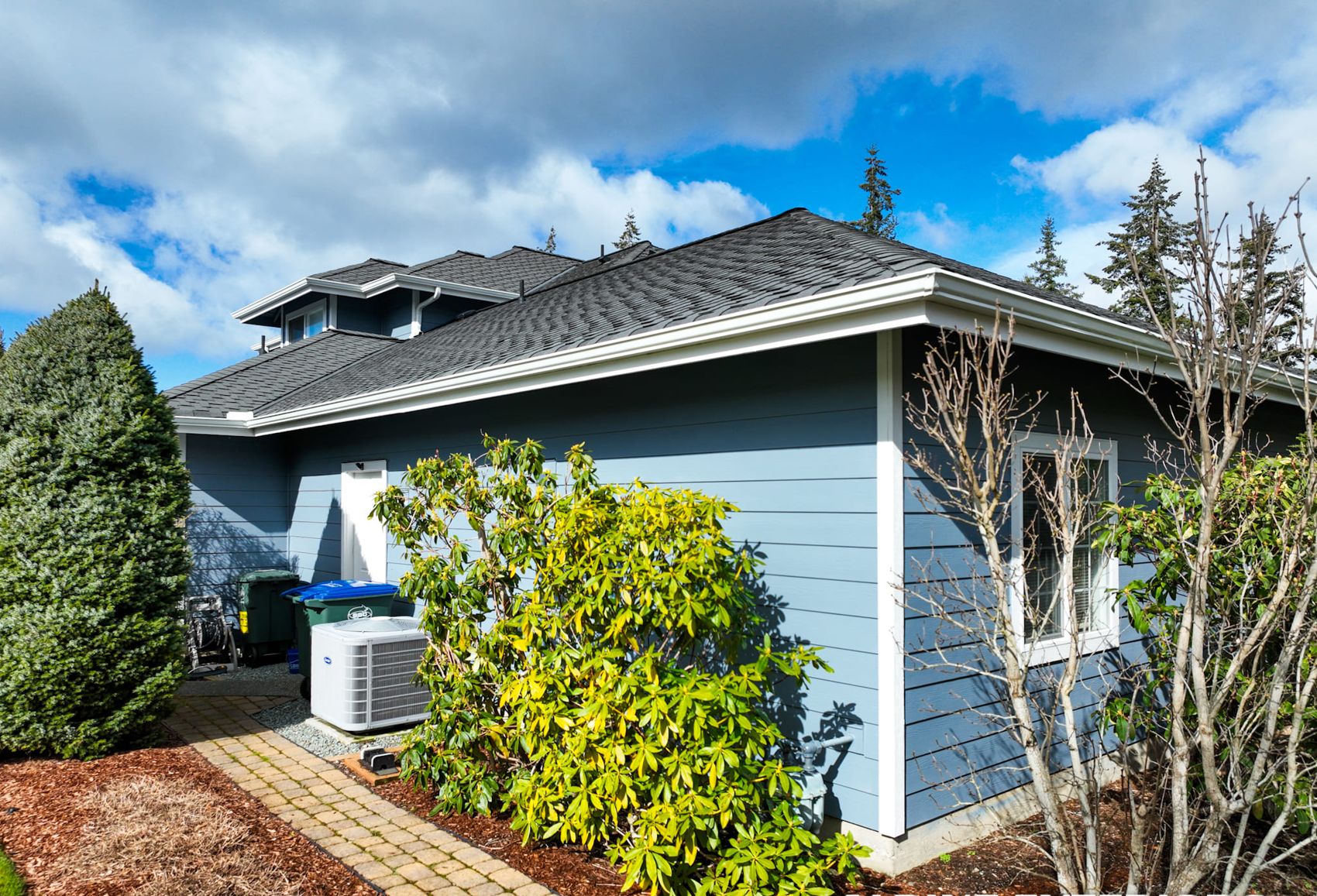
A complete, honest siding quote for a Lummi Island home should spell out more than a bottom-line number. Look for these components laid out clearly:
Alpine Exteriors writes quotes this way because a homeowner comparing three bids can't make a good decision from three different bottom-line numbers alone. The detail is what tells you whether you're comparing similar scopes of work.
The lowest number on paper is rarely the cheapest job once the work is underway, and that's especially true on an island where a change order means another ferry trip. When you're lining up bids, check that each one accounts for:
Ask each bidder to walk you through what happens if rot is discovered mid-project. A contractor who has a clear, pre-agreed process for pricing and approving that extra work is more trustworthy than one who simply promises it "won't be a problem."
Many siding replacement projects are paid for through a combination of homeowner savings, a home equity line of credit, or a contractor-arranged financing plan, and it's worth asking upfront which financing options a contractor offers and what the actual terms and total cost look like before committing. If your siding is failing due to age, moss, or general weathering, a standard homeowner's insurance policy typically won't cover replacement, since that's considered maintenance rather than sudden damage. However, if the damage stems from a specific covered event — wind, a falling tree limb, or similar storm damage — it's worth contacting your insurance carrier before work begins to find out whether an adjuster needs to inspect the damage first. Keep photos of any storm damage and hold onto materials receipts and the contractor's detailed invoice regardless of how the project is paid for, since documentation matters both for warranty claims down the road and for any future home sale disclosure.
The main difference isn't the siding itself — it's logistics. Every crew and every load of material has to travel by ferry, and larger deliveries sometimes depend on tide-friendly barge scheduling. That adds modest mobilization cost on top of the same labor and material pricing you'd see for a comparable home in Bellingham or Ferndale.
Soft or spongy spots when you press on the siding, visible gaps at seams and trim, paint that won't hold, and persistent moss or algae growth on north-facing walls are all signs that rot may be present underneath. A contractor can usually tell the difference between cosmetic wear and structural rot with a visual inspection and some spot-checking, though the full extent often isn't clear until tear-off begins.
It depends on the scope of the project and whether it triggers a building permit. Some re-siding projects are an opportunity to add continuous insulation and improve air-sealing toward current Washington State Energy Code targets, particularly on older homes that were never upgraded. Ask your contractor whether your specific project scope triggers that requirement.
Timelines depend heavily on home size, how much rot repair is needed, and weather windows, since siding work generally needs dry stretches to proceed safely. Island logistics can also stretch a schedule slightly compared to a mainland job of the same size, simply because crews are working around ferry sailings rather than a normal daily commute.
If you're weighing siding replacement on Lummi Island or anywhere else in Whatcom County — Bellingham, Ferndale, Lynden, Blaine, Birch Bay, or Sudden Valley — the most useful next step is an in-person inspection rather than a phone estimate. Alpine Exteriors can walk your specific walls, check for hidden rot at trim and penetrations, and put together a detailed, itemized quote you can actually compare against other bids. Reach out to schedule a walkthrough and get a real number for your home, not a guess.