
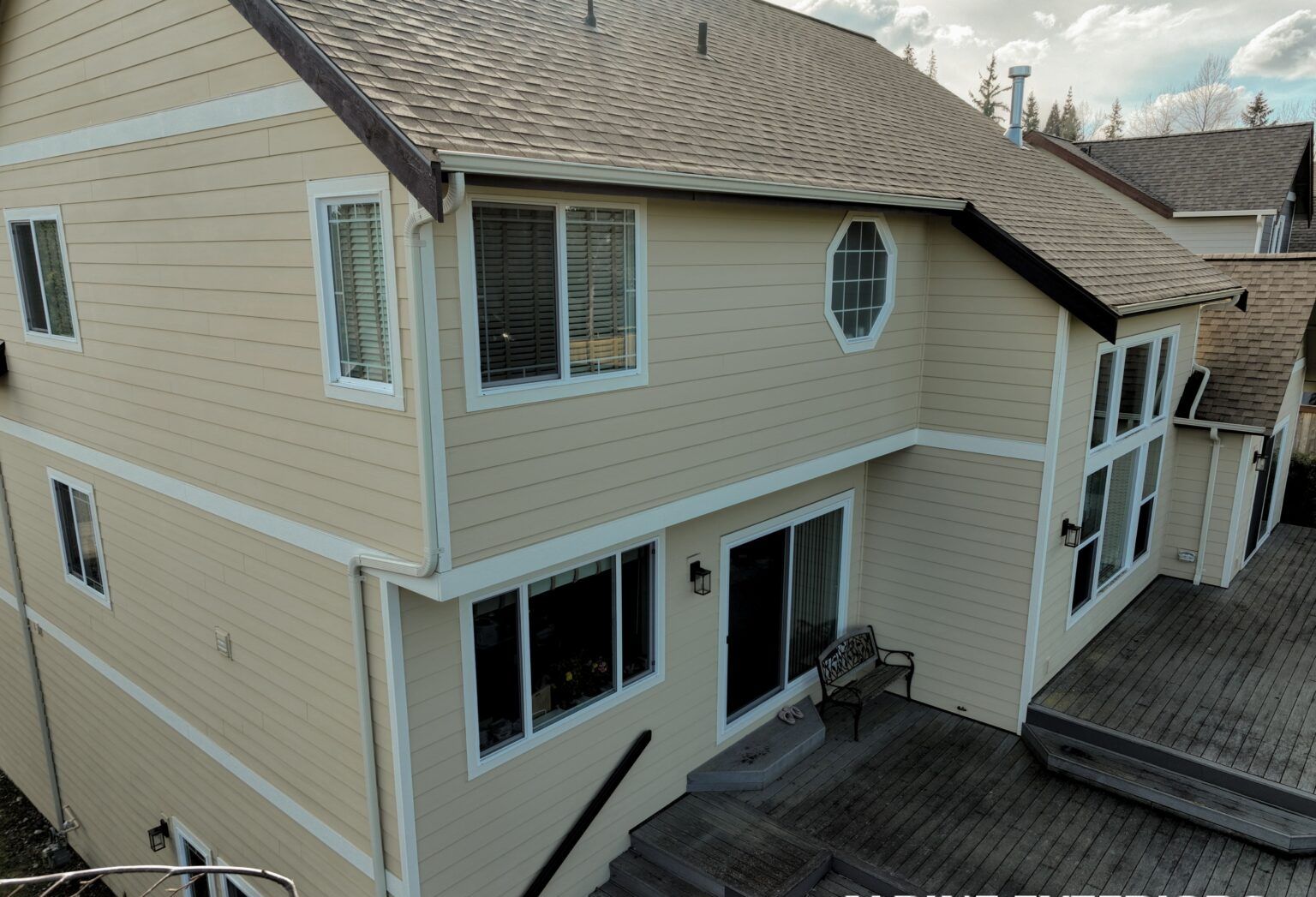
Meridian sits in the middle of Whatcom County's siding weather — close enough to Bellingham Bay to catch wind-driven rain off the Strait, close enough to the foothills for real freeze-thaw cycles, and old enough as a farming and residential area that a lot of homes are still wearing their original siding from decades back. If you're pricing a siding replacement here, the honest answer is that there is no single number that applies to every house. What follows is a realistic range, the factors that push a project toward the low end or the high end, and what should be sitting inside any quote you're comparing.
Whatcom County siding jobs generally run from a modest per-square-foot number for a straightforward vinyl re-side on a simple rectangular home, up to a considerably higher number for fiber cement or engineered wood siding on a larger home with rot repair, multiple stories, or a lot of trim detail. The table below breaks out the main cost drivers as ranges — not quotes — so you can see roughly where your project might land before a contractor ever walks the site.
| Cost Factor | Lower End | Higher End |
|---|---|---|
| Vinyl siding, materials + install | Lower per-square-foot cost, minimal trim work | Moderate, with thicker/insulated panels and dentil detail |
| Fiber cement siding, materials + install | Moderate per-square-foot cost, simple lap profile | Higher, with shake or board-and-batten accents |
| Engineered wood or cedar siding | Higher per-square-foot cost, standard lap | Highest, with custom stain, wide reveals, or accent gables |
| Tear-off and disposal of existing siding | Modest add-on for single-layer vinyl | Significant add-on for multiple old layers or asbestos-era siding |
| Sheathing and wood rot repair | Little to none on a well-maintained home | Substantial where rot has reached the framing |
| Weather-resistive barrier and flashing upgrades | Baseline cost to meet code minimums | Higher cost for full rain-screen or drainage-plane systems |
| Trim, corners, and fascia replacement | Minor if trim is sound | Meaningful if fascia and trim boards are also failing |
| Access and site conditions | Standard for a single-story, drive-up lot | Higher for steep lots, tall gables, or island/ferry-access properties |
A small, single-story vinyl re-side with sound sheathing sits near the bottom of that range. A two-story home getting fiber cement, new weather-resistive barrier, rot repair around old window flashing, and full trim replacement can land far above it. Alpine Exteriors typically walks a home before giving a number, precisely because these factors can swing the total by a wide margin from one house to the next.
A handful of local conditions consistently separate the cheap-looking bid from the accurate one in Meridian and the surrounding parts of Whatcom County.
A complete, comparable siding quote is more than a total dollar figure. Before you sign anything, make sure the written estimate spells out:
When Alpine Exteriors puts together a quote, each of these items is itemized rather than folded into one lump sum, specifically so a homeowner can see where the money is going and compare it line by line against another bid.
The biggest mistake in siding shopping is comparing bottom-line numbers instead of scope. A bid that's noticeably lower than the others is often lower because it skips something — no rot repair allowance, a thinner weather-resistive barrier, reused trim that should be replaced, or a cheaper siding grade than what's listed in a competitor's quote. Before comparing dollar figures, line up each bid's material specification, tear-off scope, and moisture-barrier details side by side. Ask each contractor directly what happens if they find rot once the siding is off, and get that answer in writing. Confirm active Washington contractor licensing and current liability insurance for anyone bidding the job — a licensed, insured contractor should provide this without hesitation. Alpine Exteriors' Washington contractor license is ALPINI751OW; any contractor you're vetting should be able to give you their license number just as readily. Finally, ask for references from projects in Whatcom County specifically, since a crew's experience with this region's rain and moisture patterns matters more here than in drier parts of the state.
Many siding contractors, including Alpine Exteriors, can point homeowners toward third-party financing options for larger re-side projects, which can spread the cost over time instead of requiring a lump sum up front — ask about current options and terms directly, since they change. On the insurance side, homeowners' policies typically distinguish between sudden storm or wind damage and gradual deterioration like wood rot or moss-related decay, and the latter is usually considered a maintenance issue rather than a covered loss. If a specific windstorm event damaged siding, document it with photos as soon as it's safe and get a written assessment from a contractor before filing, since insurers often want to see the extent of damage clearly separated from pre-existing wear. Don't assume coverage either way — call your carrier and ask what your specific policy covers before you plan a project around an insurance payout.
It depends heavily on material choice, home size, and how much rot or trim repair is needed once the old siding comes off. A simple single-story vinyl re-side sits toward the lower end of the regional range, while a larger home getting fiber cement or engineered wood siding with rot repair and full trim replacement lands considerably higher. The only way to get a number specific to your home is a site walk and written estimate.
Both can perform well here when installed correctly with a proper weather-resistive barrier and flashing details, and both can fail early if installed poorly. Fiber cement tends to hold up well against moss and moisture over the long run and takes paint well, but it costs more upfront and requires careful fastening. Vinyl is more budget-friendly and low-maintenance but can be more prone to cracking during hard freeze-thaw swings if it's a thinner-grade product. The right choice depends on your budget, your home's exposure, and how long you plan to own the house.
Usually not for gradual wood rot, moss damage, or general wear — those are typically treated as maintenance issues. Coverage is more likely if a specific storm or wind event caused sudden, documentable damage. Check your specific policy and talk to your insurer before assuming either outcome, and keep photos and a written contractor assessment on hand if you do plan to file a claim.
Timelines vary with home size, siding material, and how much rot repair turns up once the old siding is removed, and Whatcom County's rain windows can also affect scheduling since siding installation generally needs a dry work window. A straightforward single-story re-side moves faster than a larger, multi-story home with extensive trim and moisture-barrier work. Ask any contractor for a realistic start-to-finish estimate specific to your project and current weather conditions before committing to a date.
The most useful thing you can do before committing to a siding project is get a detailed, itemized estimate from a licensed local contractor who understands how this region's rain, moisture, and code requirements affect the work. Alpine Exteriors serves Meridian and the rest of Whatcom County — including Bellingham, Ferndale, Lynden, Blaine, Birch Bay, and Sudden Valley — and holds Washington contractor license ALPINI751OW. Reach out for a site walk and written quote so you're comparing real numbers, not guesswork, against your other bids.