
Most siding problems we see in Cordata are repairable if they're caught before the sheathing underneath gets wet, and not repairable once rot has spread past a stud bay or two. The decision usually comes down to three things: how much of the wall is actually damaged, whether the existing siding can still be matched or sourced, and how old the rest of the siding is relative to the section that failed.
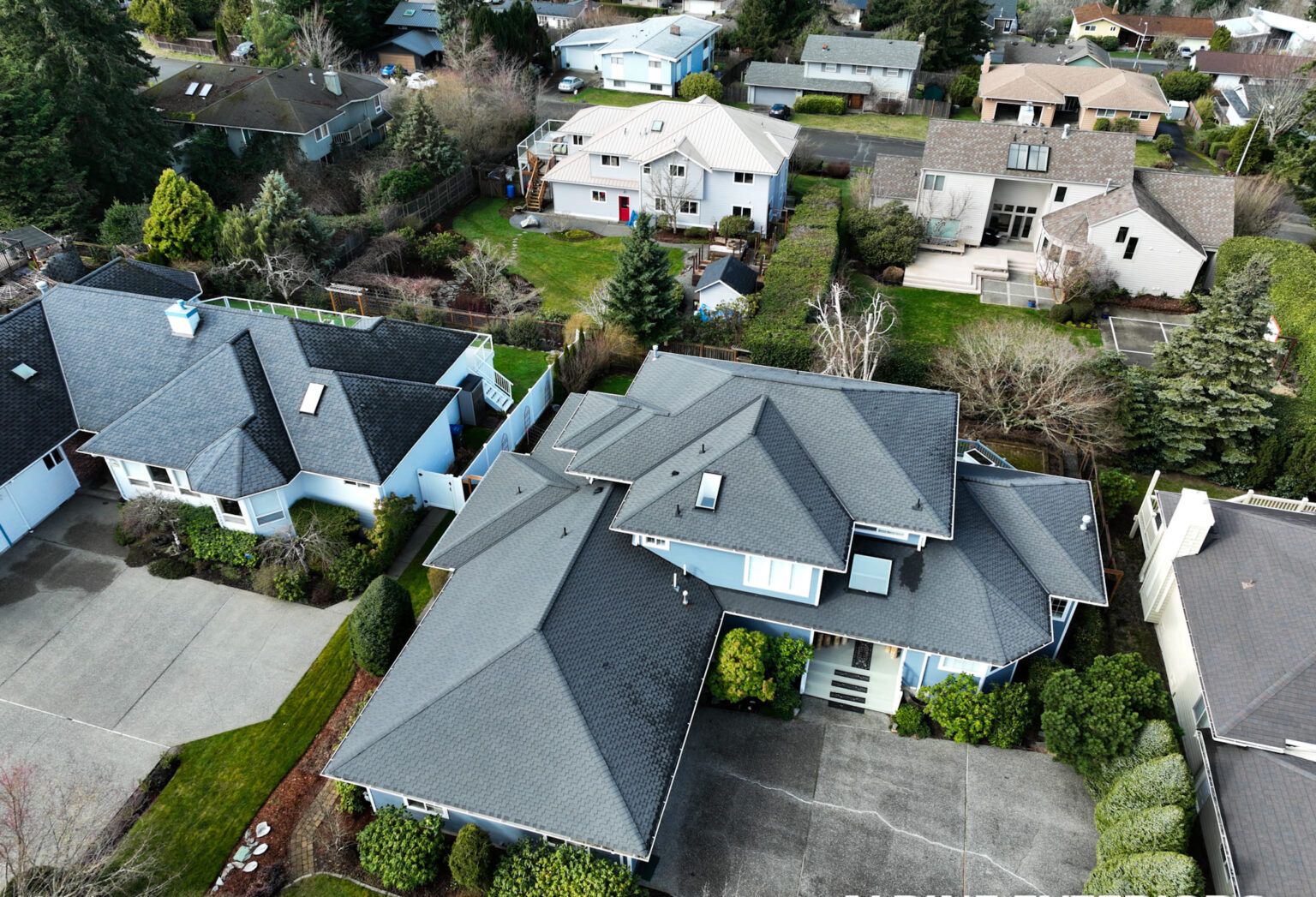
Cordata is one of Bellingham's newer growth areas, so a lot of the housing stock here is a mix of late-1990s and 2000s-era developments off Cordata Parkway, Aldrich Road, and the neighborhoods near Bellingham Technical College and Whatcom Community College, plus a scattering of older farmhouses and outbuildings that predate the subdivisions. That mix matters, because the failure patterns are different. Newer subdivision homes tend to show trouble at trim details — window and door casings, butt joints between courses of lap siding, and inside corners where a caulk joint has failed and let water track behind the cladding. Older homes, especially anything with real cedar lap or T1-11 panel siding from before vinyl and fiber cement took over the market, are more prone to straightforward wood rot: soft, spongy boards near the ground, delaminating panel edges, and paint that's blistering because moisture is trying to push out from behind rather than just weathering from the front.
The other thing we look for constantly here is moss and algae staining, which isn't just cosmetic. A siding surface that stays damp under a mat of moss or a film of green algae dries out slower after every rain, and that slower dry time is what eventually lets rot get a foothold in wood-based products, or lets mildew work into the finish on fiber cement and vinyl. North-facing walls, walls shaded by mature Douglas fir and cedar (common on the larger Cordata lots that back up to greenbelt), and anywhere gutters are undersized or clogged tend to show this first. If you're seeing dark green or black streaking below a roofline, a gutter joint, or a window head flashing, that's usually a water-management problem before it's a siding problem, and fixing the siding without fixing the water path just buys you a few years before the same spot fails again.
Less dramatic but just as common: nail pops and fastener backout on lap and panel siding, caused by the wood swelling and shrinking through repeated wet-dry cycles over the years. You'll see a slightly raised or dimpled spot where a nail head has worked its way proud of the surface, sometimes with a rust stain bleeding down the board. It's a minor repair on its own, but it's worth checking nearby boards for the same issue rather than fixing one nail and calling it done.
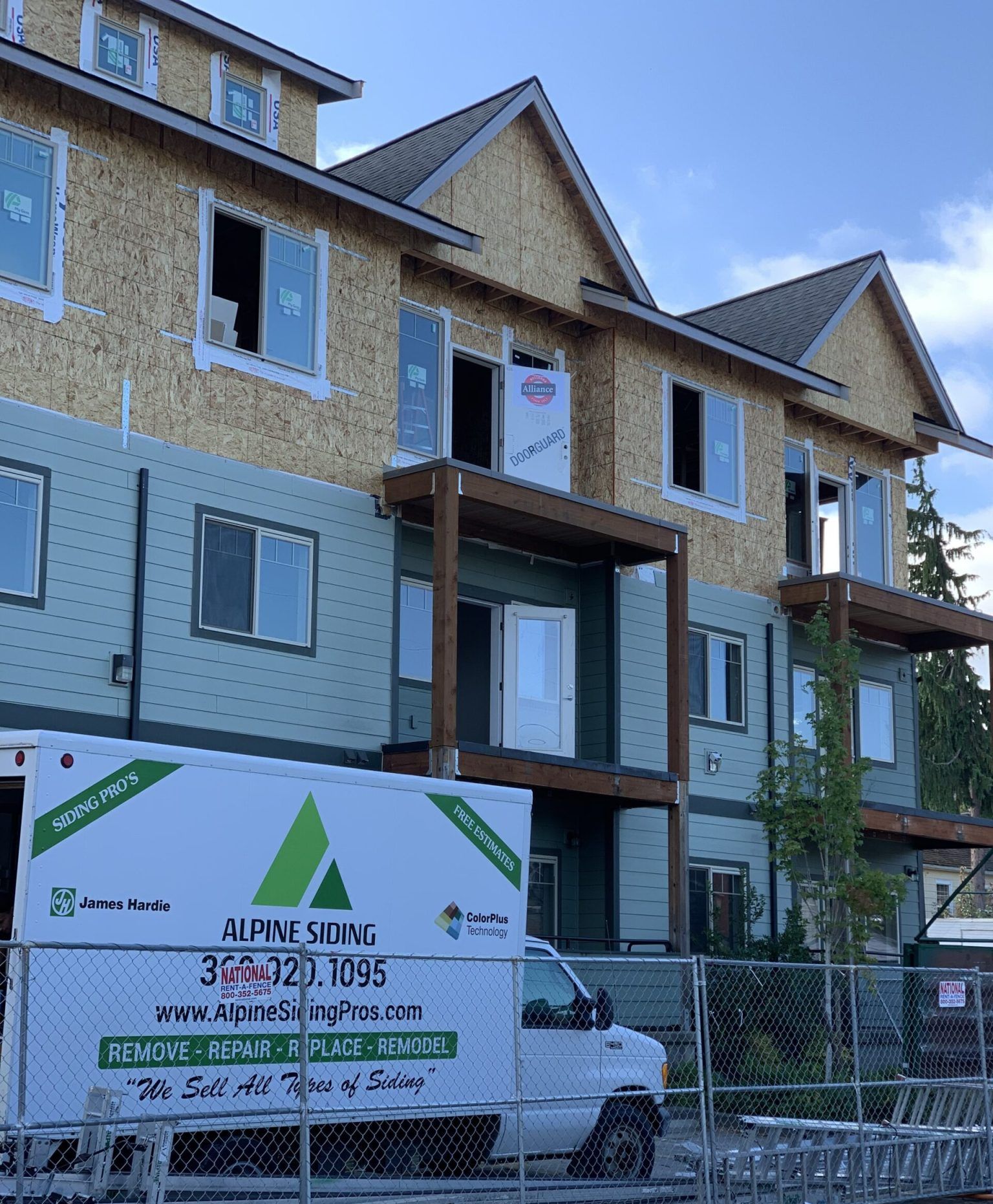
Cordata sits a few miles inland from Bellingham Bay, but it's still squarely in the path of the wind-driven rain that comes off the Strait of Juan de Fuca and the Salish Sea during fall and winter storms. That combination — sustained rain plus wind pushing it sideways into wall assemblies — is what drives water into laps, joints, and fastener penetrations that would stay dry in a climate where rain mostly falls straight down. It's a big part of why lap siding installed with a tight reveal, or without adequate flashing above windows and at horizontal trim boards, tends to show water staining first on the sides of the house that face southwest, which is the prevailing storm direction here.
Whatcom County's persistent, low-intensity rain through most of the year is arguably harder on siding than an occasional heavy storm, because it keeps wall surfaces damp for long stretches rather than drenching them and then letting them dry in the sun. That's the same mechanism behind the moss and algae growth mentioned above, and it's also why caulk and paint film on this coast tend to have a shorter useful life than manufacturer literature written for a national audience would suggest.
If your property is up toward the Lake Whatcom foothills or in areas like Sudden Valley that see more temperature swing and occasional hard frost, freeze-thaw cycling adds another layer. Water that's worked its way into a crack, a checked board, or a failed caulk joint expands when it freezes, widening the opening. A hairline crack in the fall can be a real split by spring after a couple of freeze cycles. Cordata itself is a bit more moderated being closer to the bay, but plenty of our repair calls there come from homes with siding that was originally installed or last painted up in the foothills, or from EIFS and stucco-adjacent trim details that don't tolerate freeze-thaw well anywhere in the county.
One more regional factor: any time a repair opens up wall assembly, exposes sheathing, or extends into a full siding replacement, the work needs to meet the current Washington State Energy Code for the building envelope — continuous insulation and air-sealing requirements in particular have gotten more specific in recent code cycles. That's not a reason to avoid a repair, but it does mean a "just replace a few boards" job can turn into a conversation about house wrap, insulation continuity, and flashing details if the sheathing underneath is exposed and out of code. We'd rather flag that up front than have it surprise a homeowner mid-project.
Start with a close look rather than a guess from the ground. Walk the perimeter after a dry stretch and press on any siding that looks discolored, bulging, or has visible caulk failure — spongy or soft wood is the clearest sign that moisture has already gotten past the surface. Pay particular attention to the bottom courses near grade, under window sills, around any exterior hose bibs or light fixtures, and at inside corners, since those are the spots that fail first in this climate.
Matching existing siding is its own challenge in an area with this much housing built over three or four different decades. Cedar lap siding weathers and fades unevenly, so even a perfectly matched new board will stand out until it's been through a couple of seasons and a coat of paint that ties it to the rest of the wall — that's normal and not a sign of a bad repair. Vinyl and fiber cement are harder in a different way: profiles, reveal widths, and colors get discontinued by manufacturers, sometimes within just a few years, so a repair on a fifteen-year-old vinyl-sided Cordata home may mean sourcing reclaimed material, special-ordering a close match, or accepting that the repaired section will read slightly differently until a future full re-side. We'll tell you honestly when an exact match isn't realistically available rather than promise something we can't deliver.
Don't skip the water-management side of the job. If moss, algae, or chronic dampness caused the original failure, a repair that doesn't also address gutter capacity, downspout discharge, grading near the foundation, or missing kick-out flashing at roof-to-wall intersections is likely to fail again in the same spot within a few years. It's worth asking any contractor, including us, what's causing the moisture before agreeing to a repair scope.
Finally, get a written scope that specifies whether the work is a cosmetic patch or a repair that includes checking and correcting the water-resistive barrier and flashing underneath. Those are very different jobs even when the visible siding work looks similar from the street, and the difference matters a lot for how long the repair actually lasts on a wall that's exposed to Whatcom County's wind-driven rain year after year.
Surface staining from moss, algae, or dirt wipes or scrubs off and the wood or siding material underneath stays firm. Real rot is soft to the touch — press a screwdriver or an awl into the suspect area, and if it sinks in easily or the wood crumbles, moisture has already broken down the fibers and you're looking at a repair rather than a cleaning job. When in doubt, a short section can be opened up to check the sheathing behind it before committing to a repair scope.
It depends on the material and its age. Cedar lap can usually be matched closely and will blend in further as it weathers and gets repainted. Vinyl and fiber cement are more likely to have discontinued profiles or colors, especially on homes over ten to fifteen years old, and in those cases Alpine Exteriors will tell you upfront whether we can get a close match, whether reclaimed material is an option, or whether the repaired section will be visibly different until a broader re-side down the road.
Straightforward like-for-like repairs generally don't require a permit, but larger repairs or full replacement that involve removing siding down to the sheathing, changing the wall assembly, or affecting the building envelope typically do fall under permitting and Washington State Energy Code requirements for insulation and air sealing. Whatcom County and the City of Bellingham have their own permitting jurisdictions depending on exactly where your property sits, so it's worth confirming scope with a licensed contractor before work starts.
If the damage is isolated and the rest of the siding is sound, a repair is usually the more economical choice and can buy years of additional life. But if you're already on a second or third round of patching in the same area, if the siding is original to a home from the 1990s or earlier, or if matching material is becoming hard to source, it's reasonable to start pricing full replacement and weigh it against what continued spot repairs are likely to cost over the next several years.
If you're seeing soft spots, staining, or cracked boards on a Cordata home, it's worth having someone look at it before the next round of Whatcom County rain finds its way further into the wall. Alpine Exteriors is a licensed Washington siding contractor (license ALPINI751OW) working throughout Bellingham and Whatcom County, and we'll tell you plainly whether your siding needs a repair, a partial replacement, or can wait — not just push the largest job on the list. Reach out to Alpine Exteriors for a straightforward inspection and a scope you can actually understand before you commit to any work.