
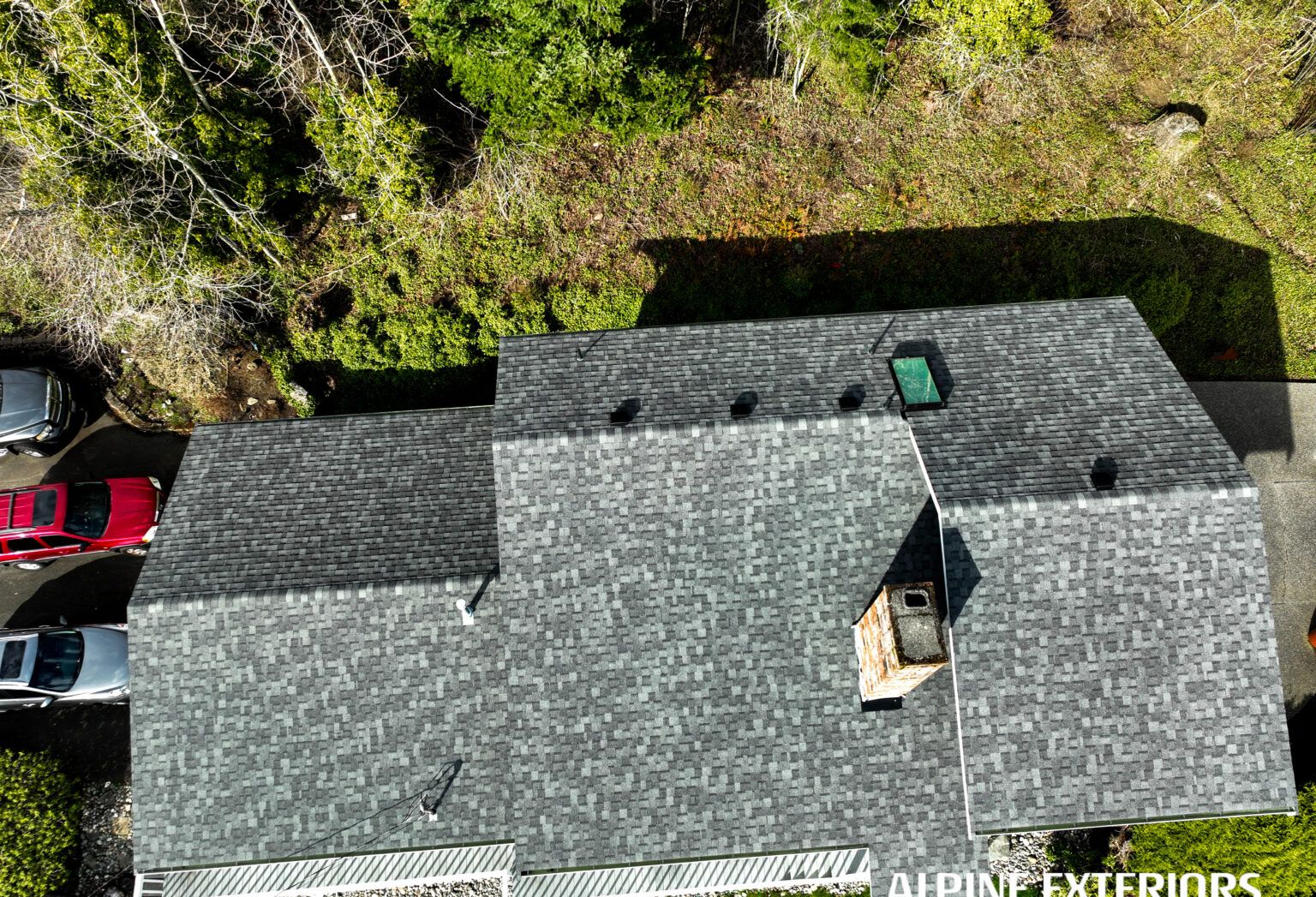
Homes around Lake Samish and the wooded corridor south of Bellingham face a different set of siding problems than homes on open, sunny lots. Mature fir and cedar canopy keeps roads and roofs shaded for much of the year, which is good for cooling in August but bad for siding: less direct sun means walls stay damp longer after every rain, and Whatcom County gets a lot of rain. If you're pricing out a siding replacement in Samish, the honest answer is that the number depends heavily on what's found once the old siding comes off, not just on the square footage of your house. This guide walks through realistic ranges, the local conditions that push costs up or down, what a complete quote should cover, and how to compare bids from different contractors without getting burned by an unrealistically low number.
For a typical single-family home in the Samish-to-Bellingham area, a full siding tear-off and replacement generally lands somewhere in the low five figures for a smaller or simpler home, up to the mid five figures for a larger home, a premium material, or a project that turns up significant rot once the old siding is removed. Per-square-foot pricing on materials and installation varies widely by product, from budget vinyl on the low end to fiber cement, engineered wood, or cedar on the higher end. These are wide ranges on purpose — nobody can give you an honest number without seeing your walls, your framing, and your current siding up close. Treat any quote given over the phone with no site visit as a placeholder, not a real bid.
What actually sets the final number is a combination of material choice, how much of the wall assembly underneath has to be repaired, the complexity of the house's shape (dormers, bump-outs, multiple gables cost more per square foot than a simple rectangle), and access — a two-story lake-view home with steep grading costs more to scaffold than a single-story rambler on a flat lot.
| Cost Factor | Typical Low End | Typical High End |
|---|---|---|
| Siding material (vinyl vs. fiber cement vs. cedar or engineered wood) | Budget vinyl, simplest profile | Cedar or high-end fiber cement with custom trim |
| Tear-off and disposal of old siding | Single layer, easy dump access | Multiple layers, difficult haul-out, older siding requiring special handling |
| Sheathing and framing repair | Little to no rot found | Extensive rot at corners, window sills, or lower wall sections |
| House size, stories, and roofline complexity | Single-story, simple rectangular footprint | Two-story, multiple gables, dormers, bump-outs |
| Weather-resistive barrier and flashing upgrades | Existing wrap still sound | Full replacement of house wrap, window and door flashing |
| Trim, fascia, and detail work | Minimal trim, standard corners | Extensive custom trim, board-and-batten accents, wide fascia boards |
| Access and staging | Flat lot, easy ladder access | Steep slope, lake-view decks, tall gable peaks requiring scaffolding or lifts |
A handful of conditions specific to this part of Whatcom County show up again and again once a crew starts pulling old siding off a Samish-area home.
Persistent rain and slow-drying walls. This region doesn't get dramatic storms so much as long stretches of steady, low-intensity rain. Walls that don't get much direct sun — the north and west sides of homes tucked under fir and cedar canopy near the lake — stay damp for days after a storm passes. Over years, that moisture works its way behind siding laps, around poorly sealed nail penetrations, and into any gap in the old caulking. The result is usually visible only when the siding comes off: soft sheathing, discolored studs, or rot at the bottom plate. This is the single biggest reason a bid can move once tear-off starts, and it's also why a contractor who won't commit to an inspection-first approach is worth being skeptical of.
Moss and algae growth. Shaded, damp siding grows moss and algae faster than siding on an open, sunny lot. Beyond the cosmetic green-black staining, moss holds moisture against the wall surface longer, which accelerates the same rot problem above. Homes with heavy tree cover often need more aggressive cleaning and prep before new siding goes on, and the choice of material matters here too — some fiber cement and engineered wood products handle repeated moisture exposure better than others, which is worth discussing directly with whoever quotes the job.
Wood rot discovered at tear-off. Older homes in this area, especially those built before modern weather-resistive barriers were standard, are the most likely to have hidden rot. It's common enough that a realistic quote should include a stated allowance or a clear process for pricing sheathing and framing repair as a separate line item, rather than a vague promise to "handle it if it comes up."
Wind-driven rain off Bellingham Bay and the Strait. Homes with more open exposure toward the water — closer to Bellingham Bay, Chuckanut Bay, or the Strait of Georgia — take wind-driven rain that gets pushed sideways into wall assemblies, seams, and trim joints in a way that sheltered inland lots don't experience as much. That exposure argues for careful attention to flashing details at windows, doors, and any wall penetration, and it's one more reason two houses of the same size can carry different price tags depending on where they sit relative to the water and prevailing wind.
Freeze-thaw cycles in the foothills. Properties closer to the foothills toward Mount Baker see more frequent freeze-thaw swings than lake-level or in-town lots. Repeated freezing and thawing stresses caulking, fasteners, and any siding material that isn't rated to handle dimensional movement well, which can shorten the useful life of a cheap installation and is part of why cutting corners on fasteners or sealant to save money upfront tends to cost more over a decade.
Washington State Energy Code. Depending on the scope of the project and what's being disturbed on the wall assembly, a siding replacement can trigger requirements under the Washington State Energy Code, which may call for continuous insulation, an upgraded weather-resistive barrier, or specific vapor-permeability characteristics depending on the wall assembly. This isn't automatic on every re-side, but it's worth asking your contractor directly whether your project scope triggers code-required upgrades, since that can add both material cost and a permit step.
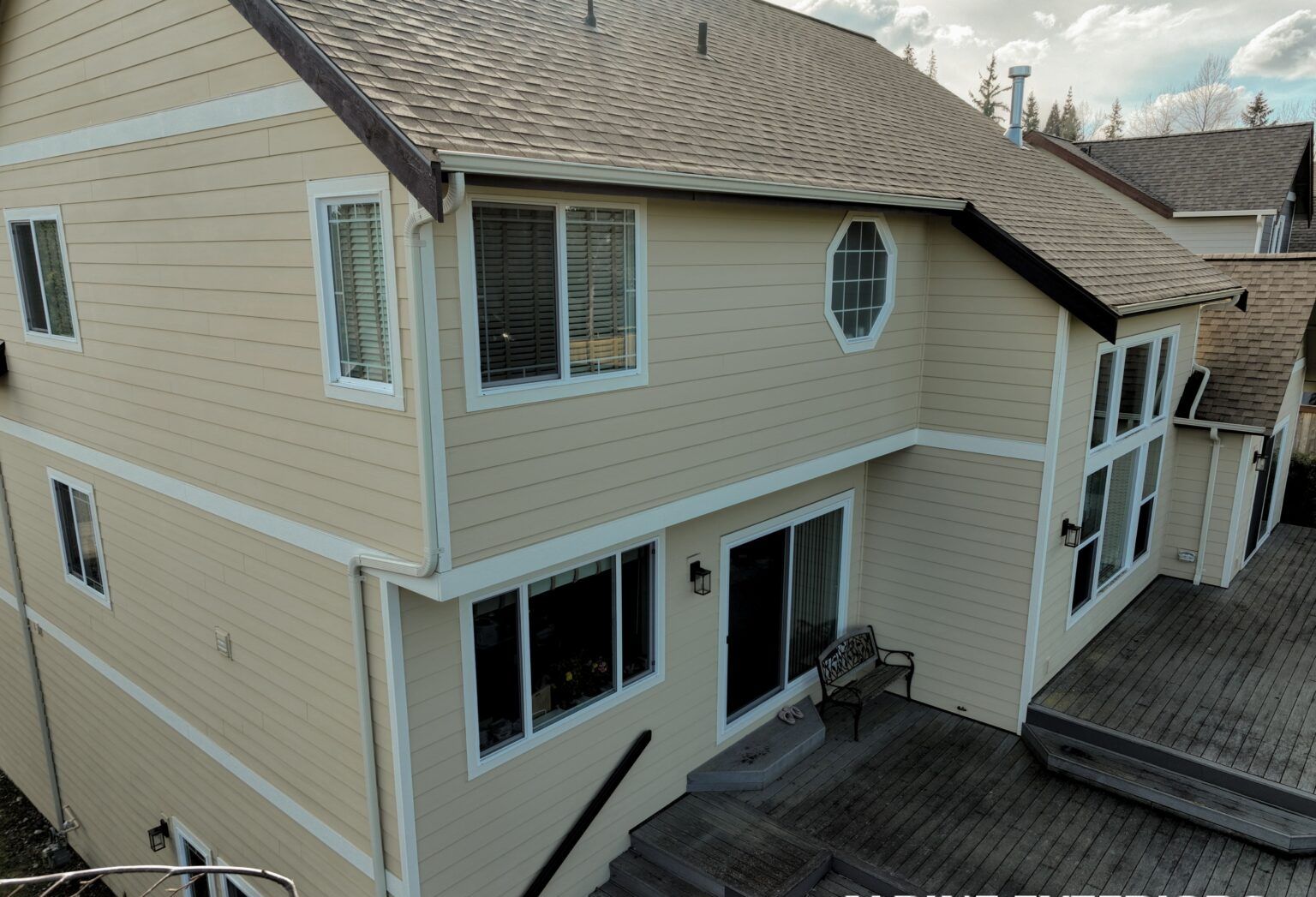
A complete, usable quote for siding replacement should spell out, in writing, at minimum: the exact material, brand, and profile being installed; full tear-off and disposal of the existing siding, including how multiple layers or older materials are handled; a clear process (and ideally a stated allowance) for sheathing and framing repair if rot is found; whether the weather-resistive barrier is being replaced or reused, and its condition; flashing details at windows, doors, and any roof-to-wall transitions; trim and fascia scope; fastener type and spacing; whether a permit is included and who pulls it; a project timeline; cleanup and disposal; and the warranty terms for both material and labor, stated separately since they're rarely the same length. Alpine Exteriors builds quotes around this same level of detail because the projects that go sideways are almost always the ones where a homeowner assumed something was included that wasn't written down anywhere.
It's also fair to ask a contractor to walk the exterior with you and point out specific trouble spots before you sign anything — areas of visible staining, soft spots you can feel by pressing on the wall, or trim that's already separated from the framing. A contractor who does that walk-through and explains what they're looking at is giving you a better basis for a quote than one who measures from the driveway.
The hardest part of getting multiple bids is making sure you're actually comparing the same job. A lower number is often a lower number because something is missing, not because the contractor found a better deal on materials. When you line bids up side by side, check that each one specifies the same material grade and profile, the same tear-off scope (full removal versus installing over existing siding, which is sometimes technically allowed but rarely a good long-term choice on a home with any moisture history), the same approach to sheathing repair, and comparable warranty terms.
Most siding replacements are paid for out of pocket, through a home equity loan or line of credit, or through financing offered by the contractor or material manufacturer. If financing is part of your plan, ask early in the process so the quote can reflect any financing-related costs and so you understand the payment schedule before work starts.
On the insurance side, it's worth being realistic: routine siding replacement due to age, moisture damage, or moss and rot that developed gradually over years is generally considered a maintenance issue, not something homeowner's insurance covers. Where insurance does typically come into play is sudden, specific damage — a fallen tree limb, wind damage to a section of siding, or fire — and even then, coverage depends on your specific policy. If you believe you have storm or impact damage rather than gradual wear, document it with photos before any repair work starts and talk to your insurance adjuster before signing a contract, since some carriers want to inspect damage themselves first.
Timelines depend heavily on house size, weather windows, and whether hidden rot repair adds work mid-project, but homeowners should expect the process to run from a couple of weeks for a straightforward single-story home to considerably longer for a larger or more complex two-story home, especially if wet weather interrupts the schedule. Because so much of this region's rain falls outside of the summer months, contractors often try to schedule tear-off and dry-in during drier stretches when possible.
Many straightforward re-siding jobs that don't touch structural framing or trigger energy code upgrades can be relatively simple on the permit side, but scope matters — work that involves significant sheathing replacement, structural repair, or changes affecting the wall's insulation and vapor barrier assembly is more likely to require a permit under Whatcom County's building requirements and the Washington State Energy Code. Ask your contractor directly whether your specific project needs a permit and who is responsible for pulling it.
Installing over existing siding is sometimes technically possible and can lower upfront cost, but on homes in this climate it's rarely the right call unless the existing siding and the wall assembly underneath are known to be dry and sound. Given how common hidden moisture and rot issues are on shaded, damp lots around Samish and Lake Samish, most contractors will recommend a full tear-off so the sheathing and framing can actually be inspected and repaired rather than sealed up behind a second layer of siding.
Heavy moss and algae growth on shaded walls usually means more aggressive cleaning and prep work before installation, and it's a signal to pay closer attention to material choice and detailing, since a wall that grew moss once is likely to face the same conditions again. It doesn't necessarily raise the base cost of new siding by itself, but it's a good reason to ask your contractor specifically how the chosen material and installation details will hold up under the same shade and moisture exposure that caused the growth in the first place.
Every number in this guide is a starting point for a conversation, not a substitute for someone walking your actual walls. If you're weighing a siding replacement on a home near Lake Samish, in Bellingham, or elsewhere in Whatcom County, Alpine Exteriors can walk the exterior with you, point out what's driving cost on your specific house, and put together a written, itemized quote you can actually compare against other bids. Reach out to schedule a site visit and get a straight answer on what your project is likely to cost before you commit to anything.