
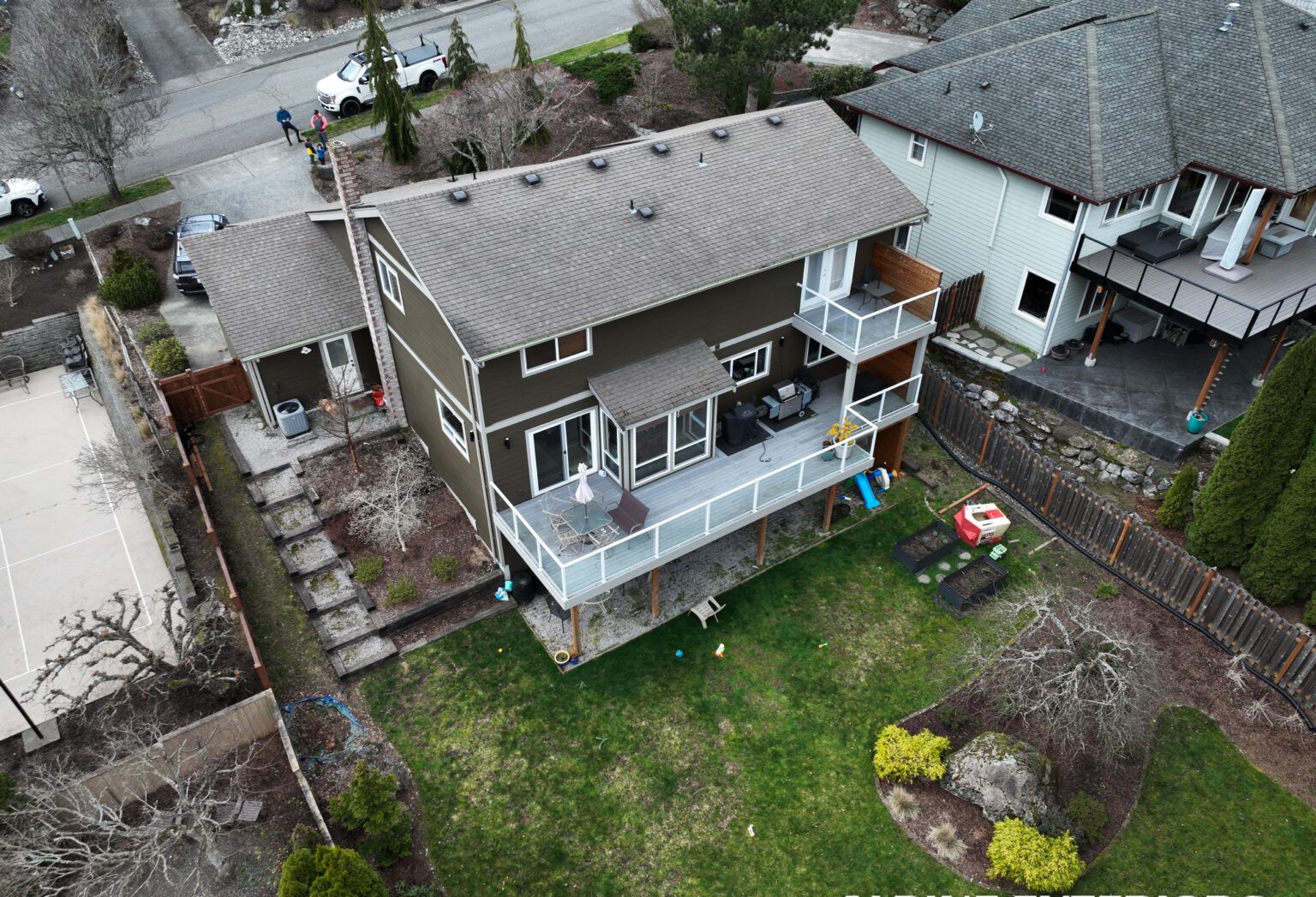
Silver Beach sits in a particular kind of microclimate. It's a shaded, tree-covered neighborhood tucked along Lake Whatcom, which means homes here get less direct sun than a place like Blaine or Birch Bay, more standing moisture under the eaves, and a steady drip line from second-growth fir and cedar canopy that keeps north-facing walls damp long after a storm has passed. Add in the wind-driven rain that comes off Bellingham Bay and the Strait of Georgia during a fall or winter system, the freeze-thaw cycles that show up in the foothills above the lake, and decades-old homes with siding that was never designed for today's Washington State Energy Code wall assemblies, and you get a neighborhood where the siding choice actually matters more than in a lot of Whatcom County. This page walks through what we've found holds up here, what doesn't, and why — without pretending any one material is perfect for every house on the lake.
For most Silver Beach homes, fiber cement siding is the material we recommend first. It resists rot and moisture absorption better than wood, it doesn't deform in the freeze-thaw swings that hit the higher lots above the lake, and it holds paint and caulking well enough to handle wind-driven rain without constant recaulking. Engineered wood siding is a reasonable second choice if the budget doesn't stretch to fiber cement, especially on additions or outbuildings where the exposure is lower. Cedar siding still has a real place here — it's the traditional look for this part of Whatcom County and it can last decades on a well-maintained, well-ventilated wall — but it demands more upkeep than most homeowners actually give it, and in a shaded, damp lot like Silver Beach that upkeep gap shows up fast as moss, algae staining, and soft trim. Vinyl and steel both have narrower but legitimate uses, covered below. None of this is a universal rule — a lot depends on how exposed your specific wall is to the lake wind, how much tree cover shades it, and what your existing wall assembly looks like underneath the old siding.
We didn't rank these materials on national averages or manufacturer marketing. The criteria that actually matter for a Silver Beach lot are narrower and more specific:
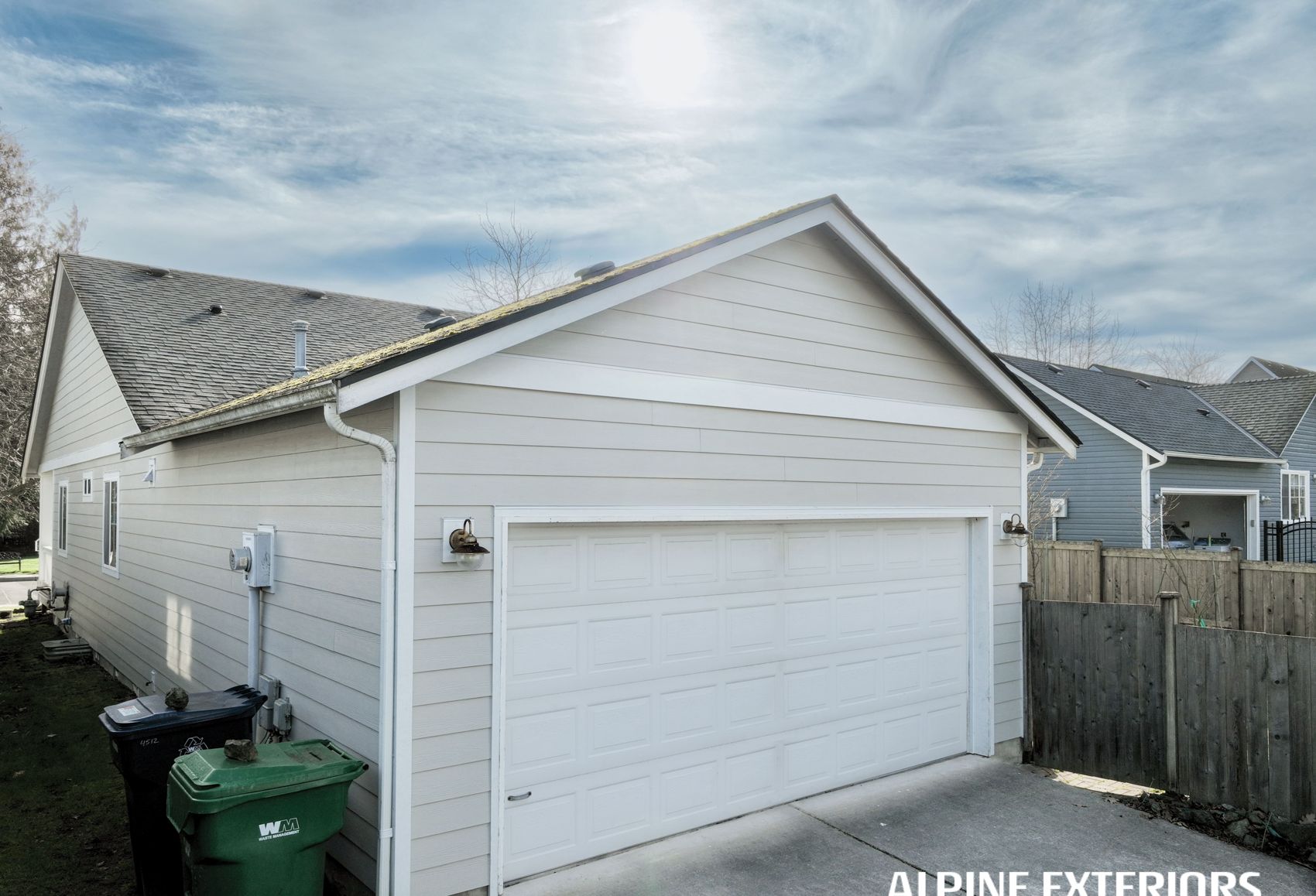
Fiber cement is a blend of cement, sand, and cellulose fibers formed into planks or panels, and it's become the default recommendation for most of our jobs on the wetter side of Whatcom County, Silver Beach included. It does not absorb water the way wood does, so it doesn't swell, cup, or rot at the bottom edges the way an old cedar lap board does after ten winters of splashback from a gutter that's running a little slow. It also holds up well against moss and algae staining compared to bare wood — it's not immune to growth in a heavily shaded, low-airflow spot, but a rinse and a mild wash handles it without damaging the material underneath, which isn't always true of softer sidings. Factory-primed and factory-finished versions hold their paint far longer than field-painted wood, which matters a lot when a house sits under fir trees that drop needles and sap onto every south or west wall.
The drawbacks are real. Fiber cement is heavy, so installation labor costs more than vinyl and the work needs a crew that knows how to cut it without silica dust becoming a problem, and how to caulk and flash the joints correctly — a sloppy install on a wind-exposed wall near the lake will let wind-driven rain find every gap over a few seasons. It's also not something you patch invisibly; a cracked plank generally gets replaced rather than repaired. And while factory finishes last a long time, they're not permanent — expect a repaint cycle eventually, just a much longer one than bare wood requires.
Engineered wood siding — strand-based products treated with resins and zinc borate for moisture and insect resistance — sits in the middle ground between traditional cedar and fiber cement, both in cost and in performance. It installs lighter and faster than fiber cement, which can bring the labor cost down, and it takes paint well. On a Silver Beach lot with moderate tree cover it performs reasonably well against rot, as long as the manufacturer's installation and moisture-management instructions are followed closely, particularly around butt joints and cut ends, which need to be sealed on site or they become the weak point.
The honest caveat is that engineered wood's real-world performance depends heavily on installation quality and on keeping cut edges sealed — skip that step, or let a downspout dump water onto one section for a few years, and it can fail faster than fiber cement in the same spot. It's a solid option for additions, garages, and lower-exposure walls, and a fair budget alternative to fiber cement on a full re-side, but we're more cautious recommending it for the most wind- and rain-exposed lake-facing walls in the neighborhood.
Cedar is the traditional siding material for this part of the Pacific Northwest, and there's a reason a lot of the older homes around Lake Whatcom still wear it. Western red cedar has natural oils that give it some rot and insect resistance, it takes stain or paint beautifully, and it's simply the look that fits Silver Beach's wooded, lakeside character better than almost anything else on this list. Done right — back-primed, properly gapped off the wall for airflow, and refinished on schedule — a cedar-sided house can look good for decades.
Done wrong, or just left alone, cedar is the material that struggles most with this specific microclimate. The combination of heavy shade, high humidity, and slow dry-out time after rain is close to the worst-case scenario for wood siding: moss and algae take hold fast on north- and east-facing walls that don't get afternoon sun, and once a finish coat starts to fail, water gets behind it and the rot follows within a few seasons, not decades. Maintenance isn't optional here the way it can feel optional in a drier climate — a homeowner who skips a refinish cycle or two on a shaded Silver Beach wall is likely to be looking at board replacement sooner than they'd expect. We still install and repair cedar siding regularly, but we tell every client going in that it's the highest-maintenance option on this list, not the lowest.
Vinyl remains the budget option, and it has real advantages: low material cost, fast installation, and no painting. It also doesn't rot, which takes one of Silver Beach's biggest threats off the table entirely. For a rental property, a lower-exposure wall, or a homeowner who needs the most coverage for the least upfront cost, it's not an unreasonable choice.
Where vinyl struggles here is twofold. First, standard vinyl panels can become brittle in cold weather, and the freeze-thaw swings that hit the foothill lots above the lake can make panels more prone to cracking on impact during a cold snap than they'd be at sea level closer to the bay. Second, vinyl relies on lapped, floating panels rather than a sealed surface, and wind-driven rain off the Strait can drive moisture behind panels on an exposed wall if the underlying weather-resistive barrier and flashing weren't detailed correctly — the panel itself doesn't fail, but what's behind it can. Vinyl also isn't the easiest material to blend with the exterior continuous insulation strategies that current Washington State Energy Code wall assemblies favor; it can be done, but it takes more planning than it does with fiber cement or engineered wood.
Metal siding, typically steel panels with a factory paint finish, is the least common choice in Silver Beach but it's worth including because it genuinely solves two of the neighborhood's biggest problems: it doesn't rot, and it's about as resistant to moss and algae growth as any material on this list, since there's no organic surface for growth to anchor into the way there is on wood grain or even some fiber cement textures. It also handles wind-driven rain well when installed with the right lap and fastening details.
The tradeoffs are cost and aesthetics. Metal siding runs toward the higher end of the cost range, comparable to or above fiber cement, and it's a more industrial or modern look that doesn't suit every home style around the lake — it reads very differently on a traditional lake cabin than it does on a contemporary build. Dents from hail or falling branches (common enough under the fir canopy here) are also more visible on metal than on fiber cement or vinyl, and a dented panel is typically replaced rather than repaired. We recommend it selectively — often on a specific wall or accent area rather than a full re-side — rather than as a default for every Silver Beach home.
A few choices come up often enough in estimates that they're worth calling out directly. Stucco and traditional hard-coat finishes are a poor match for this microclimate; they're built around dry-out cycles that a shaded, high-humidity lake lot doesn't reliably get, and trapped moisture behind a hard, non-breathing finish is a much harder problem to catch early than a failing wood or fiber cement board, since the damage happens behind the surface. Untreated or poorly finished wood without a rainscreen gap is another recurring mistake — face-nailing wood siding directly to the sheathing with no airflow channel behind it traps the moisture this neighborhood already generates in abundance, and it's one of the most common causes of the rot we get called out to repair. And on any re-side project, skipping an upgrade to the water-resistive barrier and flashing details because the old siding is coming off anyway is a mistake — the Washington State Energy Code has moved wall assemblies toward more continuous insulation and more careful moisture management than a lot of these older Silver Beach homes were built with, and re-siding without addressing that layer just locks the same weak points behind a new face.
Yes — shade changes how long a wall stays wet after rain, and that dry-out time is one of the biggest factors in whether moss, algae, and rot take hold. A wall that gets afternoon sun can shed moisture in a day or two; a heavily shaded north wall near the lake can stay damp for a week or more after a storm, which is why material choice and maintenance schedule both need to be more conservative on those exposures.
Not a bad choice, but a higher-commitment one. Cedar can last for decades in this climate if it's properly back-primed, installed with a rainscreen gap for airflow, and refinished on a consistent schedule; the risk isn't the material itself but the maintenance gap that tends to open up on shaded, hard-to-reach walls where a missed refinish cycle can lead to rot faster than it would in a drier or sunnier spot.
Rain falling straight down mostly tests a siding's surface, while wind-driven rain gets pushed sideways and upward into laps, joints, and fastener penetrations that were only ever meant to shed water moving downward. That's why installation detail — proper lap direction, sealed joints, correctly flashed openings — matters as much as the material itself on the lake- and bay-facing sides of a Silver Beach home.
It depends on the scope of the project and how much of the wall assembly is being opened up, which is worth confirming before work starts rather than after. In general, once siding comes off and the wall is exposed, it's a practical opportunity to bring the water-resistive barrier and insulation detailing closer to current code-compliant standards, even on a straightforward re-side, since redoing that work later means removing the new siding again.
Every wall on a Silver Beach lot faces a slightly different mix of shade, wind, and moisture, so the right siding for a lake-facing side of the house isn't always the right choice for a sheltered back wall. Alpine Exteriors has worked on homes throughout Whatcom County, from Bellingham and Ferndale out to Blaine and Birch Bay, and we're familiar with how this lake microclimate treats different materials over time. If you'd like an honest, wall-by-wall assessment of what will hold up on your specific home — not a one-size-fits-all recommendation — reach out to Alpine Exteriors for an estimate. We're licensed in Washington under contractor license ALPINI751OW, and we're happy to walk through material options, realistic maintenance expectations, and how your project intersects with current energy code requirements before you commit to anything.