
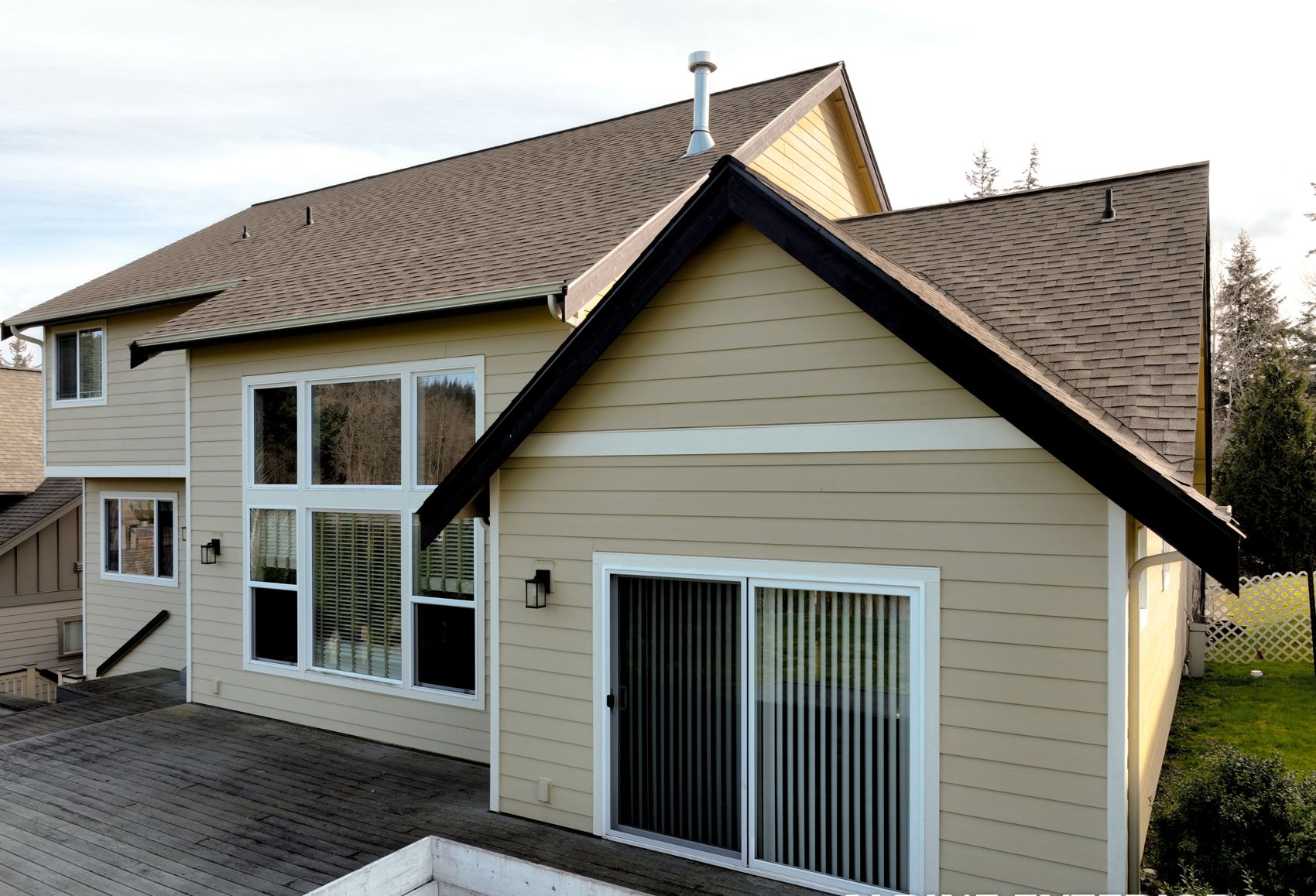
Stucco is a durable, low-maintenance cladding when it's installed correctly for a wet marine climate, but it is also one of the siding systems where a bad estimate — or a bad installation — causes the most expensive problems down the line. Homeowners in Bellingham, Ferndale, Lynden, Blaine, Birch Bay, Sudden Valley and the islands ask us for a number before they ask about anything else, and we understand why. Below is an honest breakdown of what drives stucco pricing in this part of Washington, what a real quote should contain, and how to compare bids without getting burned. These are ranges, not quotes — every home and every wall assembly is different, and the only way to get an accurate number is a walk-around inspection.
Stucco pricing in Whatcom County spans a wide range because "stucco" actually covers several different systems, and because the condition of the sheathing and framing underneath the old cladding is often unknown until tear-off begins. A straightforward re-stucco over sound sheathing on a single-story home with simple wall lines sits at the low end of the range. A full tear-off with rot repair, upgraded weather-resistive barrier, and multiple stories or dormers sits at the high end — sometimes well beyond it if the framing needs structural repair.
In broad terms, homeowners in this area should expect a per-square-foot range that varies several dollars depending on system type and wall condition, and a whole-house range that can differ by tens of thousands of dollars between a simple recoat and a full tear-off-and-rebuild. We won't put a single number on either of those because doing so before seeing the wall assembly would be a guess dressed up as a fact — and that's exactly the kind of estimate that leads to change orders later.
| Cost Factor | What It Involves | Typical Impact on Price |
|---|---|---|
| Wall prep & wood rot repair | Removing old siding, inspecting sheathing and framing, replacing anything softened by trapped moisture | Low if walls are dry; can be one of the largest line items if rot is found |
| Stucco system type | Traditional three-coat portland cement stucco vs. a synthetic or one-coat system | Traditional three-coat generally runs higher due to labor and cure time |
| Weather-resistive barrier & drainage plane | Building paper or synthetic WRB, weep screed, and a drainage gap behind the stucco | Moderate add, but essential in a climate with sustained rain |
| House size & wall complexity | Square footage, number of stories, corners, dormers, and trim details | Scales directly with square footage; complex trim adds labor |
| Tear-off & disposal | Removing and hauling away existing siding, especially old stucco or damaged material | Low to moderate, higher for multi-layer removals |
| Access & site conditions | Scaffolding on multi-story homes, tight lots, waterfront or island access | Low for simple one-story homes; can add meaningfully on islands or steep lots |
| Color & finish texture | Integral color coats, custom textures, or specialty finishes | Small to moderate, mostly a labor and material upcharge |
| Permits & code-required upgrades | Local permit fees and any upgrades needed to meet current energy code | Usually a smaller line item, but required where applicable |
Whatcom County's climate is the single biggest variable in any stucco estimate, more than finish color or trim detail. Persistent rain through fall, winter, and spring means walls here spend more time wet than in almost any other part of the country, and any gap in the weather-resistive barrier eventually shows up as a stain, a soft spot, or worse. When we tear off old stucco or siding on homes in Bellingham or Ferndale, it is common to find wood rot at window sills, at the base of walls, and around old, poorly flashed penetrations — problems that were invisible until the cladding came off. That repair work isn't optional and isn't something a reputable contractor can price accurately without seeing it, which is why tear-off jobs carry a wider range than simple recoats.
Wind-driven rain off Bellingham Bay and the Strait of Georgia is another real factor for homes in Blaine, Birch Bay, and other exposed shoreline areas. Rain that's being pushed sideways by wind finds any weak point in a wall assembly, so homes in these exposed locations often benefit from a more robust two-layer weather barrier and careful attention to flashing details around windows and doors — work that adds labor but reduces the odds of a callback in a few years. Homes tucked farther inland or behind tree cover generally don't need the same level of belt-and-suspenders detailing.
Moss and algae growth is a constant in this climate, especially on north-facing walls and anything shaded by mature trees, which describes a lot of property in Sudden Valley and the more wooded parts of the county. This mostly affects long-term maintenance rather than the initial install price, but it's worth planning for: a stucco finish in a shaded, damp spot will need periodic cleaning to stay looking good, and that's a maintenance cost, not just a first-year cost.
In the foothills and higher-elevation parts of the county, freeze-thaw cycling adds another consideration. Water that gets into a hairline crack in stucco and then freezes can widen that crack over a season or two, so crack-resistant reinforcement and proper control joints matter more here than in milder coastal spots. This is a small design decision at the estimate stage that has an outsized effect on how the wall performs over the next decade.
Finally, the Washington State Energy Code affects re-siding projects that expose the wall cavity, since code compliance for insulation and air sealing is generally triggered once the wall is opened up. On a full tear-off, this can mean adding or upgrading continuous insulation to meet current code minimums, which is a legitimate cost driver and one we flag early rather than as a surprise mid-project.
A usable stucco quote is a scope of work, not a single number on a page. At minimum, it should spell out:
If a quote is missing most of these details, it isn't really a quote yet — it's a placeholder. We write our estimates at Alpine Exteriors to include this level of detail up front specifically so homeowners aren't guessing about what's actually being installed on their walls.
The biggest mistake homeowners make when comparing stucco bids is comparing the bottom-line number without checking whether the scope is the same. A bid that's noticeably lower than the others is often lower because it specifies a thinner system, a single-layer weather barrier instead of two, no allowance for rot repair, or a shorter warranty — not because the contractor found a more efficient way to do the same job. Ask each bidder to itemize the same categories listed above so you're comparing apples to apples.
It's also worth confirming that the crew doing the work has real stucco-specific experience, not just general siding experience. Stucco is unforgiving of shortcuts — coat timing, mixing ratios, and lath installation all affect how the finish cracks and ages over years, not just how it looks on install day. Ask to see completed stucco work, not just a general portfolio, and ask how the contractor details weather barriers and flashing on homes exposed to wind-driven rain, since that answer tells you a lot about whether they've actually worked in this climate.
Verify that any contractor you're considering is properly licensed and bonded through Washington's Department of Labor & Industries, and ask for proof of liability insurance before work starts. Alpine Exteriors is licensed in Washington under contractor license ALPINI751OW; any legitimate stucco contractor should be able to give you their license number without hesitation, and it's worth checking it yourself before you sign anything.
Stucco jobs, especially full tear-offs with rot repair, are a significant expense, and most homeowners in the county pay for them through some combination of savings, a home equity line of credit, or a contractor-arranged financing plan. If financing is part of your plan, ask what the actual annual percentage rate is after any promotional period ends, and get the total cost of the loan in writing before committing — a low monthly payment can hide a much higher total cost over time.
On the insurance side, homeowners policies in Washington don't offer premium credits tied to stucco specifically, but moisture damage history matters. If your current siding failure is related to water intrusion — rot, mold, or a documented leak — it's worth talking to your insurance agent early, since some water-damage claims are covered depending on the cause and your policy's specific language, while gradual wear from age generally is not. Keep photos and any moisture-testing documentation from your contractor; if a claim is possible, that paper trail is what an adjuster will ask for. It's also reasonable to ask your agent whether a full re-siding project with a new, correctly detailed weather barrier is worth mentioning to your insurer, since documented improvements to a home's building envelope can sometimes be relevant to a policy review.
Yes, when it's installed with a properly detailed weather-resistive barrier, drainage plane, and weep screed behind it — those layers are what actually keep water out, not the stucco finish itself. Problems in this climate almost always trace back to a barrier that was skipped, damaged, or installed without a real drainage gap, not to stucco being the wrong material for the region.
Timelines vary widely with house size, whether it's a recoat or full tear-off, and how much rot repair is needed, and traditional three-coat stucco also needs curing time between coats that can stretch a schedule during our wetter months. A contractor should give you a realistic range up front and be upfront that weather delays are a normal part of building here, not an excuse added after the fact.
Sometimes — localized cracking or a small area of damage can often be patched and blended if the underlying sheathing and framing are still sound. The catch is that you don't know what's behind the stucco until it's opened up, so a contractor who's honest with you will say the repair could turn into a larger job once they see the wall, rather than promising a small fix sight unseen.
It needs different upkeep rather than necessarily more. Expect to periodically clean moss and algae from shaded or north-facing walls, keep an eye on caulking at windows and trim, and have any new cracks inspected and sealed promptly before winter freeze-thaw cycles can widen them — routine attention that's manageable but shouldn't be skipped.
The only way to turn these ranges into an actual figure is a walk-around look at your walls, since the condition of what's underneath the current siding drives more of the cost than almost anything else. Alpine Exteriors serves homeowners throughout Bellingham, Ferndale, Lynden, Blaine, Birch Bay, Sudden Valley, and the islands, and we're happy to come take a look, tell you honestly what we see, and put together a detailed, itemized quote — no pressure, no guesswork, and no number pulled out of thin air.