
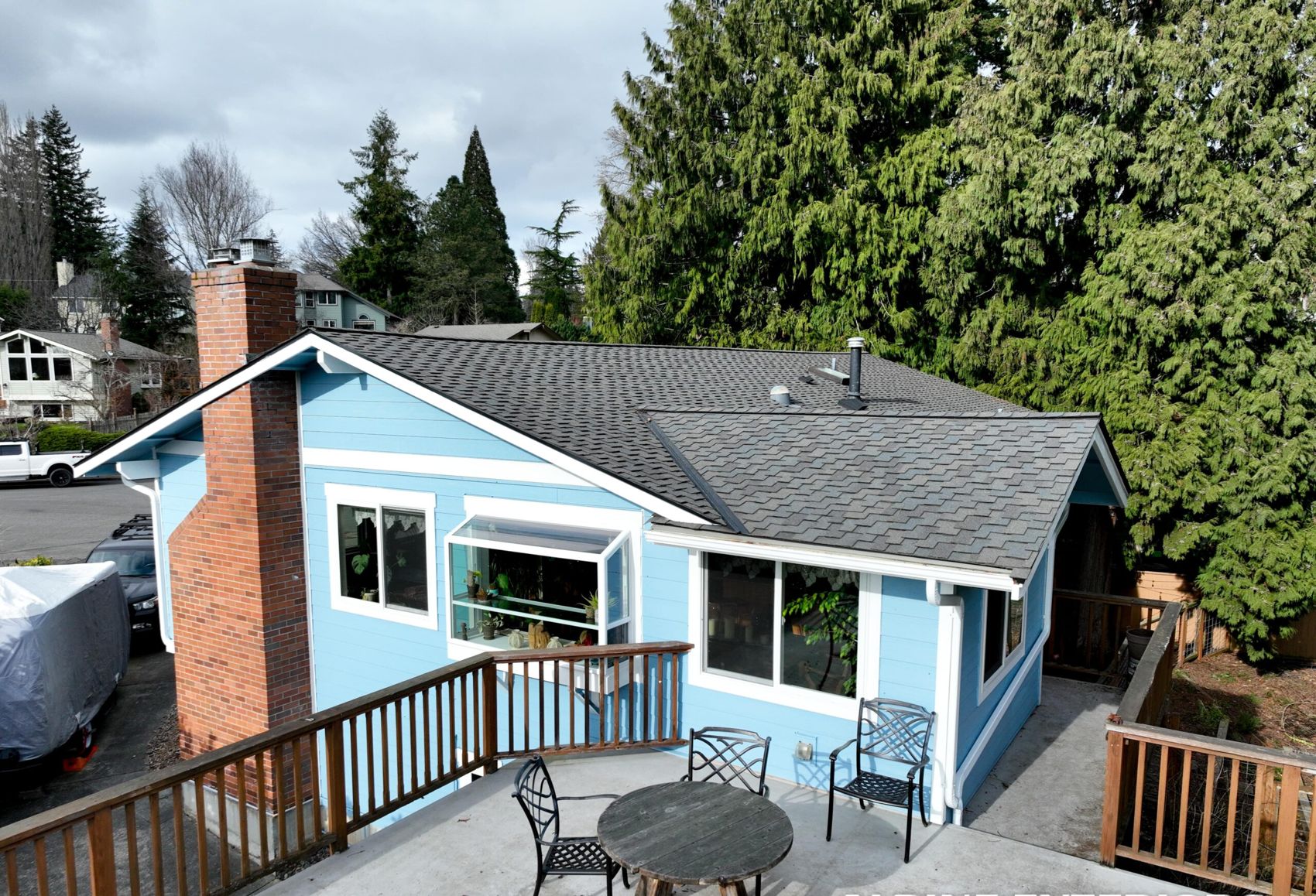
Choosing a siding color in Birch Bay isn't like choosing one in Spokane or Phoenix. Between the marine haze rolling off the Strait of Georgia, the moss that colonizes anything shaded for more than a few weeks, and the driftwood-and-fir backdrop that most Birch Bay, Blaine, and Sudden Valley lots sit inside, some colors that look great on a paint chip end up looking tired, streaked, or out of place within a couple of seasons. This guide walks through what actually holds up here, why, and what we'd steer a homeowner away from — based on years of Alpine Exteriors crews re-siding and repairing homes across Whatcom County's waterfront and foothill neighborhoods.
For most homes in Birch Bay and the surrounding shoreline communities, the safest and best-performing choices are mid-tone, muted colors: warm grays and "greige" blends, deep blue-gray or slate tones that echo Bellingham Bay itself, and natural bark or driftwood browns. These colors have enough depth to visually absorb the fine black streaking that algae and moss leave behind between cleanings, they don't fight with the evergreen-and-drift landscape that surrounds most lots, and they tend to satisfy the earth-tone expectations written into many Birch Bay and Sudden Valley community covenants. Crisp white with dark trim remains a solid classic choice too, but it asks more of the homeowner in terms of periodic washing. Very light pastels and glossy dark colors are the two ends of the spectrum we'd caution against, for reasons we get into below.
Whatcom County's coastal climate narrows the field more than people expect. We weighed each color family against the conditions that actually show up on a Birch Bay job site, not generic "curb appeal" advice:
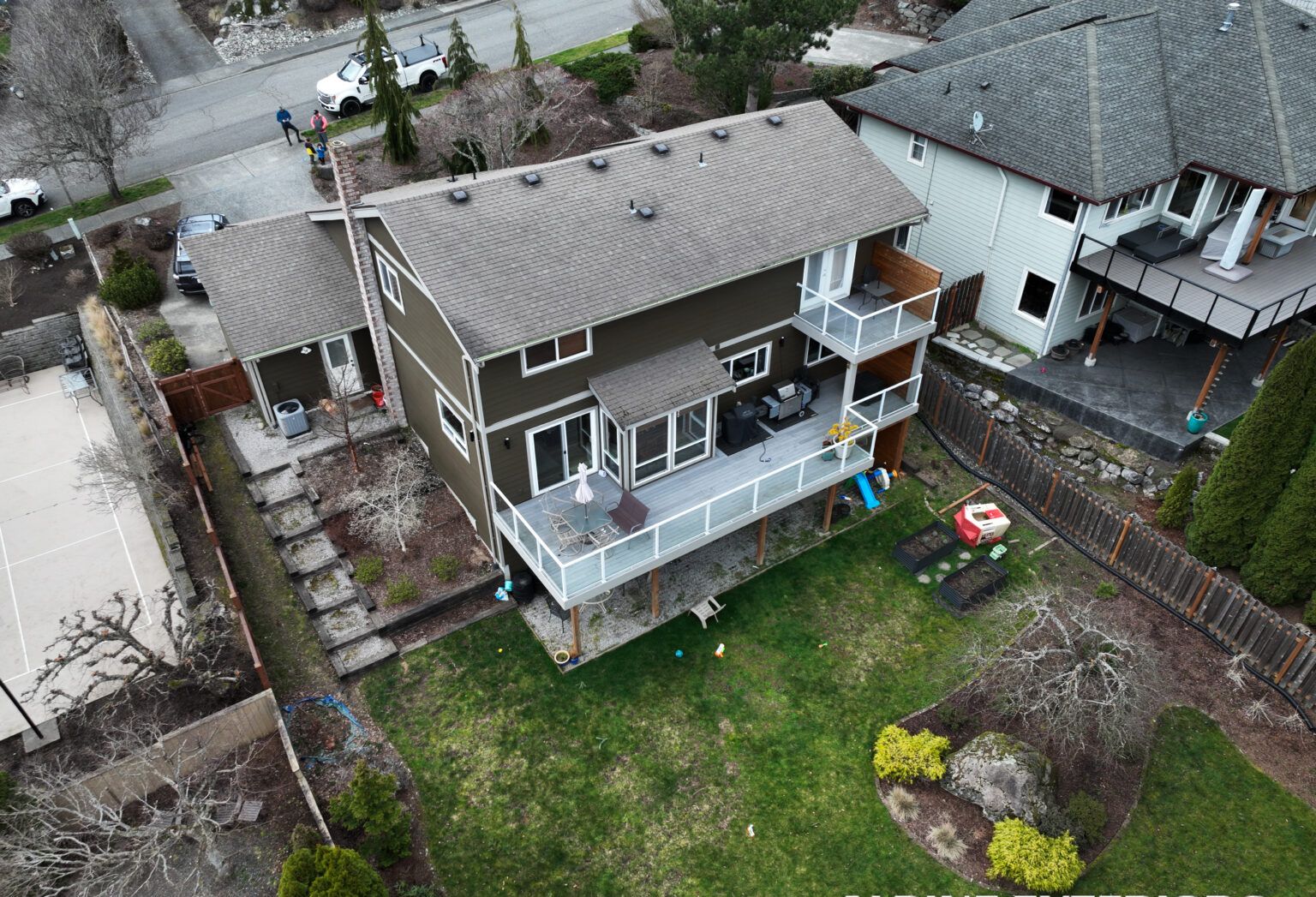
Gray, in its many regional variations — driftwood, pewter, "foggy day," warm greige — is probably the single most common recommendation Alpine Exteriors crews make in Birch Bay, and for good reason. Gray reads as neutral against both the gray-green of Douglas fir and the actual gray of driftwood and beach stone that lines the shoreline, so it rarely looks out of place on a lot near the water. It also does an excellent job of visually blending early moss and algae streaking rather than announcing it the way white does.
Pros: blends with the regional landscape, hides organic staining well, wide availability across fiber cement and vinyl lines, easy resale appeal.
Cons: the coolest gray tones can read flat or cold under Whatcom County's frequent overcast skies — a warmer greige or "driftwood" gray usually looks better here than a stark cool gray. Very light grays fade toward that flat look faster than mid-tone or warm grays.
For homes closer to the water in Birch Bay or along Semiahmoo Bay near Blaine, a deeper blue-gray or slate tone is a natural fit — it picks up the color of the water itself on an overcast day, which is most days. These tones read as intentional and coastal rather than trying to compete with a bright, saturated blue.
Pros: strong visual connection to the waterfront setting, good at hiding both moss streaking and the fine mineral staining that wind-driven rain leaves near flashing and trim, generally well-supported as a factory color in fiber cement lines.
Cons: at the darker end of this family, heat absorption becomes a real consideration for vinyl siding — very dark vinyl panels can warp or distort in direct afternoon sun, so we typically steer homeowners toward darker blue-grays only on fiber cement or engineered wood siding, not standard vinyl, unless the panel is manufacturer-rated for dark colors.
Muted greens work surprisingly well in Whatcom County because they essentially disappear into the tree line. On a heavily wooded Sudden Valley lot, a sage or deep evergreen exterior can look like it belongs on the property rather than sitting on top of it.
Pros: excellent camouflage against fir and cedar backdrops, tends to hide moss growth almost completely since the tones overlap, generally well received by HOA architectural committees that favor natural palettes.
Cons: green is a smaller color family within most siding lines than gray or beige, so options can be more limited. A green that leans too bright or "minty" reads artificial against the muted, moisture-softened greens of the actual landscape — subdued, grayed-down greens perform far better here than saturated ones.
White farmhouse-style siding with black or dark bronze trim remains popular in Ferndale, Lynden, and parts of Birch Bay, and it's a legitimately good look when the homeowner is willing to maintain it. The high contrast reads clean and classic, and it pairs well with the region's craftsman and farmhouse architecture.
Pros: timeless, strong resale appeal, makes trim details and architectural lines pop.
Cons: this is the color family that shows moss, algae, and general grime the fastest and most obviously. On a shaded, north-facing wall in Birch Bay, white siding can visibly green or blacken within a single wet season if it isn't washed. If you choose white, budget for more frequent exterior cleaning than any other option on this list, and expect gutters and downspout runoff staining to be more noticeable.
Driftwood brown, cedar, and madrona-bark tones are a strong option for homeowners who want the look of natural wood without taking on actual wood siding's maintenance burden — a meaningful consideration given how much wood rot Alpine Exteriors crews find on old cedar-sided homes throughout the county after decades of Pacific Northwest rain.
Pros: warm, organic look that suits wooded and waterfront lots alike, hides dirt and organic staining well, available in wood-grain textured fiber cement and engineered wood panels that mimic real cedar without the rot risk.
Cons: true wood-look colors can look inexpensive if the texture and sheen aren't right — a flat, low-grain vinyl in a "wood tone" color reads as fake far more than the same color on a textured fiber cement panel does. It's worth seeing a physical sample in overcast Whatcom County light before committing, since these tones can shift noticeably under gray skies compared to how they look on a sunny showroom sample.
Dark colors generally show fading and chalking sooner than mid-tone colors almost everywhere, and Whatcom County is no exception, but the bigger factor here is moisture, not sun. Because our climate keeps siding damp for long stretches, pigment and resin quality matter more than color depth alone — a well-formulated dark fiber cement color from a reputable manufacturer will typically outlast a poorly formulated mid-tone vinyl. If you want a dark color, ask specifically about the product's fade warranty and moisture performance rather than assuming darker automatically means shorter-lived.
Many communities in this area, including parts of Birch Bay and Sudden Valley, have architectural guidelines that favor natural, earth-tone palettes and may require submitting a color sample for approval before installation. Requirements vary by specific development and can change, so it's worth pulling your association's current covenants or contacting the architectural committee directly before ordering material, rather than assuming a color is approved because a neighbor has something similar.
Factory-finished fiber cement generally holds color longer under Whatcom County's rain-and-overcast cycle than field-painted wood, because the pigment is baked into a factory coating rather than applied on site and re-exposed to moisture during cure. Quality vinyl holds up reasonably well too, though it's more limited in dark color choices for the heat-related reasons noted above. Whatever material you choose, proper house-wrap, flashing, and drainage details behind the siding matter more for long-term appearance than the color itself, since trapped moisture causes staining and rot regardless of what shade is on the surface.
On shaded, north- or west-facing walls in Birch Bay, an annual soft wash is a reasonable baseline for most colors, and light or glossy colors may need attention more often than that. Homes tucked under fir canopy in Sudden Valley or Lynden's wooded lots tend to need washing more frequently than open, sun-exposed lots along the water. Choosing a mid-tone or darker color, as outlined above, won't eliminate the need for cleaning, but it does buy more time before staining becomes visually obvious.
Every lot in Whatcom County gets a slightly different mix of rain exposure, shade, and wind, and the right siding color depends as much on your specific site as it does on general regional trends. Alpine Exteriors, licensed in Washington under contractor license ALPINI751OW, works with homeowners throughout Bellingham, Ferndale, Lynden, Blaine, Birch Bay, and Sudden Valley to match siding color and material to how a particular home actually sits — its sun exposure, its tree cover, and its wind exposure off the bay. If you're planning a re-side and want an honest read on which colors will hold up on your specific property, reach out to Alpine Exteriors for a walkthrough and color consultation before you order material.