
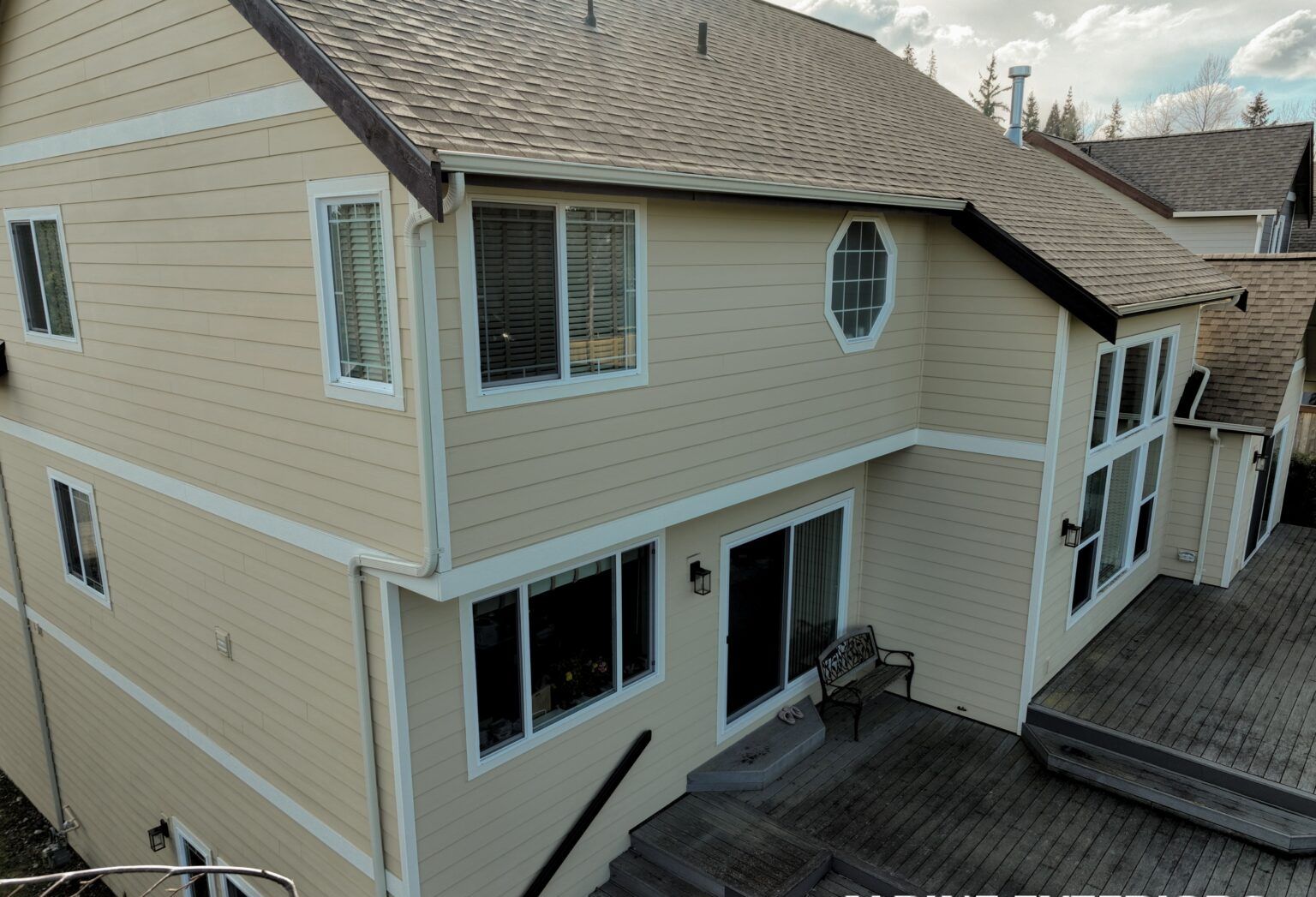
For most homes and townhomes in and around Barkley Village, the two siding types that hold up best over the long run are fiber cement and higher-grade insulated vinyl. Fiber cement earns its place because it shrugs off the near-constant Bellingham drizzle, resists the moss and algae staining that shows up fast on north-facing walls under mature trees, and takes paint well when it's time for a refresh. Insulated vinyl earns its place on a value basis — it's the lower-maintenance, lower-cost option that still performs reasonably well against wind-driven rain when it's installed with correct flashing and house wrap detailing, which matters more here than almost anywhere else in the county because Barkley Village sits close enough to Bellingham Bay to catch gusts funneling up from the water. Engineered wood siding is a fair middle option for owners who want a wood look without the maintenance schedule of real cedar. Cedar itself is beautiful but is genuinely the highest-upkeep choice given how much moisture this area sees across the year. We'd steer most homeowners away from stucco and EIFS systems in this neighborhood — not because they can't work anywhere, but because they don't suit the Pacific Northwest's wet-all-winter, dry-never climate pattern. Alpine Exteriors installs all of the products discussed below and can walk through which one fits a specific roofline, sun exposure, and budget.
Barkley Village is a newer, mixed-use pocket of Bellingham — a lot of the housing stock there dates from the 2000s and 2010s, with condos, townhomes, and single-family infill sitting alongside older homes in the adjacent neighborhoods that ring it. That mix changes what "best siding" means compared to, say, a century-old farmhouse in Lynden or a lake cabin at Sudden Valley. We weighed each siding type against five things that actually matter for this specific area:
We did not weigh anything related to hurricane-force wind ratings or storm shutters, since those simply don't apply to this part of Washington. Freeze-thaw cycling was a smaller factor for Barkley Village itself than it would be for homes up toward the foothills, but we still considered it because winter cold snaps do reach Bellingham proper often enough to matter for caulking and trim joints.
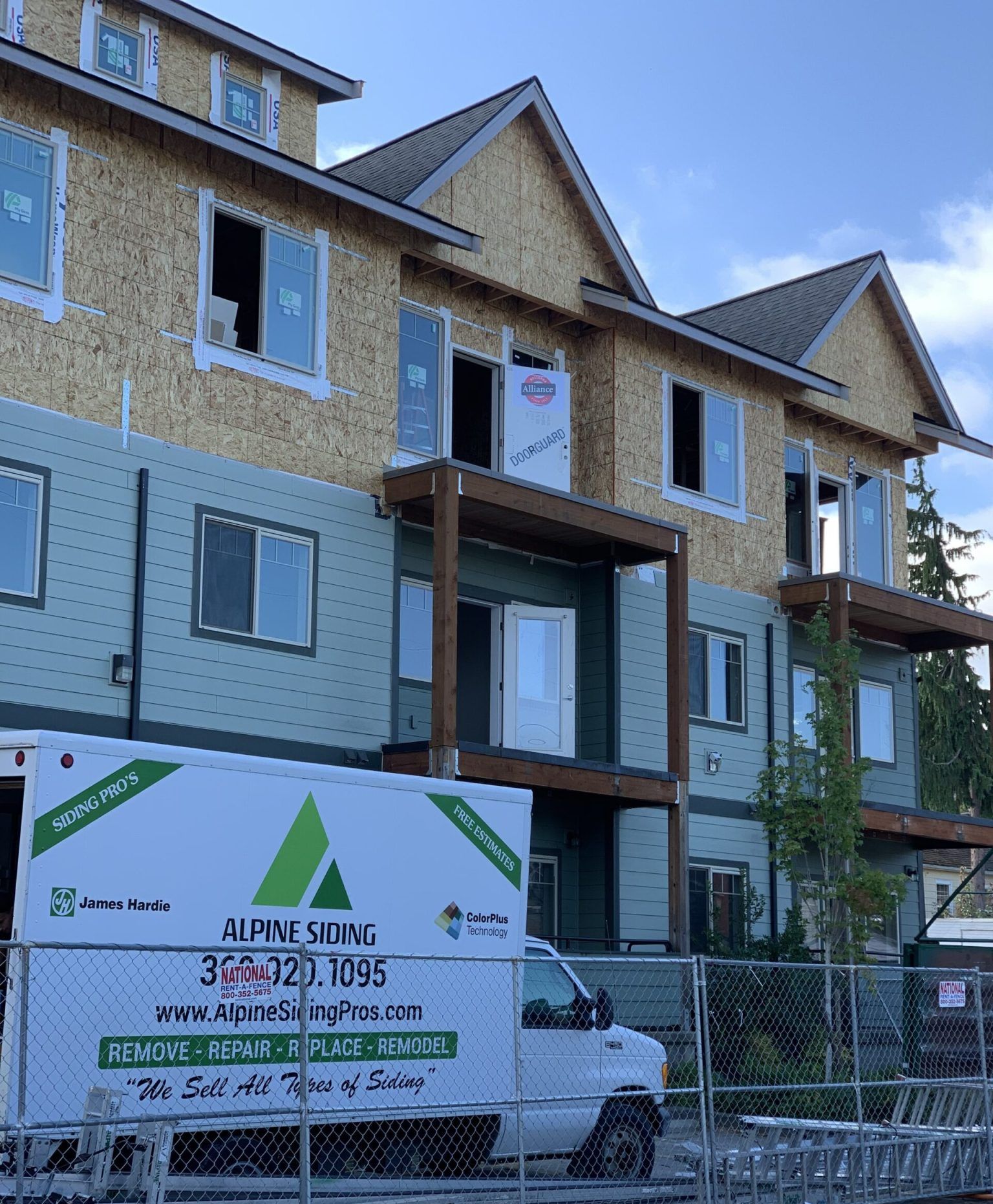
Fiber cement is a blend of cement, sand, and cellulose fibers pressed into planks or panels, and it's become the default recommendation for a lot of Whatcom County homes for good reason. It doesn't absorb water the way wood does, so it isn't prone to rot even when a caulk joint fails and goes unnoticed for a season — a realistic scenario in a climate where nobody wants to be up on a ladder in January checking trim. It also holds paint far longer than wood siding, which matters here because homeowners aren't eager to repaint every few years in a place where dry, paintable weather windows are limited to a handful of months.
On the moss and algae front, fiber cement performs well, particularly with a factory-applied finish, though it still needs an occasional wash on shaded walls — no siding is immune to that in this climate. It's heavy and dense enough to hold up to wind-driven rain when installed with proper weather-resistant barrier and flashing behind it, which is really the deciding factor more than the material itself.
The honest downsides: fiber cement costs more upfront than vinyl, typically landing somewhere in the range of $9 to $14 per square foot installed depending on plank profile and trim detail, and it's a heavier, more labor-intensive product to install correctly, so installer experience matters a lot. It also needs to be field-cut and painted at cut edges to keep water out, which is a step some crews skip. It's not a lightweight DIY-friendly product, and repairs to a damaged section usually mean replacing full planks rather than patching.
Vinyl has a mixed reputation, largely because a lot of the vinyl installed in the Pacific Northwest decades ago was thin, poorly flashed, or both. Modern insulated vinyl — thicker panels with a rigid foam backing — is a genuinely different product. The foam backing adds a bit of rigidity that helps the panels resist flexing and rattling in wind, and it contributes toward the continuous insulation targets in the Washington State Energy Code, which can simplify compliance on a re-side compared to adding a separate foam layer.
Vinyl doesn't rot, doesn't need repainting, and sheds algae reasonably well on a light color, though darker vinyl colors can show green staining on shaded walls just as readily as other materials. Cost is the biggest advantage — insulated vinyl typically runs noticeably less than fiber cement installed, which makes it attractive for townhomes and condo associations in Barkley Village managing a re-side across multiple units.
The real weakness with vinyl in this specific location is wind-driven rain at penetrations. Vinyl siding is designed to let some water get behind it by design — the drainage plane and house wrap underneath are doing the real waterproofing work, not the vinyl itself. That's fine in calm rain, but in gustier spots near the bay, a poorly lapped J-channel or a badly sealed window can let water track further than it would with a denser material. It also has a plastic look up close that some buyers in this newer, more design-conscious neighborhood want to avoid, and it can become brittle and crack in a hard freeze, which happens in Bellingham occasionally even if it's not a defining feature of the local climate.
Engineered wood — strand-based products with a resin binder and factory-applied treated coating — splits the difference between real wood's look and fiber cement's durability. It's lighter and easier to install than fiber cement, holds paint well, and resists splitting and warping better than solid wood. For a townhome or infill house in Barkley Village going for a craftsman or modern-farmhouse look without the maintenance load of cedar, it's a reasonable option.
Its main vulnerability is edge exposure. If a cut edge isn't sealed correctly, or if a section stays wet against a poorly flashed deck ledger or window sill for an extended stretch, engineered wood can swell and eventually deteriorate faster than fiber cement would in the same spot. Given how much of the year this area spends under cloud cover and rain, that installation detail isn't optional — it's the difference between a product that lasts two decades and one that needs spot repairs within five or six years.
Cedar is genuinely handsome, and Western red cedar is a regional material with real history in this part of Washington. It's naturally somewhat rot- and insect-resistant compared to other woods, which helps. But "somewhat resistant" isn't the same as "maintenance-free," and in a climate that stays damp from October through May, cedar needs a real maintenance commitment: periodic refinishing, careful attention to any spot where paint or stain has worn thin, and prompt repair of any board that starts absorbing water. Left unmaintained, cedar in this climate can start showing soft spots and rot within a handful of years, especially on north-facing walls that never fully dry out between rain events.
We'd recommend cedar mainly to owners who value the look enough to commit to that upkeep, or who plan to use it selectively as an accent — gable ends, entry surrounds — rather than as the primary siding across an entire home.
Steel and aluminum siding show up less often on residential homes here, but they deserve a mention. Metal doesn't rot, doesn't feed moss the way wood or wood-based products can, and holds up well against sustained rain. It's a legitimate option for modern-style builds, which do exist among the newer construction near Barkley Village. The downsides are cost, the need for specialized installers who work with it regularly in this region, and a tendency to show dents and oil-canning (a rippled, wavy look in the panel) more visibly than other materials, which can be a real aesthetic complaint over time.
We'd generally advise against traditional stucco and EIFS (exterior insulation and finish systems) for homes in this part of Whatcom County, even though both can perform fine in drier climates. Both systems rely on a fairly small margin of error in flashing and drainage to keep bulk water out, and in a place where the walls rarely get a long dry stretch to fully evaporate any trapped moisture, a flashing mistake tends to cause hidden rot behind the wall rather than an obvious surface problem you'd catch early. By the time staining or bulging shows up on the surface, the sheathing behind it has often been wet for a long time. This isn't a knock on the products themselves — it's a mismatch between a system built around dry-climate assumptions and a climate that almost never obliges.
For most owners planning to stay in the home for a decade or more, yes — the combination of rot resistance, paint longevity, and low maintenance in a climate this wet tends to offset the higher upfront installed cost over time. For owners planning a shorter hold, or for condo associations working with a tighter shared budget, insulated vinyl is a reasonable and defensible alternative.
It varies by exposure. Sunny, south-facing walls may only need an occasional rinse every couple of years, while shaded north-facing walls near trees can develop visible green staining within a single wet season and benefit from a gentle wash at least once a year to keep it from taking hold and staining permanently.
Re-siding projects in Whatcom County generally trigger the current Washington State Energy Code's requirements for the work being done, particularly around continuous insulation and air sealing. The exact scope depends on how much of the wall assembly is being opened up, so it's worth confirming with the local building department or with your contractor before work starts.
Yes — for attached housing and HOA-governed properties around Barkley Village, Alpine Exteriors works from existing color and profile specs where they exist, and can help coordinate timing and material matching across multiple units when a shared re-side is being planned.
Every home on a given block in Barkley Village can face a different mix of sun, shade, and wind exposure, which is exactly why a walk-through beats a generic recommendation. Alpine Exteriors, licensed in Washington under contractor license ALPINI751OW, serves Bellingham and the rest of Whatcom County — including Ferndale, Lynden, Blaine, Birch Bay, Sudden Valley, and the islands — and can look at your home's specific exposure, existing siding condition, and budget to recommend a material that will actually hold up here. Reach out to schedule an on-site assessment and get a straightforward, honest read on what your home needs.