
South Hill is one of the more distinctive pockets of Bellingham to side a house in. You've got mature fir and maple canopy shading half the lots, view homes on the upper streets looking out over Bellingham Bay and the Strait of Georgia, and a mix of century-old craftsman homes next to 1990s remodels — often under the same informal block expectations, if not a formal HOA covenant. The color you pick here has to survive shade-driven moss growth, wind-driven rain coming off the water, and the flat, filtered light that Whatcom County gets more days than not. We put together this guide after years of tearing off old siding and watching, house by house, which colors actually held up and which ones looked tired within a few winters. This is not a sales pitch for one product line — it's a straight rundown of what works on South Hill lots specifically, and what doesn't.
For most South Hill homes, our top picks are warm mid-tone grays and greiges, deep charcoal used selectively rather than on every elevation, and muted greens or blues that sit comfortably against the evergreen backdrop instead of fighting it. These colors share three traits that matter more here than almost anywhere else: they don't show water spotting and moss shadowing the way pure white does, they hold their tone under the Northwest's soft, diffuse light instead of chalking out, and they read as "quiet" against the tree line and the water views that a lot of South Hill lots are built around. None of this means bright white or black are off the table entirely — they're just higher-maintenance choices that need to be gone into with open eyes, which we'll get to below.
Whatcom County's climate and South Hill's specific setting narrow the field faster than most siding guides admit. Here's what we actually weighed:
This is the color family we install most often on South Hill homes, and for good reason. A warm gray or greige (a gray with a hint of brown or tan undertone) sits well against both weathered cedar trim and painted trim, doesn't clash with moss-covered roofs, and photographs well against the Bay in listing photos. The main drawback is that greige has become common enough in the last several years that it can look a little unremarkable on a street where three other houses already used a similar tone — worth a walk around the block before committing.
Used as a full-house color, charcoal gives a modern, grounded look that a lot of South Hill's newer remodels lean into, especially paired with black-framed windows. It also does an excellent job of hiding moss shadowing on north walls, since the contrast between clean siding and algae staining is much less visible than on white. The honest downside: dark vinyl siding absorbs more solar heat, and manufacturers cap how dark a color they'll warranty in vinyl profiles because of warping risk, particularly on south- and west-facing walls with less airflow behind the panel. We generally recommend fiber cement over vinyl if a homeowner wants true charcoal on a sun-exposed elevation, and using the darkest tones as an accent — gables, a garage wall, a rear elevation — rather than wrapping the whole house.
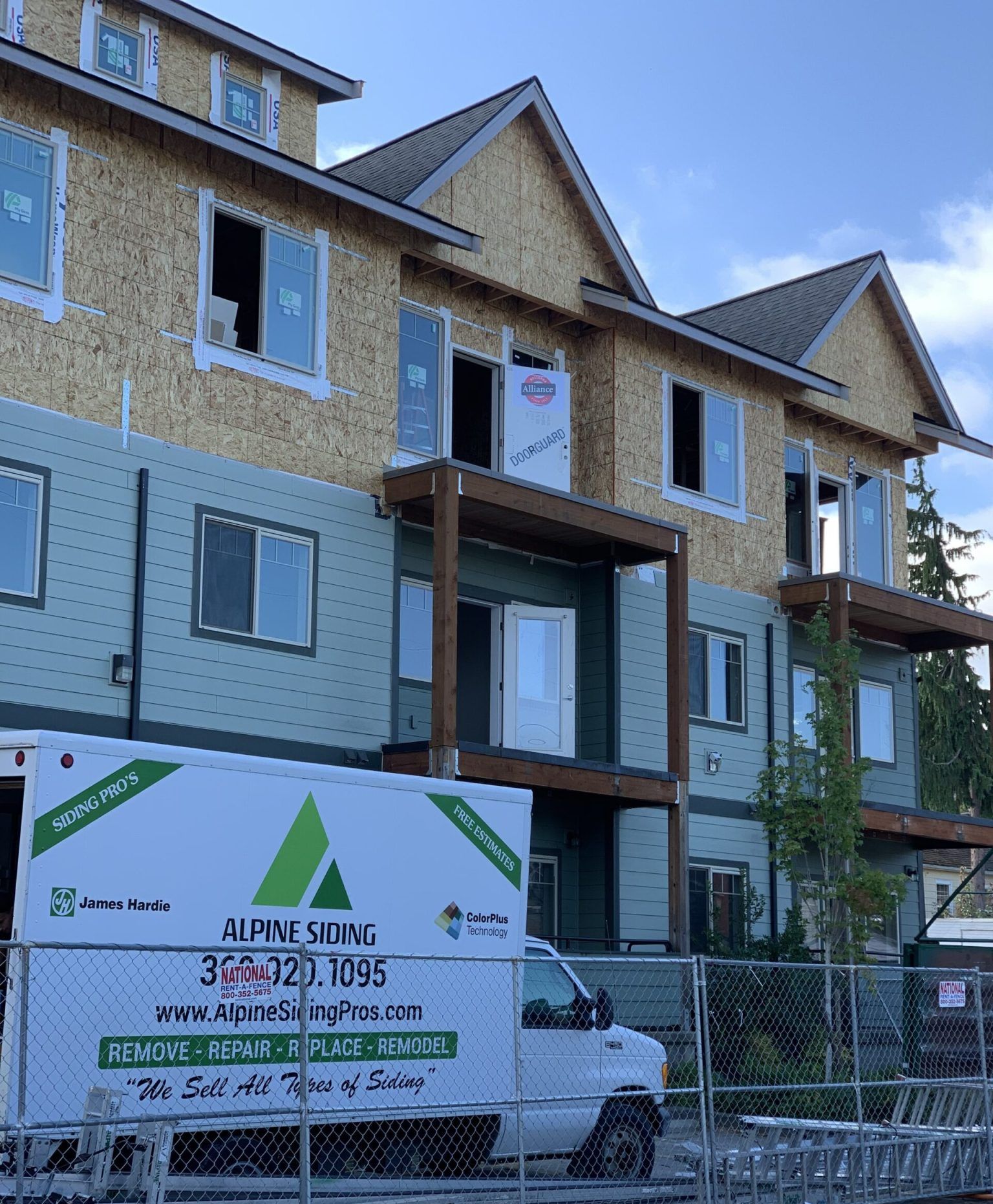
A quiet, grayed-down green is one of the few colors that genuinely disappears into a wooded South Hill lot rather than standing out from it. It also has a practical benefit: because the hue is already close to the tone of algae and moss growth, minor biological staining is far less noticeable between cleanings than it would be on a warm beige or white. The tradeoff is that green can date a house faster than neutral tones if the specific shade trends too bright or too yellow — stick to desaturated, grayed sage rather than a true forest or kelly green, and it holds up better over a ten- to fifteen-year ownership horizon.
White and cream do real work for homes that want to read as classic Craftsman or farmhouse, which describes a fair number of South Hill's older housing stock. Done well, it's a good look. But this is the color that will show the region's conditions most honestly: green-black algae streaking under gutters and roof valleys, moss shadowing on shaded north walls, and general dirt buildup show up on white faster and more visibly than on any other option on this list. If you choose white here, budget for washing the siding at least once a year, more on heavily shaded lots, and expect it to need that maintenance to actually look white rather than gray-green by year three.
A cool blue-gray works especially well on the upper South Hill streets with water views, since it echoes the color of the Strait on an overcast day rather than clashing with it. It also masks moss staining reasonably well, similarly to standard gray. The main risk is picking a tone that leans too far toward a bright, saturated blue — those read as costume-like against the muted Northwest palette and tend to be the first thing a future buyer wants to repaint.
For owners who want the look of natural cedar without the maintenance of real wood, cedar-toned fiber cement or engineered wood panel products have gotten genuinely good in the last several years. They fit South Hill's tree-canopy aesthetic better than almost anything else on this list. The honest caveat: any wood-look finish is working against the clock in this climate. Persistent rain and shade accelerate finish wear compared to drier regions, and the factory finish will eventually need refinishing or replacement panels sooner than a solid painted color would. It's a strong look for an accent wall or a gable feature; committing an entire elevation to it is a bigger long-term maintenance decision than most homeowners initially expect.
A few choices come up often enough in South Hill consultations that they're worth flagging directly. Bright, stark white is the single most common regret we hear about after a few Whatcom County winters — it's simply the hardest color to keep looking clean under this much shade and rain. Very dark, near-black colors wrapped around an entire home, especially in vinyl, run real risk of heat-related warping on south- and west-facing walls, and they also amplify how obvious every water spot and streak looks once it does happen. Trendy, high-saturation colors — bright teal, terracotta, mustard — tend to fight the muted, green-gray Whatcom County palette instead of complementing it, and they're the colors most likely to make a home stand out in a way that hurts resale on a street where the surrounding houses lean quiet and traditional. Finally, if your lot is inside a South Hill development with an architectural review committee, or you're near Sudden Valley where covenants are more actively enforced, skip any color decision until you've confirmed it against the current approved palette — a beautiful color choice that gets rejected after installation is an expensive mistake to unwind.
Alpine Exteriors has sided homes across this exact stretch of Whatcom County — South Hill, downtown Bellingham, and out toward Ferndale, Lynden, Blaine, Birch Bay and Sudden Valley — so a lot of this guidance comes from watching specific colors perform on specific lots over years, not from a manufacturer's marketing sheet.
It depends on the specific development. Some South Hill neighborhoods have formal architectural covenants with an approved color list, others have no formal HOA at all, and Sudden Valley's community association is generally more active about review than most South Hill streets. Before ordering material, check your plat's covenants or ask your title company, since a color swap after the siding is installed is far more expensive than confirming it up front.
Cloud cover reduces fade compared to a sunnier climate, but it doesn't stop it — UV still passes through overcast skies, and most siding manufacturers rate their color fade warranties assuming years of cumulative exposure regardless of how much of it is direct sun. Deeply saturated colors and certain reds fade faster than neutral grays, greiges and blues, which is part of why those neutrals dominate our recommendations for this area.
Mid-tone grays, sage greens and blue-grays do the best job of visually blending with the green-black staining that shows up on shaded, damp walls, since their base tone is already close to the color of the staining itself. Pure white shows the same staining the most starkly, simply because the contrast between clean and stained siding is greatest.
Whatcom County doesn't get punishing summer heat, but south- and west-facing walls still see real solar gain on clear days, and vinyl siding manufacturers restrict how dark a color they'll warranty because of the heat-related warping risk on darker panels. It's a bigger factor with vinyl than with fiber cement or engineered wood, which is why we often steer full-charcoal exteriors toward a different material or recommend using the darkest tones as an accent rather than a whole-house color.
Picking a siding color for a South Hill home means weighing shade, moss, water views, and sometimes an HOA color list, all at once — it's worth getting an honest second opinion before you commit to an order. Alpine Exteriors (WA contractor license ALPINI751OW) works throughout Whatcom County, from Bellingham and South Hill out to Ferndale, Lynden, Blaine, Birch Bay, Sudden Valley and the islands, and we're glad to bring physical samples out to your actual lot so you can see how a color reads against your trees, your roofline and your neighbors' homes before you decide. Reach out to set up a consultation and get a straight assessment of what will hold up on your specific site.