
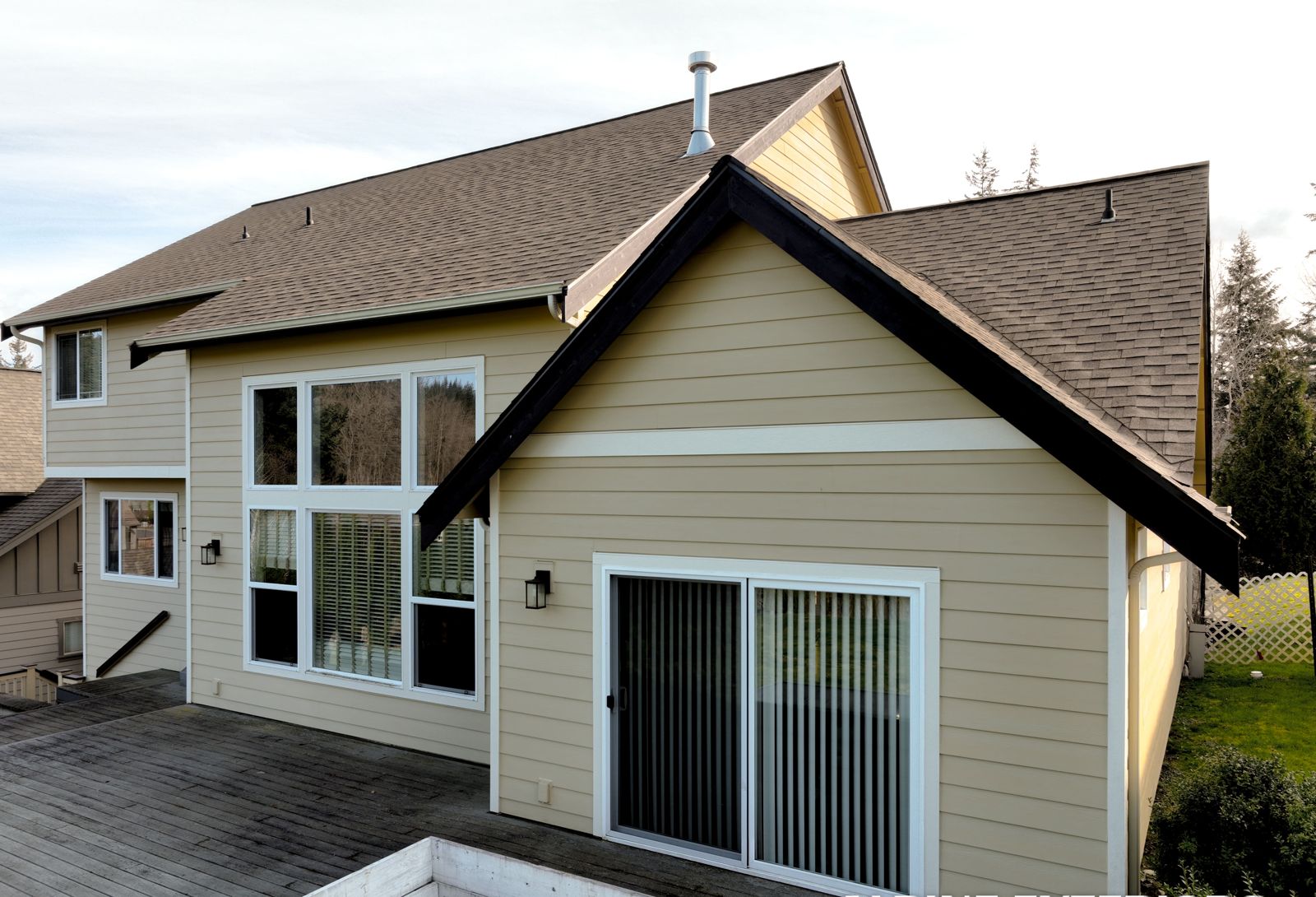
For most homes on Lummi Island and the surrounding shoreline communities of Whatcom County, the colors that hold up best over time are muted, mid-to-dark neutrals: driftwood gray, deep charcoal, warm greige, and muted cedar-brown tones. These shades read as "part of the landscape" against the fir and madrona tree line and the gray-green water of Rosario Strait, they hide the inevitable dust, pollen, and light moss haze between cleanings better than bright white or pastel finishes, and — when specified in a factory-baked finish rather than field paint — they resist the fading that comes from year-round UV exposure, even on days that never see direct sun. A soft coastal blue-gray is a close second choice for homes that want a little more personality without breaking from the island's low-key, natural aesthetic. None of these are exotic picks; they're simply the colors that perform best against this specific combination of rain, moss, salt air, and the visual expectations of neighbors who've spent decades looking at cedar, gray-weathered wood, and evergreen forest.
Picking a siding color for a home on Lummi Island or anywhere in Whatcom County isn't the same exercise as picking one for a subdivision in a drier, sunnier climate. We weighed each option against five things that actually matter here:
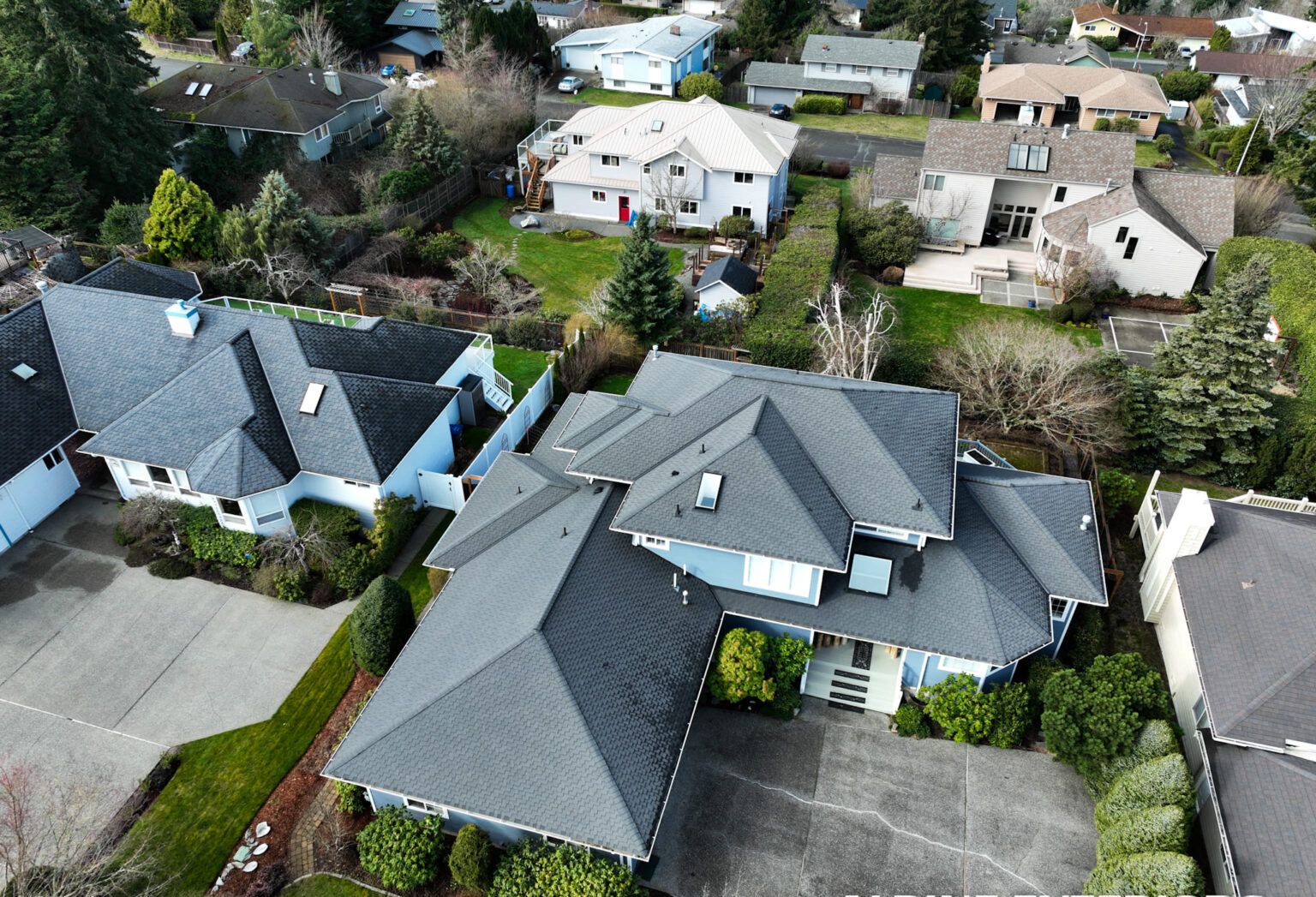
Charcoal and near-black siding has become a popular choice on newer builds and remodels around Bellingham and the islands, and for good reason: it looks sharp against cedar trim and metal roofing, and it doesn't show dirt or light algae film the way pale colors do. The tradeoff is heat and fade. Our climate doesn't push summer temperatures high enough to make dark siding a real heat-load problem the way it might in a hotter region, but dark colors — especially in vinyl — do run warmer on south- and west-facing walls during the odd stretch of clear August weather, and vinyl can warp or bow under that heat if it's an older or lower-grade product. Fiber cement handles dark colors with a factory finish far better than vinyl does, and it's the better substrate if you want to commit to charcoal or black long-term.
Greige (the gray-beige blend) is close to a safe default here. It reads as neutral and current without looking stark, it hides pollen dust and faint algae streaking reasonably well, and it pairs cleanly with the stone, wood, and metal accents common on island and Bellingham-area homes. Its main weakness is that cheaper, field-painted versions can shift slightly warmer or cooler as they age and pick up a faint green cast from ambient moss spores — not a defect exactly, just something to expect and plan a wash cycle around every couple of years.
A cooler, more silvery gray than greige, driftwood gray is the color that most literally echoes the look of weathered wood and beach debris up and down the Whatcom County shoreline. It's an easy match for water-view lots and forested lots alike, and it tends to make small amounts of moss or lichen staining look almost intentional rather than like a maintenance problem. The downside is that in a very flat, matte finish it can look a little cold or institutional on a large wall without enough trim contrast, so it usually wants a warmer trim color — cream, weathered cedar, or black window frames — to keep it from feeling flat.
Warm brown siding, whether it's an engineered wood product finished to look like cedar or an actual cedar installation, fits the wooded, rural character of Lummi Island better than almost anything else on this list. It ages gracefully and forgives dust and pollen well. The honest drawback is maintenance: real cedar siding in this rainfall pattern is the material most exposed to the wood rot risk that shows up around Whatcom County, particularly at ground contact, under overhangs with poor drainage, and anywhere caulking or flashing has failed. If you want the cedar look without the rot exposure, a fiber cement or engineered wood product finished in a cedar-toned color gets you most of the aesthetic with far less long-term vulnerability to moisture.
A quiet, grayed-down green can work beautifully on a heavily treed lot, essentially letting the house recede into the landscape rather than compete with it. It's a strong option for homes tucked back from the shoreline under fir and cedar canopy. The catch is that green is one of the harder colors to keep looking intentional once real moss and algae growth start — a green house with green biological staining can end up looking neglected faster than a neutral one would, so this color pays off best paired with a real gutter and washing routine, not a "set it and forget it" approach.
Blue-gray sits between charcoal and driftwood gray in terms of visual weight, and it's a natural fit for water-facing homes around Lummi Island, Birch Bay, and Blaine. It reads as calm and coastal without tipping into a beach-town pastel look that would feel out of place against evergreen forest. Its fade behavior depends heavily on pigment quality — cheaper blue pigments are notorious for washing out or shifting gray-green faster than earth-tone pigments, so this is a color where paying for a quality factory finish matters more than usual.
A few choices consistently disappoint homeowners in this specific climate and setting:
It depends on where the property sits. Lummi Island doesn't have a single blanket HOA covering the whole island, but a number of shoreline and platted communities carry their own covenants or design guidelines, and any work near the shoreline can fall under county shoreline design review. Before ordering material, it's worth checking your specific plat or community association documents and, for waterfront parcels, confirming with Whatcom County whether shoreline permitting applies to your project.
Not necessarily faster in absolute terms, but the fade you do get is more noticeable on dark, saturated colors than on neutrals, and it happens gradually from year-round UV exposure even on overcast days. A factory-applied finish, like the baked-on coatings used on quality fiber cement products, resists that fade far better over ten-plus years than a field-painted dark color does.
The color itself isn't what the Washington State Energy Code regulates — the code's requirements are about the insulation, air-sealing, and continuous insulation values in the wall assembly beneath the siding, not the finish color. That said, any full re-siding project is a natural point to confirm your wall assembly still meets current code requirements, since older homes on Lummi Island and elsewhere in the county were often built to a much older energy standard.
Fiber cement with a factory-applied finish is generally the strongest performer for long-term color retention in a wet, marine climate like ours, followed by quality engineered wood products with a factory coating. Field-painted wood and standard vinyl tend to show fading, chalking, or moss staining sooner, particularly on shaded or north-facing walls.
Picking a siding color that will still look good in fifteen years — after fifteen Whatcom County winters — is different from picking one off a screen. Alpine Exteriors works throughout Bellingham, Ferndale, Lynden, Blaine, Birch Bay, Sudden Valley, and the islands, and we bring large-format physical samples out to your property so you can see how a color actually reads against your trees, your roofline, and our particular gray light before you commit. As a licensed Washington contractor (ALPINI751OW), Alpine Exteriors can also walk you through how your material choice interacts with moisture management and current energy code requirements for your specific home. If you're weighing a re-side on Lummi Island or anywhere else in Whatcom County, reach out to Alpine Exteriors for a color consultation and a straightforward look at what will hold up on your particular lot.