
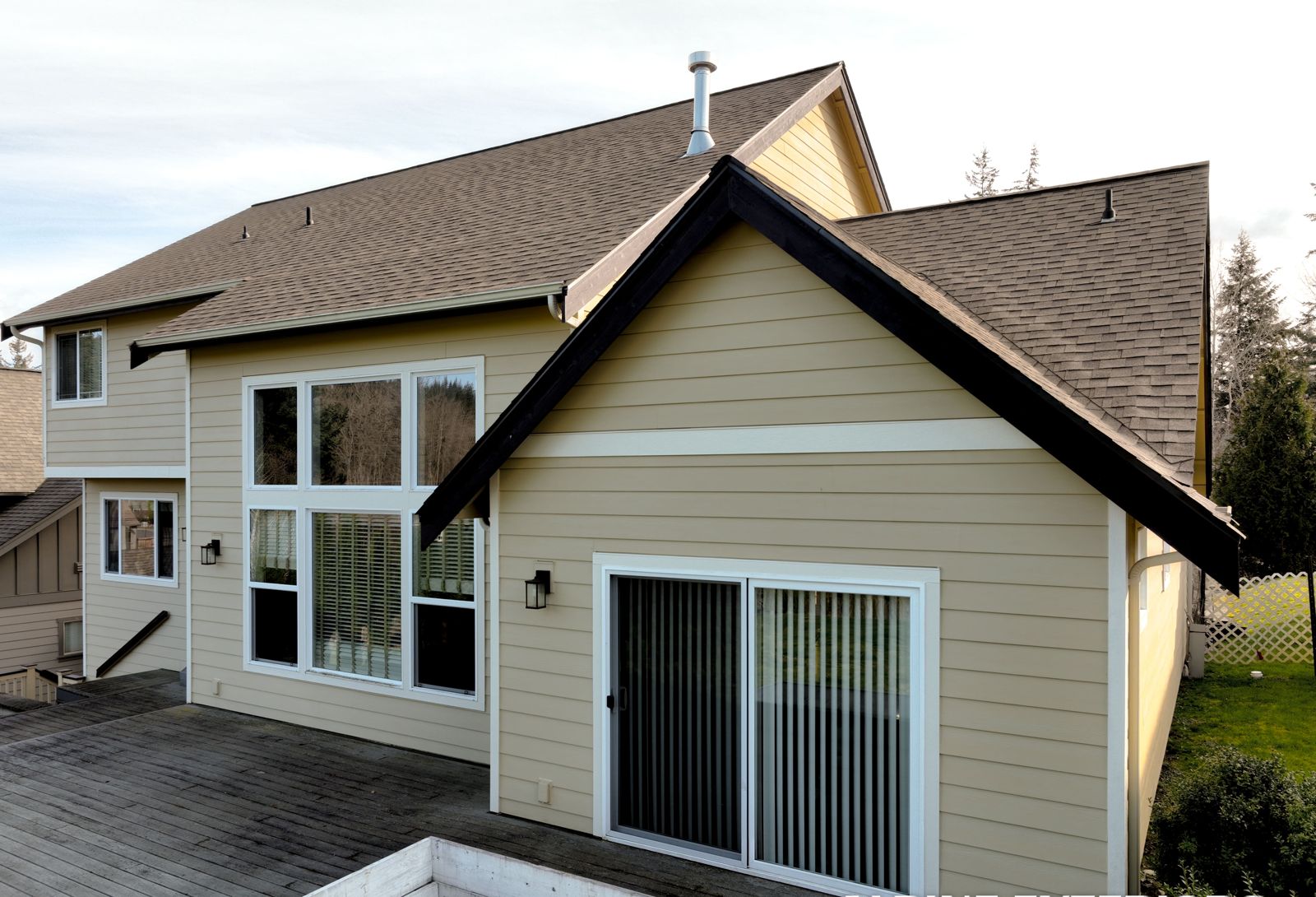
Birchwood sits under a heavy tree canopy a short walk from Whatcom Falls Park, and most of the neighborhood's housing stock dates to the mid-century boom — ranch and split-level homes from the 1950s through the 1970s, with newer infill mixed in along the side streets. That combination of mature shade trees and older wall assemblies changes what "best siding" means here compared to a subdivision out on open, sunny ground. Shaded siding stays damp longer after every rain, moss and algae get a head start on north-facing walls, and any house built before modern weather-resistive barriers became standard is more exposed to the wood rot that shows up around window trim and butt joints. This guide walks through the siding types that actually hold up under those conditions, how we weighed them, and what we'd steer a Birchwood homeowner away from.
For most Birchwood homes, fiber cement lap siding is the strongest all-around choice. It resists moisture absorption far better than wood, it doesn't feed moss and algae the way bare cedar can, and it holds paint through Whatcom County's long wet stretches without the swelling or warping that plagues lower-grade composite products. Engineered wood siding is a reasonable second option where budget matters and the wall is well-shaded from direct wind-driven rain, since it's lighter and faster to install but leans more on caulking and flashing detail to stay dry. Vinyl is worth considering on a rental or a home going up for a quick resale, mainly because of the lower upfront cost, but it's the option we'd least want on a wall that catches wind off Bellingham Bay or the Strait of Georgia, since seams and J-channels are exactly where driven rain finds a way in. Cedar and other natural wood sidings can look excellent on the right Birchwood home, but only with an owner willing to keep up with refinishing on a real schedule — in this climate, "low maintenance" and "wood siding" don't belong in the same sentence. Alpine Exteriors installs all of these systems and can walk a specific wall-by-wall exposure through with you before you commit to one.
Whatcom County's siding decisions come down to a handful of local realities, not generic marketing claims. Here's what we actually weighed for each material:
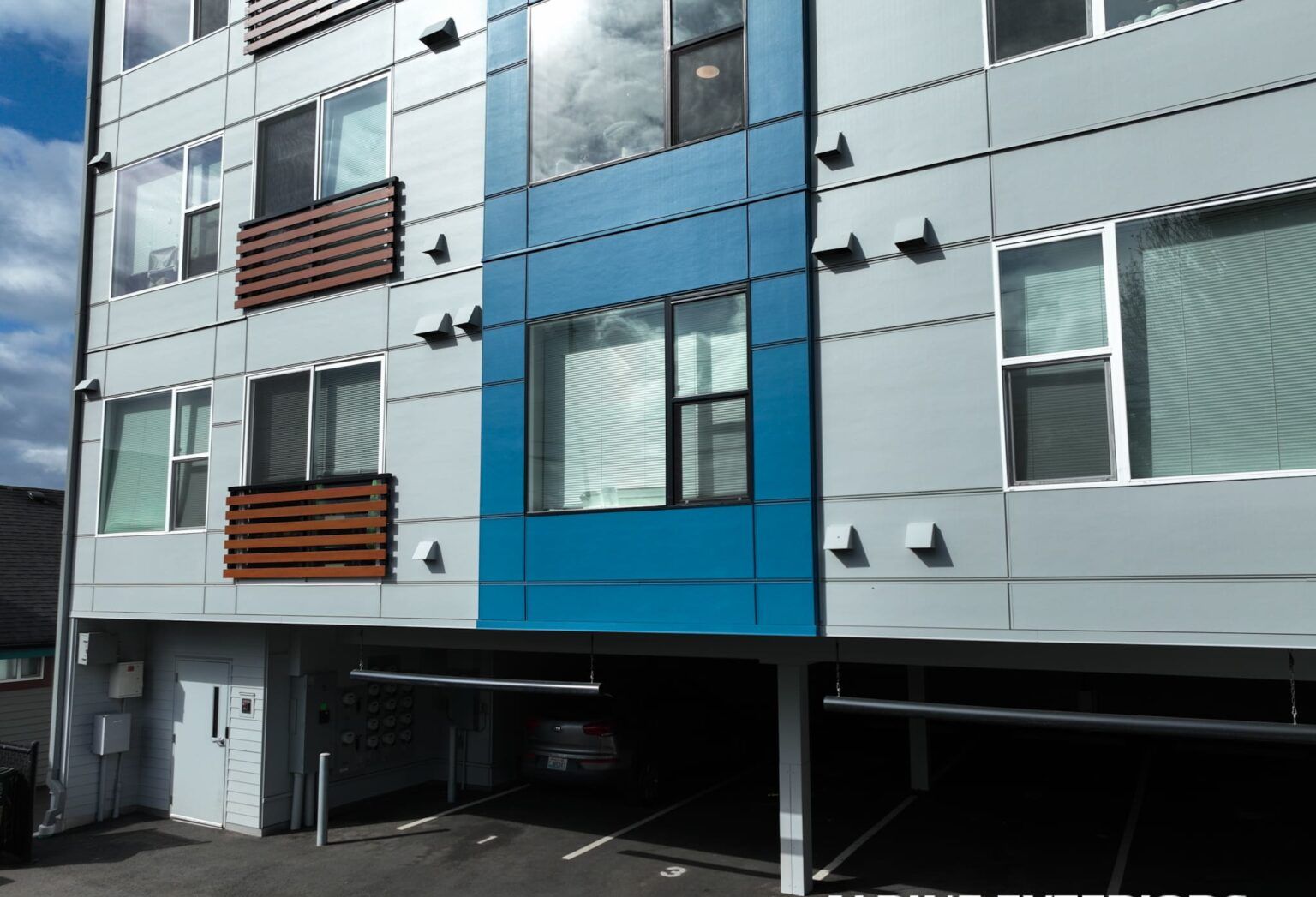
Fiber cement is a blend of cement, sand and cellulose fibers pressed into planks or panels, and it's become the default recommendation for a lot of Pacific Northwest re-sides for good reason. It doesn't absorb water the way wood does, so it isn't prone to swelling, cupping or rot even when a shaded wall stays damp for days after a storm. Factory-applied finishes hold color well through repeated wet-dry cycles, and the material itself won't feed mold or fungal growth the way cellulose-based composites can if the surface coating fails.
Pros: excellent moisture resistance, doesn't feed rot, holds paint and factory finishes for a long service life, non-combustible, wide range of profiles that can match Birchwood's mid-century lap and shingle-style walls.
Cons: heavier and more labor-intensive to install than vinyl or engineered wood, which shows up in labor cost; it must be field-cut and caulked correctly at every joint or moisture can still get behind it; and it's not a DIY-friendly material, so installer skill matters more here than with most other options. Expect installed costs in the rough range of $9–$16 per square foot depending on profile, trim detail and how much of the existing siding and sheathing needs to come off first.
Engineered wood siding — strand or panel products made from wood fibers bonded with resins and treated with a moisture-resistant coating — splits the difference between traditional cedar and fiber cement. It's lighter than fiber cement, easier to install, and gives a more traditional wood-grain look for owners who want that appearance without maintaining actual solid wood.
Pros: lower installed cost than fiber cement, faster installation, decent moisture resistance when the factory coating is intact, and a warmer look than some fiber cement profiles.
Cons: the moisture resistance depends entirely on that factory coating and on flashing details staying correct at every cut edge — any nick or unsealed field cut becomes a wicking point, and once water gets into the substrate, swelling can follow faster than it would with fiber cement. On a wall that takes direct wind-driven rain off the water, we'd want extra attention paid to butt joints and trim before recommending this over fiber cement. It's a solid option for walls under deep eave overhangs or heavy tree cover where direct wetting is limited.
Vinyl remains the lowest-cost option and it has genuinely improved over the decades in terms of impact resistance and colorfastness. For a Birchwood home on a tight budget, or an investment property where the owner wants a clean, low-maintenance exterior without a large capital outlay, it's not an unreasonable choice.
Pros: lowest material and installation cost of the main options, no painting ever required, won't rot, and modern products resist fading better than older vinyl did.
Cons: this is the weak point for wind-driven rain. Vinyl siding is installed with a certain amount of intentional looseness to allow for thermal expansion, and its overlapping panel system relies on gravity and lap geometry rather than a sealed surface. On a wall exposed to sideways rain off Bellingham Bay or the Strait, that gap-and-lap design is more likely to let moisture track behind the panels than a sealed fiber cement or well-flashed engineered wood wall would. Vinyl also becomes brittle in cold snaps and can crack on impact more readily than fiber cement, and it can't be painted to freshen a fading color without specialized paint systems. We'd use it on sheltered elevations or full re-sides where budget is the deciding factor, but not as the sole material on a home with real water exposure.
Cedar has genuine local history here — it's a Pacific Northwest material through and through, and a lot of older Birchwood homes still carry original cedar shingles or channel-lap boards under later paint layers. Done well and maintained faithfully, it's hard to beat for authentic character on a mid-century home.
Pros: unmatched natural appearance, historically appropriate for older Whatcom County homes, repairable in sections rather than requiring full panel replacement, naturally rot-resistant heartwood when properly finished.
Cons: this is the highest-maintenance option in our region, full stop. Cedar left unfinished or under-maintained under a shaded canopy is exactly the setup that produces the moss, algae and eventual rot Birchwood's tree cover is known for. It needs re-staining or re-painting on a real cycle, caulking checked annually, and any section that does rot needs to be caught and replaced before it spreads to adjacent boards or the sheathing behind it. We only recommend it to owners who value the look enough to commit to the upkeep — otherwise the long-term cost of neglect erases any short-term savings over fiber cement.
Metal siding shows up less often on residential Birchwood homes than the other four, but it has a real niche, especially on additions, garages, or modern-leaning remodels.
Pros: excellent moisture resistance since it doesn't absorb water at all, doesn't support moss or algae growth the way porous materials can, long service life, and a clean modern look that some newer Birchwood infill homes are built around.
Cons: higher material cost than vinyl or engineered wood, can dent from impact, and steel needs a quality factory finish to resist the coastal moisture here without surface corrosion over time. It also reads as a stylistic departure on a traditional mid-century ranch, so it fits better on contemporary builds or accent walls than as a full re-side on an older Birchwood home.
A few choices come up in Whatcom County re-sides that we'd steer most Birchwood homeowners away from. Untreated or unsealed wood siding left to weather naturally is the biggest one — without a maintained finish, it becomes a moisture sponge under this area's tree cover and rain totals, and rot follows faster than most owners expect. Stucco and EIFS systems, common in drier climates, are a poor match for this region generally; they depend on a sealed, crack-free surface to keep water out, and any hairline crack in a stucco wall here becomes a year-round entry point for moisture with few of the drainage paths that a rain-screen siding assembly provides. We'd also caution against any siding installed without a proper drainage gap or rain screen behind it, regardless of material — flush-nailed siding directly against the sheathing, common in older construction, traps moisture against the wall rather than letting it drain and dry, and that detail matters more here than almost anywhere else in the state given how long Whatcom County stays wet each winter. Finally, be wary of bargain composite sidings without a real manufacturer warranty behind the moisture coating — the resin-and-fiber products that failed class-action scrutiny in past decades were exactly this category, and the coating quality is what separates a durable engineered wood product from one that swells at the seams within a few winters.
It depends on the material. On fiber cement or metal, moss and algae are mostly cosmetic and clean off without lasting harm to the substrate. On wood or lower-grade composite siding, moss holds moisture against the surface continuously, which accelerates rot and finish failure underneath it — so on a shaded Birchwood wall, the material choice determines whether moss is an annoyance or an early warning sign.
Proximity to open water matters, but so does elevation and exposure — a wall with a clear line toward the Strait or Bellingham Bay can take sideways rain during winter storms even a mile or two inland, especially on upper stories with less tree buffer. If a specific elevation of your home lacks the deep eaves or tree cover that shelter most of Birchwood, that's the wall where seam and flashing quality matters most, regardless of your material choice.
A re-side is a real opportunity to improve energy performance, not just appearance, because it's often the only time the wall assembly is opened up enough to add or upgrade continuous insulation. Under the Washington State Energy Code, wall assemblies have to meet specific insulation and air-sealing requirements, and pairing new siding with correctly installed insulation and house wrap gets a lot more value out of the project than swapping the exterior skin alone.
Soft spots when pressed, peeling or bubbling paint that keeps returning in the same spots, and a musty smell near exterior walls are the usual signs, but a lot of rot on Birchwood's older homes hides behind trim boards and at butt joints where it isn't obvious from a quick look. A physical inspection that includes probing suspect areas and checking behind trim at corners and window heads is the only reliable way to know before a project starts, so that the cost of any hidden sheathing repair doesn't come as a surprise mid-job.
Every wall on a Birchwood home faces a slightly different combination of shade, wind exposure and moisture history, and the right siding choice usually varies by elevation more than homeowners expect. Alpine Exteriors, Washington contractor license ALPINI751OW, has worked on homes throughout Bellingham, Ferndale, Lynden, Blaine, Birch Bay, Sudden Valley and the islands, and can walk your specific home's exposure, existing wall condition and budget through the options above before you commit to a material. Reach out for a straightforward, wall-by-wall assessment rather than a one-size-fits-all recommendation.