
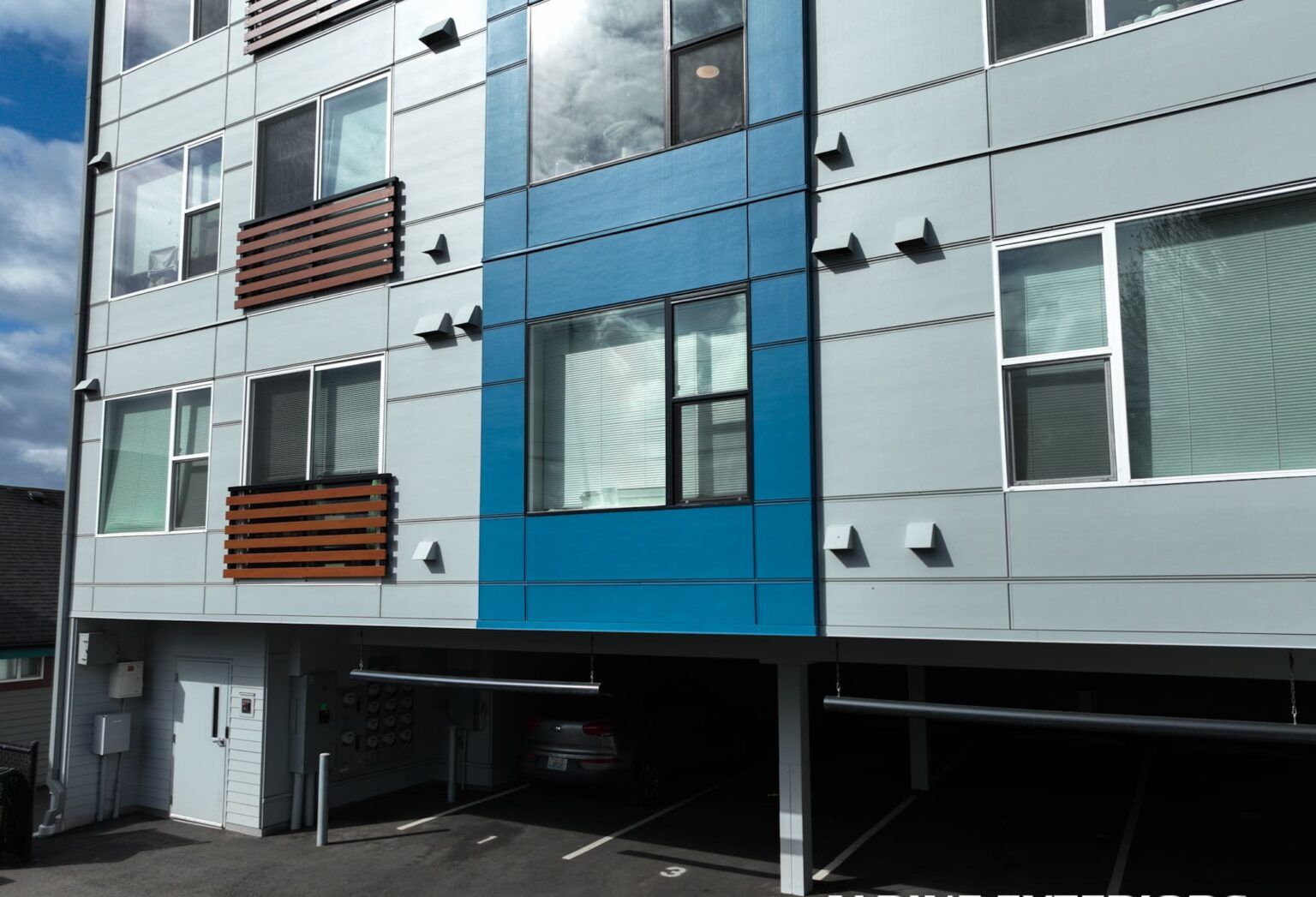
Lummi Island sits out past Bellingham Bay, reachable only by ferry, with homes exposed on nearly every side to water: Hale Passage on one shore, Rosario Strait and the open water toward the San Juans on the other. That exposure means wind-driven rain finds gaps that a more sheltered inland home would never see, siding stays damp longer between storms because tree cover and hillsides limit direct sun on many lots, and moss and black-streak algae take hold fast on anything organic. New construction and re-sides both also have to satisfy the Washington State Energy Code's wall assembly and continuous insulation requirements, which shapes which siding systems make sense here. This guide walks through what actually holds up on the island, what doesn't, and why — based on the conditions, not marketing claims.
For most Lummi Island homes, prefinished fiber cement lap or panel siding is the safest all-around choice, with engineered wood siding a close second for homeowners who want a lighter, warmer look and are comfortable with slightly more maintenance. Metal panel accents earn a place on gable ends, dormers, and the most exposed waterfront walls where wind-driven rain hits hardest. Vinyl remains a reasonable budget option, but only when it's installed with a proper weather-resistive barrier and rainscreen gap behind it — cutting that corner is where vinyl jobs on the island tend to fail. Cedar and other natural wood sidings look the most authentic against the island's older housing stock, but they demand a maintenance commitment that not every owner is prepared to keep up with in this much moisture.
| Material | Best For | Typical Installed Cost Range (per sq. ft.) |
|---|---|---|
| Fiber cement lap/panel | Most island homes, especially wind-exposed walls | $8–$13 |
| Prefinished engineered wood | Owners wanting a warmer wood look with better moisture resistance than raw cedar | $7–$11 |
| Standing-seam or panel metal | Gable ends, dormers, waterfront exposures | $9–$16 |
| Vinyl (with proper WRB/rainscreen) | Budget-conscious re-sides on more sheltered lots | $5–$9 |
| Cedar/natural wood | Historic character homes with an active maintenance plan | $9–$15 |
These are broad ranges, not quotes — actual pricing depends on wall condition, trim complexity, ferry logistics for material delivery, and how much of the existing siding and sheathing needs to come off first. Alpine Exteriors walks Lummi Island homeowners through the real number for their specific house before any work starts.
We didn't rank these materials on looks or price alone. On an island this exposed, a few practical factors matter more than they would in a drier or more sheltered part of the county:
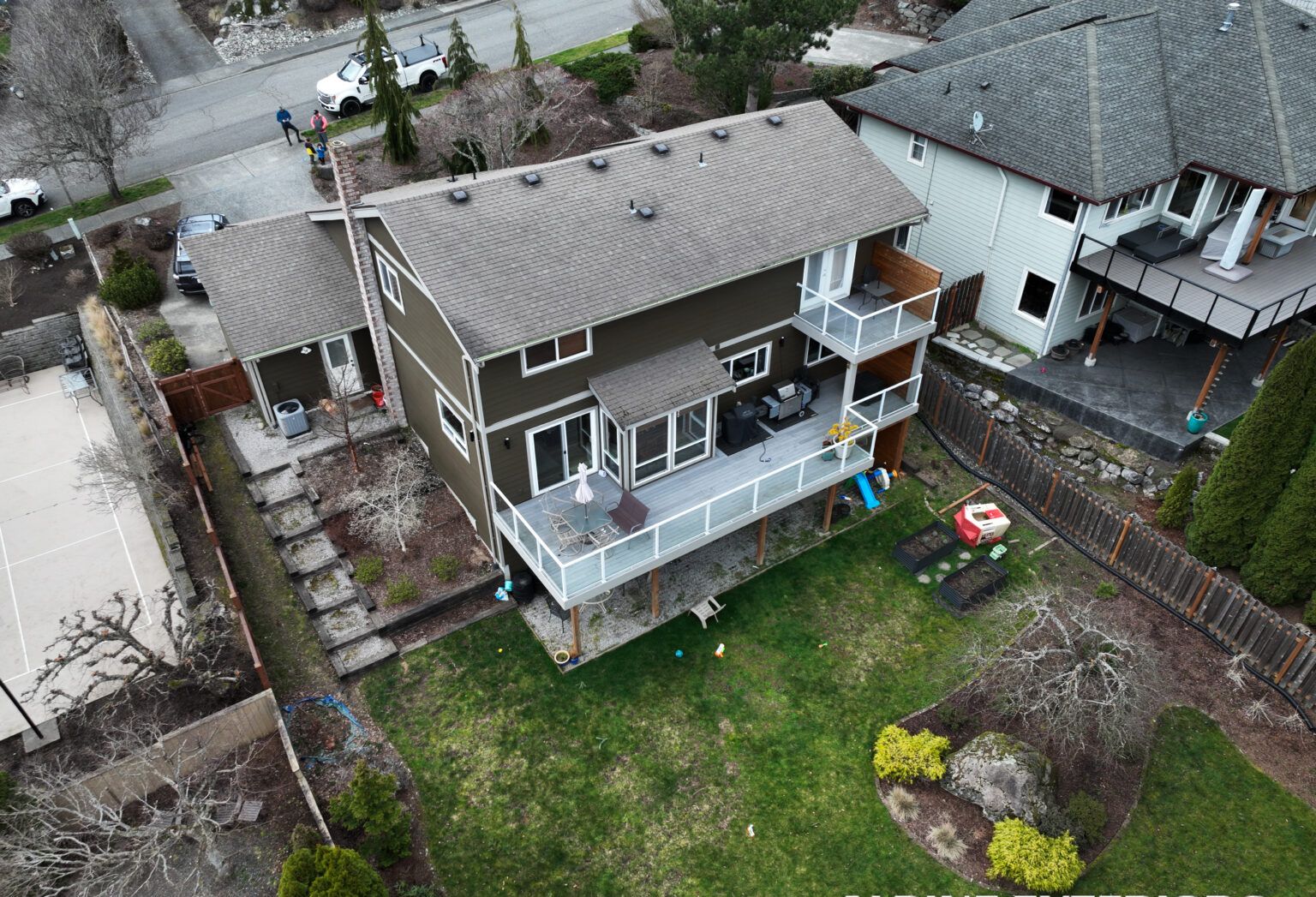
Fiber cement lap and panel siding is dimensionally stable in a way that matters a lot here — it doesn't swell, cup, or wick water the way wood-based products can when they stay damp for days at a stretch. Factory-applied finishes hold color and resist the chalking and streaking that raw or field-painted materials pick up in a low-sun, high-moisture climate. Because it's cement-based, it doesn't feed mold or algae the way bare wood fibers do, which cuts down on the black-streak and green-moss look that shows up fast on shaded island walls. It also pairs well with a rainscreen gap and continuous exterior insulation, which is the assembly most re-sides need to satisfy Washington State Energy Code wall requirements.
The drawbacks are real. It's heavy, which adds labor time and, on a ferry-access island, some added logistics for getting full pallets over. It still needs caulking maintained at trim and seams, and while the factory finish lasts a long time, it isn't maintenance-free forever. It can crack on hard impact, and cutting it on-site produces silica dust that requires proper equipment and care. Upfront cost is higher than vinyl. For most Lummi Island homes, though, the tradeoff pencils out in fewer callbacks for rot and repainting down the road.
Engineered wood siding — resin-treated strand or panel products with a factory finish — gives a warmer, more traditional look than fiber cement at a somewhat lighter weight, which can simplify installation. The better products are treated specifically to resist moisture absorption, and manufacturers back that up with finish warranties that hold up reasonably well in a marine climate, provided the installer follows the flashing and sealant details exactly.
That last part is the catch. Engineered wood's moisture resistance depends heavily on getting cut ends sealed and joints caulked correctly at install — skip that, and it's more vulnerable to the kind of prolonged saturation this climate delivers than fiber cement is. It's still a wood product at its core, so shaded, damp walls can still develop moss over time if the surface isn't kept clean. It's a solid second choice for owners who want the wood aesthetic without cedar's full maintenance burden, but it rewards a careful installer more than most materials on this list.
Vinyl remains the budget option, and it has real advantages: it doesn't rot, it's low-maintenance on the surface, and today's better vinyl products hold color longer than older generations did. Repairs are simple — a damaged panel can be swapped without redoing a whole wall section.
The honest drawback is that vinyl isn't a water barrier itself; it's a rain-shedding skin, and the weather-resistive barrier and flashing behind it do the actual work of keeping wind-driven rain out of the wall assembly. On an island that takes rain sideways off the Strait, a vinyl job installed without a proper rainscreen gap and correctly lapped WRB can trap moisture behind the panels where nobody sees it until sheathing rot shows up years later. Vinyl can also become brittle and prone to cracking in a hard cold snap, which is more of a concern for Whatcom County's colder foothill and inland properties than for the milder island waterfront, but it's still a consideration if temperatures dip. It's a reasonable choice on a budget, but only when the installer treats the barrier and drainage plane as seriously as the panels themselves.
Cedar is part of the visual identity of a lot of older Lummi Island homes, and for owners restoring or matching a historic look, it's often the right call aesthetically. It breathes well and, when properly finished and maintained, ages with a character that manufactured products don't fully replicate.
But cedar asks the most of any material on this list in exactly the climate the island has. Moss and algae find purchase on natural wood faster than on any factory-finished alternative, and keeping that in check means regular cleaning and refinishing — not a one-time seal-and-forget job. End grain and lap joints are the most vulnerable points to wind-driven rain intrusion, and once water gets behind cedar boards, rot can progress before it's visible from the outside. We recommend cedar mainly where historic accuracy matters or where an owner is genuinely committed to the upkeep schedule; as a low-maintenance primary siding for this weather, it isn't the practical choice.
Steel or aluminum panel siding sheds wind-driven rain about as well as anything on this list, doesn't feed moss or algae, and holds up for decades with minimal maintenance. That makes it a strong choice for the most exposed elements of a home — gable ends, dormers, and waterfront-facing walls that take the brunt of storms coming off Rosario Strait.
As a whole-house siding it's a harder sell for most island homes: cost runs higher, panels can dent from impact, and the look reads more contemporary than the traditional and craftsman styles common on Lummi Island. It also expands and contracts more with temperature swings than fiber cement does, which can produce noise if fastening details aren't done correctly, and it needs continuous insulation behind it to avoid thermal bridging under the Washington State Energy Code. Used as an accent on the most weather-beaten parts of a house, though, it earns its keep.
A few choices consistently cause problems in this specific climate, regardless of budget:
It can. Getting materials and crews to Lummi Island means working around the ferry schedule, which can add some time and modest logistics cost to a project, and it makes it worth ordering full material quantities up front rather than making multiple trips for small fixes. It doesn't rule out any siding material, but it's a reason to plan the project timeline with a contractor who already works on the island regularly.
Shaded, damp walls — especially north-facing ones under tree cover — rarely get enough direct sun to dry out fully between rains, which lets algae and moss establish on any surface with enough texture or organic content. Bare or lightly finished wood is the most susceptible; factory-finished fiber cement and vinyl resist it much better because there's less for the organisms to take hold on.
Most re-sides and new construction on Lummi Island need to meet the Washington State Energy Code's wall assembly requirements, which typically call for continuous insulation in addition to cavity insulation depending on the wall type chosen. The right approach depends on the existing wall construction, so it's worth having a licensed contractor confirm the assembly before work starts rather than assuming the old wall meets current code.
An annual walk-around checking caulking, trim joints, and any spots where moss or discoloration is showing catches most problems while they're still cheap to fix. After a particularly hard windstorm off the Strait, it's also worth a quick look at exposed gable ends and window flashing, since that's where wind-driven rain is most likely to have found a new gap.
Every one of these materials can work well on Lummi Island — the difference between a siding job that lasts and one that causes problems in five years usually comes down to the installation details, not just the product label. Alpine Exteriors is licensed in Washington (contractor license ALPINI751OW) and works throughout Whatcom County, including Lummi Island, Bellingham, Ferndale, Lynden, Blaine, Birch Bay, and Sudden Valley. If you're weighing options for a re-side or new build on the island, we're happy to walk your specific home, talk through what the wall assembly actually needs, and give you a straight answer on what fits your budget and your house.