
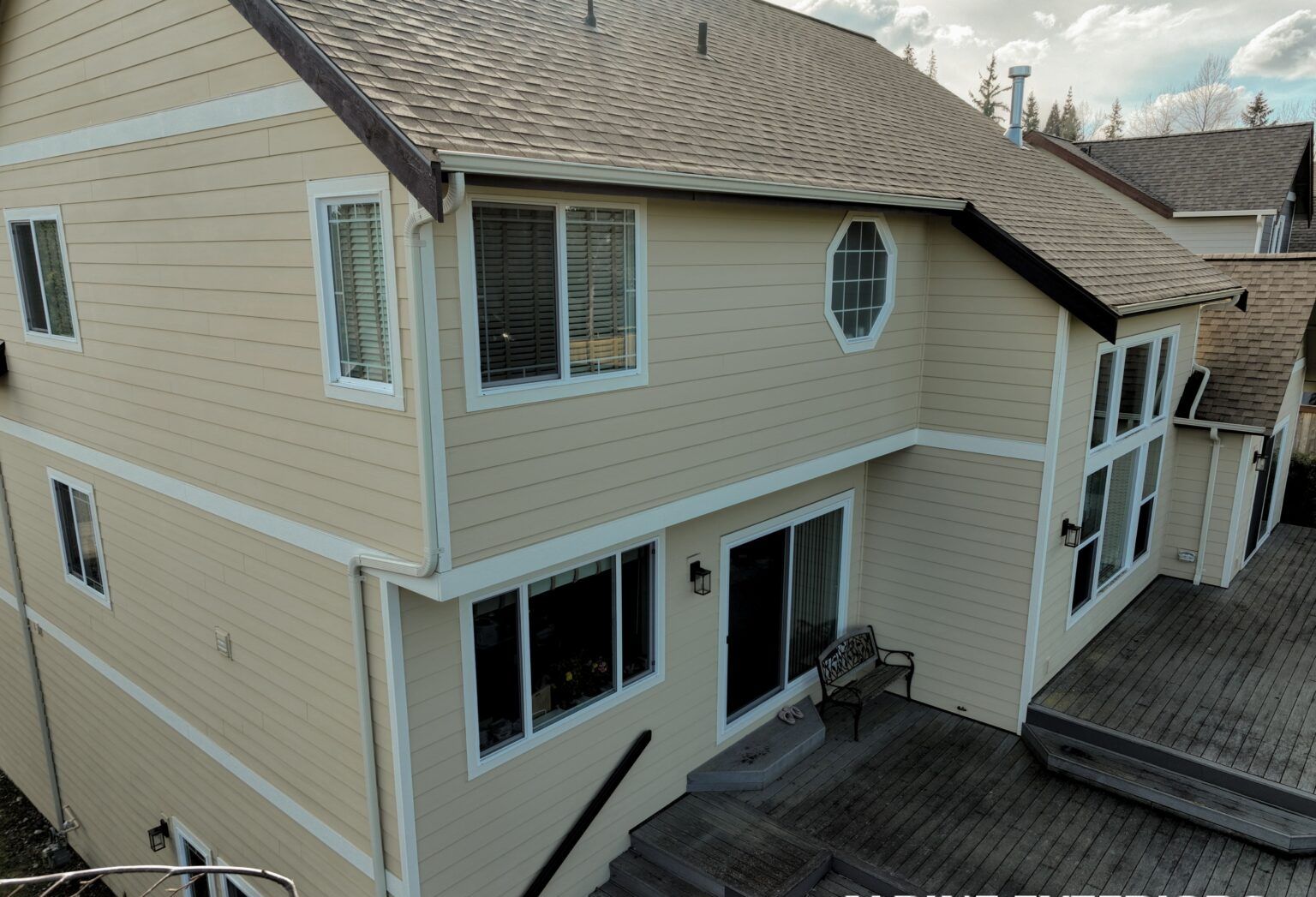
Yes. Even though Nooksack never sees a hurricane, every siding job on a home here still has to satisfy Washington's adopted building code for wind resistance, water intrusion, and how the panels or planks are actually attached to the wall. In practice that means the product needs a valid code listing that covers the wind exposure at your address, and the crew installing it has to follow a fastening pattern that matches that listing — not just whatever nailing schedule happened to be printed on the outside of the box.
Nooksack sits down in the Nooksack River valley at the edge of the North Cascades foothills, and that setting matters more than most homeowners expect. Open farmland, river-bottom exposure, and cold air draining down off the mountains in winter all push local wind conditions a step above what you'd feel on a sheltered lot in town. Code compliance out here isn't paperwork for its own sake — it's the difference between siding that stays flat through a January outflow event and siding that ends up in the neighbor's yard.
Washington adopts the International Residential Code (IRC), with state amendments, as the Washington State Building Code for one- and two-family homes, and Whatcom County's building department enforces it for permitted work in unincorporated areas like Nooksack. For siding specifically, that enforcement runs on two tracks. Standard materials like vinyl or fiber cement lap siding can be installed under the code's own prescriptive fastening tables. Everything else — engineered wood, certain metal or composite panel systems, many higher-end lap and shake products — gets installed under the manufacturer's printed instructions, which are themselves backed by an ICC-ES evaluation report or a comparable product listing. Once that listing exists, the code treats the manufacturer's instructions as enforceable, not optional, which is why an inspector will ask for the installation manual on the job site if the product isn't one of the handful covered by the prescriptive tables.
Fastening is where most of the actual wind-load engineering shows up at the wall. Codes and listings specify corrosion-resistant nails or screws of a defined gauge and length, driven to a minimum penetration depth into framing or structural sheathing, with tighter spacing at corners, eaves, and gable ends where uplift and suction loads run highest. Loose or overdriven fasteners are one of the most common defects inspectors flag, because a nail sunk too deep crushes the siding's nail hem and lets the panel work loose in wind long before it would ever pull free outright.
Wind and water are handled as one problem in the code, not two separate ones, and that's worth understanding before you sign a contract. A weather-resistive barrier — housewrap or building paper — has to go behind the siding, lapped shingle-style so water runs down and out, with flashing integrated at every window, door, deck ledger, and horizontal siding transition. Wind-driven rain doesn't need a big gap to get behind cladding; it just needs a lap installed backwards or a fastener driven through the barrier without a flashing detail underneath it. Inspectors who see the sheathing before it's covered are specifically looking at how that drainage plane is built, because it's much cheaper to fix at that stage than after the siding is on.
One layer that trips up a lot of re-side jobs here is the Washington State Energy Code. Continuous exterior insulation over the sheathing is now common on new construction and on many major re-sides in this climate zone, and it changes the math on fastener length. A nailing schedule that's technically correct for siding installed directly over sheathing will under-penetrate the framing once an inch or more of rigid foam or mineral wool sits underneath it. A contractor who doesn't account for that is handing you siding that looks correctly fastened on installation day and starts working loose within a couple of winters.
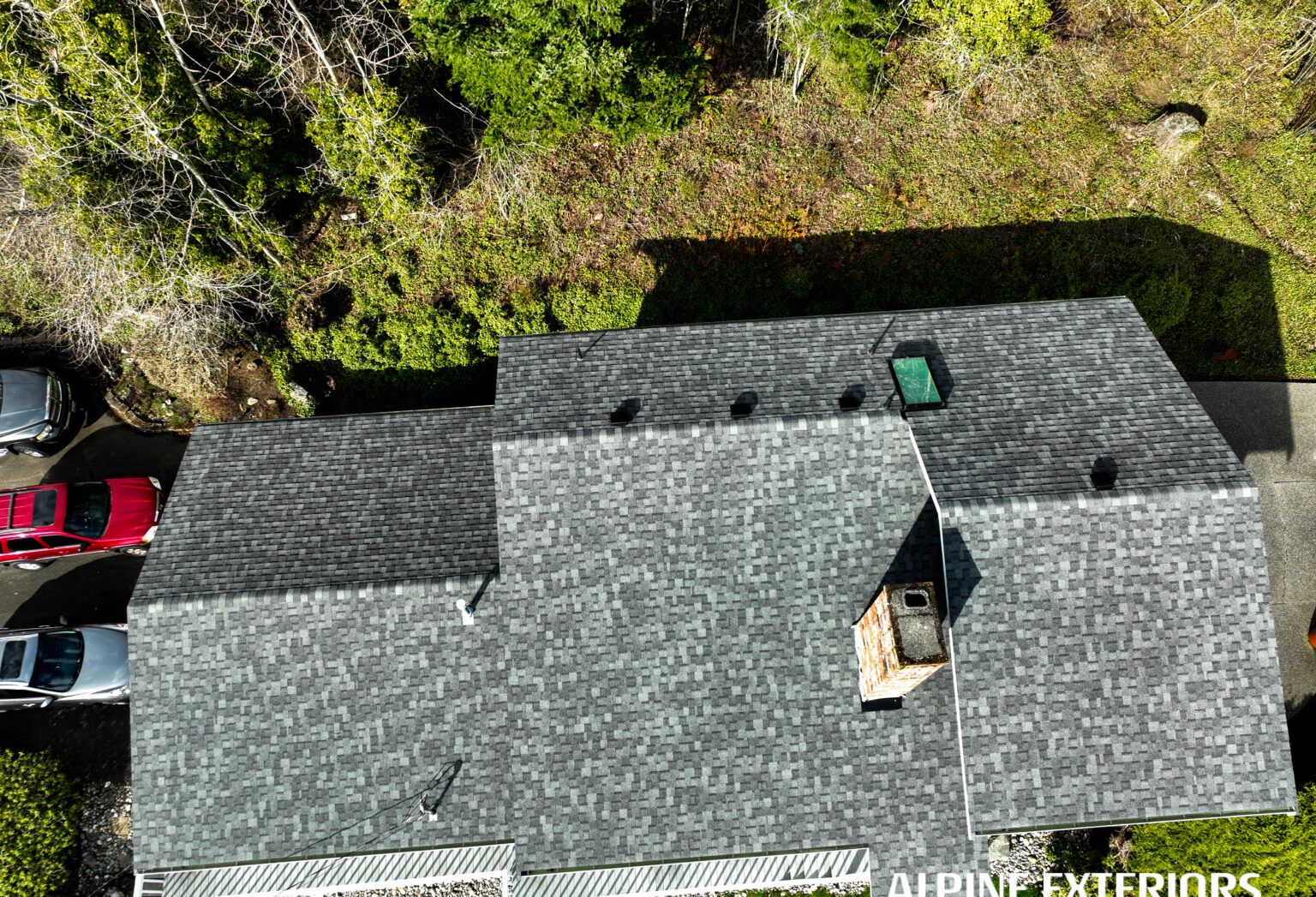
Storm systems that move in off the Strait of Georgia and Bellingham Bay generally track east, and by the time that weather reaches the Nooksack valley, the terrain funnels and accelerates it. Wind that arrives as a steady breeze in Bellingham can pick up meaningfully by the time it's moving through the open, low-lying ground around Nooksack, especially where a lot sits unshielded by trees or other structures. The building code accounts for this through wind exposure categories — broadly, "exposure B" for sheltered, wooded, or built-up areas versus "exposure C" for open or rural terrain — and a lot's actual exposure category can push the required fastening pattern to a tighter, more conservative schedule than a subdivision lot in town would need.
The foothills location also brings real freeze-thaw cycling in winter, something coastal Whatcom County properties see far less of. Cold air pools in the valley, and repeated freezing and thawing stresses caulk joints, fasteners, and any siding product not rated for that kind of cycling. Trapped moisture behind cladding is a bigger problem here than in a drier climate, because a freeze cycle on wet sheathing does more damage than the same moisture sitting there in mild weather.
Then there's the rain itself. Whatcom County gets a lot of it, and the tree cover and shade common around Nooksack properties keep siding damp longer after a storm than it would stay on an open, sun-exposed lot. That's a recipe for moss and algae growth on the siding surface and, more seriously, wood rot at ground contact, behind unflashed trim, and around any penetration that wasn't detailed correctly the first time. None of this is exotic weather — it's just persistent, and persistent moisture finds every shortcut in a siding installation eventually. We're not dealing with hurricane wind pressures out here, and it would be dishonest to sell a Nooksack homeowner on that basis — the real risk profile is wind-driven rain, valley wind acceleration, and slow moisture damage, not catastrophic wind failure.
Start with the permit question, because it's easy to assume a re-side is exempt when it isn't. Most full siding replacements in unincorporated Whatcom County — which includes Nooksack — require a building permit through Whatcom County Planning & Development Services, not a city office, since Nooksack's small incorporated area doesn't run its own building department for this kind of work. A contractor who tells you a full re-side doesn't need a permit is a red flag worth pushing back on.
Beyond that, a few concrete things are worth asking for before work starts:
It's worth being upfront about trade-offs here too. Fiber cement holds up well against moisture and wind but is heavier, requires more fasteners per square foot, and costs more in labor to install correctly. Vinyl is lighter and less expensive but has lower wind-pressure ratings in open exposure, so it's a worse fit for an unshielded rural lot than for a sheltered in-town property. There's no single "best" product for every Nooksack address — the right choice depends on how exposed the specific lot is and how much upfront cost versus long-term maintenance you're willing to trade. Expect a full re-side project in this area to vary quite a bit in price depending on material, square footage, and how much rot repair turns up during tear-off; ask for an itemized bid rather than a single flat number, since the fastening and flashing detail work described above is exactly where corners get cut on lowball quotes.
In almost all cases, yes. A full siding replacement is generally a permitted job through Whatcom County Planning & Development Services, since Nooksack falls under county building jurisdiction for this type of work. Minor spot repairs covering a small area may not require a separate permit, but a whole-house or whole-elevation re-side typically does, and skipping that step can create problems later when you sell the home or file an insurance claim.
The mapped design wind speeds used under the IRC and ASCE 7 for this part of inland western Washington are nowhere near what hurricane-prone regions design for, but they're not negligible either — and the number that matters on paper isn't always the number your specific lot actually experiences. Open, rural, or elevated sites around Nooksack can see effective wind loading that runs higher than the base map value once local exposure and valley wind funneling are factored in, which is exactly why the fastening schedule and exposure category matter more than the headline wind speed number.
Not every product can go up under whatever fastening pattern is convenient. Standard materials like vinyl and fiber cement lap siding can be installed under the code's built-in prescriptive tables, but many other products — engineered wood, certain panel and shake systems — need to be backed by a current ICC-ES evaluation report or equivalent listing, and installed exactly per the manufacturer's instructions for the code to treat the job as compliant. An inspector can and will ask for that documentation.
Persistent rain and shaded, damp conditions common around Nooksack properties encourage moss and algae growth on siding surfaces and increase the risk of wood rot at ground contact and poorly flashed penetrations. Fiber cement and properly detailed vinyl both handle sustained moisture reasonably well, but the bigger factor is usually the drainage plane behind the siding — a correctly lapped weather-resistive barrier and tight flashing details matter more here than the surface material alone, and periodic cleaning to keep moss from holding moisture against the siding face is worth building into your maintenance routine regardless of what product you choose.
If you're planning a re-side in Nooksack or anywhere else in Whatcom County — Bellingham, Ferndale, Lynden, Blaine, Birch Bay, Sudden Valley, or the islands — the wind exposure, fastening schedule, and drainage detailing on your specific lot deserve a real look before any product gets chosen. Alpine Exteriors, WA contractor license ALPINI751OW, can walk your property, check what the current siding and flashing are actually doing, and put together a written scope that accounts for your lot's exposure and the Washington State Energy Code requirements that apply to your project. Reach out to Alpine Exteriors for an on-site assessment before your next siding decision.