
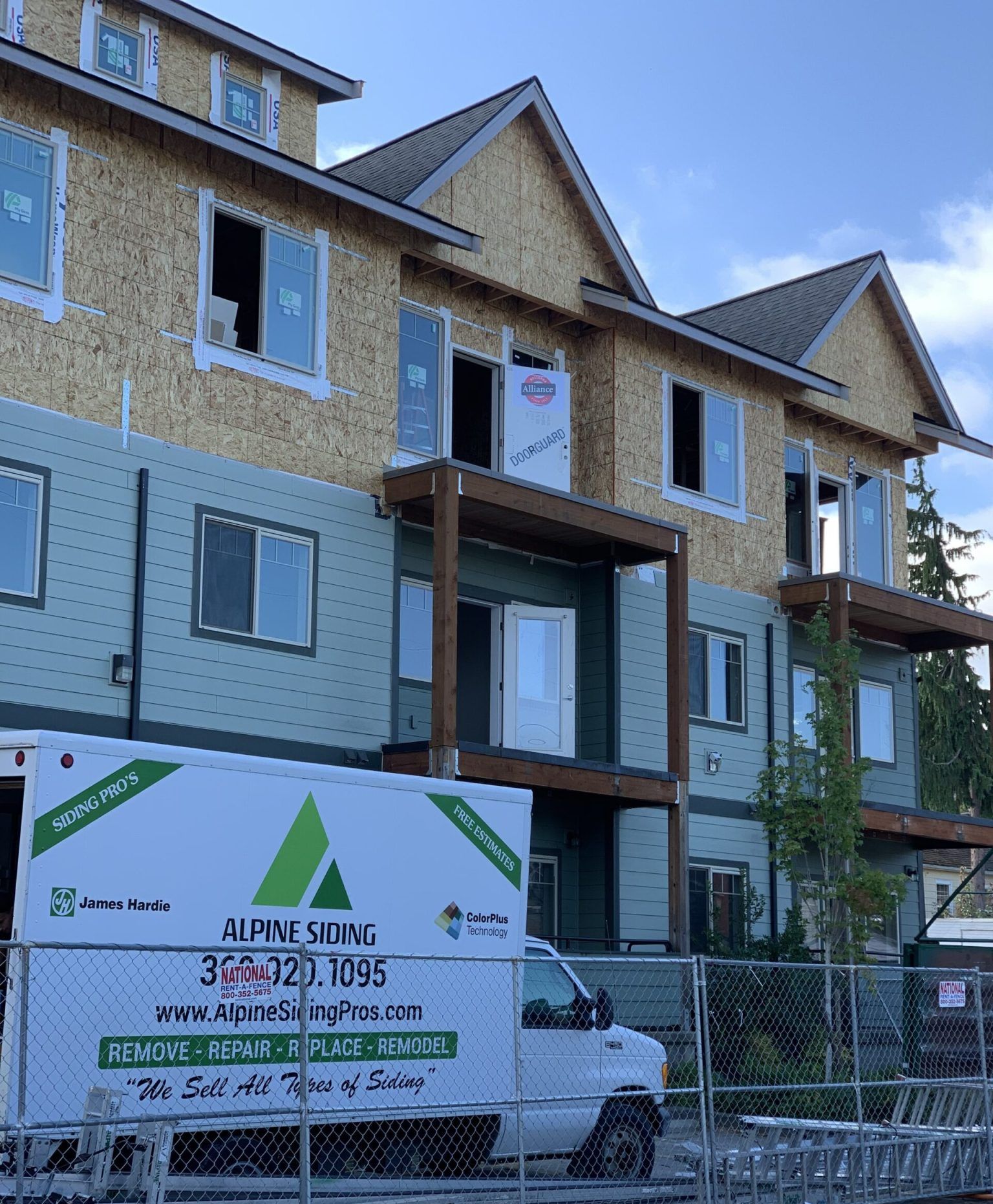
Birch Bay sits right on the water, and that location shapes how siding ages here. Wind coming off the Strait of Georgia and Semiahmoo Bay drives rain sideways into walls for days at a time, especially during fall and winter storms, which pushes moisture into seams and laps that would stay dry in a more sheltered inland yard. Add the region's long stretch of overcast, drizzly months, and siding rarely gets a real chance to dry out between rain events. That combination is exactly what moss and algae need to take hold, and it's exactly what wood rot needs to spread once water finds a way behind the cladding.
Inland toward Sudden Valley and the foothills around Lake Whatcom, homes see a different stress: freeze-thaw cycling. A siding board or a piece of trim that's already holding moisture can crack or delaminate when a cold snap freezes that water and it expands. It's a slower, quieter form of damage than a wind-driven leak, but it adds up over several winters.
There's also a code angle worth knowing about. The Washington State Energy Code sets requirements for the building envelope, including how walls are supposed to manage moisture and maintain a continuous weather-resistive barrier behind the siding. When siding fails or is installed with gaps, it's not just a cosmetic problem — it can compromise the drainage plane the energy code assumes is doing its job, which is part of why an annual walk-around inspection is worth the half hour it takes. This checklist is built around the specific failure patterns we see repeatedly on homes from Blaine and Birch Bay through Ferndale, Lynden, and Bellingham, not a generic list written for a drier climate.
Siding surface and panels
Moss, algae, and general growth
Trim, flashing, and moisture entry points
Foundation line and lower wall
Windows, doors, and wall penetrations
Gutters, downspouts, and drainage
Attic and interior signs
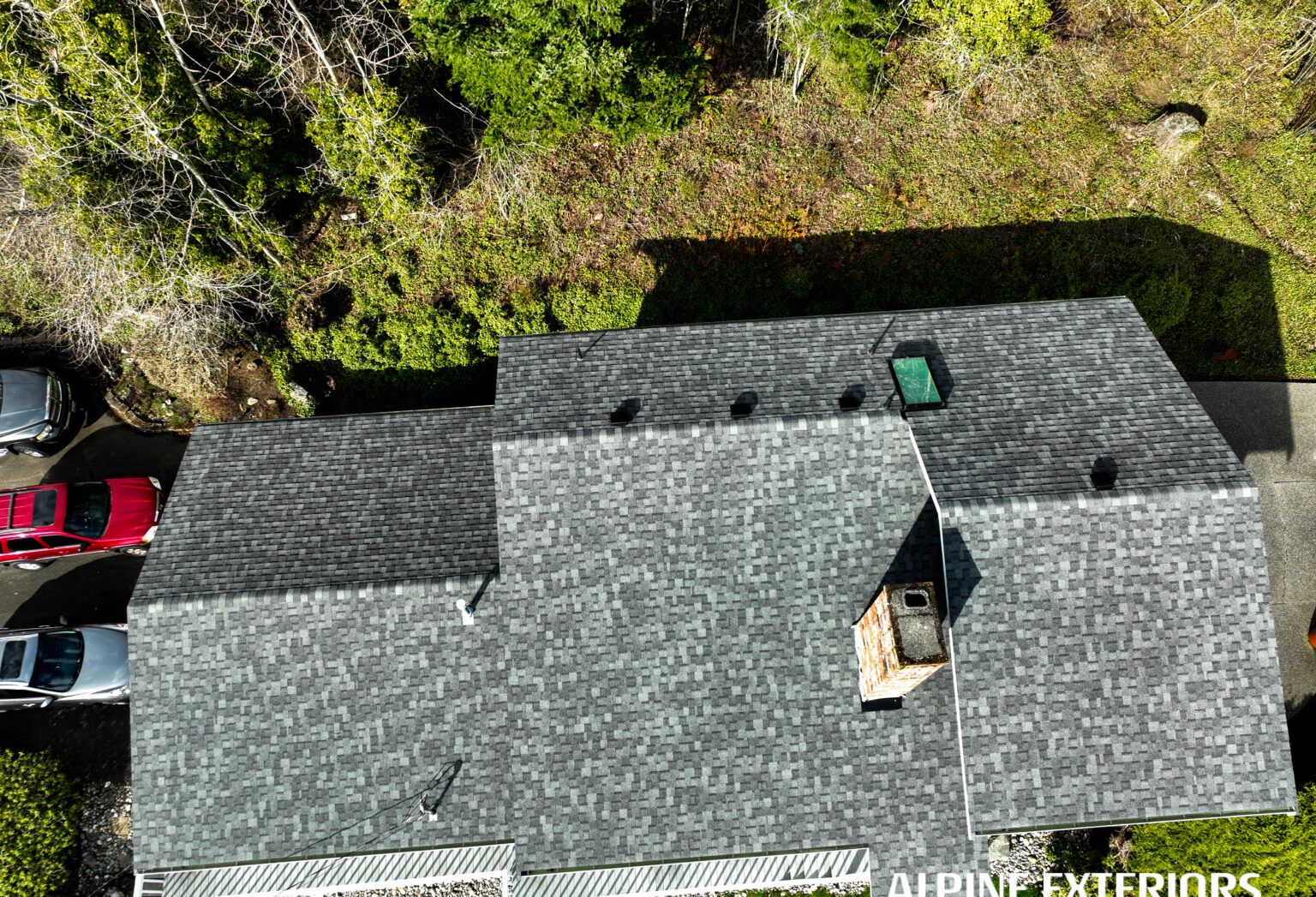
Not every item on this list means a major repair. Start by documenting what you find — a few photos with a note on the date and location make it much easier to track whether a spot is getting worse over a season. For surface issues like light moss growth or minor caulk shrinkage, a careful cleaning with a soft wash (not a pressure washer aimed directly at seams, which can force water further behind the siding) and fresh sealant is often enough.
If you find soft or spongy siding, staining that keeps returning after cleaning, or gaps at flashing and trim, treat it as a moisture problem rather than a cosmetic one. Water damage under siding tends to spread sideways and downward before it shows up as an obvious problem, so a small soft spot today can represent a larger area of wet sheathing by the time it's visible from the outside. It's worth being honest here: some of these fixes are within reach for a handy homeowner — recaulking a window trim, clearing a gutter, trimming back a shrub for airflow — while others, especially anything involving removed siding, flashing repair, or sheathing replacement, are not a good DIY project. Cutting into a wall assembly without understanding how the weather-resistive barrier and flashing are supposed to layer together can make a leak worse, not better.
Call a licensed siding contractor when you see soft or rotted wood, siding that's separated from the wall, recurring stains after you've cleaned and resealed, or any sign of moisture inside the attic or along interior walls. These are the situations where the damage is often larger than what's visible, and where an incorrect DIY fix can trap moisture instead of resolving it. It's also worth having a professional look at a home before a first winter in a new house, or after any unusually strong wind event off the water, since wind-driven rain can force water into gaps that were never a problem in calmer weather.
Alpine Exteriors inspects and repairs siding across Whatcom County — Bellingham, Ferndale, Lynden, Blaine, Birch Bay, Sudden Valley, and the islands — and holds Washington contractor license ALPINI751OW. A professional inspection typically includes checking behind accessible trim and at a few representative panels, not just what's visible from the ground, since a lot of the moisture damage that matters in this climate starts in places a homeowner can't easily see from the driveway.
A full walk-around at least once a year is a reasonable baseline, ideally in early fall before the wet season sets in, with a shorter check after any major windstorm off the Strait of Georgia. Homes right on the water or with a lot of shaded, north-facing wall area benefit from checking twice a year since moss and algae establish faster in those spots.
Not necessarily on its own — moss is extremely common on shaded siding throughout Whatcom County and isn't automatically a sign of a structural problem. It becomes a concern when it's thick enough to hold water against the wall for extended periods, or when you find soft wood or staining underneath it once it's cleaned off.
Light washing with a garden hose and a soft brush is generally fine, but a pressure washer aimed directly at siding seams, corner boards, or trim joints can force water behind the siding rather than just cleaning the surface. If you do use a pressure washer, keep the nozzle at a low angle, work with the lap direction of the siding, and avoid concentrating spray on any single seam.
It can, depending on the scope of work. The Washington State Energy Code addresses the building envelope's insulation and moisture management, so a repair that opens up the wall assembly — replacing sheathing, adding a weather-resistive barrier, or re-flashing — may need to meet current code requirements even on an older home. A licensed contractor can tell you whether a specific repair triggers those requirements.
If this checklist turned up a few items you're not sure about, or you'd rather have a second set of eyes before winter storms roll in off the water, Alpine Exteriors offers siding inspections throughout Birch Bay and the rest of Whatcom County. We'll walk the exterior with you, point out what's cosmetic versus what needs attention, and give you a straightforward cost range for any repairs — no pressure, no invented urgency. Reach out to schedule a visit.