
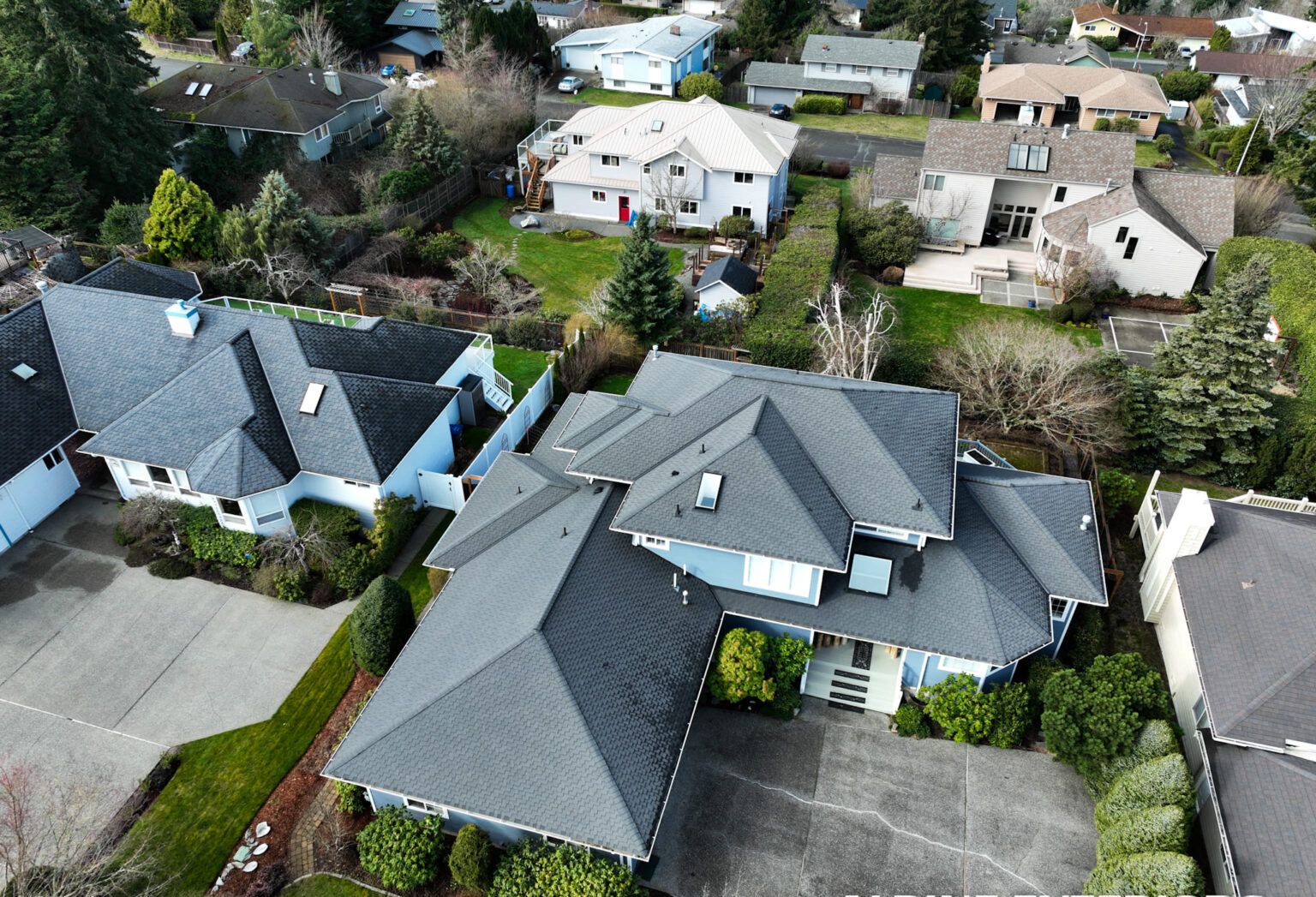
In Blaine and across the rest of Whatcom County, siding has to be installed under the wind and moisture provisions of the Washington State Building Code, which adopts the International Residential Code with state amendments, and the siding product itself needs a current code-compliance report, usually an ICC-ES evaluation report, showing it was tested to withstand the wind pressures our local exposure conditions actually produce. The building inspector who signs off on your job is not grading which brand you picked or how it looks from the street. They are checking whether the fastening pattern, the water-resistive barrier behind it, and the flashing at every window, door, and penetration match what that evaluation report and the manufacturer's printed instructions call for, because on this stretch of coastline those details are what keep wind-driven rain out of the wall.
Washington does not write its own siding code from scratch. Whatcom County and the City of Blaine both enforce the Washington State Building Code, the state's version of the International Residential Code, and the IRC handles siding mainly through two mechanisms working together. The first is exposure and wind pressure. Every site gets classified into a wind exposure category based on surrounding terrain, generally a sheltered, tree-lined, or built-up classification for protected lots and a more exposed classification for open, flat, or water-adjacent terrain, and that classification feeds directly into the wind pressure a wall assembly has to resist. The second mechanism is the fastening schedule, which spells out nail type, minimum length and shank diameter, spacing along studs, and how deep the fastener has to bite into structural sheathing or framing rather than just into foam trim or rigid board.
In practice, very few sidings on a real job are installed strictly to the code's generic prescriptive tables. Most manufacturers publish their own installation instructions and back them with an ICC-ES evaluation report or a similar code-recognized listing, and where those instructions are more restrictive than the base code, the more restrictive instructions govern. That is the paperwork an inspector actually wants referenced on the permit: the specific product's approved wind rating, and proof the crew followed its nailing pattern rather than whatever pattern was fastest that day. Corrosion-resistant fasteners matter here too. Given how much of the year this region spends wet, code and most manufacturer instructions call for hot-dip galvanized, stainless, or otherwise corrosion-resistant nails and screws, because standard fasteners streak and eventually fail behind siding that stays damp for months at a stretch.
Underneath the visible siding, code also requires a water-resistive barrier, typically a housewrap or building paper, installed shingle-fashion so water sheds down and out rather than behind the layer beneath it, with seams lapped or taped per the manufacturer's instructions. Flashing at windows, doors, deck ledgers, and any wall penetration has to integrate with that barrier in the correct order, not just get caulked afterward. None of this is unique to Whatcom County, but it is enforced here with real attention because wind-driven rain, not wind alone, is the failure mode inspectors are actually trying to prevent.
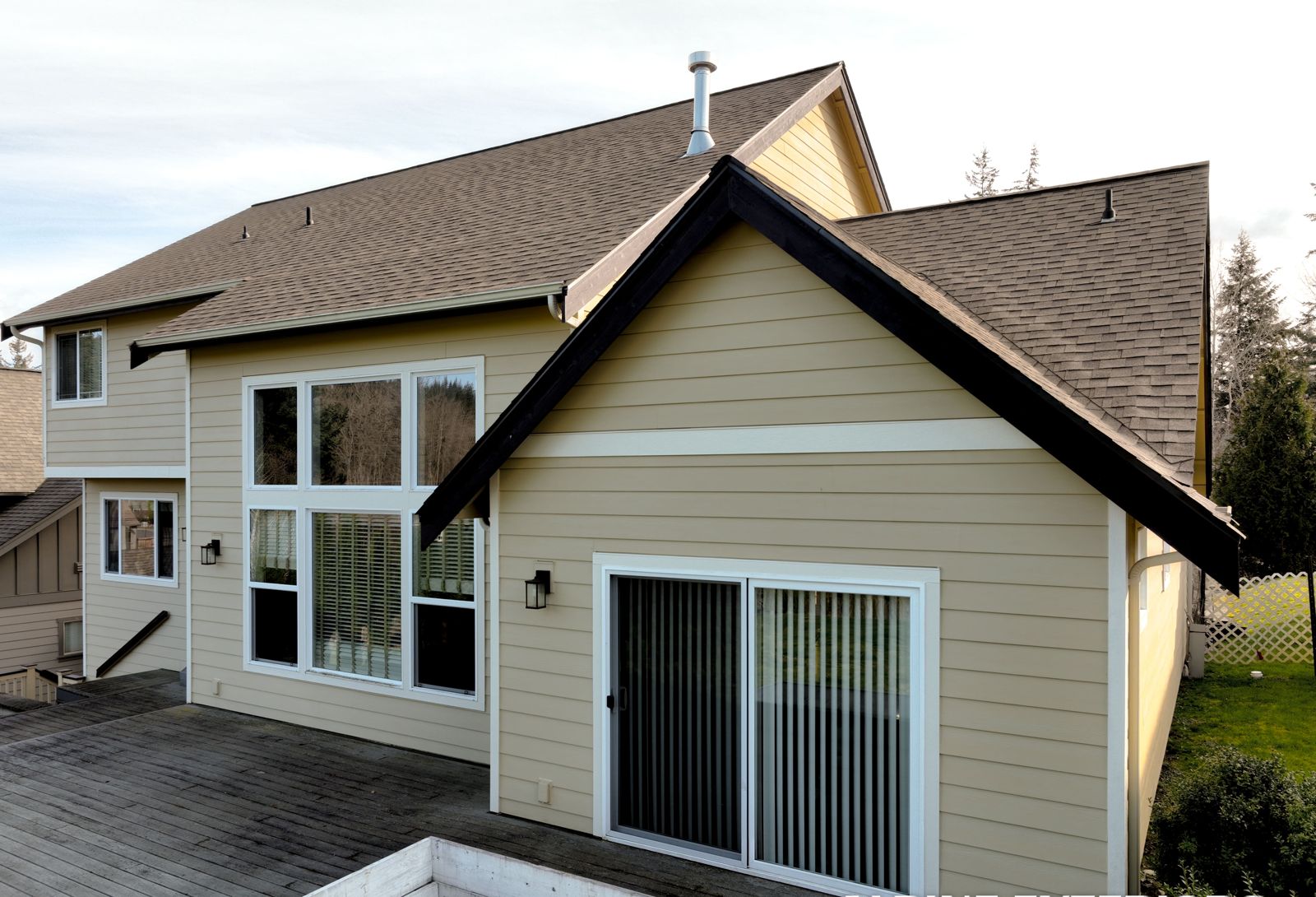
Whatcom County does not deal with hurricane-force design wind speeds, and nobody here needs a wind mitigation inspection report or the kind of storm-shutter and impact-glazing rules that Gulf Coast or Atlantic Coast jurisdictions require. What we deal with instead is a longer, wetter, steadier exposure problem. Bellingham and the surrounding lowlands see many more days of drizzle and sustained light-to-moderate rain each year than they see a handful of dramatic storms, and that matters because slow, persistent moisture finds every gap a fast downpour would simply run off of. Add wind on top of that persistent rain and you get wind-driven rain, water pushed sideways and upward into laps, seams, and fastener holes rather than water that just falls straight down and sheds.
Blaine, Birch Bay, and the Semiahmoo Peninsula sit right on Boundary Bay and the Strait of Georgia, and waterfront or near-waterfront lots there routinely fall into a more exposed wind category than a similar house tucked into the trees in Ferndale or set back on a large lot in Lynden. An open, unobstructed fetch across the water lets wind carry rain harder and farther inland than terrain-sheltered sites experience, which is exactly the kind of condition that pushes a house into a more exposed wind classification. Sudden Valley and other foothill neighborhoods add a different wrinkle: freeze-thaw cycling happens more often up there than down at sea level, and repeated freezing and thawing of trapped moisture behind poorly sealed trim, caulk joints, and inside corners accelerates cracking and separation over the life of a siding job, even though it rarely drops to the kind of hard, sustained freeze that concerns colder climates.
Shaded, north-facing walls anywhere in the county, especially on tree-covered lots in Bellingham and around Lake Whatcom, grow moss and algae far faster than open, sun-exposed elevations do, and untreated wood siding in those conditions is also more prone to slow rot at the bottom courses, behind shutters, and anywhere trim traps standing water. That is more a material and maintenance issue than a strict code issue, but it is a real regional condition that should inform what siding a homeowner chooses. Siding replacement projects of a certain scope can also trigger obligations under the Washington State Energy Code, which governs continuous insulation and vapor-permeable barrier requirements when wall assemblies are opened up, so a full re-side is not always just a cosmetic swap from the code's point of view. For the islands served out of Whatcom County, material delivery by barge or ferry adds lead time and narrows which products are practical to source and warranty locally, which is worth planning around before a contract is signed rather than after.
Start by asking whatever contractor bids your job to show you the specific product's ICC-ES evaluation report or equivalent code listing, and to explain, in plain terms, what wind exposure category your lot falls into and whether the proposed product is rated for it. This matters far more on an open waterfront lot in Blaine or Birch Bay than on a sheltered inland lot, but it costs nothing to ask on either kind of site, and a contractor who cannot answer the question has not actually looked at the fastening schedule for your house. Ask to see the fastening pattern written down, not just described verbally, and ask what fastener material they intend to use given how much of the year this area stays damp.
Confirm the water-resistive barrier and flashing plan before the old siding comes off, not after, since that is the point at which corners get cut if nobody is watching. Ask specifically how window and door flashing will integrate with the housewrap, and how deck ledgers, hose bibs, and other wall penetrations will be handled. If your home is in Sudden Valley or another foothill area, ask how joints and trim will be sealed against freeze-thaw movement, since a caulk joint that looks fine in August can open up after a winter of freezing and thawing. If moss and algae are already visible on your current siding, particularly on shaded or north-facing walls, treat that as useful information about which sides of the house need the most attention to drainage and material choice, not just a cosmetic problem to power-wash away.
Pull the actual building permit through Whatcom County or the City of Blaine rather than treating siding as work that flies under the radar, and expect an inspector to check the items above at the appropriate stage of the job. Be honest with yourself about tradeoffs: a wind-rated product with a heavier fastening schedule and more careful flashing detail generally costs more in labor time than a fast, minimum-code install, and that shows up in the bid. It is money spent on the parts of the job nobody sees once the siding is up, which is exactly why it is worth asking about upfront instead of assuming every bid covers it the same way. Alpine Exteriors has built its process in Whatcom County around walking homeowners through these code and product-approval questions before a contract is signed, not after a wall has already been opened up, and holds Washington contractor license ALPINI751OW for exactly this kind of work.
In most cases, yes. Re-siding a home typically requires a building permit through Whatcom County or the City of Blaine's building department, and that permit is what triggers an inspector checking the fastening schedule, water-resistive barrier, and flashing details described above. A straightforward repair of a small damaged section may not need one, but a full re-side generally does, and it is worth confirming with the local building department before work starts rather than assuming.
There is no single number that applies to every lot, because the required wind rating depends on your specific site's exposure category, which is driven by how open or sheltered the terrain around your house actually is. Waterfront and near-waterfront properties along Boundary Bay, the Strait of Georgia, and the Semiahmoo Peninsula are more likely to fall into a more exposed category than a similar house set back in the trees, so the honest answer is that your contractor should evaluate your specific lot rather than quoting a generic figure.
It can, depending on the scope of the work. Once wall assemblies are opened up for a substantial re-side, continuous insulation and vapor-permeable barrier requirements under the Washington State Energy Code may come into play, whereas a more limited job might not trigger those provisions at all, so it is worth asking your contractor or the local building department how your specific project is classified before assuming either way.
Inspectors are primarily looking at the fastening pattern and fastener type against the product's approved schedule, the presence and correct lapping of the water-resistive barrier, and flashing integration at windows, doors, and other wall penetrations, since those details determine whether wind-driven rain stays out of the wall assembly over the life of the siding rather than just how the finished product looks from the curb.
If you are planning a siding project anywhere from Bellingham and Ferndale out to Blaine, Birch Bay, Lynden, Sudden Valley, or the islands, it is worth getting a site-specific look at your home's wind exposure and current wall condition before comparing bids on material alone. Alpine Exteriors serves homeowners throughout Whatcom County under Washington contractor license ALPINI751OW and can walk you through what your specific lot actually requires, what a straightforward job looks like, and where the real cost differences between options come from. Reach out to schedule a walk-through and get a written estimate that spells out the product, the fastening approach, and the flashing plan in plain language before any work begins.