
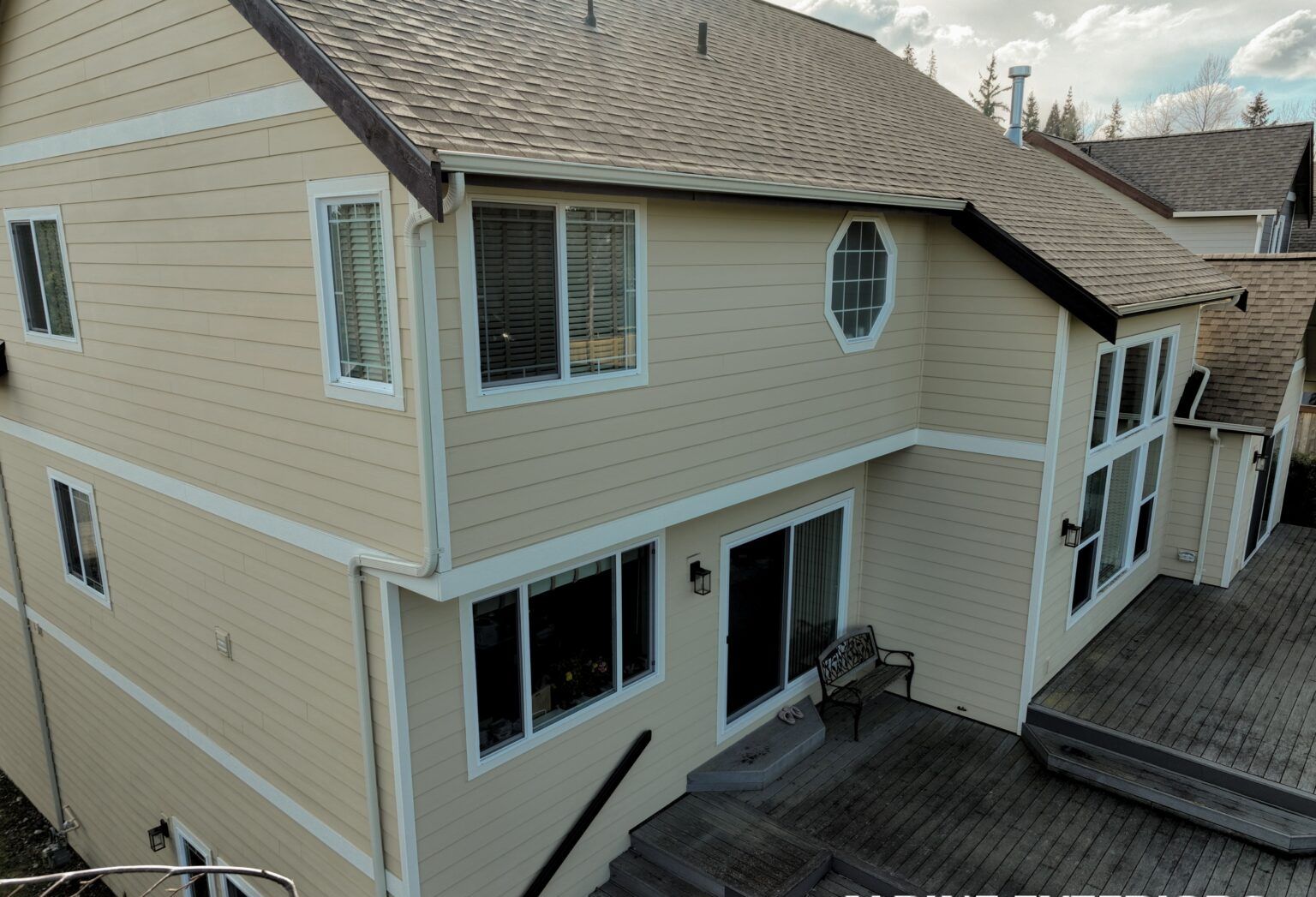
If a windstorm has come through Silver Beach or anywhere along Bellingham Bay, your siding needs a walk-around inspection within a few days, not a few weeks. Wind-driven rain off the water finds every gap in flashing and trim faster than most homeowners expect, and moisture that gets behind siding here rarely dries out on its own before it causes rot.
Silver Beach sits close enough to Bellingham Bay that storms arriving from the Strait of Georgia and the Strait of Juan de Fuca hit the neighborhood with a mix of wind and rain that most siding materials were never tested against in a lab. The problem in Whatcom County is almost never a single dramatic event. It's the accumulation: a fall windstorm loosens a piece of trim, winter rain gets behind it, and by the time anyone notices a soft spot on the wall, the sheathing underneath has been wet for months.
Wind gusts off the bay during a fall or winter low-pressure system can drive rain sideways into lap siding, especially on the west- and southwest-facing walls of a house, which is the exposure most Silver Beach homes present toward the water. That sideways rain doesn't need a hole to get in. It needs a nail pop, a hairline gap at a butt joint, a cracked caulk line around a window, or house wrap that was installed with the laps running the wrong direction.
Once water is behind the siding, Whatcom County's climate makes the drying-out part hard. We don't get long stretches of hot, dry weather that pull moisture back out of wall assemblies the way homes in drier climates get. Instead we get months of overcast, damp air, which means wet OSB or plywood sheathing can stay wet, and wet wood behind siding is exactly the condition that supports rot fungus and, over time, structural softening at the studs and sill plate.
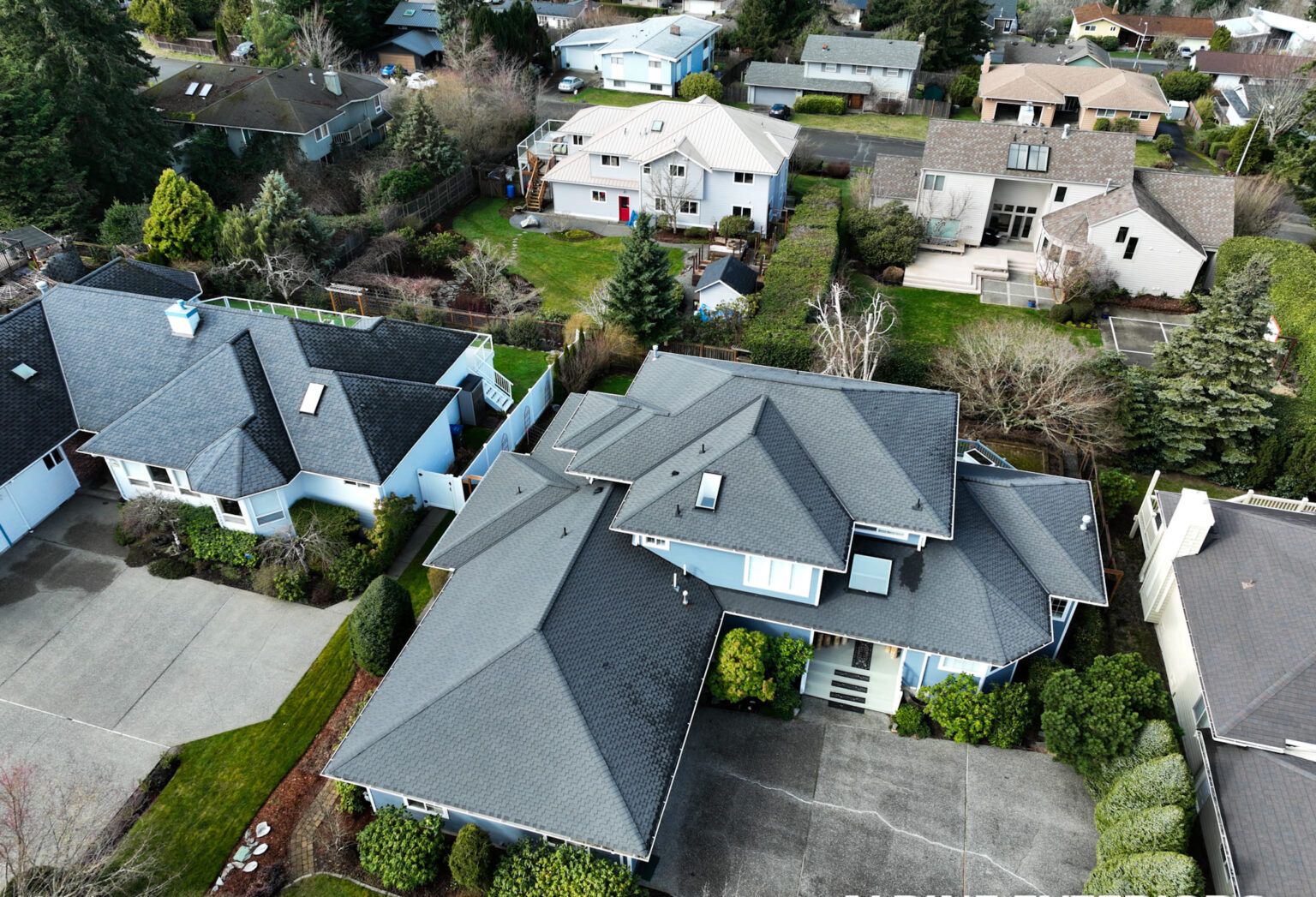
A few things separate storm damage here from what you'd read about in a generic siding article written for a different climate. First, this isn't hurricane country, and none of the wind mitigation thinking that applies to hurricane-prone regions is relevant to a Whatcom County home. There's no wind mitigation inspection form or hurricane strapping requirement here. What matters instead is water intrusion and the slow damage that follows it.
Second, moss and algae growth on siding is a constant low-grade issue in this climate, not an occasional cosmetic annoyance. The persistent rain and the shade from mature trees around many Silver Beach and Sudden Valley properties keep siding damp for long stretches, and moss holds moisture against the surface even after a storm has passed, which slows drying and speeds up rot in wood-based products.
Third, freeze-thaw cycling is a real factor for homes up toward the foothills and higher elevations around Lake Whatcom and Sudden Valley, even though it's less of a factor right down at the waterline in Silver Beach itself. Water that gets into a crack in trim or siding and then freezes expands the crack, and a few freeze-thaw cycles over a winter can turn a hairline gap into a real entry point.
Fourth, any siding work done on a home here has to meet the Washington State Energy Code, which sets requirements for the wall assembly's insulation and air-sealing performance. That matters after storm damage because a repair that only patches the visible siding without addressing the water-resistive barrier, insulation, or air sealing underneath can leave a home out of compliance and still vulnerable to the next storm.
Start outside, from the ground, with binoculars if you have them, before you get on a ladder. Walk the full perimeter of the house and look specifically at the walls facing the bay and the Strait, since those are the ones that take the brunt of wind-driven rain. Look for siding panels or lap boards that look slightly out of alignment compared to their neighbors, which can mean a fastener has pulled loose.
If you find soft siding, visible gaps, or missing pieces, take dated photos before anything is touched or repaired, because that documentation matters for the next step. On the insurance side, most homeowner policies cover sudden wind damage to siding, but they typically draw a hard line around damage attributed to gradual deterioration, deferred maintenance, or pre-existing rot, so an adjuster who finds soft, rotted sheathing behind a storm-damaged panel may treat some or all of the claim as a maintenance issue rather than a covered loss. It helps to have your policy's wind and water damage language in hand before you file, and to get a written scope from a contractor that separates what the storm caused from anything that was already degrading before the storm.
Alpine Exteriors provides that kind of documented estimate when we do a storm damage inspection, because a vague verbal description rarely holds up well in a claims conversation. It's also worth being honest with yourself about timing: a small area of soft siding found and repaired now is a much smaller job, in both scope and cost, than the same area left through another wet Whatcom County winter, when the rot has a chance to spread into the framing itself.
Storm damage tends to show up as physically displaced or missing material, cracked caulk that lines up with the direction the wind was blowing, or fresh interior staining that wasn't there before the event. Long-term moisture damage tends to be soft or spongy siding, dark staining that's been there a while and has faded or spread gradually, and moss or algae growth that's clearly been established for more than one season. In practice the two often overlap, since a storm frequently finishes off a spot that was already weakened by months or years of dampness, and a contractor doing a physical inspection can usually tell the difference by probing the material and checking the sheathing underneath.
Most standard homeowner policies in Washington cover sudden, wind-driven damage to siding, but coverage usually excludes damage caused by gradual deterioration, poor maintenance, or pre-existing rot. Whether a claim gets approved often comes down to how clearly the damage can be tied to a specific weather event versus ongoing wear, which is why photos, a dated inspection, and a written contractor scope matter. Talk to your insurance agent about your specific policy language before assuming either outcome.
Moss and algae are more than cosmetic in this climate. They hold moisture directly against the siding surface long after a storm or rainy stretch has passed, which slows drying and, on wood-based siding products in particular, creates the sustained dampness that rot fungus needs to take hold. On fiber cement or vinyl the risk is lower since those materials don't rot, but moss can still trap grit and moisture that degrades paint and caulk lines faster over time.
Yes, siding repair or replacement work in Washington is subject to the Washington State Energy Code, which addresses the performance of the wall assembly, including insulation and air sealing, not just the visible exterior material. A patch that only replaces the surface siding without checking the water-resistive barrier and insulation behind it can leave gaps in both moisture protection and energy performance, so it's worth asking a contractor whether their repair scope addresses the whole wall assembly or just the outer layer.
If a recent storm left you with loose, cracked, or soft siding anywhere from Silver Beach to Sudden Valley, Bellingham, Ferndale, Lynden, Blaine, Birch Bay, or the islands, it's worth having someone look at it before the next round of Whatcom County rain finds its way behind the wall. Alpine Exteriors is a licensed Washington siding contractor, license ALPINI751OW, and we do storm damage inspections with the kind of documentation that holds up in an insurance conversation. Reach out to schedule a walk-through of your home's exterior, and we'll give you a straight assessment of what the storm actually damaged, what was already a problem before it, and what it will take to fix it right.