
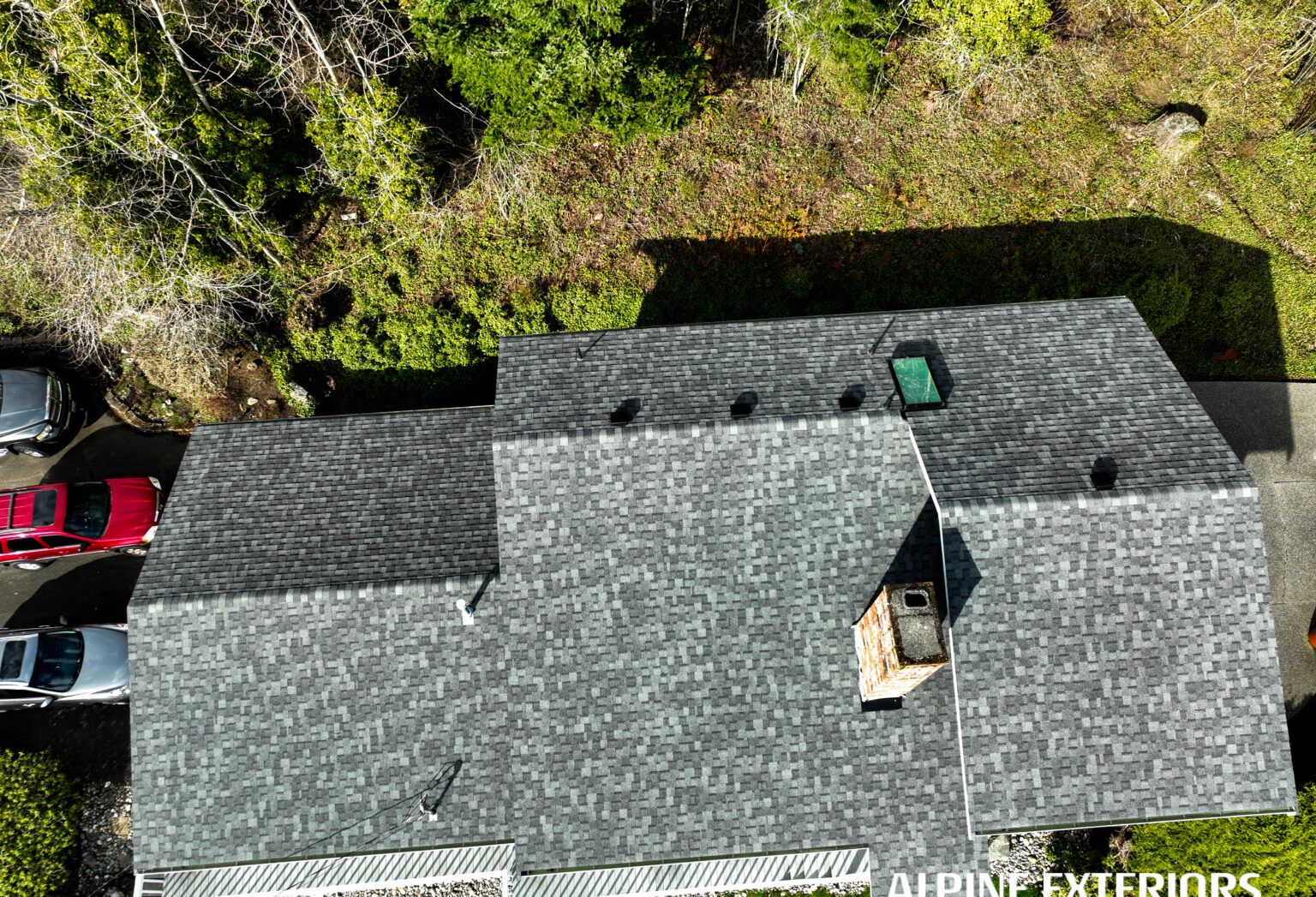
Homes in the Samish neighborhood sit up in the hills south of downtown Bellingham, tucked under a heavy canopy of Douglas fir and cedar along the Samish Way corridor. That elevation and tree cover feel protective, but they come with their own siding problems: shade that never quite dries out, needle litter that dams water against walls, and enough exposure to wind off Bellingham Bay and the Strait of Georgia during a southwesterly blow to drive rain sideways into anything that isn't sealed tight. Add close to nine months of rain most years and the occasional hard freeze that follows a wet stretch in the foothills, and it's not surprising that siding on Samish homes tends to show wear in specific, recognizable ways. Below is what to look for, what's actually happening behind the wall, and how to tell the difference between a repair that can wait for drier weather and one that needs attention now.
None of these show up for no reason. Siding is a system, not a single layer of material, and once water finds a way past the outer surface, it tends to travel — so the spot where you see a stain isn't always where the problem started.
Vinyl and hardboard siding are made to lie flat against the wall with a small amount of room to expand and contract with temperature. When you see waviness or bubbling, it usually means moisture has gotten in behind the panel — often through a nail hole, a butted seam, or a spot where the house wrap failed — and the sheathing or panel backing underneath has started to swell. On older homes in Samish with hardboard (particleboard-style) siding from the 1980s and 90s, this is one of the earliest visible signs of trouble, because that material swells and delaminates once it takes on water, long before it looks obviously rotten.
Press gently on a suspect area. If it gives more than the panel around it, or if a screwdriver sinks in without much resistance, water has been sitting in the wall assembly long enough to soften the wood fiber underneath — whether that's the siding itself, the sheathing, or in bad cases the framing. This almost never stays isolated; if there's a soft spot, moisture has usually spread further than what's visible from outside.
Green-black streaking is extremely common on the shaded, tree-covered lots that make up a lot of Samish, and it's the sign homeowners here are most likely to underestimate. Moss and algae themselves don't eat siding the way rot does, but they hold moisture against the surface around the clock, which keeps the material wet far longer than an open, sunny wall ever would. Over a few winters, that constant dampness breaks down caulk, paint, and the surface of wood or hardboard siding, opening the door for the rot problems described above. A shaded north wall under fir trees can look fine one year and be visibly failing three years later if the moss is never addressed.
If a wall needs repainting every year or two instead of every seven to ten, that's usually not a paint quality problem — it's a sign the substrate underneath is already damp or degrading, so the paint film can't bond and cure properly. Chalking (a powdery residue that rubs off on your hand) is normal aging for older paint, but combined with peeling in the same area, it points to moisture working from behind rather than sun exposure from the front.
Caulk and sealant have a service life of roughly five to ten years in this climate, shorter on south- and west-facing walls that see more temperature swing. Once it shrinks, cracks, or pulls away — especially around window and door trim, at butt joints, and at inside corners — every wind-driven rain event pushes water directly behind the siding at that point. This is one of the cheaper problems to catch early and one of the most expensive to ignore, since it's usually the direct entry point for the rot and soft-spot issues above.
By the time moisture shows up as a smell or a soft patch on interior drywall, water has been getting through the wall assembly for a while — this is not an early sign, it's a later-stage one. It typically means the siding, house wrap, and flashing have all been breached in the same spot, or that the problem has been ongoing long enough to migrate through the sheathing. Any musty smell tied to an exterior wall is worth investigating right away, not scheduling for later.
Wind off Bellingham Bay and the Strait doesn't hit Samish as directly as it hits waterfront neighborhoods, but the higher elevation still gets real gusts during fall and winter storms. Siding that's lost its grip — nails visibly backed out, panels that move when you push on them, or a rattling sound in wind — has usually swollen and shrunk enough times from repeated wetting and drying that the fasteners can no longer hold it tight. Loose siding also lets more wind-driven rain in behind it than intact siding does, so this tends to accelerate the other problems on this list.
The bottom few courses of siding, inside and outside corners, and the areas under window sills take the most water exposure on any home in this climate, since that's where runoff, splash-back, and gravity all concentrate. On Samish lots with limited ground clearance or plantings tight against the foundation, splash-back off soil or mulch adds to this. Rot here often starts small — a slightly soft, darker patch — and spreads along the grain of the wood or the seams of the panel if it isn't cut out and repaired.
Not every sign on this list means the same thing, and treating a cosmetic issue like an emergency (or an active leak like it can wait for summer) both lead to worse outcomes. Here's a rough way to sort them.
These all point to water actively getting behind the siding. Every additional wet season makes the repair bigger and pushes it from a patch-and-paint job toward a section (or whole-wall) replacement.
These are maintenance items. They matter — left alone through a few more Whatcom County winters, most of them turn into the urgent list above — but they don't require emergency scheduling. A cleaning, re-caulking, and repaint cycle timed for a dry stretch is usually enough.
If you're seeing one or more of the signs above, the practical next step is a hands-on inspection rather than guessing from the ground. A few things worth doing before you call anyone:
If replacement turns out to be the right call for a section or the whole house, it's also a reasonable point to think about more than just the siding material itself. Washington State Energy Code has tightened wall insulation and air-sealing requirements over the past several code cycles, and a siding tear-off is one of the few times continuous exterior insulation and proper house wrap can be added without extra demolition cost. It's not required just to patch failing siding, but it's worth asking about if you're already opening up the wall. Alpine Exteriors, WA contractor license ALPINI751OW, walks Samish homeowners through material options — fiber cement, engineered wood, and vinyl all perform differently in this climate — and through where energy code upgrades make sense and where they don't pencil out for a smaller repair.
It depends heavily on scope. A localized repair — cutting out a rotted section, replacing a few courses, and re-caulking — is a modest, targeted cost, often in the low thousands of dollars depending on how much sheathing underneath also needs replacing. A full re-side of an average home runs considerably more, generally landing somewhere in the mid five figures depending on square footage, material choice, and how much of the underlying wall assembly needs attention. The only way to get a number that means anything is a walk-through, since the visible damage rarely tells the whole story.
Often a section repair is the right call, especially if the damage is limited to one or two walls and the rest of the siding presses firm and shows no soft spots. The exception is when the failing sections share the same age and material as the rest of the house — in that case, a repair may look fine for a year or two before the next section starts failing the same way, and it can be more cost-effective to plan a fuller replacement rather than repeat repairs one wall at a time.
It varies by material and by exposure more than by any fixed number. A shaded, moss-prone wall under fir trees wears differently than a sunny, open wall on the same house, and a wall that catches wind-driven rain off the Bay wears differently than a sheltered one. Vinyl and well-maintained fiber cement tend to hold up longest in this climate; older hardboard products from past decades are usually the first to show the swelling and delamination described above, regardless of how well they were maintained.
New siding on its own is mostly a weather barrier, not an insulation upgrade — the energy benefit comes from what goes on underneath it, not the siding material itself. When a re-side project adds continuous exterior insulation and properly seals the house wrap and window flashing to current Washington State Energy Code expectations, homeowners typically notice less draftiness and more consistent indoor temperatures. It's a reasonable side benefit to plan for during a re-side, but it isn't a reason on its own to replace siding that's otherwise sound.
If your Samish home is showing any of the signs above, it's worth getting a straight answer about what's actually happening behind the wall before deciding between a repair and a replacement. Alpine Exteriors serves Bellingham, Ferndale, Lynden, Blaine, Birch Bay, Sudden Valley, and the islands, and can walk your property, check the areas most exposed to this region's rain and wind, and lay out what's urgent versus what can wait. Reach out to schedule an inspection and get a clear picture of where your siding stands.