
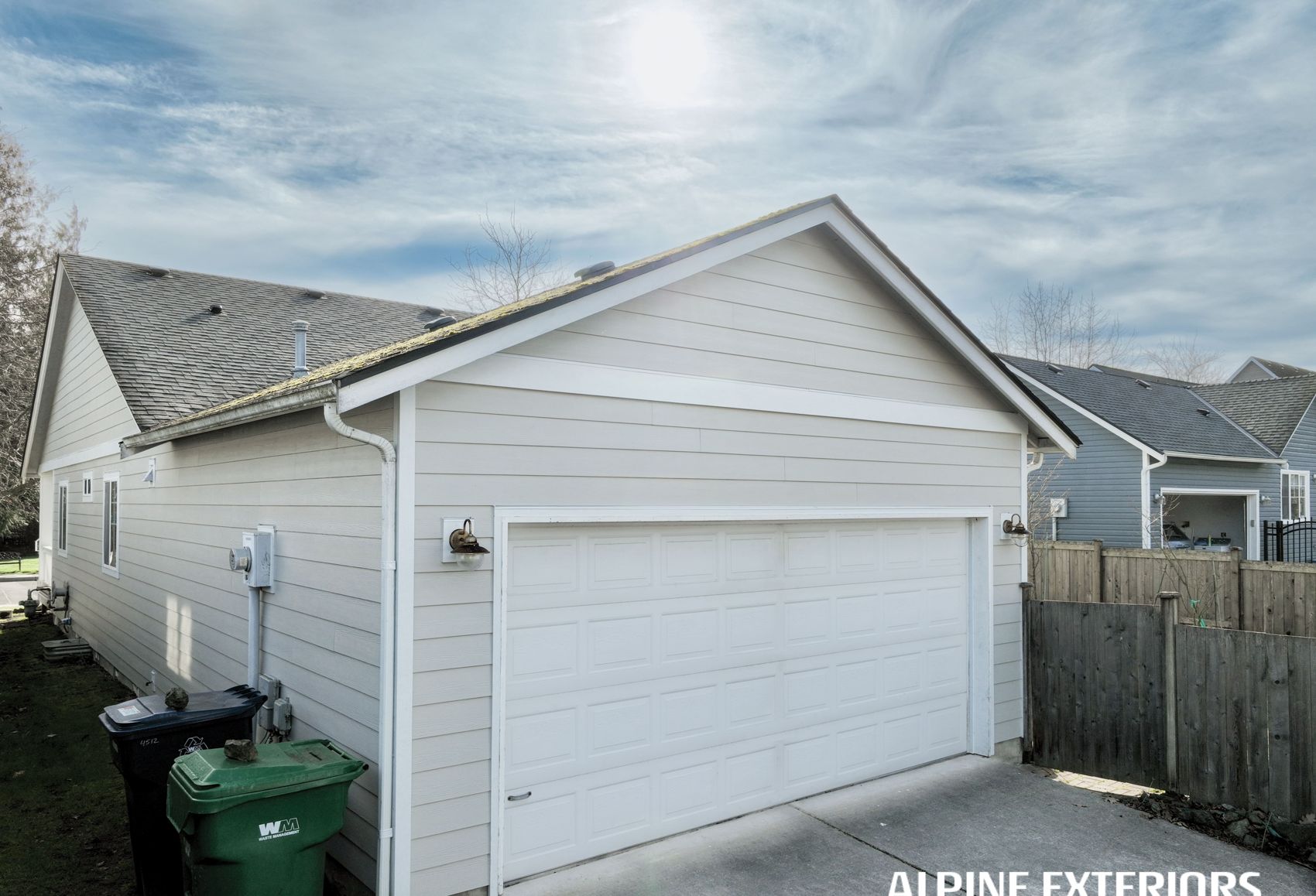
In Chuckanut and the rest of Whatcom County, siding has to be installed exactly the way its manufacturer's tested installation instructions say, using fasteners and spacing that match the product's ICC-ES evaluation report — that's the legal standard under the Washington State Building Code, not a suggestion. A Whatcom County building inspector checking a Chuckanut job is really checking two things: does the siding match its own listed installation method, and does the wall assembly behind it meet the Washington State Energy Code for water-resistive barrier and insulation continuity.
That sounds simple, but Chuckanut's terrain complicates it. Lots along Chuckanut Drive and up into the mountain's lower slopes sit at elevations and exposures that don't match the flat, sheltered building sites most siding is designed and marketed for. A product that performs fine on a protected lot in Ferndale can be under-fastened for a bluff-top house catching wind straight off Bellingham Bay and the Strait of Georgia.
Washington doesn't run a separate state product-approval program the way some hurricane-prone states do. Instead, the Washington State Building Code (which adopts the International Residential Code with Washington-specific amendments) requires exterior wall coverings to be installed per the manufacturer's instructions, and those instructions are themselves backed by an ICC-ES evaluation report or equivalent testing that establishes allowable wind pressure, fastener type, fastener spacing, and lap requirements. When an inspector pulls a permit file for siding work in Chuckanut, they're comparing what's on the wall to what that report and those instructions actually specify — not eyeballing it for "looks sturdy enough."
Fastening is where most failures start, and it's rarely dramatic. It's a nail gun set to drive fasteners flush or slightly overdriven into fiber cement, which crushes the material's fastener zone and lets panels work loose under repeated wind-driven rain. It's ring-shank nails substituted with smooth shank because that's what was on the truck that day. It's fastener spacing stretched from 16 inches on-center to 24 because it goes faster. Every one of those shortcuts can pass a casual glance and still fail during the first real windstorm off the water.
Behind the siding, the Washington State Energy Code governs the water-resistive barrier, any continuous insulation, and how penetrations and seams are sealed and flashed. This layer matters as much as the siding itself in this climate — Whatcom County's persistent rain means a wall assembly is judged less on whether water ever reaches the sheathing (it will, eventually, at some seam or fastener) and more on whether that water has a clear drainage path back out. A code-compliant rainscreen gap, correctly lapped house wrap, and properly flashed window and door openings do more for long-term durability here than the siding brand does.
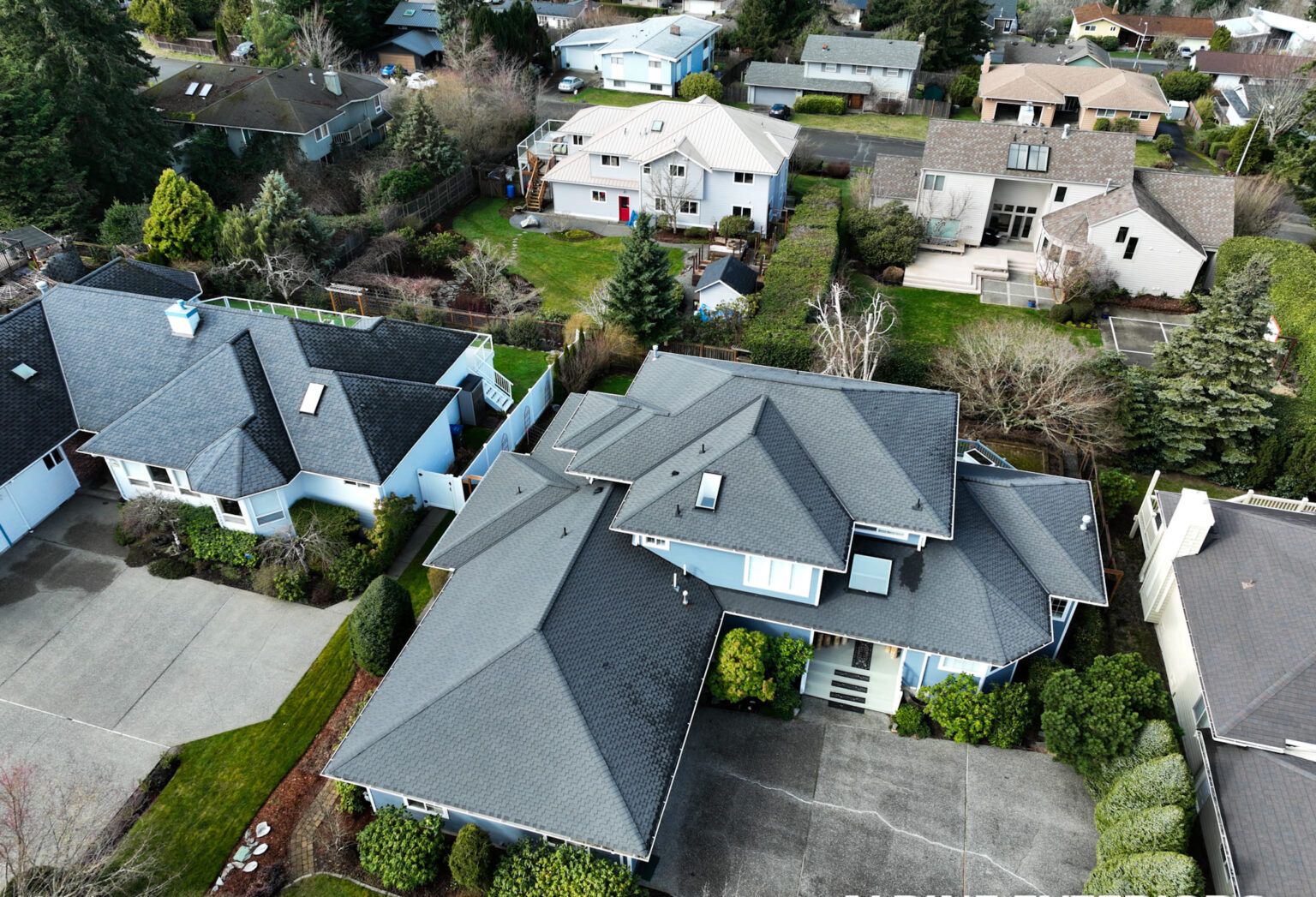
Chuckanut isn't generic Whatcom County. A handful of local conditions push it toward the stricter end of what the code allows:
Most of this comes down to a handful of decisions before and during the job, not after.
Alpine Exteriors has done enough of this work on Chuckanut Drive, around Chuckanut Bay, and up into the surrounding foothills to know where the shortcuts tend to hide, and we build every fastening schedule and drainage plan around the specific exposure of your lot rather than a generic Whatcom County default. Alpine Exteriors holds Washington contractor license ALPINI751OW and pulls permits on every re-side we quote.
Not a special product category, but yes to a stricter installation. The Washington State Building Code applies the same wind-exposure framework everywhere in the county, and it assigns rougher, more open sites — like bluff-top or shoreline-facing lots along Chuckanut Drive — a higher exposure category than sheltered inland lots. That higher category typically means tighter fastener spacing and, in some cases, a heavier-gauge product than what would pass on a protected lot a few miles away, even though it's the same siding line.
Inspectors generally verify fastener type, spacing, and edge distance against the manufacturer's installation instructions and any referenced evaluation report, along with confirming the water-resistive barrier and flashing details before siding closes the wall in. On a straightforward re-side, some of this happens at a rough-in or mid-installation checkpoint rather than only at the end, which is exactly why it's worth having your contractor call for that inspection instead of skipping it.
It's not automatically wrong, but it's a harder environment for it. Vinyl's seams and channels can trap moisture longer under heavy tree cover than they would on an open, sunnier lot, and that favors materials — like fiber cement — that tolerate sustained dampness better and hold paint or factory finish longer under moss and algae growth. It's a legitimate budget option, just one worth pairing with extra attention to gutter, drip-edge, and clearance detailing.
Rot and improper clearance at the bottom courses, almost every time. Older siding installed too close to grade, retaining walls, or dense landscaping doesn't meet current clearance expectations, and years of standing moisture at that lowest course is usually what triggers the re-side in the first place. It's rarely the siding material that failed — it's the detailing around it.
If you're planning a re-side or repair on Chuckanut Drive, around Chuckanut Bay, or anywhere else in Whatcom County, Alpine Exteriors will walk your lot, identify its actual wind exposure, and put the fastening schedule and drainage details in writing before any panel goes up. Call Alpine Exteriors to schedule an on-site assessment and get a written scope that matches your home's real exposure, not a generic estimate.