
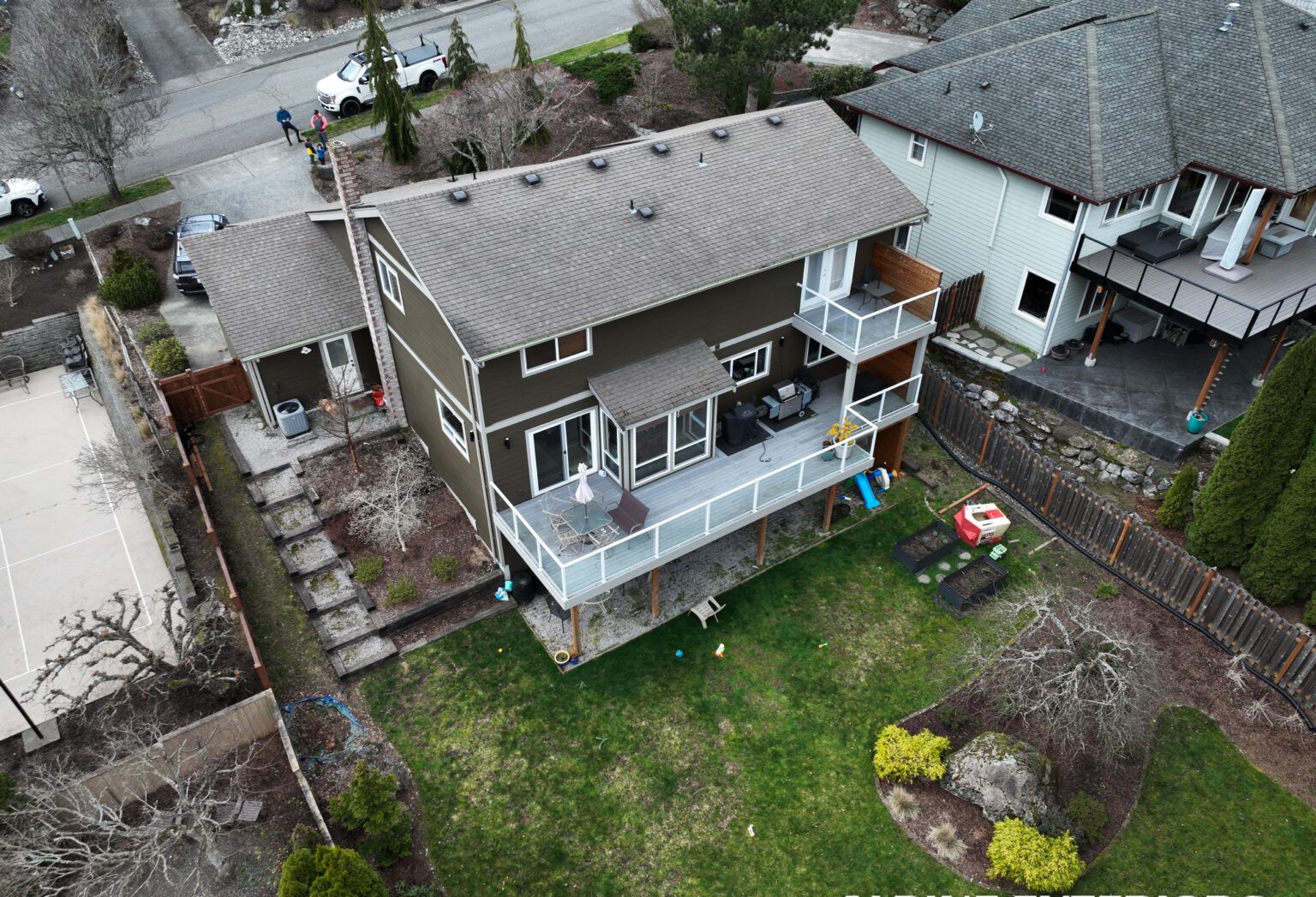
Most siding problems in Birchwood and the surrounding Bellingham neighborhoods start small and localized — a soft board near a downspout, moss creeping up a north wall, a cracked panel from a windstorm — and can be repaired without touching the rest of the house. Full replacement only makes sense once damage has spread past a section or two, moisture has reached the sheathing behind the siding, or the material itself (older hardboard, some early-generation fiber cement) has failed at a systemic level rather than a spot level.
Birchwood is one of Bellingham's older established neighborhoods, with a housing stock that ranges from mid-century ramblers to newer infill on the same lots. That mix matters for siding repair because it means a lot of homes are wearing their original cladding, or a re-side from decades ago, and the material underneath a repair call could be cedar lap, T1-11 plywood panel, older hardboard, vinyl, or fiber cement, depending on when the house was built or last touched. Each of those behaves differently when it fails.
Cedar lap siding, common on the older homes in the neighborhood, tends to fail at butt joints and lower courses first — the places where two boards meet, or where the siding sits closest to grade and splashback. Water gets behind the joint, the wood can't dry out fast enough between rain events, and the board goes soft. You'll usually feel it before you see it: press a screwdriver handle or your thumb into the board near a joint, and spongy give is the tell.
T1-11 and other panel sidings, which show up on a fair number of the more utilitarian additions and garages in Birchwood, fail differently — usually along the bottom edge and at any spot where the factory-applied coating has worn through, letting the plywood face veneer delaminate. Once that starts, patching rarely holds for long; the panel is telling you it's done.
Vinyl siding cracks and warps rather than rots. Impact damage — a ladder, a branch, a baseball — cracks a panel outright, and thermal cycling (cold snaps followed by sun) can make older, more brittle vinyl crack on its own, especially on sides of the house that face full afternoon sun in summer and hard frost in winter. Vinyl is also the easiest of the common sidings to spot-repair, because panels are designed to interlock and slide out individually — the challenge is finding a matching color, since vinyl fades over the years and manufacturers change their color lines.
Fiber cement (James Hardie and similar products) holds up the best against rot by a wide margin, since it's not wood, but it isn't immune to problems. Poor original installation — caulk where a manufacturer's instructions call for a gap, fasteners driven at the wrong spot, boards installed too close to grade or a deck surface — causes localized failures that look like moisture damage even though the board itself is fine. That's a repair, but the fix is correcting the installation detail, not just replacing the board the same way.
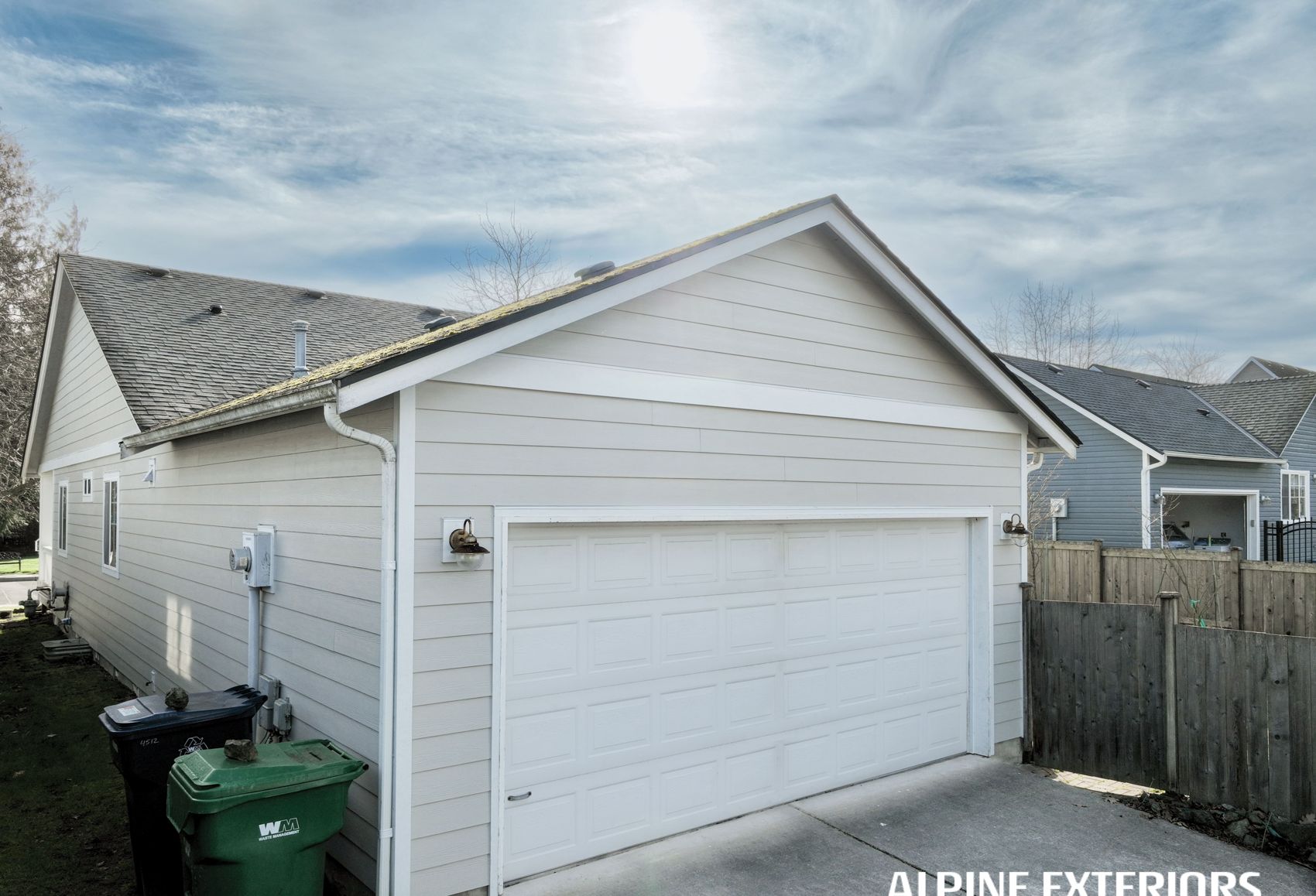
Whatcom County's siding problems are almost entirely moisture-driven, and Birchwood's tree cover and lot layout shape exactly where that moisture shows up. A few things specific to this area worth knowing:
Start with a walk-around, ideally twice a year — once in early fall before the wet season sets in, and once in spring after it's passed. Look specifically at butt joints, the bottom few courses near grade, areas under downspouts and gutters without splash blocks, and anywhere trim meets siding. Press on suspect spots. Soft, spongy, or crumbling wood means active rot, not just surface weathering.
Don't assume moss and dark staining are purely cosmetic. On wood siding especially, get it cleaned properly (not just power-washed, which can drive water into seams and joints) and check what's underneath once it's clear. If a board has been holding moss for a season or more, there's a reasonable chance the wood beneath it has started to soften.
Get a second opinion before committing to a full re-side. A contractor who actually probes suspect boards and, where there's real doubt, checks moisture content rather than eyeballing it from the ground, can usually tell you honestly whether you're looking at a repair or a replacement. As a rough rule of thumb: if the damage is confined to a few boards or one section of one wall, repair is almost always the more sensible and less expensive route — often a few hundred to a couple thousand dollars depending on the extent and material. If damage shows up in multiple, unrelated spots around the house, or moisture has clearly reached the sheathing in more than one place, that's usually a sign the whole assembly is past its service life, and a full re-side, while a much larger expense, saves you from repeating patch jobs every year or two.
Matching existing siding is its own decision point, separate from repair versus replace. Cedar weathers and grays with age in a way that a fresh replacement board won't match for at least a season or two, even with stain applied. Fiber cement and vinyl product lines get discontinued or updated in color and profile over time, so a board bought today to patch a wall sided fifteen years ago may not be an exact match even brand-new. For a repair on a highly visible wall — the front elevation facing the street, for instance — it's worth asking directly whether an exact match is realistic, or whether the more honest fix is re-siding that one elevation so the color and profile are uniform, rather than living with a visible patch. On a side or rear wall that's less visible, a close-enough match is often a perfectly reasonable trade-off for saving money on a full re-side. Alpine Exteriors walks Birchwood homeowners through that trade-off honestly rather than defaulting to a full re-side quote when a targeted repair would do the job — and just as honestly recommends replacement when a patch would only be a temporary fix on a wall that's already failing in more than one place.
One more practical note: whoever does the work should be pulling the necessary permits for anything beyond a like-for-like spot repair, and should be a licensed Washington contractor. Alpine Exteriors holds Washington contractor license ALPINI751OW and handles siding repair and replacement across Whatcom County, including Birchwood, Bellingham, Ferndale, Lynden, Blaine, Birch Bay, and Sudden Valley.
Look at how widespread the damage is, not just how bad one spot looks. A soft board or two near a downspout, a cracked vinyl panel from an impact, or a failed caulk joint at one window are typically repairable in isolation. If you're finding soft or rotted wood in multiple unrelated locations, if moisture has reached the sheathing behind the siding rather than just the siding face, or if the material itself is an older product known to fail broadly (some 1980s and '90s hardboard siding, for example), that points toward replacement of the affected wall or the whole exterior rather than chasing individual repairs.
It depends on the material and how long it's been up. Wood siding weathers and grays over time in a way new boards won't match right away, even stained. Vinyl and fiber cement product lines change colors and profiles over the years, so an exact match on an older house isn't guaranteed even when you buy from the same manufacturer. A close match is usually achievable; a seamless, invisible match on an older home is sometimes not, and it's worth having that conversation before the work starts rather than after.
It varies widely with the material, the extent of the damage, and whether the crew finds hidden rot once they open up a section. A small, contained repair — a handful of boards, a cracked vinyl panel, resealing a trim joint — is usually a modest cost, often a few hundred to a couple thousand dollars. Repairs that turn into partial re-siding of a wall, especially once you factor in matching siding, moisture barrier work, and possibly bringing the wall assembly up to current Washington State Energy Code, run considerably higher. An honest inspection before work starts is the only way to get a real number for your specific situation.
Small cosmetic fixes — recaulking a trim joint, replacing a single vinyl panel — are reasonable DIY projects if you're comfortable with basic tools. Anything involving cutting into wood siding, checking for rot behind the surface, or working on fiber cement (which requires specific cutting and fastening methods to avoid future cracking) is worth handing to a licensed contractor. Beyond the skill involved, a licensed contractor carries the insurance and accountability that matter if something's missed, and in Washington, most repair work beyond simple cosmetic fixes should be done by a licensed contractor pulling the appropriate permits.
If you're seeing soft boards, spreading moss, cracked panels, or you're just not sure whether what you're looking at is a quick fix or the start of something bigger, Alpine Exteriors offers straightforward siding inspections for homeowners throughout Birchwood, Bellingham, Ferndale, Lynden, Blaine, Birch Bay, Sudden Valley, and the islands. We'll tell you honestly whether you're looking at a repair, a partial re-side, or a full replacement, and what a realistic match on your existing siding looks like before any work begins.