
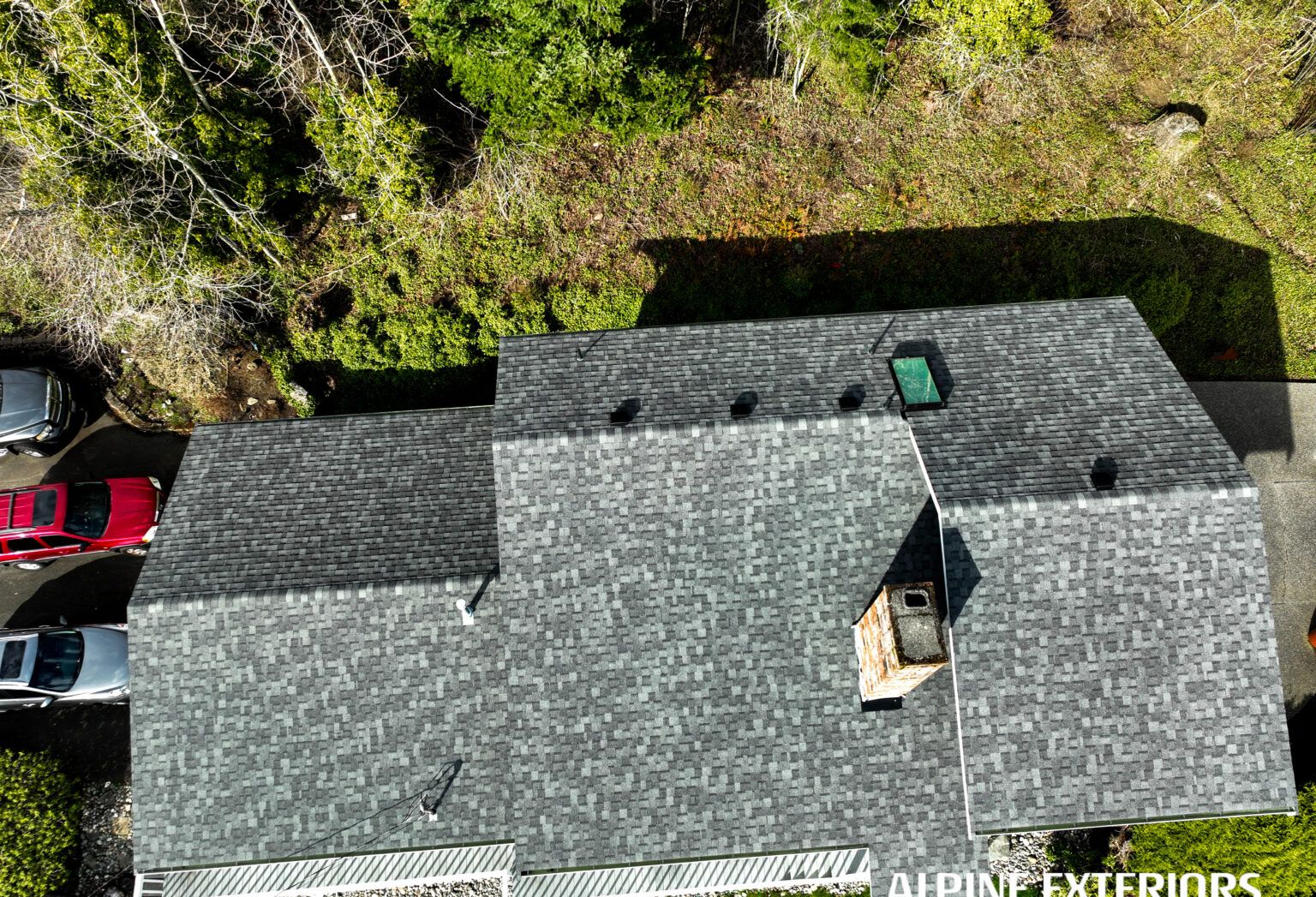
Edgemoor sits on the bluffs above Bellingham Bay, one of the most exposed pieces of real estate in Whatcom County when it comes to weather. The homes here get the full effect of wind-driven rain pushing in off the water, tree cover from the old growth firs and madronas that shade half the neighborhood, and nine months a year of the kind of steady Pacific Northwest drizzle that never quite dries out. Siding in this neighborhood works harder than siding almost anywhere else in the county, and when it starts to fail, the signs are often subtle until they aren't. Below is what to look for on an Edgemoor home, why it happens here specifically, and how to tell the difference between something you can watch for a season and something that needs attention now.
Soft or spongy spots. Press a gloved hand or the back of a screwdriver handle against a suspect area. If it gives like wet cardboard, water has gotten behind the siding and is breaking down the sheathing or the siding material itself. On older Edgemoor homes with original wood lap siding, this is common at butt joints and anywhere caulk has failed. On homes with fiber cement or engineered wood siding installed in the last 15-20 years, soft spots usually trace back to a flashing detail that was never sealed properly, letting wind-driven rain track in sideways during a southwesterly storm off the Bay.
Bubbling, blistering, or peeling paint. Paint that lifts in sheets or bubbles almost always means moisture is trying to escape from inside the wall assembly rather than damage from outside. In a marine climate like this one, walls stay damp longer after every rain event, and if there's no way for that moisture to vent, it pushes the paint film off from underneath. This is one of the more reliable early signs that something behind the siding, not just the surface, needs attention.
Visible gaps, warping, or boards pulling away. Wood and wood-composite siding expands and contracts with the county's damp-to-dry cycles, and over enough seasons the fasteners work loose or the boards themselves cup and warp. On bluff-facing walls in Edgemoor - the ones catching the brunt of the wind off the water - this shows up faster than on the more sheltered, tree-covered sides of the same house.
Moss, algae, and dark streaking. Whatcom County's humidity and shade make moss and algae almost unavoidable on north-facing walls and anywhere tree canopy blocks the sun for most of the day - which describes a large share of Edgemoor lots. A light green film on its own is mostly cosmetic and can often be treated with a gentle wash. But moss that's thick enough to hold water against the siding for days at a time accelerates rot underneath it, especially on wood and OSB-backed products. Black streaking near the roofline is usually algae feeding on organic material washing down from the roof and is a maintenance issue more than a structural one.
Musty smell indoors. If you notice a musty or mildew smell near an exterior wall, especially after a heavy rain, that's often a sign that moisture has worked its way past the siding and the weather-resistive barrier and is sitting in the wall cavity. This one shouldn't wait.
Rising utility bills. Siding that has separated from the wall, or that's no longer backed by intact insulation, lets conditioned air escape and cold, damp air in. The Washington State Energy Code sets minimum insulation and air-sealing standards for the wall assembly behind new siding, and a lot of older Edgemoor homes were built well before those standards existed. If a bill creeps up with no other explanation, failing siding and the gaps it leaves behind are worth ruling out.
Cracked or missing caulk. Caulk is a maintenance item, not a permanent seal, and in this climate it tends to dry out and crack faster than the manufacturer's rated lifespan suggests, particularly on south- and west-facing trim that gets more direct sun between rain systems. Once a caulk joint opens up, it becomes the entry point for the next round of wind-driven rain.
Rot at the bottom edges or near the foundation. The lowest few feet of siding on any Whatcom County home takes the most abuse - splashback from the ground, standing water after a storm, and less airflow to dry out between rain events. On Edgemoor properties with mature landscaping close to the foundation, reduced air circulation makes this worse. Rot at this level can spread upward inside the wall long before it's visible from outside.
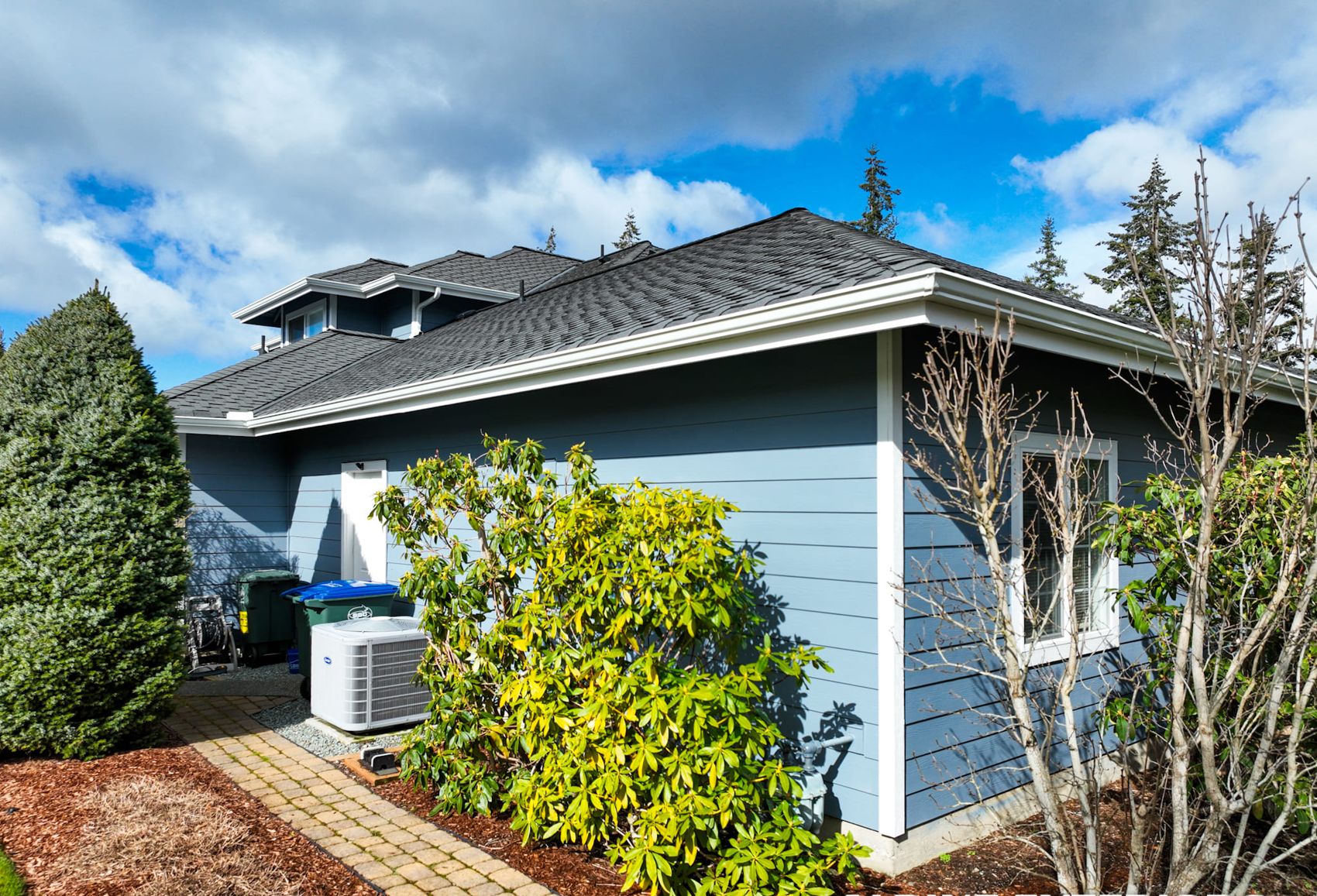
Not every sign on this list means calling someone today. A few things - light surface moss, a hairline paint crack, one section of caulk that's just starting to shrink - are reasonable to note and revisit at the next dry stretch. Others aren't.
Treat these as urgent, meaning worth a professional look within the next few weeks: any soft or spongy spot you can press your fingers into, a musty smell indoors, boards that have visibly separated from the wall, or rot you can see at the base of the siding. Water damage in this climate rarely stays contained to where you first notice it - persistent rain and high humidity keep wood assemblies wet for longer stretches than in drier climates, which gives rot more time to spread between the point of entry and the point where it becomes visible.
Things that can reasonably wait for a planned maintenance visit: cosmetic moss and algae with no soft spots underneath, minor caulk touch-ups on a section that's still otherwise sealed, and paint that's fading but not bubbling or peeling. It's still worth having someone confirm there's nothing hiding under the surface, but these don't call for an emergency response.
Start with a visual walk around the house after a dry day, checking the areas most exposed to wind off the Bay - typically the west and southwest-facing walls - along with anywhere tree cover keeps a section of wall shaded and damp most of the year. Press on any area that looks discolored or uneven. If you find soft spots, note their location and, if it's safe, take a photo before the area gets any wetter.
For anything beyond light cosmetic moss, it's worth having a contractor open up a small section rather than guessing from the outside. Surface symptoms - a bit of peeling paint, a patch of moss - don't always match what's happening behind the siding, and the only way to know how far rot or moisture has traveled is to look. Alpine Exteriors inspects Edgemoor and Bellingham-area homes for exactly this reason: a five-minute look from the driveway tells you less than pulling back a few boards at the worst-looking spot.
If the damage is limited to a section or two, repair or partial re-siding may be enough. If moisture has been getting in for years, or if the underlying sheathing has failed in multiple spots, full replacement is often the more honest answer even though it costs more upfront - patching around widespread rot tends to fail again within a few seasons. A straightforward repair on a small area might run somewhere in the low thousands of dollars; a full re-side of an average Edgemoor home is a much larger project, and the honest range depends heavily on square footage, siding material, and how much of the wall assembly underneath needs rebuilding, not just the visible siding.
A visual check once a year, ideally in late summer or early fall before the wet season sets in, catches most problems before they become expensive. Homes closer to the bluff edge with more direct wind exposure benefit from a slightly closer look, since they weather faster than more sheltered lots a few blocks inland.
Thin surface moss is mostly cosmetic and can usually be washed off without harm. The problem is thicker moss that holds moisture against the siding for extended periods - in Whatcom County's damp climate that constant contact can soften wood-based siding and create a foothold for rot, especially on shaded north walls where it never fully dries out between rain events.
Yes. Siding is part of the wall's overall weather barrier, and gaps, separation, or trapped moisture behind it reduce how well the wall assembly performs. The Washington State Energy Code sets minimum requirements for insulation and air sealing in wall construction, and a wall that's supposed to meet that standard won't perform as designed once the siding and the barrier behind it have failed.
It depends on how widespread the damage is. A localized repair to one or two sections is almost always less expensive than full replacement in the short term. But if rot has spread through multiple areas or the sheathing underneath has been compromised, repeated patch repairs can end up costing more over a few years than doing a full re-side once and addressing the underlying moisture problem at the same time.
If your Edgemoor home is showing any of the signs above - or if you just want a second opinion before another wet season sets in - Alpine Exteriors offers inspections for homes throughout Bellingham, Ferndale, Lynden, Blaine, Birch Bay, Sudden Valley, and the islands. Alpine Exteriors is a licensed Washington contractor (license ALPINI751OW), and we'll tell you plainly whether you're looking at a minor repair, a partial re-side, or a full replacement - not just quote the largest job available.