Siding Repair in Chuckanut, Whatcom County: Common Damage, Repair vs. Replace, and Matching Existing Siding
Updated August 2026 · Alpine Exteriors · WA contractor license ALPINI751OW
The Short Answer
Most siding problems in Chuckanut come down to trapped moisture, not a single dramatic event — a cracked lap, a gap at a trim board, or a shaded north wall that never fully dries out. If the damage is isolated and the sheathing behind it is still sound, repair is usually the right call; if the wall assembly has been wet for a season or more, replacement of that section (or the whole elevation) tends to be cheaper in the long run than repeated patch jobs. The honest first step is finding out which situation you actually have, which usually means pulling a board, not guessing from the driveway.
The Detail Behind It
Chuckanut sits along the wooded bluffs and bay-facing slopes south of Bellingham, where homes are tucked under tall conifers and get direct exposure off Chuckanut Bay and Samish Bay. That combination — heavy tree cover plus open water exposure — produces a specific damage pattern that's different from what you'd see on a dry, open lot inland. The most common issues we find on siding repair calls in this pocket of Whatcom County are:
- Wood rot at butt joints and bottom courses. Wood and engineered wood lap siding that sits close to grade, under a deck, or behind shrubs stays damp for days after a storm instead of hours. Once the paint film or factory coating breaks down at a joint, water gets behind the board and the substrate softens from the inside out — often before it's visible from the street.
- Moss and algae staining on north- and west-facing walls. Under the tree canopy that's common in Chuckanut, walls that don't get afternoon sun stay damp long enough for moss and algae to colonize the siding surface and, on textured or fiber cement products, work into the grain. This is mostly cosmetic early on, but sustained moss growth holds moisture against the wall longer than bare siding would, which accelerates whatever's happening underneath.
- Wind-driven rain intrusion at corners and window trim. Storms coming off Bellingham Bay and the Strait of Georgia don't just drop rain — they push it sideways into vertical joints, outside corners, and window and door trim that face west or northwest. Over time this shows up as staining, soft trim, or bubbled paint well before the siding field itself looks damaged.
- Freeze-thaw cracking on the foothill side. Properties tucked up toward the Chuckanut Mountain foothills see more freeze-thaw cycling than the immediate waterfront — moisture gets into a hairline crack or a nail hole, freezes, and expands the gap a little more each winter. It's slow, but it's cumulative, and it's easy to miss until a board actually splits.
- UV and coating fade on south- and west-facing exposures. Less of a structural issue, more a matching problem — sun-facing walls fade faster than shaded ones, which is exactly why patch repairs on an older wall often stick out even when the workmanship is fine.
What Makes This Region Different
Whatcom County's marine climate means Chuckanut homes deal with sustained dampness rather than short, hard storms. There's no hurricane exposure here and no need to think about wind-borne debris in the way a coastal Gulf or Atlantic property would — the risk profile is almost entirely about water finding its way in slowly and staying. A few things make Chuckanut specifically a little different from, say, downtown Bellingham or the flatter farmland around Lynden and Ferndale:
- Dense tree cover shades large sections of most homes for much of the day, which slows drying time after every rain event and creates ideal conditions for moss and algae even on newer siding.
- The bluff and shoreline exposure means some walls take wind-driven rain almost broadside during a southwesterly blow, while the same house's uphill side barely gets wet.
- Properties higher on the slope toward the foothills see more freeze-thaw cycling in a normal winter than low-lying, water-adjacent lots, so crack-related repairs skew toward those addresses.
- Many homes here are older or custom-built with siding profiles — board-and-batten, shiplap, certain cedar patterns — that aren't stocked at a standard lumberyard, which makes matching existing material a bigger factor in the repair-vs-replace decision than it would be in a newer subdivision.
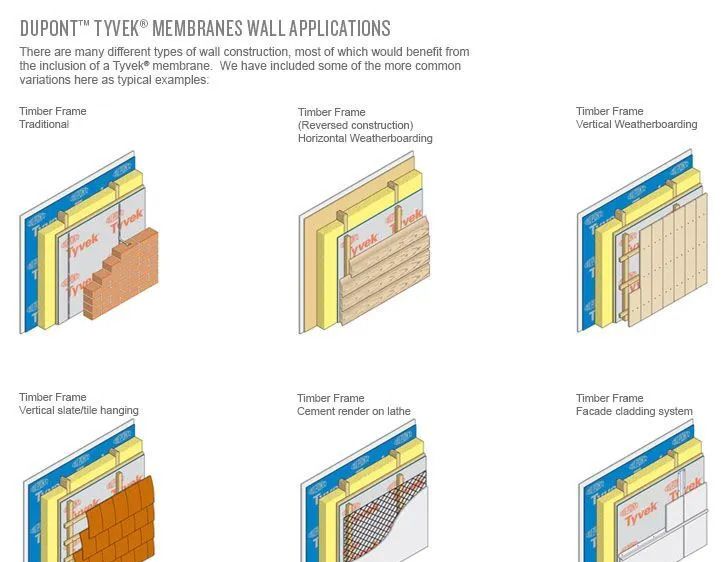
Any siding work in Washington also has to account for the Washington State Energy Code, which governs the wall assembly's insulation and air-sealing requirements. A repair that only addresses the visible siding but ignores a compromised water-resistive barrier or insulation that's been wet for months isn't really solving the problem — it's covering it back up. Replacement work in particular needs to keep the wall assembly compliant with current code requirements for the climate zone, not just match the old exterior appearance.
What the Homeowner Should Actually Do
Start by figuring out how far the moisture has actually traveled, not just what's visible. A soft spot, a section that flexes when pressed, or paint that's bubbling rather than just peeling are all signs that water has gotten past the surface. Here's a practical way to think through it:
- Repair makes sense when the damage is localized — a single cracked or split board, a caulk joint that's failed, a small area of moss on otherwise sound siding — and probing the area shows firm material underneath. A competent repair here is a matter of removing the damaged piece, checking the house wrap or building paper behind it, and installing a matched replacement section.
- Replacement makes more sense when rot has spread along a course, when multiple areas on the same wall are failing at once (a sign the whole elevation has a drainage or flashing problem, not a bad board), or when the siding is old enough that matching a single repair to the surrounding material and finish is unrealistic. In those cases, patching individual spots often ends up costing more over a few years than doing the wall once, correctly.
- Get an honest look behind the siding before committing either way. On a home with any history of leaks, deck ledger connections, or window flashing issues, what's underneath matters more than what the wall looks like from ten feet away. Alpine Exteriors typically pulls a board or two in the suspect area during an inspection rather than quoting off a visual walk-around, because that's the only way to know whether you're looking at a $400 repair or a wall that needs to come off.
- Expect a real range in cost, not a fixed number. A small localized repair — a few boards, some trim, fresh caulk and paint — often lands in the low hundreds to low thousands of dollars depending on access and material. A full wall or elevation replacement, especially if rot has reached the sheathing, is a bigger project and can run well into the thousands; the actual number depends on the siding material, how much of the wall assembly needs to be opened up, and how easy the house is to access. Get a written scope, not just a price, so you know exactly what's being replaced versus patched.
- Ask specifically about matching. If your home has an uncommon profile, weathered cedar, or a discontinued fiber cement color, ask your contractor how they plan to blend new material with old — whether that means sourcing a close match, repainting a full elevation for consistency, or being upfront that a visible seam is unavoidable. Alpine Exteriors, WA contractor license ALPINI751OW, works through that matching question with homeowners up front rather than after the new boards are already up, because it's a much easier conversation before the work starts than after.
FAQ: Siding Repair in Chuckanut
How do I know if my siding damage is just cosmetic or actually structural?
Press on the area — soft, spongy, or flexing material usually means moisture has reached the substrate, while surface staining or moss on a firm board is typically cosmetic. Cosmetic issues can often be cleaned and repainted, but any softness, dark staining that doesn't wash off, or a musty smell near the wall warrants pulling a board to check what's happening behind the siding before deciding on a fix.
Can moss and algae actually damage my siding, or is it just appearance?
On its own, moss is mostly cosmetic, but it holds moisture against the siding surface longer than a bare wall would, and on wood or wood-composite products that extra dwell time can eventually contribute to rot at joints and edges. It's worth addressing moss-heavy walls sooner rather than later, especially on the shaded, tree-covered elevations common in Chuckanut, even if the siding itself still looks structurally fine.
Will a patch repair be noticeable next to my older siding?
It depends on the material and how much the existing siding has faded or weathered. New boards almost always look slightly different in color and sheen than siding that's had years of UV exposure, so a small patch on a heavily faded south wall may be visible even with a good material match. Repainting the full elevation after a repair, rather than just the patched section, is usually what closes that gap.
Does Washington's energy code affect a straightforward siding repair?
For a small, localized repair that doesn't disturb the water-resistive barrier or insulation, code impact is minimal. But once a project opens up a section of wall — replacing a course, dealing with rot that's reached the sheathing, or redoing an elevation — the work needs to keep the wall assembly consistent with Washington State Energy Code requirements for insulation and air sealing, not just replace the visible siding.
Get a Straight Answer on Your Siding
If you're looking at a damaged section of siding in Chuckanut and aren't sure whether it's a quick repair or the start of a bigger problem, the fastest way to find out is to have someone actually open it up and look. Alpine Exteriors serves Chuckanut and the rest of Whatcom County — Bellingham, Ferndale, Lynden, Blaine, Birch Bay, Sudden Valley, and the islands — and can walk your property, check behind the suspect boards, and give you a straightforward repair-or-replace recommendation along with a written scope before any work starts.
Want a straight answer for your home? Alpine Exteriors gives free on-site assessments across Bellingham, Ferndale, Lynden, Blaine, Birch Bay, Sudden Valley and the islands.
Call (360) 543-4799 or
request an estimate.