
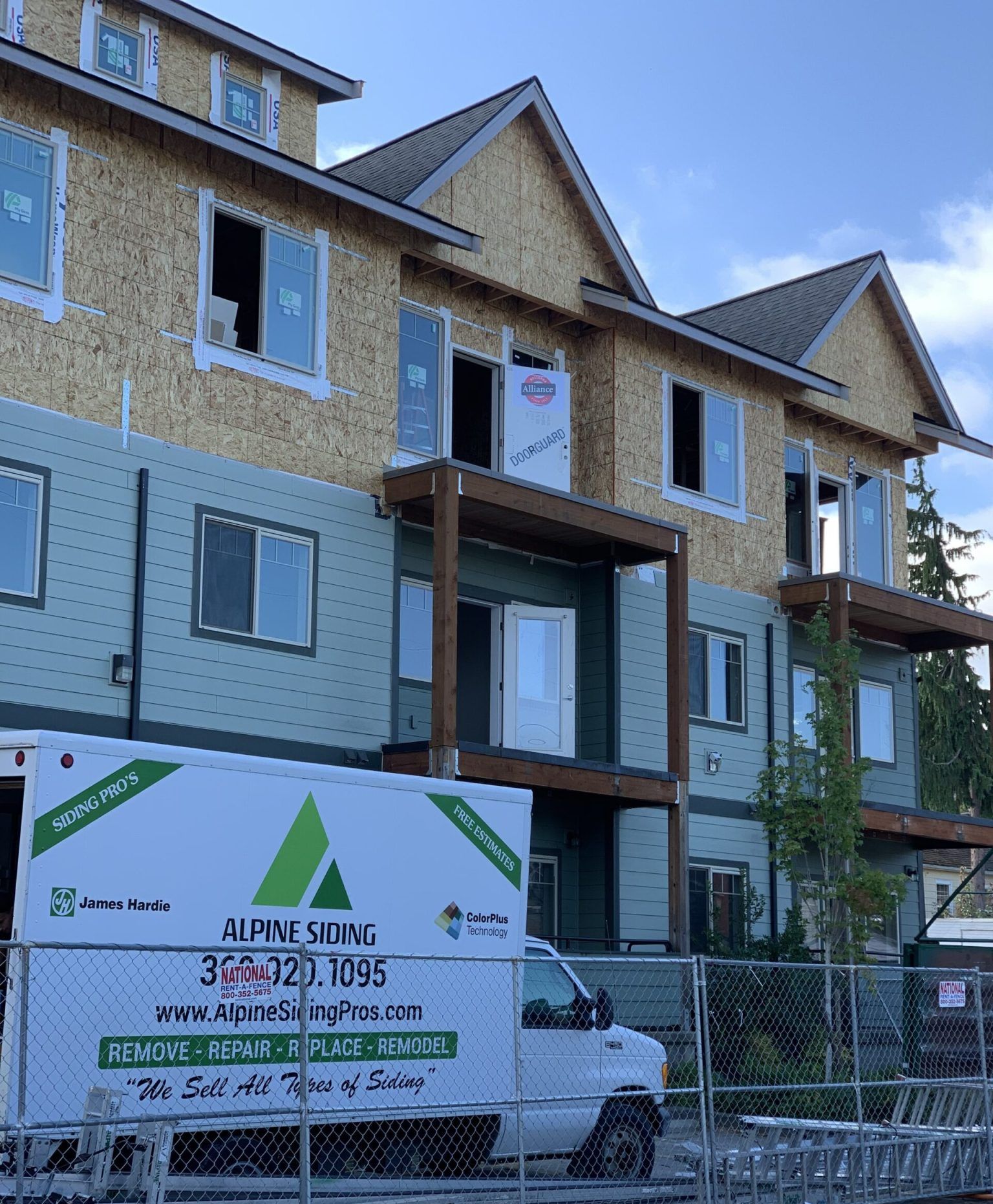
Most siding problems we see around Lake Whatcom start out small and fixable — a soft spot where two boards meet, a patch of dark algae along a shaded wall, a section cracked by a falling cedar limb — and a competent contractor can repair that without touching the rest of the wall. Replacement becomes the right call once rot has moved past one or two boards, moisture has worked its way into the sheathing behind the siding, or the siding material itself is failing as a product rather than failing in one spot.
That last case shows up often on older homes around the lake sided decades ago in hardboard or early composite panels; once those start to swell and delaminate at the edges, patching one board buys a year or two before the board next to it goes the same way. Alpine Exteriors treats that distinction as the whole decision: repair when the damage is contained, replace when the damage is telling you something about the wall as a system. Sorting out which one you're actually looking at is harder here than it is a few miles into downtown Bellingham, because the lake changes how siding ages.
Wood rot is the damage that matters most, and it almost never announces itself where you'd expect. The visible symptom — a discolored or spongy board — is usually downstream of the real problem, which is a failure point somewhere upstream: a gap in caulking at a window trim, a butt joint that was never back-primed, a downspout dumping water against the wall instead of away from it, or siding installed tight to grade with no clearance to dry out. Water gets behind the cladding at that entry point and travels, so by the time you see a soft spot at eye level, the rot may already run down inside the wall toward the sill plate. This is why probing a suspect board with an awl or screwdriver matters more than looking at it — paint can hide a lot.
Whatcom County homes carry a mix of siding types, and each fails differently. Cedar lap siding, still common on older homes near the lake, rots at butt joints and anywhere it stays wet against a fastener. T1-11 plywood siding, popular in the 70s and 80s, delaminates at cut edges and around window openings once the factory seal is breached. Hardboard and masonite panels, widely installed through the 80s and 90s across the Pacific Northwest, swell at the bottom edge and blow out at nail lines — this is a known weakness of the material itself, not a sign of poor maintenance, and once it starts it tends to keep going. Vinyl siding cracks from impact and warps if something reflective (a nearby window, a dark grill) throws concentrated heat on it, though that's a smaller issue here than in sunnier climates. Fiber cement — the newer standard for re-siding — holds up well against moisture but still needs its caulked joints and painted cut edges maintained, or water finds a way in at the seams anyway.
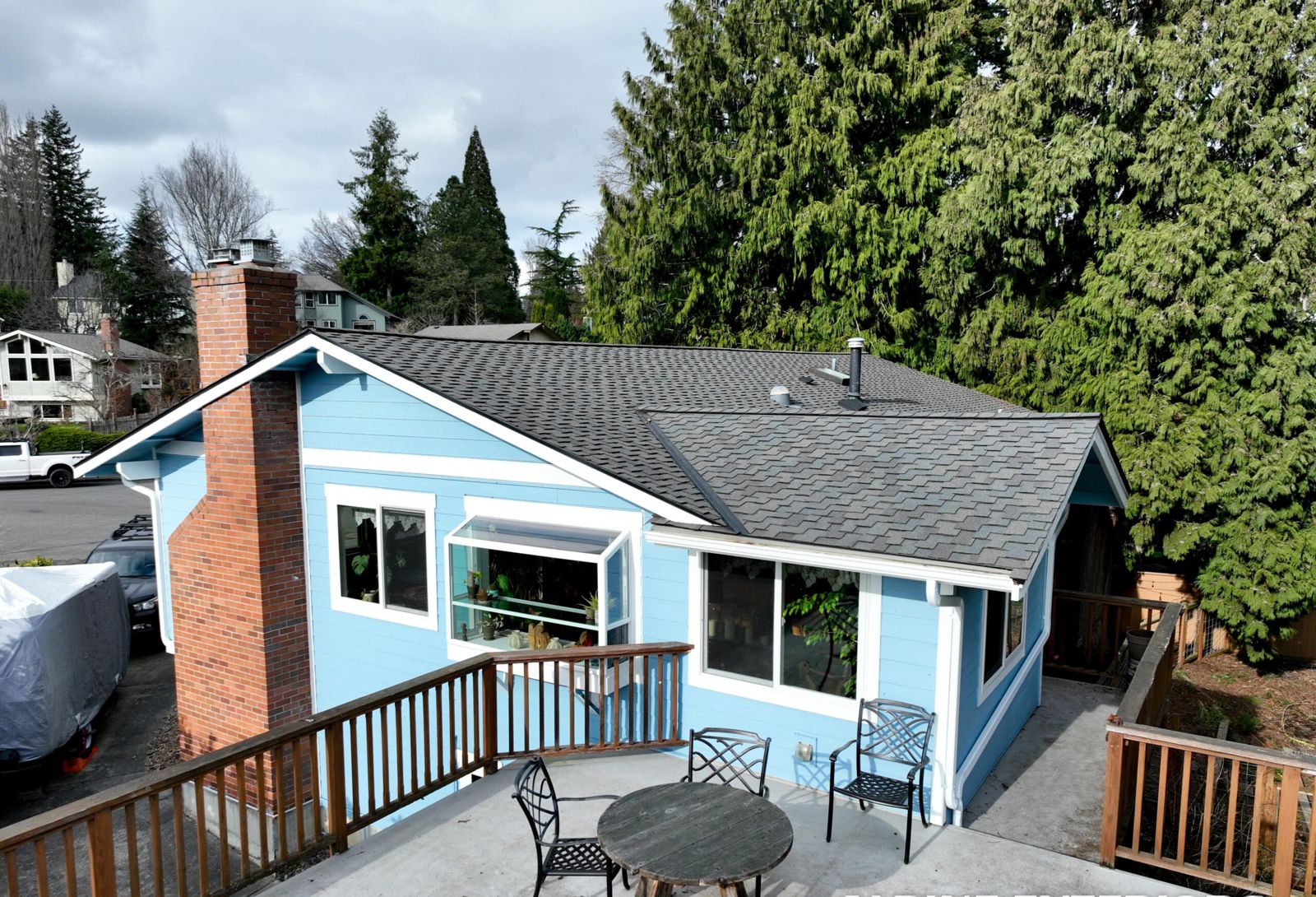
A house on Lake Whatcom is not weathering the same way as a house three miles away on Bellingham Bay, even though both are in Whatcom County. The lake sits in a basin ringed by dense fir and cedar forest, and that tree cover keeps large sections of most homes in shade for much of the day. Shaded siding dries slower after every rain, and slow-drying siding is exactly what moss and algae need to establish — north- and west-facing walls near the lake often carry a green or black film that a comparable wall in an open, sunnier part of Ferndale or Blaine never develops. That growth isn't just cosmetic; trapped moisture under moss keeps wood siding wet longer between storms, which accelerates rot at seams and fastener points.
The lake basin also has its own wind pattern. Storms can funnel wind down the length of the lake and drive rain sideways into west- and south-facing walls with more force than you'd expect for an inland location, in the same way wind off Bellingham Bay and the Strait of Georgia drives rain into waterfront homes closer to town — different source, same effect on siding: water pushed up under laps and behind trim rather than just running down the face of the wall. And because Lake Whatcom sits at higher elevation than the immediate bay shoreline and away from the moderating marine air, homes here — especially up toward Sudden Valley and the foothill roads — see more freeze-thaw cycling through the winter. Water that got into a crack or a seam during a wet spell can freeze, expand, and widen that opening before it ever gets a chance to dry out, which is a slower but real contributor to siding failure that waterfront-adjacent homes deal with less.
One more regional wrinkle worth knowing: Lake Whatcom is the primary drinking water reservoir for the city of Bellingham, and the watershed carries extra environmental restrictions on top of standard building requirements. Pressure washing runoff, paint chips, and treatment chemicals near the shoreline are treated differently here than they would be on a job in Lynden or Blaine, so it's worth confirming your contractor is familiar with those constraints before any washing or stripping work happens close to the water.
Start with a walk around the exterior on a dry day, working from the bottom up. Check the lowest courses of siding first — anywhere it sits close to grade, near a downspout outlet, or below a deck ledger board — since that's where rot shows up earliest. Press on suspect boards; wood that flexes or feels soft under light pressure is already compromised even if the paint looks fine. Pay particular attention to any wall that stays shaded most of the day, since that's where moss and slow drying have had the most time to work.
Cost is a real factor and it's fair to ask about it up front. An isolated repair — a few boards, a corner trim piece, a section around one window — typically runs from a few hundred to a couple thousand dollars depending on access and material. A full re-side of an average home is a much larger project, generally running into the tens of thousands, which is exactly why the repair-vs-replace call matters: paying for a full re-side when three boards needed fixing is wasteful, but paying to patch a wall that's failing everywhere just delays a bigger bill and lets water keep reaching the framing underneath. If a repair does open up enough of the wall assembly to expose the sheathing — say, replacing a large damaged section down to the studs — that's also the moment to ask whether the Washington State Energy Code's requirements for the replaced wall assembly apply, since older Whatcom County homes were often built with far less wall insulation than current code calls for. Alpine Exteriors will flag that during an inspection rather than after work has started, since it changes both the scope and the cost.
Matching existing siding is its own separate problem from repair-vs-replace, and it deserves honest treatment: exact matches get harder the older the siding is. Paint and stain fade unevenly over years of lake-basin sun and shade, cedar and fiber cement profiles get discontinued or updated by manufacturers, and hardboard siding from the 80s and 90s generally isn't made anymore at all. A patch that's structurally perfect can still stand out visually. The honest options are to match as closely as possible and accept some visible difference in an inconspicuous spot, to repaint the full wall or elevation after the patch so the color reads as uniform, or — if the mismatch would be too obvious on a highly visible wall — to treat that as a point in favor of full replacement rather than a repair.
Surface algae and moss stay on top of the wood and wash or scrape off without the board losing its shape; if the surface underneath is firm when you press on it, it's cosmetic. Rot is underneath the surface — the board will feel soft, spongy, or slightly crumbly under a screwdriver tip, and the discoloration usually looks darker or more uneven than a simple green or black film. When in doubt, a contractor probing a handful of suspect spots takes a few minutes and settles it far more reliably than guessing from the color alone.
In most cases a section repair is possible, especially with fiber cement or newer vinyl where matching stock is still available. The harder cases are older cedar with heavily weathered paint, or hardboard and T1-11 siding that's been discontinued — there a patch may be structurally sound but visually different enough that repainting the wall, or in some cases replacing the full elevation, gives a better result. We'll tell you up front which situation you're in rather than pushing a bigger job than the damage calls for.
If the damage is contained and the rest of the siding is sound, repairing now is almost always the cheaper path and it stops water from reaching the framing behind the wall. Waiting only makes sense if you already know a full re-side is coming soon for other reasons — an addition, a major remodel, or siding that's failing broadly rather than in one spot. Patching a wall you know is failing everywhere just spends money twice.
A like-for-like spot repair generally does not. But if a project opens up a significant section of wall down to the sheathing — which happens on some full re-sides and larger rot repairs — the Washington State Energy Code's requirements for wall assemblies can come into play for that portion of the work, particularly on older homes built with minimal insulation. It's worth asking your contractor to address this directly in the scope of work rather than finding out mid-project.
If you're seeing soft spots, persistent moss staining, or siding that just looks tired on a home anywhere from Bellingham and Sudden Valley out to Ferndale, Lynden, Blaine, Birch Bay, or the islands, an on-site look is the fastest way to know whether you're facing a repair or a replacement. Alpine Exteriors is a licensed Washington contractor (license ALPINI751OW) working throughout Whatcom County, and we'll walk the exterior with you, probe the areas that actually matter, and give you a straight answer along with a written scope — not an upsell to a full re-side when a repair will genuinely hold up. Reach out to schedule an inspection of your Lake Whatcom home's siding.