
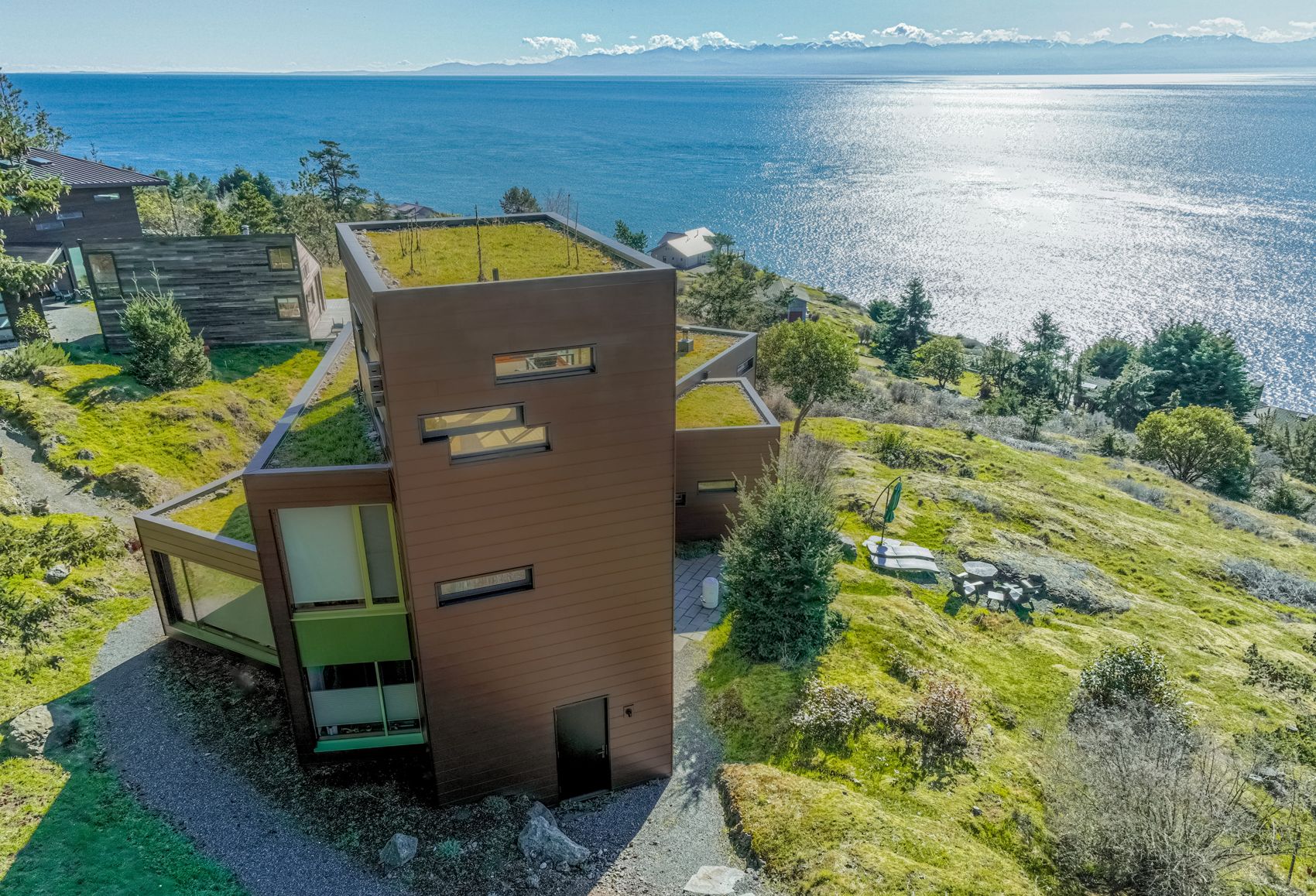
Most siding damage in the Columbia neighborhood is repairable if it's caught while it's still limited to a board or two — cracked lap siding, a soft spot near a downspout, or moss buildup on the north wall usually doesn't require a full replacement. Once rot has spread behind the siding into the sheathing, or damage covers more than a wall or two, replacement is almost always cheaper than chasing repairs one section at a time.
Columbia sits close to Bellingham Bay, and that proximity matters more than most homeowners realize until they're standing on a ladder with a screwdriver in a piece of siding that gives way like wet cardboard. The damage patterns we see fall into a few repeatable categories:
None of this is hurricane-driven wind damage — that's not a real risk here — but wind-driven rain intrusion over a long wet season does comparable damage over a longer timeline, just quieter and easier to miss until it's significant.
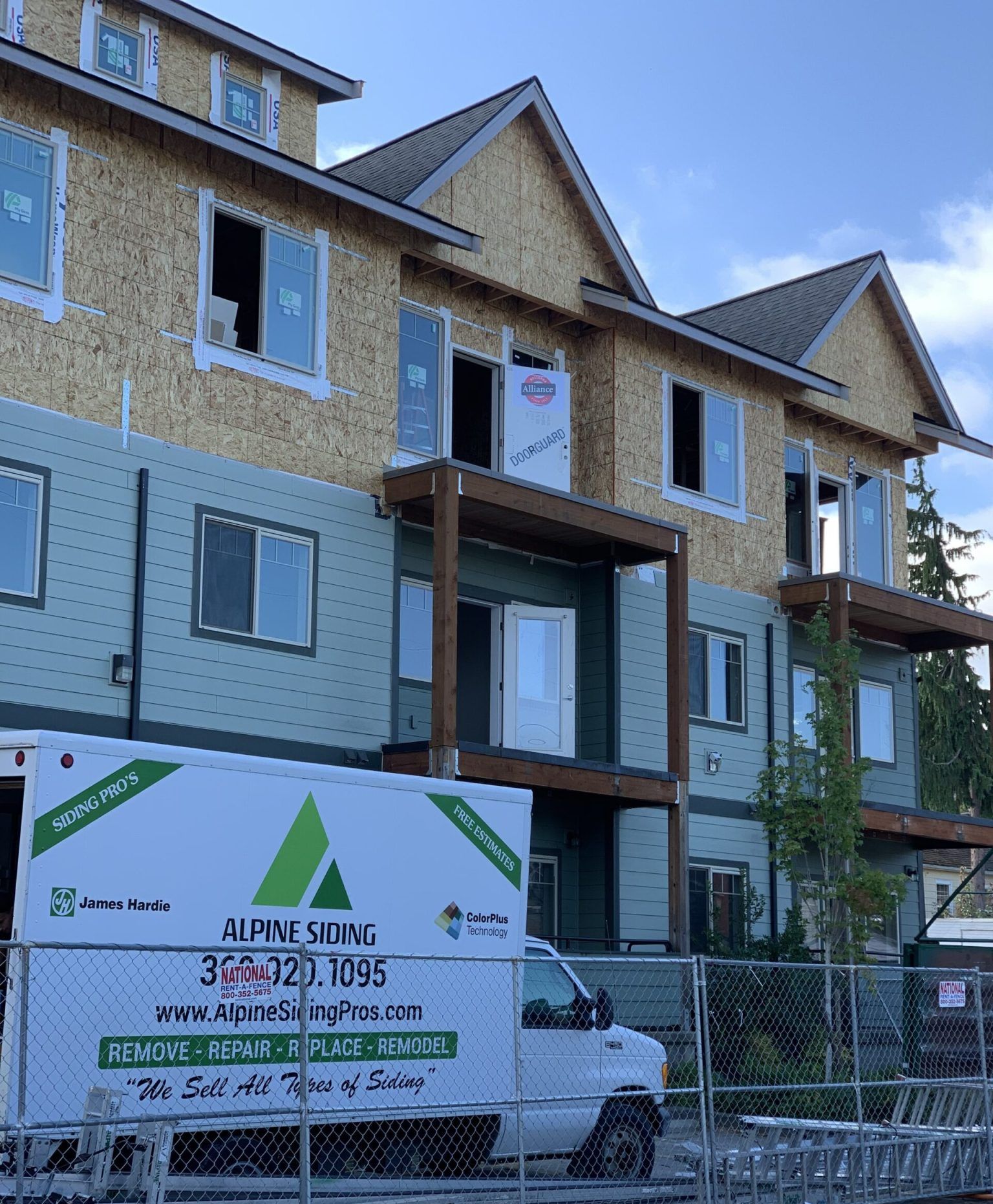
A siding repair job in Columbia isn't the same job as one in a drier climate, and it isn't the same job as one in a hurricane zone either. A few things specific to this stretch of Whatcom County change how a contractor should approach it:
Elevation and exposure vary block to block. A house two streets back from the water can have noticeably less wind-driven rain exposure than one facing the bay directly. Repair scope should reflect actual exposure, not a blanket assumption that every wall took the same abuse.
Older tree canopy creates permanent shade zones. Columbia has more mature landscaping than some of the newer Whatcom County developments, and that shade keeps certain wall sections damp for days after a storm has passed elsewhere in town. Those zones need to be inspected separately from sun-exposed walls, because they fail on a different timeline.
The Washington State Energy Code affects what "repair" can mean. If a repair or replacement project exposes the wall assembly — meaning siding comes off down to the sheathing or framing — current energy code requirements for continuous insulation and air sealing can apply depending on the scope of work and how much of the wall is being opened up. A patch-and-caulk repair usually doesn't trigger this. A section replaced down to the studs might. This is worth asking about before work starts, not after a permit gets flagged.
Product matching gets harder every year a house ages. Cedar lap widths, exposures, and finishes have shifted over the decades, and fiber cement lines get discontinued or redesigned. A 15-year-old repair job blending into original siding is a very different task than matching siding installed last year.
Start with an honest inspection, not a guess from the ground. Soft spots, dark staining, and paint that's bubbling or peeling in a concentrated area are all signs worth probing with a screwdriver — if it sinks in without resistance, that section has active rot. A few guidelines that hold up in practice:
On the matching question specifically: exact matches for older cedar or discontinued fiber cement lines are not always possible, and it's worth saying that plainly rather than promising a seamless blend that might not happen. Sometimes the more honest path is repainting the full wall after a repair so the patched section doesn't stand out by contrast, or replacing full boards edge-to-edge instead of splicing a shorter section into the middle of a course. Cost ranges for siding repair in this area vary widely depending on square footage, whether sheathing needs replacing, and siding material — a same-material patch on wood siding runs quite differently than tearing into fiber cement and rebuilding flashing detail behind it, so a site visit is really the only way to get a number that means anything.
Alpine Exteriors has done this kind of repair-vs-replace assessment across Whatcom County long enough to know that the cheapest fix in the moment isn't always the cheapest fix over five years. A ten-minute conversation about what's actually happening behind the wall, not just what's visible on the surface, usually settles the question.
Surface staining from moss, algae, or mildew wipes or scrubs off and doesn't affect the board's structural integrity — press on it and it feels solid. Rot feels soft or spongy when you press a screwdriver or your thumb into it, and the wood often gives way with little resistance. If you're not sure, a probe test on a few different spots is a better indicator than color alone, since dark staining can look alarming while the wood underneath is still sound, or the reverse.
It can go either way depending on the material and how long it's been growing. On fiber cement or vinyl, moss is mostly cosmetic and a matter of curb appeal, though it should still be cleaned gently to avoid staining that sets in permanently. On wood siding, moss holding moisture against the surface for extended periods — which happens easily on shaded Columbia lots — can contribute to rot developing underneath over a period of years, so it's worth addressing rather than ignoring on wood specifically.
Sometimes closely, sometimes not perfectly, and it depends heavily on the age and type of siding. Fiber cement and vinyl lines get discontinued and redesigned over time, and cedar's grain and weathering are never identical board to board. A contractor should be upfront about how close a match is realistic before work starts, and offer options like full-wall repainting or edge-to-edge board replacement when an exact blend isn't possible.
It depends on the scope. A localized patch that doesn't expose the wall sheathing typically doesn't trigger energy code requirements. A larger repair or replacement that opens up the wall assembly down to the framing can bring current insulation and air-sealing requirements into play, depending on the project. This is a scope question worth raising with your contractor and, if needed, the local building department before work begins.
If you're looking at damaged siding in Columbia or anywhere else in Whatcom County — Bellingham, Ferndale, Lynden, Blaine, Birch Bay, Sudden Valley, or the islands — the fastest way to know whether you need a repair or a full replacement is an in-person look at what's happening behind the surface. Alpine Exteriors, WA contractor license ALPINI751OW, inspects the wall assembly, not just the visible board, and gives a plain assessment of what's actually needed before recommending a scope of work. Reach out to schedule a siding inspection and get options in writing.