
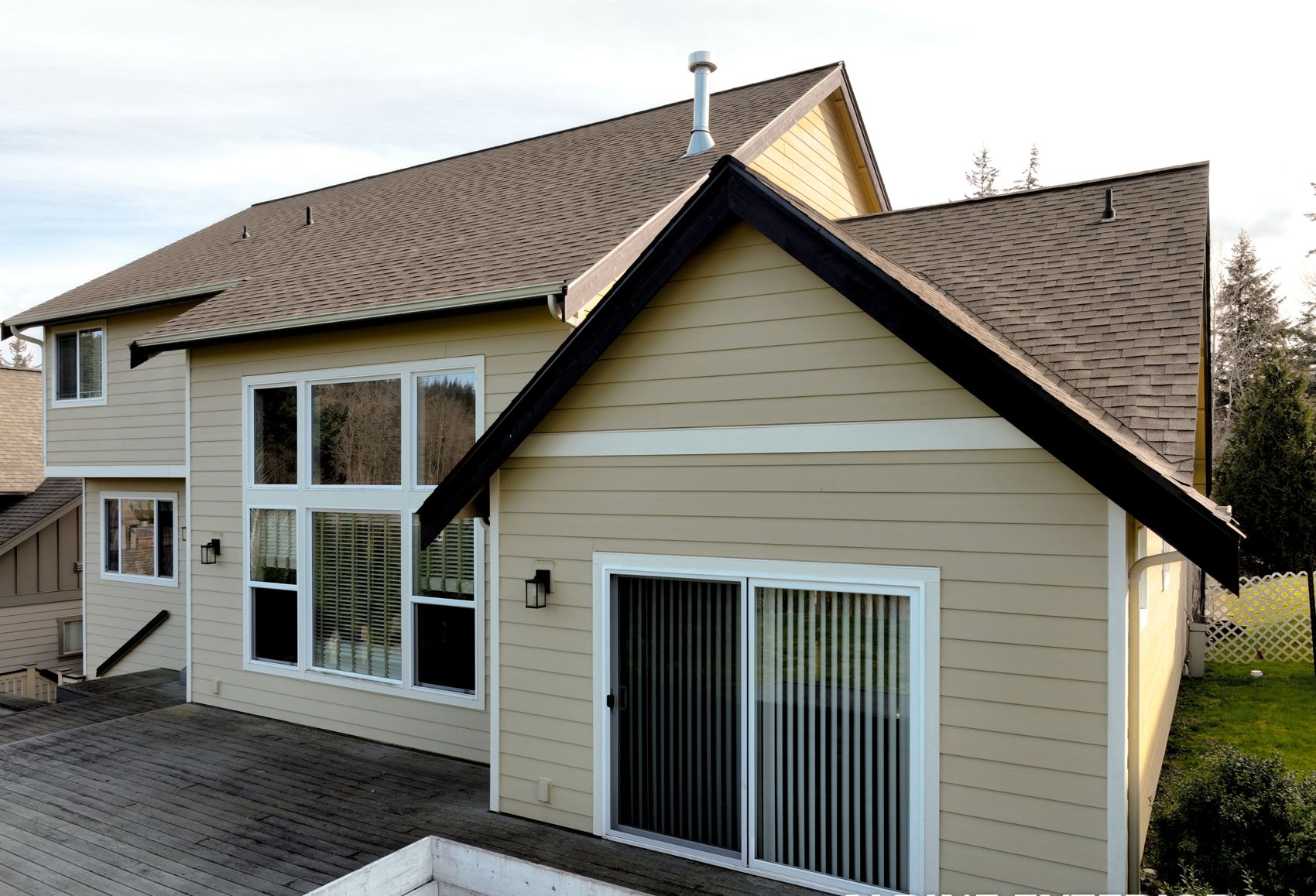
In Deming and the surrounding foothills, the siding on your home has to satisfy two separate things at once: a wind pressure rating tied to your specific site exposure, and the fastening pattern printed in the manufacturer's ICC-ES evaluation report, which the Whatcom County building inspector will check against the installed product. Most vinyl and fiber cement siding sold today is rated for more wind than a typical Deming lot will ever see, but the rating only holds if the crew actually follows the nailing schedule, the panel is the correct product for the exposure category, and the water-resistive barrier underneath is lapped and taped the way the code requires.
That last part is where most siding failures actually start. A panel rated for high wind pressure will still fail early if it's face-nailed too tight, hung over rotted sheathing, or installed without a drainage gap behind it. The code exists to catch the installation half of that equation, not just the product half.
Washington adopted the International Building Code and International Residential Code with state-specific amendments, published together as the Washington State Building Code, and Whatcom County enforces that code through its own permit and inspection process. For siding, the two things that actually get checked are product approval and attachment.
Product approval, in Washington, doesn't work the way it does in hurricane states — there's no statewide product approval database and no wind mitigation form to fill out. Instead, manufacturers get their siding tested to ASTM standards (ASTM D3679 for vinyl, ASTM C1186 or C1178 for fiber cement, and related test methods) and publish an ICC-ES evaluation report or equivalent testing data stating the product's wind pressure rating and the fastening pattern required to achieve it. That report is the actual legal basis for the installation. When an inspector shows up, they are, in effect, checking the physical siding against the manufacturer's printed instructions, because the Washington State Building Code requires installation to follow those instructions as a condition of code compliance.
Attachment is where the real variation happens. Vinyl siding has to be nailed loose enough to allow for thermal expansion and contraction — over-driving the nails is one of the single most common defects Alpine Exteriors finds when tearing off older siding in this county, because it causes buckling and oil-canning long before any wind event, and it also weakens the nail's actual holding power in a gust. Fiber cement has the opposite problem: it needs a harder, more precise nailing pattern, correct edge clearance, and specific fasteners (usually stainless or hot-dip galvanized ring-shank) because a panel that isn't fastened per spec can crack at the nail head or pull free in wind long before the panel itself would fail.
Behind all of that sits the water-resistive barrier — housewrap or a fluid-applied WRB — which the code requires to be installed shingle-fashion, lapped correctly at seams, and integrated with window and door flashing. This isn't really a wind-load item on paper, but in a wet climate it's arguably more important than the fastening schedule, because wind-driven rain finds every gap the WRB doesn't cover.
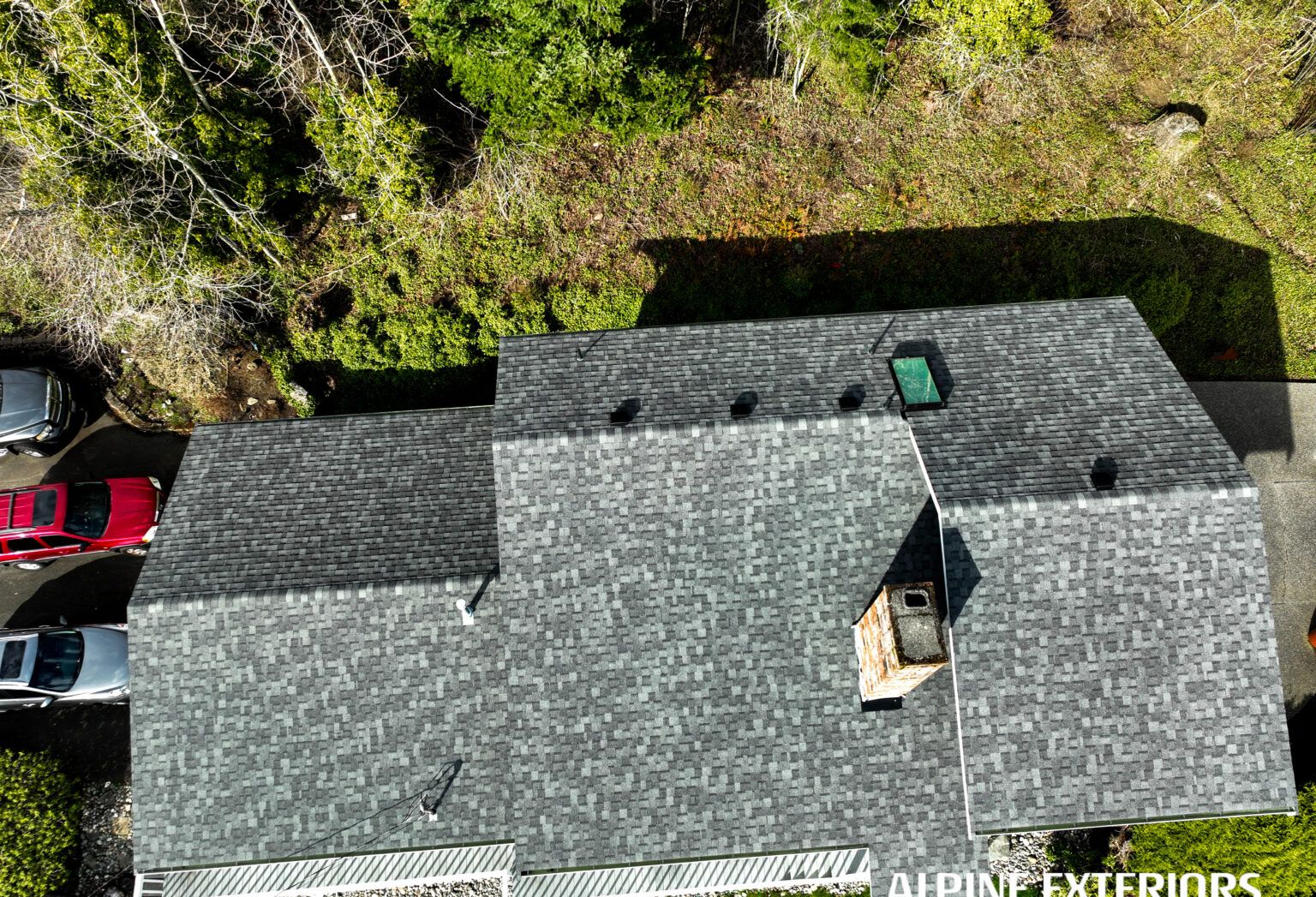
Deming sits up the Mount Baker Highway corridor in the Nooksack River valley, and that geography changes the wind and moisture picture from what you'd see closer to Bellingham Bay. Coastal parts of Whatcom County — Blaine, Birch Bay, the west side of Bellingham — deal mostly with steady wind-driven rain coming off the Strait of Georgia and the bay, which pushes water sideways into siding laps and window trim for days at a stretch. Deming gets a different pattern: the valley can funnel and accelerate wind gusts coming down off the Cascade foothills, especially during fall and winter frontal systems, and the surrounding tree cover means falling limbs and windthrow are a bigger practical risk to siding than sustained wind pressure alone.
Moisture behaves differently here too. The foothills see more freeze-thaw cycling in winter than Bellingham proper does — nights cold enough to freeze standing water in a siding lap, followed by daytime thaw, several times a season. That cycle is hard on any siding that's already trapping moisture behind it, because water that freezes in a gap or a crack expands and works the material loose. Combined with Whatcom County's persistent rain and the moss and algae growth that comes with heavy tree shade along the river, a Deming home's siding is under more sustained biological and freeze-thaw stress than the same product would see on a drier, more open coastal lot, even though the raw wind speed numbers are often lower.
None of this is hurricane-country engineering — Whatcom County isn't designing for tropical wind loads, and no Deming homeowner needs to think about missile-impact ratings or storm shutters. The stresses here are cumulative: wind, freeze-thaw, and rain working on the same wall assembly year after year, rather than one severe event testing it all at once.
Start by finding out what's actually behind your current siding before assuming a straight recover job is fine. On older Deming homes, especially anything built before the mid-1990s, Alpine Exteriors regularly finds sheathing with wood rot or moisture damage under siding that looked intact from the street. Code compliance for the new siding won't matter much if it's fastened into compromised sheathing.
Be honest with yourself about tradeoffs, too. Fiber cement holds up better against moss, algae, and freeze-thaw over the long run than vinyl, but it costs more installed and takes longer on the job. Vinyl is less expensive and installs faster, but it's more sensitive to over-driven nails and can become brittle with age in a wet, cool climate. Neither one is a bad choice — the right answer depends on your budget, your home's exposure, and how long you plan to stay in it.
Not by code — the Washington State Building Code applies countywide, and there's no separate wind zone map that singles out Deming versus Bellingham. In practice, though, the wall assembly needs to handle more freeze-thaw cycling and windthrow debris risk in the foothills, while coastal areas deal more with sustained wind-driven rain, so the smart product choice can differ even when the code requirement doesn't.
It depends on scope. Straightforward siding replacement on an existing single-family home is often permit-exempt or handled through a simplified process, but anything involving sheathing replacement, structural repair, or work tied to a larger remodel usually triggers a full permit and inspection. Check with Whatcom County Planning and Development Services before starting, since exemption thresholds can change.
Mainly attachment and water management: whether the fastening pattern matches the manufacturer's ICC-ES report or installation instructions, whether flashing at windows, doors, and penetrations is integrated correctly with the water-resistive barrier, and whether clearance to grade and other moisture-control details are met. They are not measuring wind speed on site — they're confirming the installation matches the tested, approved system.
Properly rated and correctly fastened vinyl siding is strong enough for the wind conditions typical of Deming and the rest of Whatcom County — this isn't a region that demands impact-rated or hurricane-grade products. The more relevant question is usually moisture and freeze-thaw durability over the long term, where fiber cement tends to hold up better, rather than raw wind resistance.
If you're not sure what's behind your existing siding, whether your project needs a Whatcom County permit, or which product actually makes sense for a Deming lot versus a coastal one, Alpine Exteriors can walk the property with you and lay out the real tradeoffs before any contract gets signed. Alpine Exteriors holds Washington contractor license ALPINI751OW and works throughout Whatcom County, from Bellingham and Ferndale out to Deming and the foothills — reach out for an on-site look at your siding, sheathing, and drainage before deciding what to install next.