
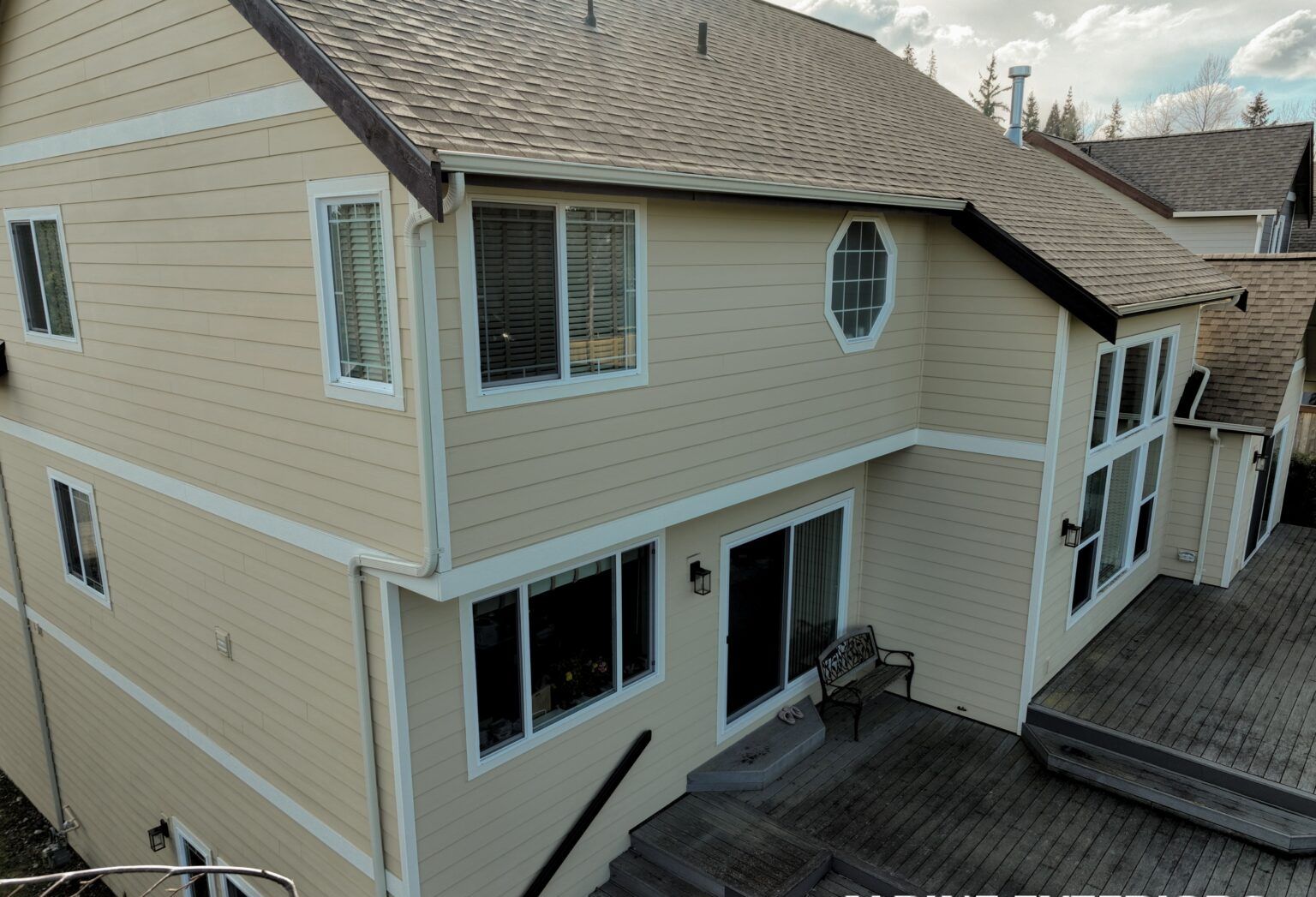
Sumas sits at the very top of Whatcom County, tucked against the Canadian border where the Nooksack floodplain narrows into the Sumas Gap. That geography matters more here than almost anywhere else in the county, because the gap acts like a funnel for cold outflow winds that drop down out of the Fraser Valley in the fall and winter. A siding replacement in Sumas has to be planned around that wind pattern, on top of the same wet-climate issues that affect Bellingham, Ferndale, and Lynden: long stretches of persistent rain, moss and algae growth on north-facing walls, and wood rot that develops slowly and quietly behind old siding.
For a typical single-family home, the on-site work — tear-off, sheathing repair, house wrap, new siding, trim, and paint — usually runs somewhere between one and three weeks of active labor. Larger homes, homes with extensive rot, or homes with detailed trim and multiple gable ends take longer. What surprises most homeowners isn't the labor time itself, it's everything that happens before a crew ever shows up: permitting questions, material ordering, and waiting for a stretch of weather that won't blow a tarp off the wall sheathing overnight. Between the pre-construction steps and the actual installation, a realistic window from signed contract to finished walkthrough is often six to ten weeks, and that can stretch further if the job lands in the heart of the rainy season between October and April.
Whether a siding job needs a permit depends on scope. A straight re-side — removing old siding and installing new siding over sound, unchanged sheathing — often doesn't trigger a building permit in Whatcom County or within the City of Sumas. But the moment a project involves replacing sheathing, moving or resizing windows, or adding rigid insulation that changes wall assembly thickness, a permit is typically required, and the work has to meet the Washington State Energy Code. Whatcom County falls in Climate Zone 5 under the WSEC, which affects decisions like whether continuous exterior insulation goes under the new siding and how the wall assembly is expected to perform. We check with the relevant jurisdiction — City of Sumas for in-town addresses, Whatcom County Planning & Development Services for rural parcels just outside city limits — before work is scheduled, not after.
Sumas itself is a small, mostly low-density town without the dense HOA coverage you'd find in a newer development, but that's not true everywhere in the service area — Sudden Valley, for instance, has an active HOA with its own architectural review process for exterior color and material changes. If a property falls under a homeowners association or a recorded covenant, that approval needs to happen before ordering material, because color and profile changes made after the fact are expensive to undo.
Material lead time is the other piece that catches people off guard. Fiber cement siding (James Hardie and similar products) is popular in this climate because it resists moisture and doesn't feed moss and algae the way untreated wood can, but specific profiles and factory-finished colors can run three to six weeks out, sometimes longer depending on the manufacturer's production schedule. Vinyl siding generally has shorter lead times. Cedar and engineered wood siding lead times vary widely by supplier and are worth confirming early rather than assuming stock is available.
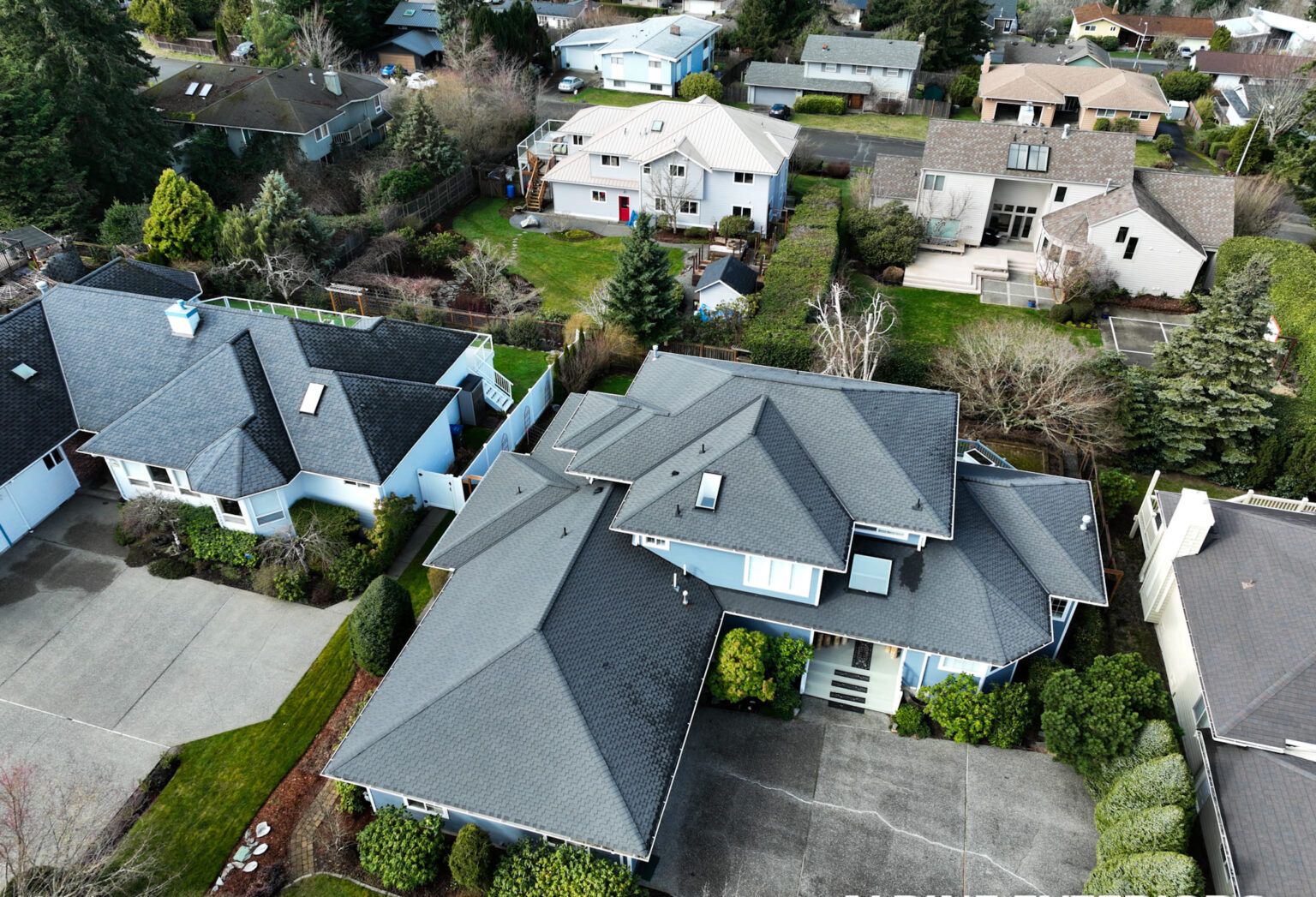
Once material is on order and the schedule is set, the sequence on-site is fairly consistent from house to house, though the specifics shift depending on what's found once the old siding comes off:
A few days of preparation before the crew arrives makes the job go faster and protects your property. Clear a perimeter of at least a few feet around the house — patio furniture, potted plants, gas grills, and anything leaning against exterior walls needs to move, since scaffolding and ladders will need that space. Vehicles should be moved out of the driveway closest to the work area. If you have an exterior security system, cameras, or motion lights mounted to the siding, let the crew know in advance; those fixtures typically have to come down during tear-off and get remounted once the new siding is up.
Pets and small children should be kept away from the work zone during active hours — nail guns, ladders, and falling debris don't mix well with curious kids or dogs. Inside the house, it's worth walking around and noting any pictures or shelving hung on exterior walls, since vibration from tear-off and fastening can occasionally jostle items loose on the interior side. Finally, settle on your final color and material choice before the crew shows up; mid-project changes are possible but almost always mean a delay while new material is special-ordered.
If the scope of work required a permit, the local building inspector signs off at the relevant stages — commonly after sheathing repair and weather barrier installation, and again at final completion. Even on jobs that don't require a permit, we hold ourselves to the same sequence internally, because those are the stages where problems are cheapest to fix.
Daily cleanup matters more on a siding job than people expect. Old siding, cut-offs, and packaging generate a fair amount of debris, and nails and screws can end up in the yard or driveway. A magnetic sweep of the work area at the end of each day, and again at project completion, is standard practice — a small step that prevents a flat tire or a barefoot injury weeks later. Once the last piece of trim is caulked and painted, we walk the exterior with the homeowner, checking every elevation for fastener pattern, caulking lines, paint coverage, and trim fit, and noting anything that needs a touch-up before calling the job complete.
New siding in this climate isn't maintenance-free, even with a durable material choice. Whatcom County's combination of shade, moisture, and mild temperatures is close to ideal for moss and algae growth, and a north-facing wall that never fully dries out will eventually show green or black staining regardless of what it's clad in. A gentle annual or biennial soft wash — low pressure, not a pressure washer aimed directly at seams and laps — keeps that growth from taking hold and extends the life of caulking and paint finishes.
Manufacturer warranties on the siding material itself, typically covering defects in the product, are separate from the workmanship warranty that covers installation. Alpine Exteriors stands behind the installation work we perform, and we'll walk through exactly what's covered and for how long before the contract is signed, rather than leaving warranty terms as a footnote. It's also worth keeping an eye on gutters after a re-side; overflowing or clogged gutters are one of the more common causes of new siding developing water staining or trim rot within the first few years, and it has nothing to do with how the siding itself was installed.
It depends on scope. A like-for-like re-side that doesn't touch sheathing or window openings often doesn't require a permit, but any project that replaces sheathing, adds continuous insulation, or alters window or door openings generally does, and has to meet Washington State Energy Code requirements for Climate Zone 5. We confirm the requirement with the City of Sumas or Whatcom County Planning & Development Services, depending on the property's location, before scheduling work.
Most single-family homes take one to three weeks of on-site labor, depending on square footage, the amount of trim detail, and how much wood rot repair is needed once the old siding comes off. Add in the weeks needed for material lead time and permitting ahead of time, and the full process from signed contract to finished walkthrough commonly runs six to ten weeks.
Fiber cement is popular here because it doesn't feed moss and algae growth the way untreated wood siding can, and it holds paint well through repeated wet-dry cycles. Vinyl performs reasonably well and costs less upfront but can become brittle during hard cold snaps and freeze-thaw swings in the foothills. Cedar looks excellent and is traditional in this region but needs more consistent maintenance to resist rot in a climate this wet. The right choice depends on budget, maintenance tolerance, and how much shade the walls get.
They can, particularly in late fall and winter when strong outflow events push cold air and wind down through the gap from the Fraser Valley. We watch the forecast closely for jobs in and around Sumas and won't leave a wall open to weather-resistive barrier or bare sheathing ahead of a wind event; if a forecast looks questionable, we sequence the work to keep exposed sections to a minimum rather than push through and risk water intrusion.
If you're weighing a siding replacement in Sumas or anywhere else in Whatcom County — Bellingham, Ferndale, Lynden, Blaine, Birch Bay, Sudden Valley, or the islands — Alpine Exteriors can walk your property, point out what's driving the decision (rot, aging material, energy performance, or simply appearance), and lay out a realistic timeline and material plan before any commitment is made. Alpine Exteriors holds Washington contractor license ALPINI751OW; reach out to schedule a walkthrough and get a written scope specific to your home.