
Deming sits in the shadow of the Mount Baker foothills, along the Nooksack River corridor, under more tree cover and more consistent cloud cover than the shoreline towns closer to Bellingham Bay. That geography changes what actually wears out siding here. Homes in Deming don't take the same wind-driven rain off the Strait of Georgia that a house in Blaine or Birch Bay contends with. What they do take is shade, dampness that lingers longer because the tree canopy slows drying time, and a wider temperature swing in winter as cold air pools in the valley and pushes toward freezing more often than it does right on the water. That combination of prolonged moisture and periodic freeze-thaw cycling is a slower, quieter kind of stress than a coastal storm, but it's just as capable of shortening a siding system's life if nobody's checking on it.
Add in the fact that a lot of Deming and greater Whatcom County housing stock includes older wood lap siding, cedar shakes, and early-generation hardboard products that were never rated for how wet our shoulder seasons actually run, and you get a region where an annual walk-around inspection pays for itself. Catching a soft board or a failed caulk joint in October, before six more months of rain sets in, is the difference between a patch and a full wall section replacement. This checklist is built around what we actually see in the field on Deming homes — not a generic list written for a drier climate.
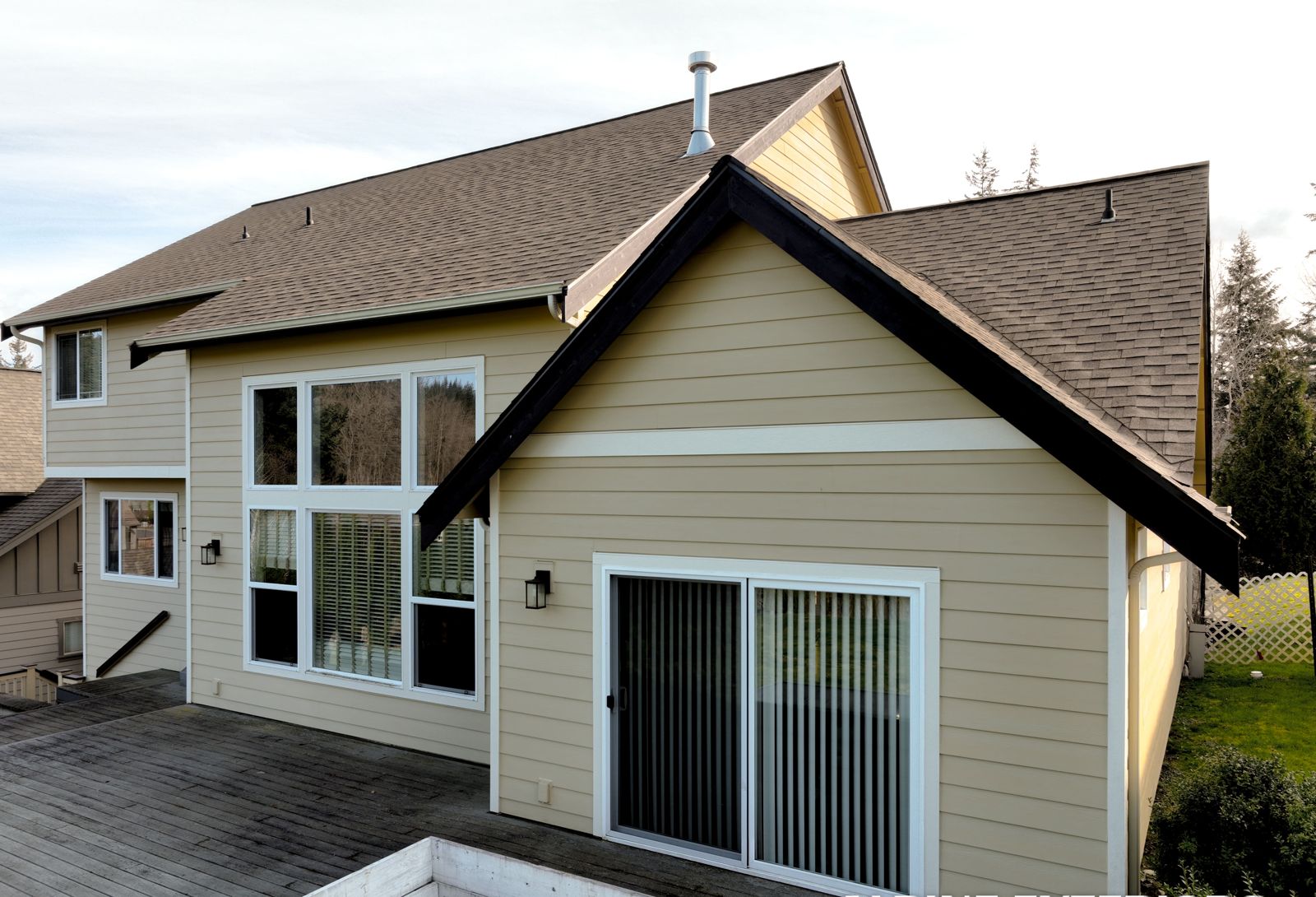
Not every item on this list means a full siding replacement, and it's worth being honest about that up front. A single cracked caulk line at a window trim board is usually a same-day fix — clean out the old caulk, let the substrate dry fully (which can take longer than you'd expect in our climate), and re-caulk with an exterior-grade, paintable sealant rated for our temperature range. Surface moss and algae staining can often be treated with a gentle wash and a moss-inhibiting treatment rather than replacement, provided the wood underneath tests firm.
Where it gets more involved is anything that fails the screwdriver test for soft wood, any flashing that's missing or rusted through, or staining that's shown up on an interior wall. Those aren't cosmetic issues — they mean water has already gotten past the first line of defense, and the fix usually requires opening up the affected section to see how far the damage has spread before anyone can give you an honest scope of work. Patching over active rot without removing it doesn't solve anything; it just hides the problem for another season.
If you catch an issue that's spread across more than a wall or two, or if you're finding the same failure pattern repeated in multiple spots, that's usually a sign of a systemic installation issue — wrong flashing detail, insufficient clearance, or a product that was never well-suited to this climate — rather than isolated wear. That distinction matters for how the repair should be scoped.
A homeowner can reasonably handle the visual walk-around, the caulk touch-ups, and a basic moss wash. Call a licensed siding contractor when you find soft or rotted wood, when flashing needs to be replaced rather than resealed, when there's any sign of moisture inside the wall cavity, or when you're not sure whether what you're looking at is surface staining or something structural. It's also worth a professional opinion any time a repair estimate starts creeping toward the cost of just replacing a full wall section — sometimes patching is genuinely the better value, and sometimes it's just delaying a bigger bill.
Alpine Exteriors inspects homes throughout Deming and the rest of Whatcom County, including Bellingham, Ferndale, Lynden, Blaine, Birch Bay, and Sudden Valley, and we're straightforward about which items on a list like this are minor maintenance versus which ones warrant a closer look. We hold Washington contractor license ALPINI751OW, and we'd rather tell a homeowner a repair is small than talk them into more work than the house needs.
Once a year is a reasonable baseline for most homes, ideally in early fall before the heavy rain season sets in, with a quick follow-up look after any major windstorm. Homes with heavy tree cover or wood siding benefit from checking twice a year, since shaded walls hold moisture longer and give moss and rot more time to establish between inspections.
It's more than cosmetic, though it's not usually an emergency either. Moss holds water against the siding surface well after the rest of the wall has dried, and that prolonged dampness is exactly the condition that lets wood rot start. Treating moss early, before it's thick enough to hold a visible water film, is a lot cheaper than dealing with rot later.
It can, depending on scope. The Washington State Energy Code governs insulation and air-sealing requirements for new construction and for many remodel projects, and a siding replacement that opens up the wall assembly is often the point where those requirements come into play. It's worth asking your contractor whether your specific project triggers code-required upgrades before work starts, since that affects both the scope and the budget.
Painting over failed caulk doesn't restore its ability to flex and seal — it just hides the crack temporarily, and the gap underneath is still an entry point for water. The more durable fix is to remove the old caulk, confirm the substrate is dry, and apply a fresh bead of exterior-grade sealant before any repainting happens.
If your walk-around turned up soft wood, failed flashing, or anything you're not sure how to read, Alpine Exteriors offers on-site siding inspections for homeowners throughout Deming and the surrounding Whatcom County communities. We'll walk the exterior with you, point out what's genuinely urgent versus what can wait, and give you a straightforward assessment before any work is proposed.