
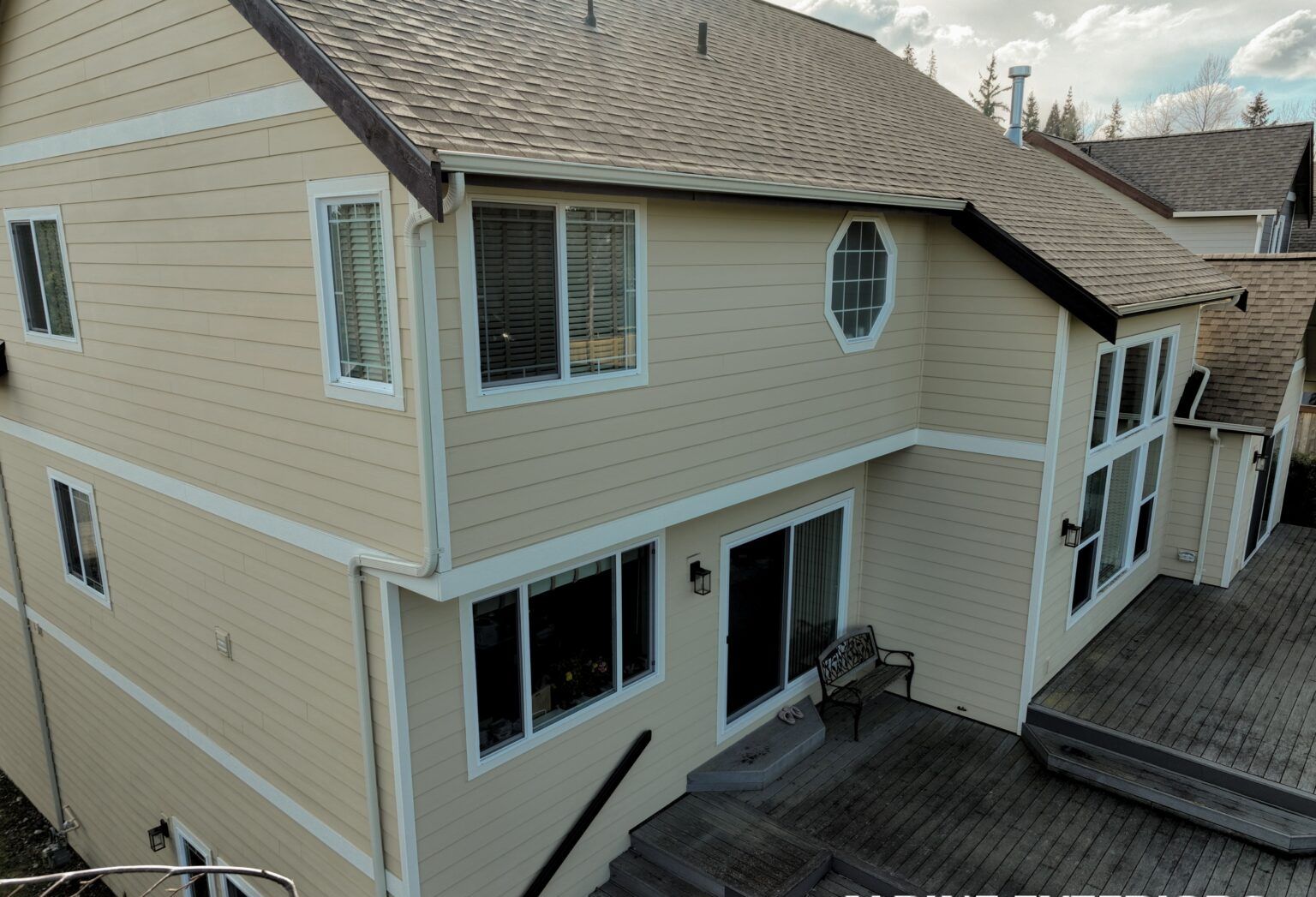
If a windstorm off the Nooksack River valley, a falling cedar or fir limb, or a hard winter freeze has left your Deming home's siding cracked, buckled, streaked, or peeling away from the wall, the first move is a slow walk around the exterior with your phone camera, not a call to a random handyman. Most siding damage in Deming falls into one of two very different buckets — sudden impact damage from wind and debris, or slow moisture and rot damage that's been building for years and just became visible after the last storm — and insurers, and contractors, treat those two situations very differently.
Alpine Exteriors inspects storm-affected siding all along the Mount Baker Highway corridor, including Deming, Nugents Corner, and the rural county roads in between, and can usually tell within one visit which bucket a given problem falls into and what it actually takes to fix it. That distinction matters more than it sounds, because a repair that would take an afternoon can turn into a multi-day re-side if rot has already spread inside the wall, and the fix an insurer will pay for depends heavily on whether the damage reads as sudden or gradual.
Deming sits in the foothills along the Nooksack River, upriver and uphill from Bellingham and Ferndale, and that position changes how weather interacts with a house. Rain here isn't usually a single dramatic event — it's day after day of steady, low-intensity rain moving up the valley, and siding that doesn't shed water quickly stays damp for long stretches at a time. That persistent dampness is what drives two of the most common problems seen on Deming homes: moss and algae growth on shaded, north-facing and tree-covered walls, and wood rot in fiber cement, wood, or engineered wood siding wherever caulking has failed, trim has separated, or a J-channel was cut a little short during the original install.
Moss holds moisture against the wall long after the rain stops, and once water gets behind a panel or into an end-cut that wasn't sealed, rot can spread inside the wall cavity for a season or more before it ever shows as a soft spot or a stain on the outside. By the time a homeowner notices bubbling paint or a section of siding that flexes under a thumb, the damage is usually already several years old, even if a recent storm is what finally pushed it over the edge.
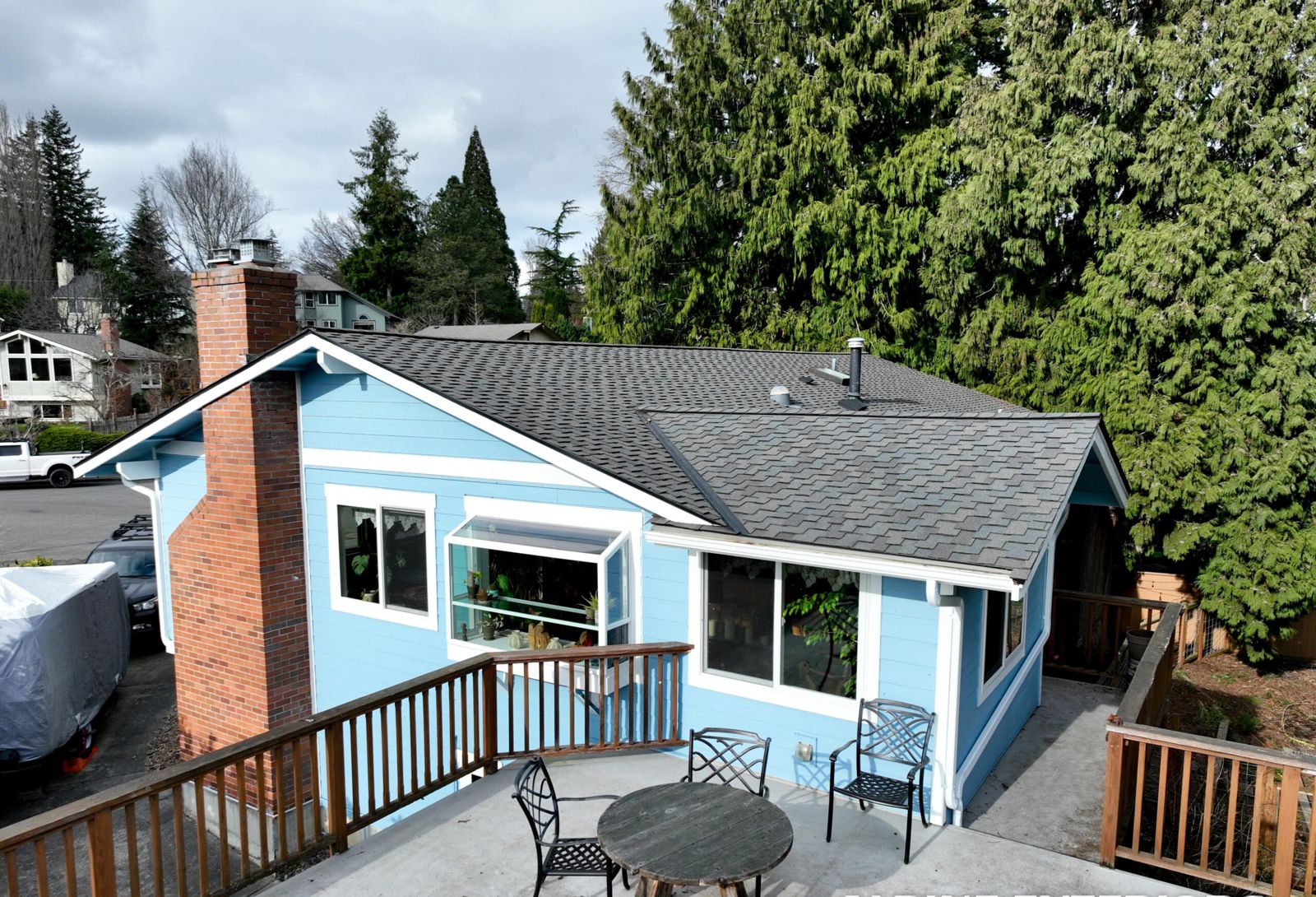
Coastal parts of the county — Blaine, Birch Bay, and the Bellingham waterfront neighborhoods — deal mainly with wind-driven rain coming straight off Bellingham Bay and the Strait, where gusts push water sideways into seams and fastener holes that were never built to face standing water pressure. Deming's exposure is a different animal. It sits inland and up in elevation, tucked against the foothills of the Cascades on the way to Mount Baker, so winter lows run colder and more often than they do in Bellingham or Blaine, and that means Deming siding goes through more freeze-thaw cycling. Water that soaks into a hairline crack, a nail hole, or the cut edge of fiber cement board expands when it freezes overnight and pries the damage open a little wider every time the temperature swings back above freezing the next afternoon. Over a full winter, that cycle can turn a small crack into a section of siding that needs full replacement.
Deming also sits under heavier tree canopy than most of the rest of the county, with mature fir, cedar, and big-leaf maple close to a lot of properties, so wind events here tend to bring down limbs and sometimes whole trees rather than just driving rain sideways — impact damage from falling debris is a much bigger share of what gets called out for in Deming than it is along the coast. The river valley setting adds one more wrinkle worth knowing about: homes close to the Nooksack floodplain carry a flood exposure that homes in Bellingham or on the islands simply don't have, and that matters for how insurance treats water damage.
Start with a methodical inspection rather than a quick glance from the driveway. Walk the full perimeter of the house, including any walls that back up to trees or sit in near-constant shade, and look for:
Photograph everything before you touch or clean any of it, with a wide shot and a close-up of each area, and note the date. If a specific windstorm or freeze event caused the damage, write down when you first noticed it and, if you can, the date of the storm itself — insurers care a great deal about whether damage was sudden and identifiable or gradual and ongoing, because most homeowner policies cover the former and specifically exclude the latter as a maintenance issue.
Call your insurance agent before you call a contractor if the damage looks like it came from a single event such as a fallen limb, high winds, or hail, and ask directly whether your policy treats gradual water intrusion or wood rot as a covered peril or an exclusion, because policy language varies more than people expect. If the Nooksack is anywhere near your property, also ask specifically whether your policy includes flood coverage, since standard homeowner policies in Washington typically exclude rising water and require a separate flood policy through the National Flood Insurance Program. Get an independent contractor assessment in parallel with any insurance claim, not after it, so you have your own documented opinion on cause and scope before an adjuster forms one.
When any wall assembly is opened up for a real repair rather than a cosmetic patch, ask whether the work triggers Washington State Energy Code requirements for continuous insulation or a water-resistive barrier upgrade, since a full-wall re-side is often the point where it makes sense to bring an older Deming home's envelope up to current code rather than simply replacing what was there. Alpine Exteriors can walk a homeowner through which parts of a repair are purely cosmetic and which ones touch code-required work, and will say plainly when a full re-side isn't necessary and a targeted repair will hold.
In most standard homeowner policies, wind and falling-object damage — a limb coming down on siding during a storm — is treated as a sudden, covered peril, but the specifics depend on your policy's language and deductible, and an insurer may still try to characterize part of the damage as pre-existing rot if the siding was already compromised before the branch fell, so document the siding's condition and the storm date as clearly as you can.
Deming's tree cover and foothill setting mean more shade and slower drying time after rain than a more open, coastal lot gets, and moss needs exactly that combination of moisture and shade to establish itself, so north-facing and tree-shaded walls here often show growth within a season or two where an open, sun-exposed wall in town might stay clean for years.
Not usually — code triggers generally scale with how much wall assembly is being opened up, so a small patch repair rarely forces an energy-code upgrade, but once a project moves into full-wall or whole-house re-siding, continuous insulation and water-resistive barrier requirements typically do come into play, and it's worth confirming the scope with your contractor before work starts rather than after.
Sudden storm damage usually looks mechanical — a cracked or split panel, a dent, a piece knocked loose or missing entirely — while rot tends to look organic, with soft or discolored material, bubbling paint, and damage concentrated at seams, corners, and low points where water collects, and a contractor who can get behind the siding, not just look at the surface, is usually the fastest way to tell the two apart.
If a recent storm left you looking at cracked panels, a downed limb, or a stretch of siding that suddenly looks worse than it did last fall, don't wait for it to get worse over another wet winter. Alpine Exteriors, Washington contractor license ALPINI751OW, serves Deming and the rest of Whatcom County from Bellingham and Ferndale out to Lynden, Blaine, Birch Bay, Sudden Valley, and the islands, and can come out, document what's actually happening on your walls, and give you a clear read on what's a repair, what's a re-side, and what your insurance should be paying for before you spend a dollar.