
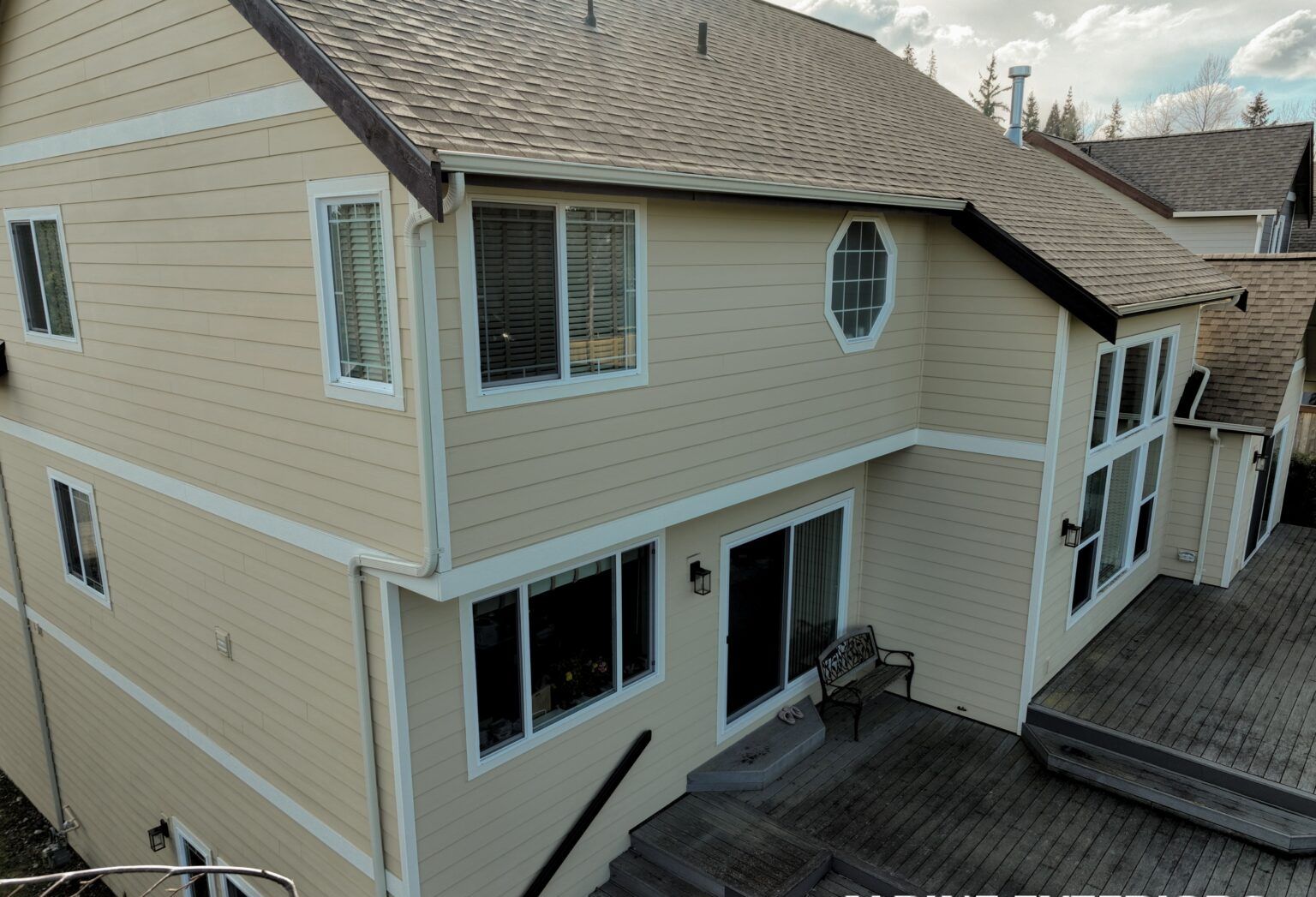
Yes. Siding on a Geneva home isn't just a finish material — it's a code-regulated weather-resistive assembly, and it has to be installed to the manufacturer's tested instructions or it's technically not compliant with the Washington State Building Code. That means the fastener spacing, the type of house wrap or building paper underneath, the flashing at windows and doors, and even how far the bottom course sits above grade are all things a Whatcom County inspector can flag, not just aesthetic choices left to the installer's judgment.
Washington adopts the International Residential Code (IRC) with state amendments as the Washington State Building Code, and Whatcom County's building division enforces it on every permitted residential job, including re-siding projects that go past a simple like-for-like replacement. Two threads matter most for siding specifically: product approval and wind resistance.
On product approval, Washington doesn't run a separate state-level approval program the way some coastal states do. Instead, the code relies on the siding manufacturer's ICC-ES evaluation report (or equivalent testing to the relevant ASTM standard — ASTM D3679 for vinyl siding, ASTM C1186 or C1186-equivalent testing for fiber cement, and manufacturer wind-load testing for engineered wood and lap siding) to establish that a given product, installed a given way, meets the wind and weather-resistance requirements of the IRC. The inspector's job is to confirm the installation matches what that report says — correct fastener type, correct penetration depth, correct nailing pattern, correct clearance above roofing and grade — not to re-derive the engineering from scratch.
On wind, the IRC assigns every jurisdiction an ultimate design wind speed pulled from the ASCE 7 wind maps referenced in the code, and most of the Puget Sound lowlands and Whatcom County's populated valley and lake areas fall in the broad range shown on those maps for western Washington — generally in the 85–100 mph ultimate design wind speed band, well below the design speeds used in hurricane-prone regions but still enough that fastening schedules aren't optional. That wind speed, combined with the exposure category assigned to the specific lot (open exposure near the lake or a ridge, versus sheltered exposure in a tree-buffered subdivision), determines how tightly siding has to be fastened and what starter and corner details are required to keep panels from lifting in a gust.
Geneva sits on the north end of Lake Whatcom, in the transition zone between Bellingham's lowland neighborhoods and the forested foothills that climb toward the Mount Baker foothills. That position creates a specific mix of conditions that generic siding advice doesn't cover well.
Start with the site, not the product. A lakeside lot in Geneva with open exposure toward the water needs a tighter fastening schedule and more attention to flashing than a similar house tucked into trees a half-mile inland, even though both are technically in the same jurisdiction. Ask whoever quotes the job to identify which exposure category applies to your specific lot and to walk through the fastening pattern that follows from it, rather than quoting a generic installation.
Second, ask what's happening behind the siding, not just what product goes on top. A weather-resistive barrier that's correctly lapped, taped, and integrated with window and door flashing does more to prevent the wood rot and hidden moisture damage common in this area than upgrading to a more expensive siding product installed the same sloppy way. If your existing siding is coming off, that's the point where a contractor should be checking sheathing for soft spots and rot, especially at lower courses, deck ledgers, and anywhere water has historically pooled or run.
Third, budget for maintenance that fits the climate. Moss and algae growth on lake-facing and shaded elevations is close to inevitable here regardless of product choice; a soft wash on a reasonable interval keeps it from staining or degrading the surface, and it's far cheaper than replacing panels that failed early because growth was left to sit. Expect siding replacement or major re-siding work in this region to run in a broad range depending on square footage, product (vinyl, fiber cement, and engineered wood price out very differently), and how much sheathing repair is needed underneath — get itemized numbers rather than a single lump sum so you can see what's driving the cost.
Fourth, don't assume permit-free means inspection-free judgment doesn't matter. Simple like-for-like siding replacement on a single-family home is often exempt from a Whatcom County building permit, but that exemption doesn't lower the bar for how the work should be installed — it just means no inspector is going to catch a bad fastening pattern or missing flashing before it becomes a leak. Alpine Exteriors treats every siding job to the same fastening and flashing standard whether or not a permit is pulled, because the wind and rain exposure on a given lot doesn't change based on paperwork.
Fifth, get a straight answer about drawbacks before you commit to a product. Vinyl siding is the most affordable option and handles moisture well, but it can become brittle and crack in sustained cold snaps if it's a lower-grade product, and it won't hold up as well to direct impact as fiber cement. Fiber cement resists moisture, pests, and fire better and holds paint longer, but it's heavier, costs more to install, and requires more careful fastening to avoid cracking. Engineered wood siding looks closer to traditional cedar and is lighter to work with, but it depends more heavily on correct flashing and maintenance to avoid the moisture problems that gave older wood siding a bad reputation in this climate. None of these is a wrong answer — the right one depends on your specific lot, budget, and how much upkeep you want to take on.
Straightforward like-for-like siding replacement on an existing single-family home is often exempt from a building permit under Whatcom County's rules, but any work that adds sheathing, changes the wall assembly, or is part of a larger remodel usually does require one. Because exemption rules can change and depend on the specific scope of work, it's worth a quick call to Whatcom County Planning and Development Services or having your contractor confirm before work starts, rather than assuming.
Whatcom County's populated lowland and lake areas, including Geneva, fall within the ultimate design wind speed range shown on the ASCE 7 maps referenced by the Washington State Building Code for western Washington — generally in the 85 to 100 mph band, well below hurricane-region design speeds. The exact fastening schedule required depends on the exposure category assigned to your specific lot (open versus sheltered) and the siding manufacturer's tested installation instructions for that wind speed.
Geneva's position near Lake Whatcom and under significant tree cover means humidity and shade linger on north- and lake-facing walls longer than they do on more open, sun-exposed lots elsewhere in the state. Moss and algae need sustained moisture to establish, and that's exactly what this microclimate provides, so regular soft washing and keeping vegetation trimmed back from the house make a bigger difference here than they would in a drier climate.
Yes. If your re-siding project includes continuous exterior insulation to meet Washington State Energy Code wall requirements, fasteners need to be long enough to penetrate the insulation and still achieve full bite into the framing, which is a different calculation than fastening siding directly over sheathing. This is a detail worth confirming against the specific siding and insulation manufacturers' combined installation guidance rather than assuming standard fastener lengths apply.
If you're weighing a siding replacement or repair on a Geneva property and want a straight assessment of what your specific lot's exposure and moisture history call for, Alpine Exteriors can walk the site, check what's happening behind the existing siding, and lay out product and fastening options suited to this part of Whatcom County. Alpine Exteriors holds Washington contractor license ALPINI751OW and works throughout the Bellingham, Lynden, Ferndale, Blaine, Birch Bay, Sudden Valley and island communities, so reach out for a site visit and a straightforward, itemized quote.