
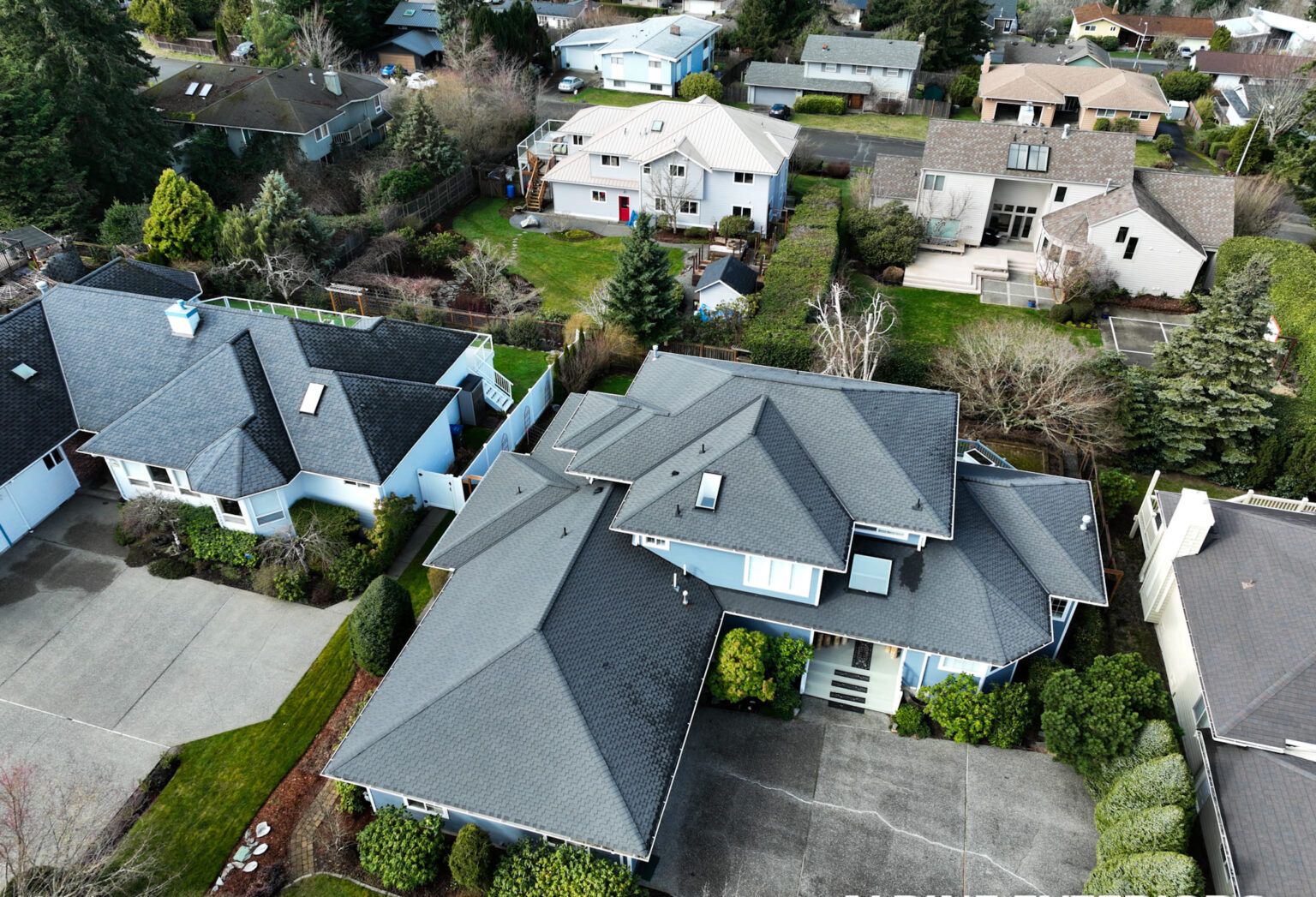
In Everson, siding has to meet two things at once: the wind-resistance testing behind the product itself, and the fastening schedule the manufacturer published to earn that rating, installed the way Washington's adopted building code requires. In practice that means the siding your contractor proposes needs a documented wind-load rating from the manufacturer, and the crew needs to nail, screw, or clip it exactly to that manufacturer's instructions — because under the code those instructions are treated as the enforceable standard once the county has approved the product.
Whatcom County, like the rest of Washington, enforces the Washington State Building Code, which is the International Residential Code (IRC) as amended for this state, layered with the Washington State Energy Code for insulation and air-sealing requirements. Neither of those documents lists a single wind speed number for "siding" the way people sometimes expect. Instead, the IRC sets a design wind speed and exposure category for the jurisdiction — Whatcom County sits in a moderate wind zone by national standards, well below hurricane-prone regions, but not zero — and cladding products are required to be installed per their tested and labeled fastening schedule for that exposure. That schedule comes from the manufacturer's ICC-ES evaluation report or equivalent product testing, not from a number a contractor picks. For fiber cement, vinyl, and engineered wood siding, this usually shows up as a required nail or screw type, minimum fastener penetration into structural sheathing or framing, maximum spacing along studs, and clearance requirements at butt joints, corners, and openings. A product installed with the wrong fastener spacing can look identical to a correctly installed one on the day it goes up, and still fail during the county's inspection — or worse, during the first real windstorm.
Beyond fastening, the code and the county's inspection process also touch the water-resistive barrier (WRB) behind the siding, flashing at windows, doors, and any roof-to-wall transitions, and the minimum clearance between the bottom of the siding and grade, decks, or roofing. None of that is exotic; it is the same package of rules applied everywhere in the state. What changes from region to region is how much margin for error the local climate actually allows, and that's where Everson's specific conditions matter.
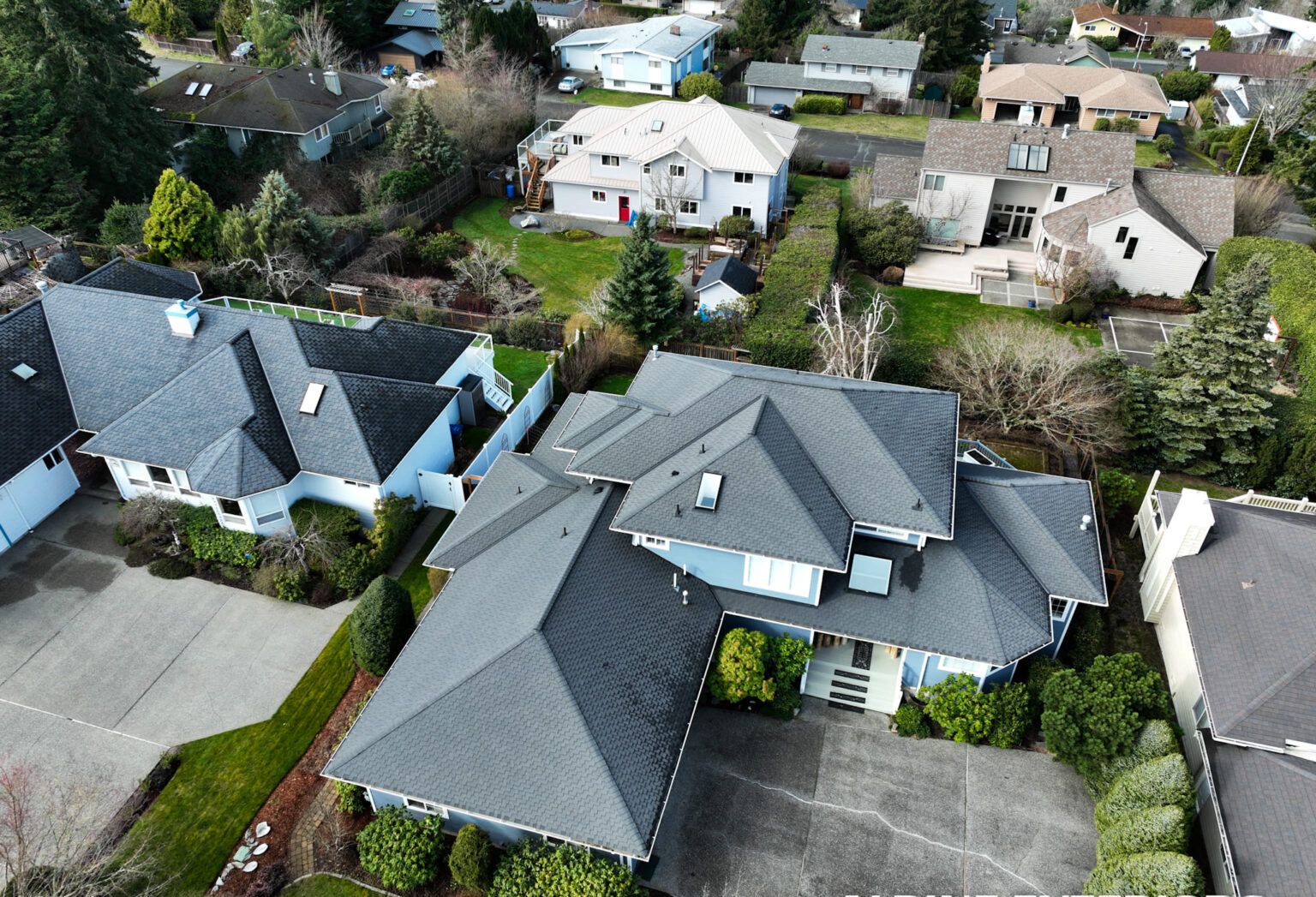
Everson sits inland from Bellingham Bay in the Nooksack River valley, close to the Sumas Gap where cold, dense air periodically funnels down from the Fraser Valley in British Columbia during winter outflow events. These aren't hurricane-force winds, but they're a real, well-documented local wind pattern that produces sustained gusts stronger than what you'd see on a typical inland site the same distance from the coast — different from the wind-driven rain that hits Blaine, Birch Bay, and the shoreline west of town, but not gentler. A siding installation that would hold up fine on a sheltered lot in south Bellingham can be marginal on an open field edge near Everson if the fastening schedule wasn't matched to actual site exposure.
Layered on top of that is the everyday reality of Whatcom County weather: long stretches of persistent rain rather than isolated storms, which means any gap in flashing or WRB coverage gets tested repeatedly instead of once. Moss and algae growth on north-facing and shaded siding is routine here, and while it's mostly cosmetic, trapped moisture behind poorly lapped siding or blocked weep paths contributes to wood rot at trim, fascia, and sheathing over time — a slower problem than wind damage, but one inspectors and experienced installers both watch for. Because Everson is close to the foothills rather than directly on the water, it also sees more freeze-thaw cycling in winter than the immediate coastline; damp siding and trim that freezes and thaws repeatedly is more prone to cracking and fastener loosening than the same materials in a milder coastal microclimate. None of this is hurricane country, and no legitimate contractor should be pricing your job as if it were — but it's also not a climate where fastening shortcuts go unnoticed for long.
Ask your contractor for the manufacturer's fastening schedule for the specific siding product and your site's wind exposure, not just a verbal assurance that "it's rated for this area." A reputable installer can show you the installation instructions and explain how the fastener spacing was determined for your house, not a generic townwide default. Confirm the WRB and flashing plan before the first course of siding goes up — this is much cheaper to get right the first time than to correct after the siding is on. If your lot is exposed — open field, ridge, or a clear wind path down from the Sumas Gap — say so, since it can change the fastening spec even within the same small town.
Pull a permit through Whatcom County (or the Town of Everson directly, depending on jurisdiction and scope) for any full re-side, and don't skip the inspection even if it feels like extra hassle for a straightforward job — the inspection is the checkpoint that catches fastener and flashing errors before they're hidden behind trim. Budget realistically: fiber cement siding in this region typically runs several thousand dollars more than vinyl for a comparable house due to material and labor cost, but tends to hold paint and resist moss staining better over the long term, while vinyl is lower cost upfront and low-maintenance but can be more susceptible to wind flex and cracking in cold snaps if the fastening isn't done correctly. Neither is automatically the "right" answer — it depends on your budget, your home's exposure, and how much maintenance you're willing to do. Alpine Exteriors works through this trade-off with homeowners directly, matching the product and fastening plan to the actual site rather than a one-size answer, and can walk you through what a Whatcom County inspector will specifically be checking on your job before work starts.
Not a separate legal standard — the same Washington State Building Code applies countywide — but the practical fastening spec can differ by site because Everson's exposure to Sumas Gap outflow winds and open valley terrain is different from a sheltered in-town Bellingham lot or the shoreline exposure in Blaine and Birch Bay. The code accounts for this through exposure category and manufacturer fastening tables rather than a town-by-town wind number.
Inspectors generally verify the water-resistive barrier is installed and lapped correctly, flashing is in place at windows, doors, and wall penetrations, fasteners match the type and spacing called for in the manufacturer's installation instructions, and required clearances from grade, roofing, and decks are met. They are not evaluating paint color or cosmetic finish — the inspection is about moisture management and structural attachment.
Both can meet code when installed to their respective manufacturer's fastening schedule; the real-world difference shows up more in moisture and cold-weather performance than in wind alone. Fiber cement tends to hold up well against moss staining and rot risk over decades but costs more upfront, while vinyl is more budget-friendly but can become brittle and more prone to cracking in freeze-thaw conditions if fastener spacing or clearances weren't done correctly.
In most cases, yes — a full siding replacement typically requires a permit and inspection through the county or town, particularly when the water-resistive barrier and flashing are being redone, which they should be on any full re-side. Simple spot repairs on a small area may not require a permit, but it's worth confirming with the local building department before starting, since the threshold can depend on scope.
If you're planning a siding project in Everson or anywhere else in Whatcom County — from Bellingham and Ferndale out to Lynden, Blaine, Birch Bay, Sudden Valley, or the islands — Alpine Exteriors can walk your site, confirm the wind exposure and fastening plan for the product you're considering, and handle the permitting and inspection process with the county. Alpine Exteriors holds Washington contractor license ALPINI751OW; contact us for a straightforward assessment of what your home actually needs before any work begins.