
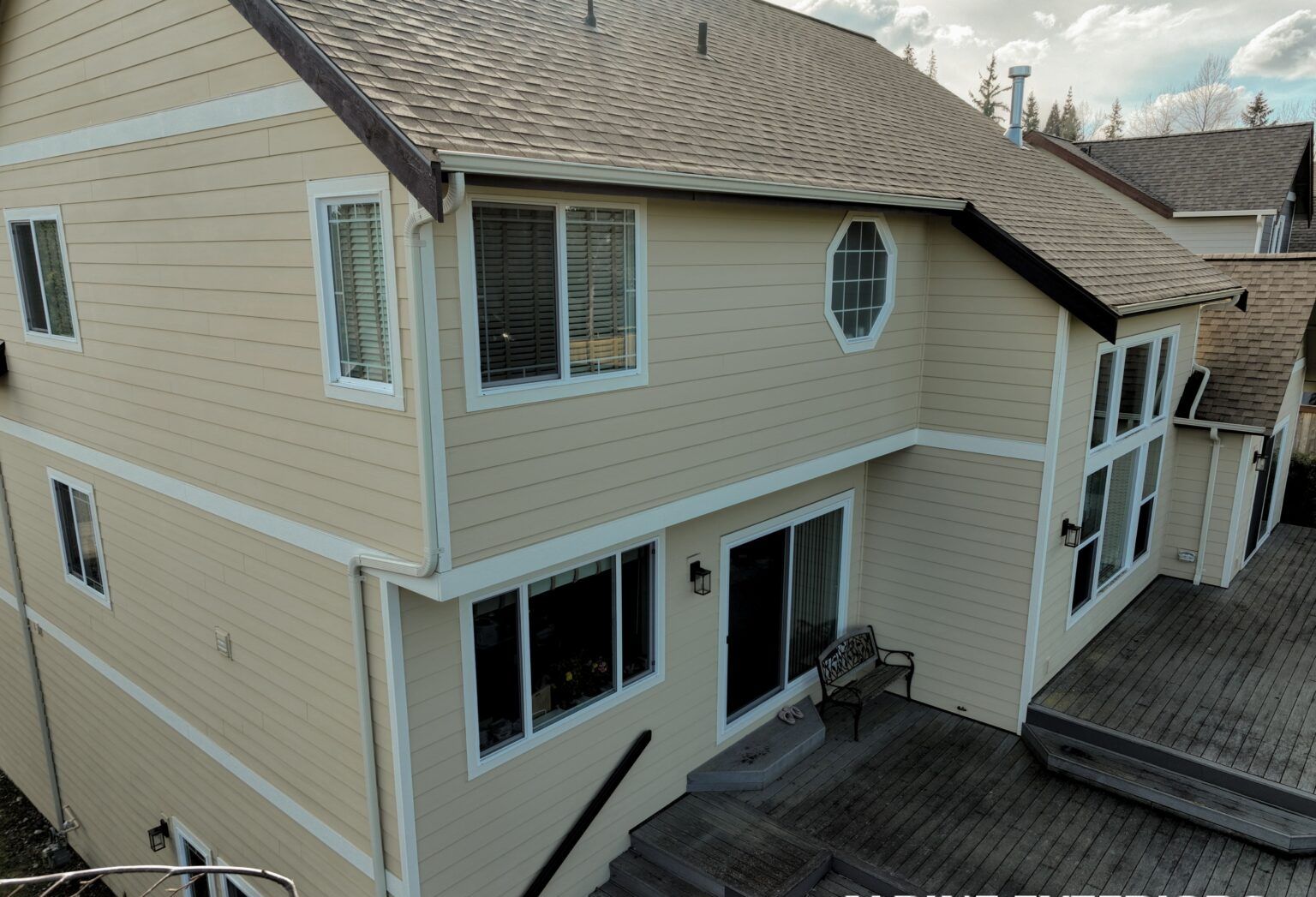
In most cases, yes. Replacing siding on more than a small section of a house inside Ferndale city limits requires a building permit from the City of Ferndale, and if your property sits outside the city in unincorporated Whatcom County, the same project is permitted through Whatcom County Planning & Development Services instead. Which office you deal with depends entirely on which side of the jurisdictional line your parcel falls on, not on which contractor you hire or how the work is described on an estimate.
That split trips up a lot of homeowners in this area, because Ferndale's city boundary doesn't line up neatly with how people talk about the town. A house on the west side near the Nooksack River delta or along Main Street is inside city limits and goes through the city. A house a few miles out toward Lynden Road, Grandview, or the Cherry Point area may still have a Ferndale mailing address but sit in unincorporated county land, which means the county's permitting desk is the correct one. The same logic applies across the rest of Alpine's service area — Blaine, Birch Bay, Sudden Valley, and the islands each have their own mix of incorporated and unincorporated parcels, and the wrong office simply won't have your project on file.
The trigger isn't "did you touch the siding," it's how much of the wall assembly the work exposes. Spot repairs — replacing a handful of damaged boards, patching a section behind a downspout, or recaulking trim — generally don't require a permit in either jurisdiction, because they don't open up the weather-resistive barrier (WRB) or sheathing underneath. A full or majority tear-off and re-side does require one, almost always, because once the old siding comes off, the inspector needs to see the house wrap, flashing at windows and doors, and the condition of the sheathing before any of it gets covered back up. Projects that combine siding with window or door replacement, or that turn up rot requiring sheathing repair, also cross into permit territory even if that wasn't the original plan.
Once a permit is pulled, expect at least one mid-project inspection — the WRB or "wrap" inspection — before the new siding goes on, and a final inspection once the job is closed out. The WRB inspection is the one that actually matters most for long-term performance: the inspector is checking lap direction, flashing integration at penetrations and openings, and that the barrier is continuous, because any gap there is where water gets behind the cladding later. Projects that add insulation or otherwise change the wall assembly also need to show compliance with the Washington State Energy Code (WSEC), which governs things like continuous insulation values and vapor retarder placement for exterior walls in this climate zone. Skipping the permit doesn't just risk a stop-work order — it can also become a real problem at resale, since a title company or buyer's inspector will ask for permit history on any visible re-siding job.
Alpine Exteriors pulls permits as a routine part of re-siding jobs that meet the threshold, rather than leaving it to the homeowner to sort out after the fact. Under Washington contractor license ALPINI751OW, that means the permit is filed, the WRB inspection is scheduled at the right point in the build sequence, and the final sign-off happens before the crew calls the job done — not something bolted on afterward.
Permitting rules on paper are similar across most of western Washington, but what inspectors here actually scrutinize is shaped by the weather. Whatcom County gets sustained, low-intensity rain for long stretches of the year rather than short heavy storms, and that changes how a wall assembly fails. Water doesn't need to be driven hard against a house to find a weak lap or a missed flashing detail — it just needs time, and this region gives it plenty. Wind-driven rain off Bellingham Bay and the Strait of Georgia adds a directional component in the more exposed spots — Blaine, Birch Bay, and the west-facing sides of homes near the water take more sideways moisture than a sheltered lot a few miles inland, so flashing and lap details on those elevations get extra attention during inspection.
Moss and algae are a constant here in a way they simply aren't in drier parts of the state. Shaded north walls under tree cover, especially around Sudden Valley and the wooded lots near Lake Whatcom, stay damp longer between rain events, and that sustained moisture is what turns cosmetic algae staining into actual wood rot at seams and butt joints over a few years. It's also why a permit inspector examining an older wall during a tear-off will often find soft sheathing that wasn't visible from the outside — the siding looked fine, but the barrier behind it had already failed. Up in the foothills toward Sudden Valley, freeze-thaw cycling adds another stress: water that gets into a crack or seam during a cold snap expands and works the joint wider each time it refreezes, which is a slower, more mechanical kind of damage than the coastal lots see. None of this is hurricane-country engineering — there's no wind-uplift rating or missile-impact standard in play — but the WSEC's insulation and moisture-management requirements exist specifically because this climate rewards a well-sealed, well-drained wall and punishes a sloppy one within a few winters.
Start by confirming which jurisdiction your parcel actually falls under before assuming anything based on your mailing address — Whatcom County's parcel lookup or a quick call to either the city or county permitting desk settles it in a few minutes and saves a rejected application later. If you're getting quotes, ask each contractor directly whether the permit is included in their scope and who's responsible for scheduling the WRB inspection; a bid that's noticeably lower than others is sometimes lower because it's assuming a permit-free scope that won't hold up once the tear-off actually starts. Verify any contractor's license is current and bonded — Alpine Exteriors' Washington license number is ALPINI751OW, and any legitimate contractor working in the state should have theirs ready to share without hesitation.
Budget schedule flexibility around inspection timing, particularly if the job lands in the wetter months — an inspector needs a dry, accessible wall to sign off on the WRB stage, and back-to-back rain days in November or December can push that appointment out. It's also worth going in with the expectation that a full tear-off may turn up more rot than a visual estimate suggested, especially on north-facing or tree-shaded walls; that's not a sign of a bad contractor, it's a sign the old siding was doing its job of hiding the problem. Ask upfront how change orders for sheathing repair are priced so it isn't a surprise mid-project. Finally, keep the permit paperwork and final inspection sign-off with your other home records — it's the kind of document nobody thinks about until a home sale or an insurance question makes it necessary, and by then it's much easier to have it than to chase it down.
It depends on whether the parcel is inside Ferndale's city limits or in unincorporated Whatcom County, even if the mailing address says Ferndale. City-limit properties go through the City of Ferndale's building department; everything else in the surrounding area, including many properties with a Ferndale address, is permitted through Whatcom County Planning & Development Services. A quick parcel lookup or a call to either office will tell you which one applies before you submit anything.
Small, localized repairs — a few damaged boards, a patched section, recaulking around trim — generally don't require a permit because they don't expose the weather-resistive barrier or sheathing underneath. A full or majority tear-off almost always does, because that's when the inspector needs to see the house wrap and flashing before it's covered back up. If a project is close to that line, it's worth confirming with the permitting office directly rather than guessing.
The main inspection happens after the old siding is off and the weather-resistive barrier is installed but before new siding goes on — this is when the inspector checks that the wrap is lapped correctly, flashing is integrated at windows, doors, and other penetrations, and there are no gaps that would let water behind the cladding. A final inspection follows once the job is complete. If insulation or the wall assembly changed, that inspection also confirms compliance with the Washington State Energy Code.
If the project adds or changes insulation, or otherwise alters the exterior wall assembly, it needs to meet Washington State Energy Code requirements for that assembly, which can include minimum continuous insulation values and correct vapor retarder placement for our climate zone. A like-for-like re-side that doesn't touch the insulation layer typically doesn't add new energy code obligations beyond the existing wall, but it's worth asking your contractor to confirm this before work starts, since the answer can shift depending on what the tear-off reveals.
Figuring out who issues the permit, what triggers one, and when the inspection has to happen is a lot easier to sort out before a crew shows up than after the old siding is already on the ground. Alpine Exteriors handles this as a normal part of siding projects across Whatcom County, from Ferndale and Bellingham out to Lynden, Blaine, Birch Bay, Sudden Valley, and the islands, under Washington contractor license ALPINI751OW. If you're not sure whether your property needs a permit or which office would issue it, reach out and we can walk through it with you before you commit to a project.