
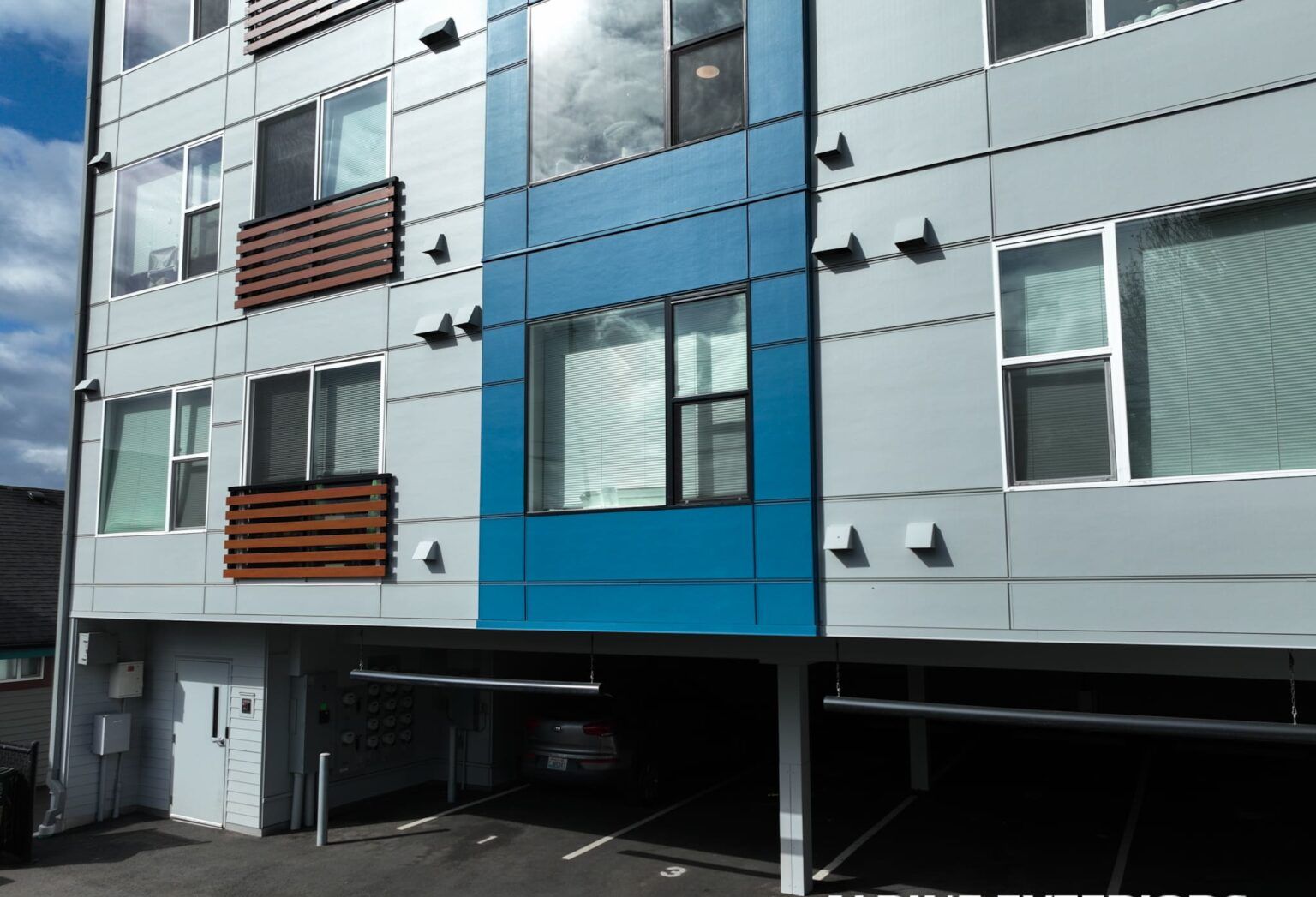
In Glacier and the rest of Whatcom County, siding is regulated as "cladding" under the Washington State Building Code (the state's adopted version of the International Residential Code), which means it has to resist wind pressure at the wall surface without being treated as a structural, load-bearing element. In practice that comes down to three things an inspector actually checks: the product has a recognized evaluation report or listing backing its wind and weather performance, the fastening pattern matches what that report and the manufacturer's installation instructions call for, and the water-resistive barrier and flashing details underneath are installed so wind-driven rain can't get behind the panels.
Washington doesn't write its own siding wind tables from scratch. The state adopts the International Residential Code with local amendments, and the IRC handles siding under its cladding and component provisions rather than under the main structural wind-resisting system (that's the job of shear walls, hold-downs, and continuous load paths, which are separate from what's happening at the siding layer). For siding specifically, code compliance rests on three legs: the product itself, the fasteners, and the drainage plane behind it.
On the product side, most fiber cement, vinyl, and engineered wood siding lines carry an ICC-ES evaluation report or an equivalent recognized listing that documents how the product performed in testing and what installation conditions that performance depends on — fastener type, fastener spacing, minimum embedment, panel overlap, and starter strip details. That report is effectively the product's approval pathway in Washington, similar in spirit to how other states handle product approval for exterior cladding, just without a statewide database attached to it. A Whatcom County plans examiner or inspector can ask to see it, and a contractor who can't produce it — or who's installing a product outside the conditions the report covers — is creating a problem that surfaces later, usually as a wind-driven leak.
On the fastening side, code doesn't leave nail spacing to judgment. The IRC's siding attachment provisions, combined with the manufacturer's printed instructions (which get incorporated by reference once a product is listed), specify fastener type, minimum penetration into structural framing or sheathing, spacing along the field and at panel ends, and clearance from panel edges to prevent splitting or pull-through. Corner boards, J-channel, and butt joints each have their own detailing requirements because they're the places wind uplift and wind-driven rain concentrate. An inspector walking a job isn't eyeballing the whole wall; they're checking a sample of these details against the approved fastening schedule.
On the drainage side, the Washington State Energy Code (WSEC) intersects with siding installation because most wall assemblies here now include continuous insulation, a water-resistive barrier, and increasingly a rain screen gap behind the cladding. None of that is about wind load directly, but it's inspected alongside siding because the same wall opening — house wrap laps, window and door flashing, weep paths at the base of the wall — is what keeps wind-driven rain from becoming trapped moisture. A siding job that passes wind-fastening requirements but skips proper WRB lapping and flashing sequencing can still fail, just on a different timeline.
Glacier sits up the Mt. Baker Highway corridor at meaningfully higher elevation and closer to the mountain than most of the county's population centers, and that changes the practical risk profile even though the code numbers are the same countywide. A few things matter here that wouldn't in, say, a dry inland climate:
Most of what protects a homeowner here isn't exotic — it's making sure ordinary steps actually happen instead of getting skipped to save a day of labor.
None of this is complicated, but it's the difference between siding that's still doing its job in fifteen years and siding that needs premature repair because a fastening schedule or a flashing detail got shortcut on day one. Alpine Exteriors builds every Whatcom County siding job — including homes up toward Glacier — around these same steps: pulling the permit, documenting the product's approval, following the manufacturer's fastening schedule, and getting the wall inspected before it's closed up.
In most cases, yes — particularly if the existing siding and water-resistive barrier are being removed rather than sided over. The permit is what triggers the inspection that verifies fastening and flashing details, so skipping it removes the one check that would catch a mistake before it's covered up.
Washington's adopted building code uses mapped design wind speeds and exposure categories that vary by terrain and elevation rather than a single countywide number, and homes near Glacier can see different effective loading depending on whether they sit in open terrain or sheltered timber. Rather than trying to pin down a specific figure yourself, ask your contractor to confirm the exposure category and wind speed used for your specific site and how the siding product's fastening schedule accounts for it.
You can in limited cases where the existing WRB and sheathing are sound, but it's risky to assume that without checking. Re-siding over hidden rot or a failed water-resistive barrier just traps the problem behind new material, and it skips the chance to correct any fastening or flashing issues that caused the loose siding in the first place.
An inspector isn't checking every fastener — they're sampling representative areas, corners, and penetrations against the approved fastening schedule from the product's evaluation report or listing, along with flashing at windows, doors, and butt joints. If the visible sample matches what was approved, it's a reasonable indicator the rest of the wall was installed the same way.
If you're planning a siding project on a home in Glacier or anywhere else in Whatcom County, it's worth having a conversation before materials get ordered — not after. Alpine Exteriors can walk your specific site, talk through product options suited to this climate, and handle the permitting and inspection process as part of the job rather than as an afterthought. Reach out to Alpine Exteriors to get a straightforward assessment of what your home actually needs.