
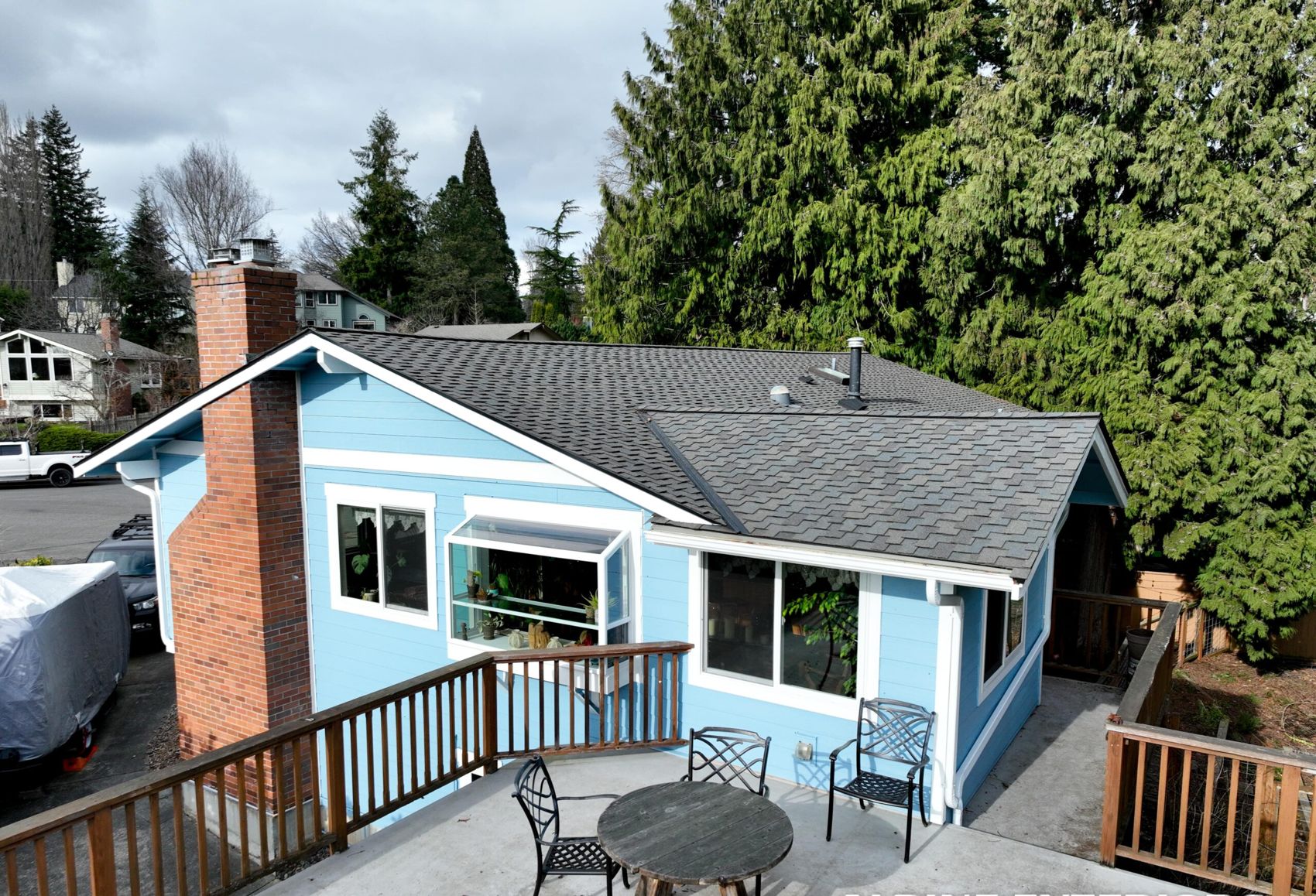
If a small section of siding is cracked, soft, or stained but the rest of the wall is sound, a targeted repair is usually the right call and costs far less than a full re-side. If rot has spread behind more than a panel or two, or the damaged siding is an older style that's no longer sold, replacement of that wall — or in some cases the whole elevation — tends to be the more honest long-term answer, even though it's the more expensive one up front.
That distinction sounds simple, but in a neighborhood like Sunnyland it's rarely obvious from the driveway. Sunnyland sits along Whatcom Creek on Bellingham's east side, and a lot of the housing stock dates from the 1940s through the 1960s, with mature trees shading yards that stay damp well into summer. Original cedar lap siding is still common here, sometimes under a coat of paint that's hiding more moisture damage than it's showing. Alpine Exteriors gets called out to Sunnyland fairly often specifically because homeowners can see a problem — a soft board, a stain, a patch of moss — but aren't sure whether it's a minor repair or a signal that the whole wall needs attention.
The damage patterns in this part of Whatcom County are fairly consistent, and most of them trace back to water finding a way in and staying there longer than it should.
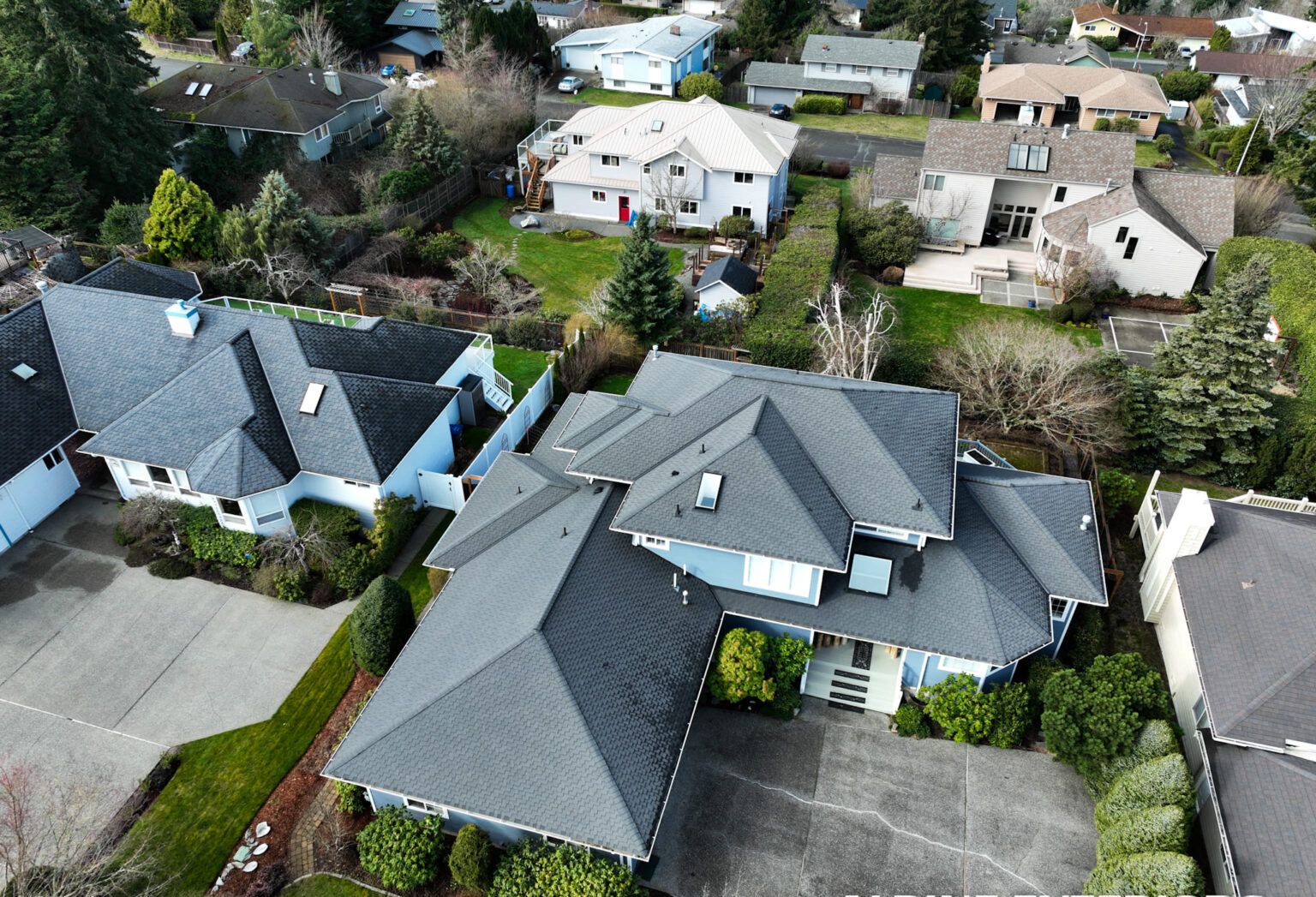
Siding decisions here can't be made with a generic playbook, because the coastal Pacific Northwest climate stresses siding in a specific, cumulative way rather than in dramatic one-time events.
The defining factor is persistence. Bellingham and the rest of Whatcom County don't get intense downpours as often as they get long stretches of steady, low-intensity rain, sometimes for days at a time. Siding that would shed a heavy but brief storm just fine can still take on water when it's damp for a week straight, because the wood or substrate never fully dries between exposures. That's compounded on Sunnyland's tree-shaded lots, where afternoon sun that would otherwise dry out a wall never reaches it.
Wind is the second factor, and it matters more near the water. Homes closer to Bellingham Bay, or exposed to open fetch off the Strait of Georgia, take wind-driven rain that gets pushed horizontally into laps, joints, and trim rather than simply running down the face of the wall. That's a different failure mode than straight-down rain, and it's why caulking and flashing details matter more here than they would a few miles inland.
Moss and algae growth is close to universal on north- and east-facing walls anywhere in this region with tree cover, and Whatcom County has no shortage of both. It's a cosmetic and moisture-retention issue more than a structural one on its own, but it's often the visible clue that leads a homeowner to call in the first place.
Out toward the foothills and higher elevations of the county — around Lake Whatcom, Sudden Valley, and up toward the base of Mount Baker — freeze-thaw cycling adds another stress that Sunnyland itself sees less of, since it sits closer to sea level and Bellingham Bay's moderating influence. Water that gets into a crack or joint and then freezes expands and widens the damage, which is one more reason repairs in the higher parts of the service area sometimes need to happen faster than they would down in the city.
Finally, any full re-siding project in Washington has to account for the Washington State Energy Code, which sets requirements for wall insulation and, on many projects, continuous exterior insulation depending on the assembly. That's a code and design consideration, not a repair-vs-replace factor by itself, but it's worth knowing before assuming a re-side is a simple swap of old siding for new.
Start by looking, not guessing. After a windy stretch off the bay, walk the perimeter of the house and check for lifted or missing panels, especially on the sides that face open exposure. Pay particular attention to any wall that stays shaded most of the day — those are the ones most likely to be hiding rot under an intact-looking surface.
Don't paint over a soft spot. It's a common instinct to touch up a stained or discolored area with paint and call it handled, but paint over wet wood traps moisture rather than solving the problem, and it makes the eventual repair harder to scope because the extent of the rot is now hidden again.
Get an actual moisture reading before deciding repair or replace. A contractor who probes suspect areas with a moisture meter, rather than just eyeballing the outside, can tell you whether the damage is contained to a board or two or has traveled along the sheathing behind the siding. That reading is the real basis for the repair-vs-replace decision, not the size of the visible stain.
Think in terms of percentage of wall affected, not number of boards. As a rough rule of thumb, if damage is isolated to a small area, a patch repair using matched material is usually the sensible, cost-effective choice. If a meaningful share of one elevation is compromised, or the same failure is showing up in multiple spots on the same wall, it's often more cost-effective over time to re-side that wall as a unit rather than keep patching it board by board.
Plan for the matching problem early. This is where Sunnyland's older housing stock creates a real complication: original cedar profiles, older paint colors, and discontinued vinyl lines can be difficult or impossible to match exactly. Alpine Exteriors keeps a range of lap profiles and reclaimed or custom-milled cedar options on hand for exactly this situation, but even so, a homeowner should go in expecting that a repair on an older home may involve either a very close approximation rather than an identical match, or a decision to re-side a full wall so the mismatch isn't visible at all. Being honest about that trade-off up front avoids disappointment later.
Ask about permits before assuming a repair is exempt. Small patch repairs typically don't require a permit, but larger siding replacement projects in the City of Bellingham or unincorporated Whatcom County may, particularly if sheathing or insulation is being altered. A licensed contractor should be able to tell you which category your project falls into before work starts.
Finally, hire someone licensed and willing to explain the reasoning, not just quote a number. Alpine Exteriors holds Washington state contractor license ALPINI751OW and has worked on enough Sunnyland and Bellingham homes to recognize the difference between cosmetic moss and structural rot on sight — but a good contractor should still walk you through what they found and why they're recommending repair over replacement, not just hand you an estimate.
The honest answer depends on how far the moisture damage has traveled, not just how bad the visible spot looks. A contractor who probes the area with a moisture meter can tell you whether rot is contained to a board or two, which usually means a repair, or has spread along the sheathing behind the siding, which usually means replacing that section or wall. As a general guide, isolated damage on an otherwise sound wall is a good repair candidate, while damage repeating across multiple spots on the same elevation is often more cost-effective to address by re-siding that wall outright.
Often, yes, though it depends on the material. Many Sunnyland homes still have original cedar lap siding, and cedar can usually be matched closely with custom-milled or reclaimed material even when the exact original profile isn't in production anymore. Older vinyl siding is harder — colors and profiles get discontinued, and an exact match isn't always possible. In those cases the realistic options are a close approximation or re-siding a full wall so any color difference isn't visible, and it's worth discussing which makes more sense before committing to a patch repair.
Not by itself. Moss and algae are extremely common on shaded, north- and east-facing walls throughout Whatcom County, including much of Sunnyland under its tree canopy, and moss growth alone doesn't mean the siding underneath has failed. It does mean the surface is holding moisture longer than it should, which is worth cleaning and monitoring, and if moss has been established for years without attention it's reasonable to have the wall checked for rot underneath rather than assuming it's purely cosmetic.
It can, depending on the scope of the project and how much of the wall assembly is being opened up. Full re-siding jobs, and projects that involve removing siding down to the sheathing, are more likely to fall under current Washington State Energy Code insulation requirements than a simple like-for-like patch repair. A licensed contractor should be able to tell you early in the process whether your specific project triggers those requirements so there are no surprises once permitting or inspection is involved.
If you're staring at a stained board, a soft spot near a downspout, or a wall that's gone green with moss and you're not sure whether it needs a patch or a re-side, that's exactly the kind of call Alpine Exteriors is set up to make. We inspect the actual damage, take moisture readings where it matters, and give you a straight recommendation on repair versus replacement — along with realistic options for matching your existing siding — before any work starts. Alpine Exteriors is a licensed Washington contractor (ALPINI751OW) serving Sunnyland, Bellingham, and the rest of Whatcom County. Reach out for an inspection and get a clear picture of what your siding actually needs.