
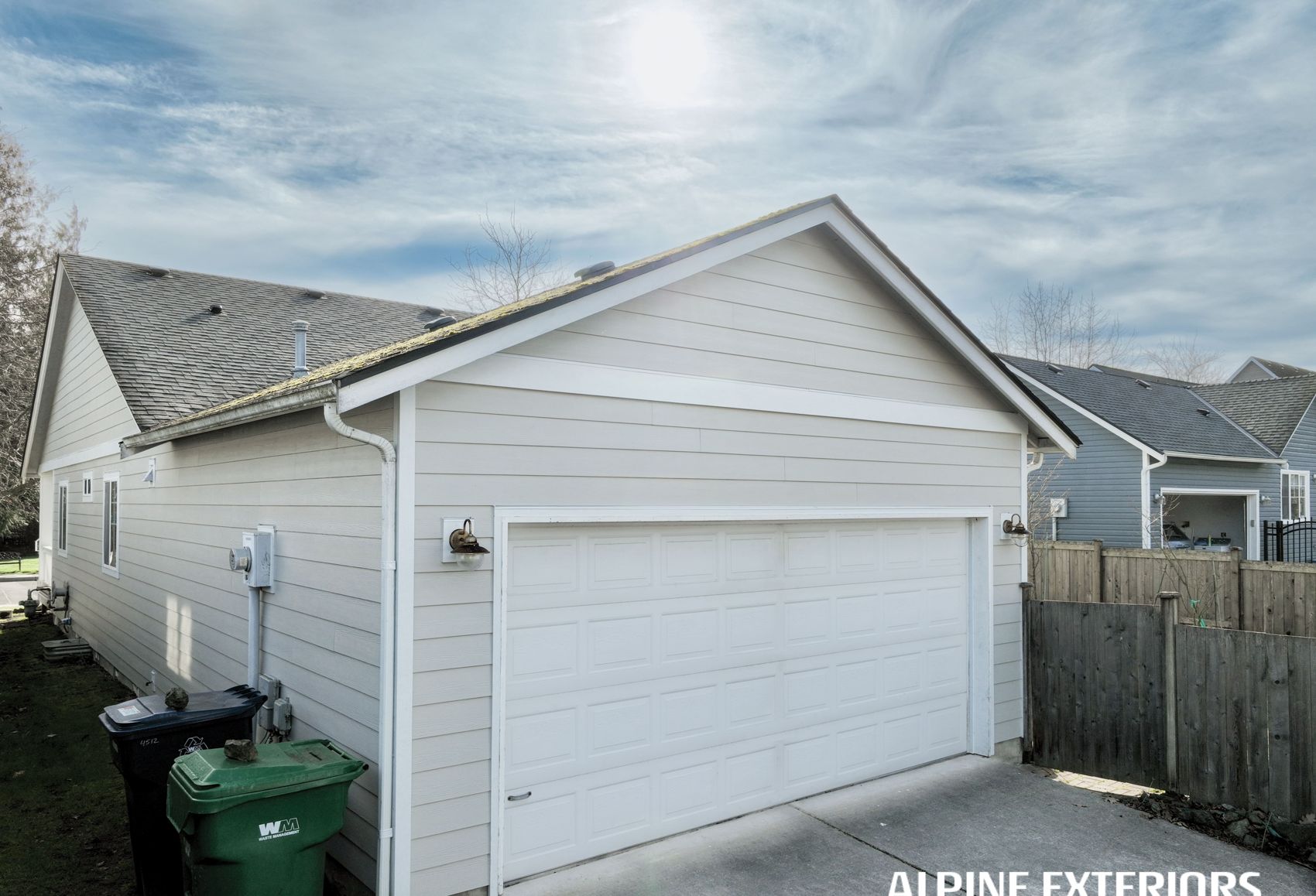
Properly installed, finished, and maintained cedar lap siding typically lasts 30 to 40 years in Whatcom County, and some well-cared-for installations go longer. Cedar that's neglected — unpainted, uncaulked, or shaded and damp most of the year — can show serious rot and board failure in half that time, sometimes less on the worst-exposed walls.
That range is wide on purpose. Cedar lap siding isn't a fixed-lifespan product like a shingle with a manufacturer's rated service life; it's a natural material that performs roughly in proportion to how it was installed and how consistently it's been maintained since. Two houses on the same Bellingham street, sided the same year, can be a decade apart in remaining life depending on which one got repainted on schedule.
Western red cedar is the species almost always used for lap siding in this part of Washington, and it earns its reputation honestly — it's naturally resistant to decay and insects because of extractives in the heartwood, it takes stain and paint well, and it moves less with humidity swings than a lot of other softwoods. None of that makes it waterproof or maintenance-free. What determines whether a given board is still doing its job in year 15 or year 35 comes down to a handful of factors:
Add those up and you get the spread between a 20-year cedar job and a 40-year one on houses that look nearly identical the day they're finished.
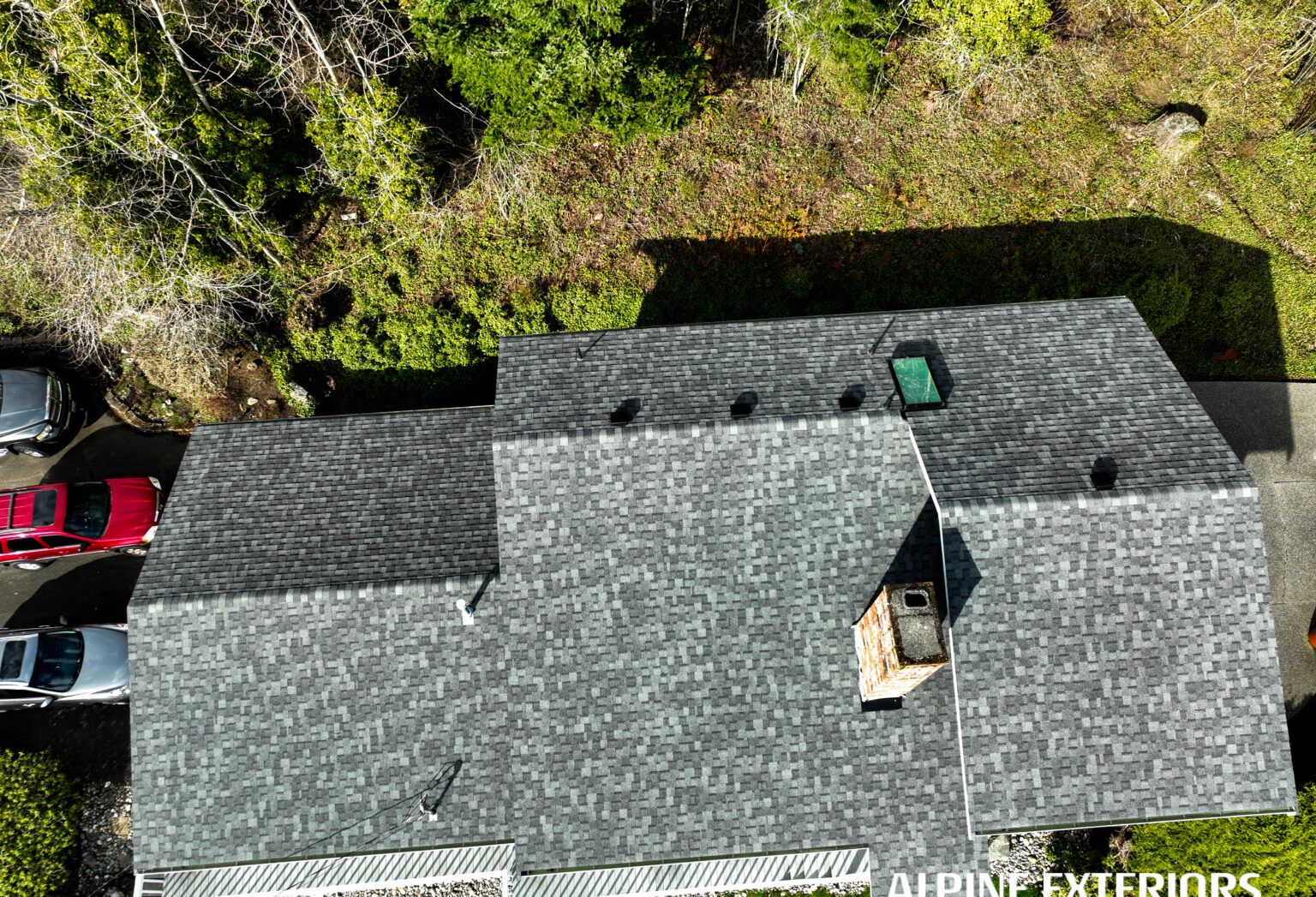
Cedar siding ages differently here than it does in a drier or milder climate, and it's worth being specific about why, because the generic advice you'll find online doesn't always apply to this corner of Washington.
Persistent rain, not occasional storms. Whatcom County's wet season runs from roughly October through May, and what defines it isn't intensity so much as duration — long stretches of overcast, drizzly days where wood siding never fully dries between rain events. That's a very different stress than an occasional heavy downpour followed by weeks of sun. Cedar can handle getting wet; what shortens its life is staying wet.
Moss and algae. Shaded, north-facing, and tree-covered walls — common on wooded Sudden Valley lots and on properties tucked under conifers around Lynden and the county's rural edges — grow moss and algae readily. Left alone, that growth holds moisture directly against the wood and finish, which accelerates coating breakdown and, eventually, decay underneath.
Wood rot at the details, not across whole walls. In practice, rot rarely shows up as a uniform problem. It concentrates at butt joints between boards, at the lowest courses near grade or a deck ledger, under window sills where flashing was skipped or failed, and anywhere caulk has cracked and let water track behind the siding. Catching rot at these specific points early is far cheaper than catching it after it's spread.
Wind-driven rain off Bellingham Bay and the Strait. Homes closer to open water — Blaine, Birch Bay, Semiahmoo, and the bay-facing parts of Bellingham — take rain at an angle, driven by wind off Bellingham Bay and the Strait of Georgia. That wind-driven moisture pushes past laps and into seams that would stay dry in a calmer, more sheltered location, which is exactly why flashing, caulking, and drainage gaps matter more on exposed, waterfront-adjacent lots than on a sheltered inland lot in Ferndale.
Freeze-thaw cycling inland and at elevation. Whatcom County isn't a hard freeze climate most winters, but the inland and higher-elevation areas east of the coastal strip see more freeze-thaw cycling than Bellingham itself. Water that's worked its way into a crack in the paint film or a hairline check in the wood expands when it freezes, widening the opening and speeding up finish failure — a slow, cumulative process rather than a single dramatic event.
The Washington State Energy Code. Wall assemblies built or re-sided under the current Washington State Energy Code generally require continuous insulation and careful air- and water-barrier detailing behind the siding. Done correctly, that assembly — weather-resistive barrier, drainage gap, and properly lapped and flashed cedar over it — actually protects the siding by giving incidental moisture somewhere to go instead of trapping it against the back of the boards. It's a case where code compliance and siding longevity point the same direction, not opposing ones.
None of the region-specific challenges above are reasons to avoid cedar. They're reasons to maintain it on a schedule instead of waiting until something looks obviously wrong. A rough, honest maintenance rhythm for cedar lap siding in this climate looks like this:
| Task | How often |
|---|---|
| Visual inspection (caulk gaps, loose boards, soft spots) | Once a year, typically in early fall before the wet season |
| Gentle wash to remove moss, algae, and mildew | Every 1 to 2 years, more often on shaded walls |
| Re-caulk joints, seams, and trim intersections | As soon as cracking or gapping appears, usually every few years |
| Recoat with solid stain or paint | Every 8 to 12 years |
| Recoat with clear or semi-transparent finish | Every 2 to 4 years |
| Trim vegetation and clear gutters for airflow and drainage | Twice a year |
A few of these deserve a specific warning. Pressure washing feels like an obvious way to knock moss off siding, but aiming a pressure washer directly at lap siding can force water up and behind the boards through the very seams you're trying to protect — a soft wash or hand scrub with a mild cleaner is the safer route. Caulk failure is easy to dismiss as cosmetic, but it's usually the first sign that water has a path into the wall; catching it before the next wet season is far cheaper than repairing rot afterward. And if you're re-siding or doing a major repaint, that's the moment to confirm there's an actual drainage gap behind the cedar rather than boards nailed tight against the weather-resistive barrier — a detail that's easy to get wrong and expensive to fix later.
Alpine Exteriors (WA contractor license ALPINI751OW) inspects cedar siding across Whatcom County — Bellingham, Ferndale, Lynden, Blaine, Birch Bay, Sudden Valley, and the islands — and the pattern holds up on nearly every older home we look at: the siding itself is rarely the failure point. It's a missed recoat, a cracked bead of caulk, or a flashing detail that was never quite right, left alone for a few too many wet seasons.
A drainage gap behind the siding isn't strictly required on every project, but given how much of the year this region spends wet, it's one of the most effective things you can build into a re-side. A properly detailed gap lets any moisture that gets past the cedar drain and dry out instead of sitting against the back of the boards, and it pairs naturally with the continuous insulation and air-sealing work already expected under the Washington State Energy Code.
Cedar generally needs more active maintenance than fiber cement, which holds paint longer and doesn't rot, or vinyl, which needs essentially no refinishing at all. What cedar offers in return is a natural look and repairability that manufactured products can't fully match — a damaged board can be cut out and replaced rather than the whole run needing attention. The honest trade-off is upkeep time and cost against appearance and repairability, and different homeowners reasonably land in different places on that trade-off.
It starts as cosmetic but doesn't stay that way. Moss and algae hold moisture directly against the wood and finish far longer than the surrounding siding would otherwise stay wet, which speeds up coating breakdown and, over enough seasons, contributes to the decay that shows up as soft or crumbling wood. Removing growth promptly and improving airflow and sun exposure where possible slows that process considerably.
Isolated soft spots, a rotted board at grade, or failed caulk at a few joints are typically repairs — cut out the damaged section, replace it, address whatever let water in, and refinish. Replacement becomes the more sensible call when rot is showing up in multiple areas across the house, when the underlying sheathing or framing has been compromised, or when the siding has gone long enough without maintenance that recoating won't restore a sound surface. A hands-on inspection is really the only reliable way to tell which situation you're in.
If you're not sure whether your cedar siding needs a recoat, a few targeted repairs, or a full re-side, Alpine Exteriors can walk the exterior with you and give a straight assessment — not a sales pitch. We work throughout Whatcom County, including Bellingham, Ferndale, Lynden, Blaine, Birch Bay, Sudden Valley, and the islands, and as a licensed Washington contractor (ALPINI751OW) we can also speak to how any repair or re-side fits current Washington State Energy Code requirements for your wall assembly. Reach out for an inspection before the next wet season sets in.