
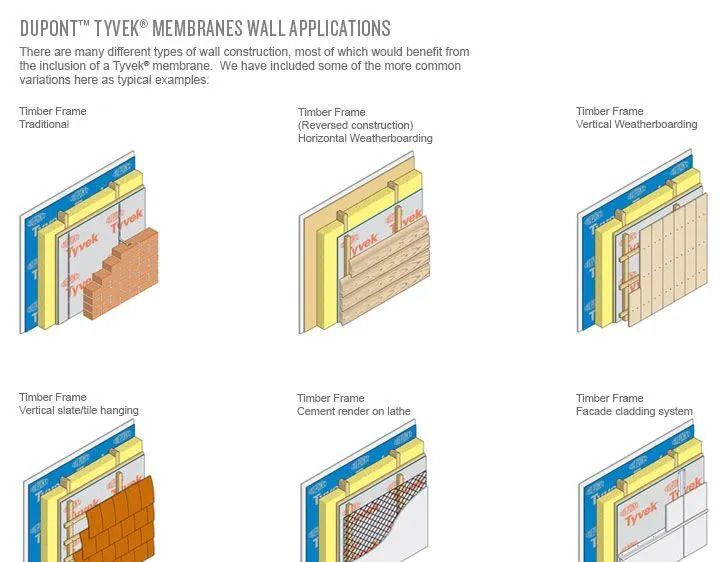
Traditional portland cement stucco can last 50 to 80 years as a material, and in many parts of the country that number holds up fine. In Whatcom County, though, the stucco itself is rarely what fails first — what determines whether a wall reaches that range or falls apart in 15 to 20 years is almost always what's happening behind the surface coat: the drainage plane, the flashing, and how much rain the wall has been asked to shed for decades.
Stucco is a mineral-based cladding, usually applied in three coats over a metal lath fastened to the wall sheathing. It doesn't rot, it doesn't attract insects, and a well-maintained coat holds paint and texture for a long time. But stucco is water-resistant, not waterproof. Hairline cracking is normal and expected as the material cures and the building moves seasonally, and those cracks let some water in. The whole system is designed around the assumption that a certain amount of moisture will get past the surface coat and needs somewhere to go — typically a weather-resistive barrier behind the lath, ideally with a drainage gap or furring strip that lets any water that gets in run down and out at the base of the wall rather than sit against the sheathing.
When that drainage detail is missing or was done poorly — stucco applied directly over a single layer of building paper with no gap, no functioning weep screed at the foundation line, or window and roof flashing that dumps water into the wall instead of away from it — the stucco can look fine on the outside for years while the sheathing and framing behind it slowly saturate and rot. By the time cracking, staining, or soft spots show up on the surface, the damage underneath is often already significant. This is the real reason stucco's lifespan varies so much from house to house even within the same block: two homes built the same year, with the same stucco mix, can have completely different outcomes depending on who installed the drainage details and how exposed each wall is to weather.
On the cost side, minor patch repairs — recoating a cracked section, resealing control joints, fixing a flashing detail — commonly run from a few hundred dollars to a couple thousand, depending on how much wall is involved and whether a color match is needed. If an inspection finds rotted sheathing or framing behind the stucco, the job stops being a patch and becomes a tear-off and rebuild of that section, which is a much bigger expense. A full re-stucco or a conversion to a different cladding across an entire house is a significant investment, generally running into the tens of thousands of dollars depending on square footage, how much substrate needs replacing, and site access. Anyone quoting an exact number without opening up the wall first is guessing.
Stucco's track record here has to be read against local conditions, not national averages. A few things matter more in this county than in most places stucco gets installed:
If you already have stucco, or you're deciding whether to keep it during a remodel, the goal is to figure out what's actually happening behind the surface rather than judging the wall by its paint job. A few things are worth doing:
Alpine Exteriors works on stucco and siding across Bellingham, Ferndale, Lynden, Blaine, Birch Bay, Sudden Valley, and the islands, and the first step on any stucco call is usually the same: figure out what's happening behind the coat before recommending anything.
Stucco can work well here, but it's less forgiving of installation shortcuts than it is in drier climates. If it's installed with a proper drainage plane, correct flashing, and a weep screed kept clear of soil and mulch, there's no reason it can't perform for decades in this county. The issue isn't the material itself so much as how consistently it needs to be done right, given how much rain the wall will see over its life.
Visual clues include cracking that follows a spiderweb pattern rather than a single straight line, dark staining running down from window tops or roof intersections, and any spot that feels soft or gives slightly when pressed. None of these confirm rot on their own, but they're reasons to have someone check moisture levels behind the wall rather than assume a fresh coat of paint will solve the problem.
It depends entirely on how far the damage has spread. An isolated crack or a small area of surface damage can usually be patched and recoated. Once rot has spread through the sheathing or framing behind several sections of wall, patching just delays the same problem showing up again elsewhere, and a larger repair or full re-side is the more honest recommendation.
Generally, yes, if the wall is exposed to significant rain and wind. Homes in sheltered, inland spots with good roof overhangs tend to need less attention than waterfront homes near Bellingham Bay, Birch Bay, or Blaine that take direct wind-driven rain. Routine maintenance — recoating, resealing joints, keeping moss under control — is the same regardless of location, but how often it's needed tracks closely with how much weather a given wall actually absorbs.
If your stucco is showing cracks, staining, or you just don't know what's behind it, it's worth getting an honest look before deciding between a recoat, a repair, or a full re-side. Alpine Exteriors, WA contractor license ALPINI751OW, inspects and works on stucco and siding throughout Whatcom County — Bellingham, Ferndale, Lynden, Blaine, Birch Bay, Sudden Valley, and the islands. Reach out for a straightforward assessment of your walls before committing to any repair.