
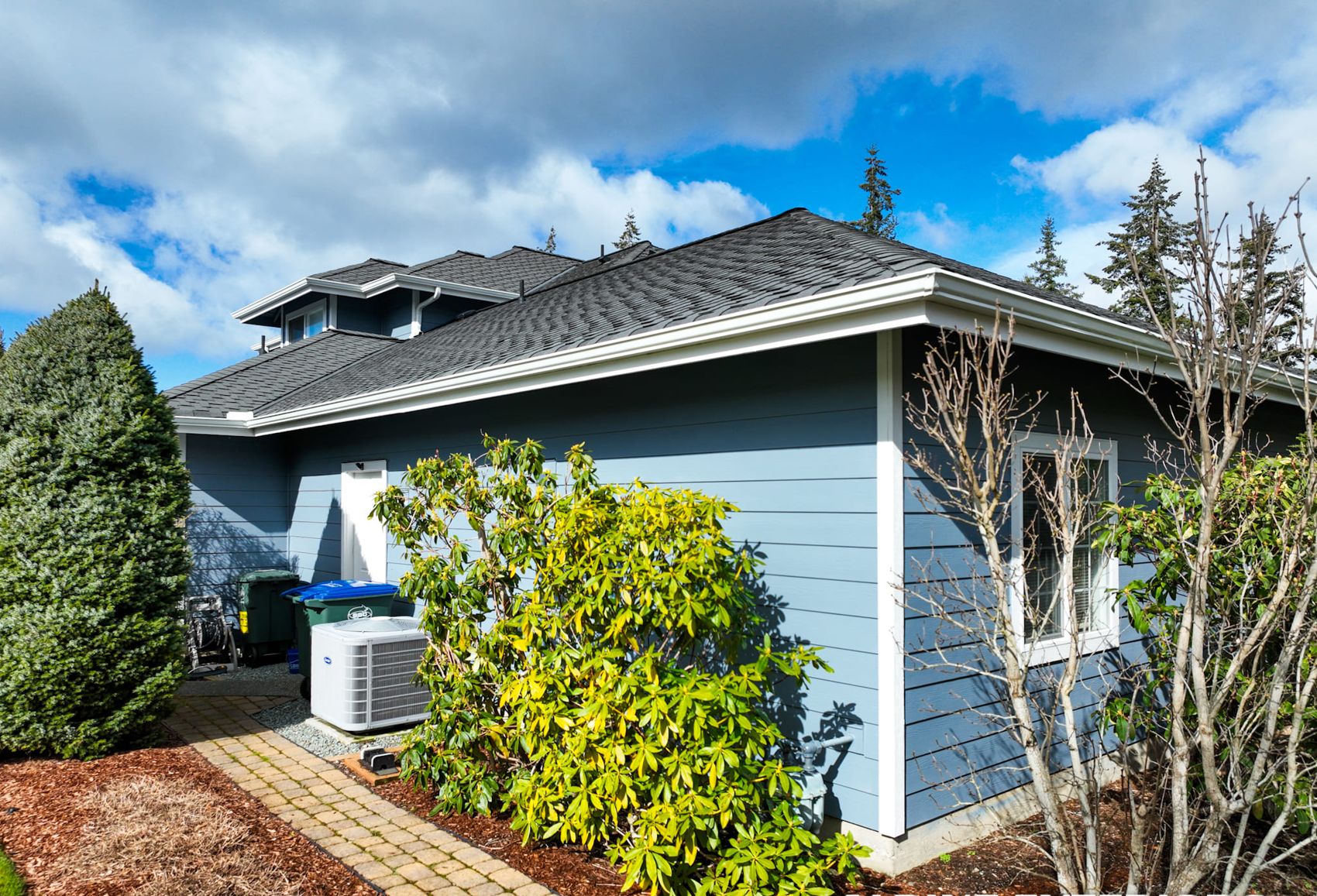
For most Whatcom County homes, board and batten is worth it as an accent — on gables, entry bays, dormers, or a full elevation that gets good sun and roof coverage — but it's a riskier choice as the only siding on a home's most rain-exposed walls unless it's installed with a real drainage plane behind it. The look is worth chasing; the installation details are what decide whether you're happy with it in five years or fighting rot and streaking.
Board and batten is a vertical siding pattern: wide boards (or sheets of fiber cement or engineered wood) run up the wall, and narrower battens are nailed over the seams between them. The appeal is obvious — it reads as more custom and more textured than horizontal lap siding, it hides panel joints cleanly, and it's become the default accent material for the modern farmhouse and craftsman-influenced homes going up around Bellingham, Ferndale, and Lynden right now.
The trade-offs are real, though, and they don't always show up in the glossy after photos. Vertical siding has more linear feet of seams to flash and caulk per square foot of wall than horizontal lap does, because every batten edge is a potential water path if it isn't detailed correctly. Labor runs higher too — more cuts, more fasteners, more time spent getting reveals even — so board and batten typically costs more per square foot to install than standard lap siding in the same material, sometimes by a noticeable margin depending on the substrate and trim detail. And because it's vertical, any water that does get behind a board has a straighter, faster path downward than it would on horizontal siding, which is why the installation method matters more here than the material choice itself.
Material choice still matters, though. Real cedar board and batten looks the best and ages the most gracefully when it's stained and maintained, but it's also the option most exposed to wood rot if a homeowner falls behind on refinishing. Fiber cement board and batten (pre-primed or factory-finished) holds paint far longer and shrugs off moisture better, which is why it's become the most common choice on the newer builds we see across the county. Engineered wood products split the difference — good look, moderate cost, but they need consistent caulking and paint maintenance to avoid swelling at cut edges. Vinyl board and batten exists too and is the cheapest option, but the vertical panel look in vinyl tends to read visibly less premium up close than the other three, and it's worth seeing a sample panel in person before committing.
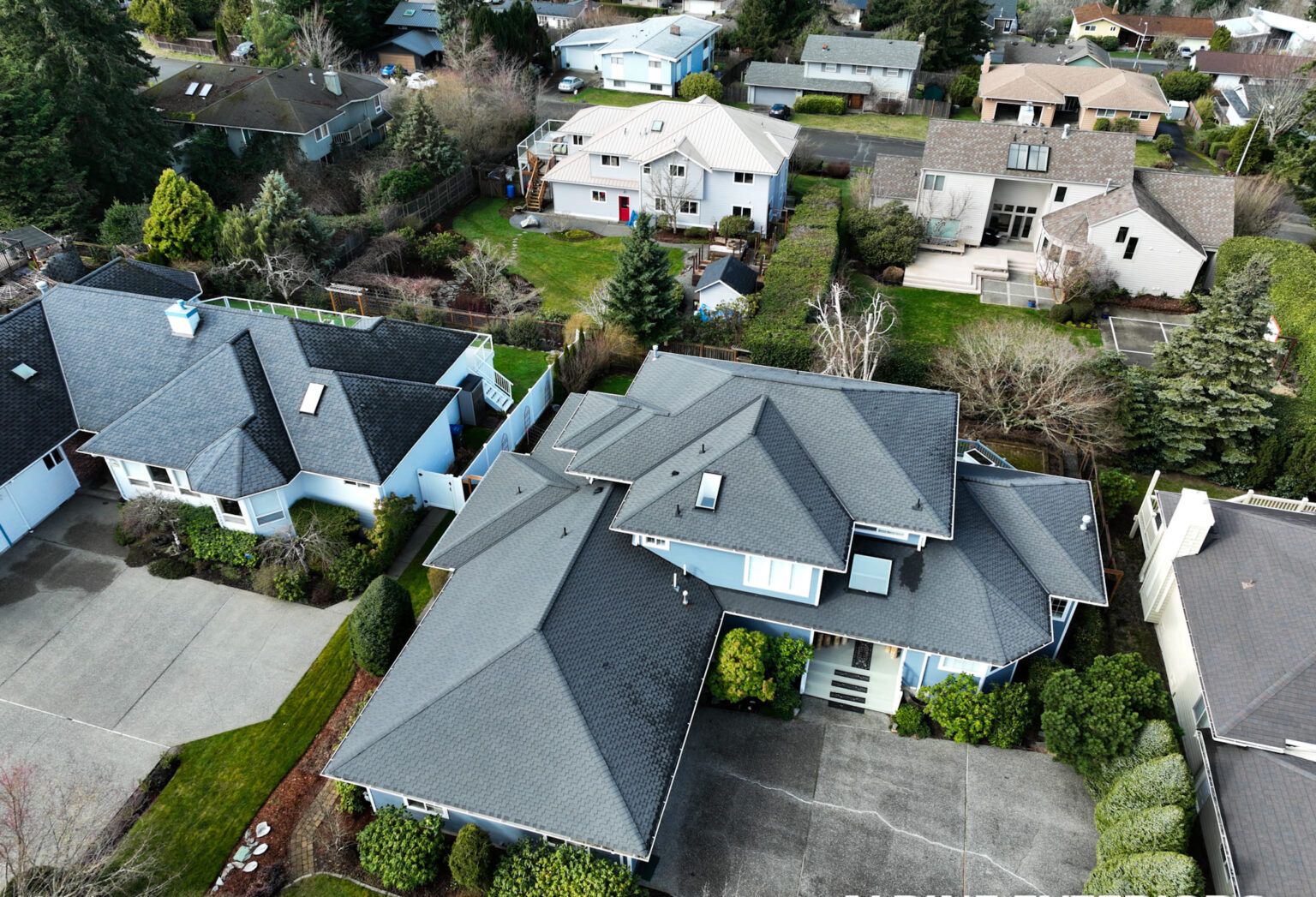
Whatcom County isn't a hurricane market, so wind-driven rain doesn't mean storm-rated fasteners or product approval numbers the way it would somewhere the Gulf Coast worries about. What it does mean is months of steady, low-intensity rain, plus real wind-driven rain events off Bellingham Bay and the Strait of Georgia that push moisture sideways into west- and southwest-facing walls harder than most homeowners expect. On a lap siding wall, gravity and overlap do a lot of the water-shedding work for you. On a vertical board and batten wall, that sideways-driven rain has more opportunity to find its way behind a batten edge or a poorly caulked seam, which is exactly where a proper rain-screen gap and weather-resistive barrier behind the siding earn their keep.
The other piece that's easy to underestimate is biological growth. Shaded, north-facing walls under mature trees — common in Sudden Valley, parts of Bellingham's older neighborhoods, and the more wooded lots out toward the islands — stay damp longer between rain events than open, sun-exposed elevations. Moss and algae take hold on any siding profile in those conditions, but the vertical grooves and reveals of board and batten give algae more edges and shadow lines to establish in than a flat lap profile does, so those walls tend to show green and black staining sooner if they're not periodically rinsed.
Freeze-thaw is a smaller factor here than it is in the Cascade foothills toward Mt. Baker or the higher elevations around Lynden's back roads, but it's not zero. Water that gets trapped behind siding and then freezes, even for short stretches most winters, expands joints and accelerates paint failure at cut edges faster than a purely wet, non-freezing climate would. That's one more reason the assembly behind the boards — house wrap, flashing, and an actual air gap rather than boards nailed flat to sheathing — matters as much as the siding itself in this region.
Finally, the Washington State Energy Code sets requirements for the wall assembly's overall insulation and air-sealing performance, and board and batten installed correctly as a rain-screen system tends to support that goal better than siding nailed directly to the wall, because the airspace behind the boards helps the wall dry and helps continuous insulation stay effective. It's not a reason to choose board and batten on its own, but it's a point in its favor when the installation is done with that airspace in mind, and a point against it when a contractor skips the gap to save time.
Start by being honest about which walls actually need board and batten's look and which ones are just along for the ride. A gable end, a dormer, a porch surround, or the wall facing the street from Blaine or Birch Bay's more visible lots is a great candidate — it gets the architectural payoff without carrying the full rain load of an entire elevation. Full-house board and batten can absolutely work, but it raises the stakes on getting the drainage plane right on every wall, including the ones facing the water and prevailing wind.
Alpine Exteriors, WA contractor license ALPINI751OW, walks Whatcom County homeowners through exactly this kind of wall-by-wall decision before any siding goes up, because the right answer is rarely "the whole house" or "none of it" — it's usually a specific, honest plan for which elevations earn the upgrade and which ones don't need it.
Generally yes. The extra cuts, additional fasteners, and more detailed flashing work at each seam mean board and batten typically runs higher in installed cost per square foot than standard lap siding in the same material, though the gap narrows or widens depending on the substrate, trim complexity, and how much of the house is getting the vertical treatment versus how much stays as an accent.
It can, but that's the wall where installation quality matters most. A properly built rain-screen assembly with correct flashing at every seam and opening should perform well against wind-driven rain off the water. A board and batten wall installed flat against the sheathing without a drainage gap is the version most likely to develop problems on an exposed, water-facing elevation.
Periodic gentle washing — a soft wash rather than an aggressive power wash that can damage caulk joints — on north-facing or tree-shaded sections every year or two keeps growth from taking hold. Trimming back overhanging branches to let more sun and airflow reach the wall also helps, and starting with a fiber cement product rather than untreated wood reduces how much the staining affects the material underneath.
Both can work, but a full re-side raises the installation stakes because every wall, including the ones with the most weather exposure, needs the same careful rain-screen detailing. Many Whatcom County homeowners get the architectural benefit they're after by using board and batten on gables, dormers, and street-facing accent walls while keeping simpler, proven lap siding on the rest of the house.
If you're weighing board and batten against lap siding for a home in Bellingham, Ferndale, Lynden, Blaine, Birch Bay, Sudden Valley, or the islands, Alpine Exteriors can walk your specific walls with you, point out which ones are strong candidates for the look, and lay out honest material and installation options before you commit to a full re-side. Reach out to schedule a walkthrough and get a straight answer for your house, not a generic pitch.