
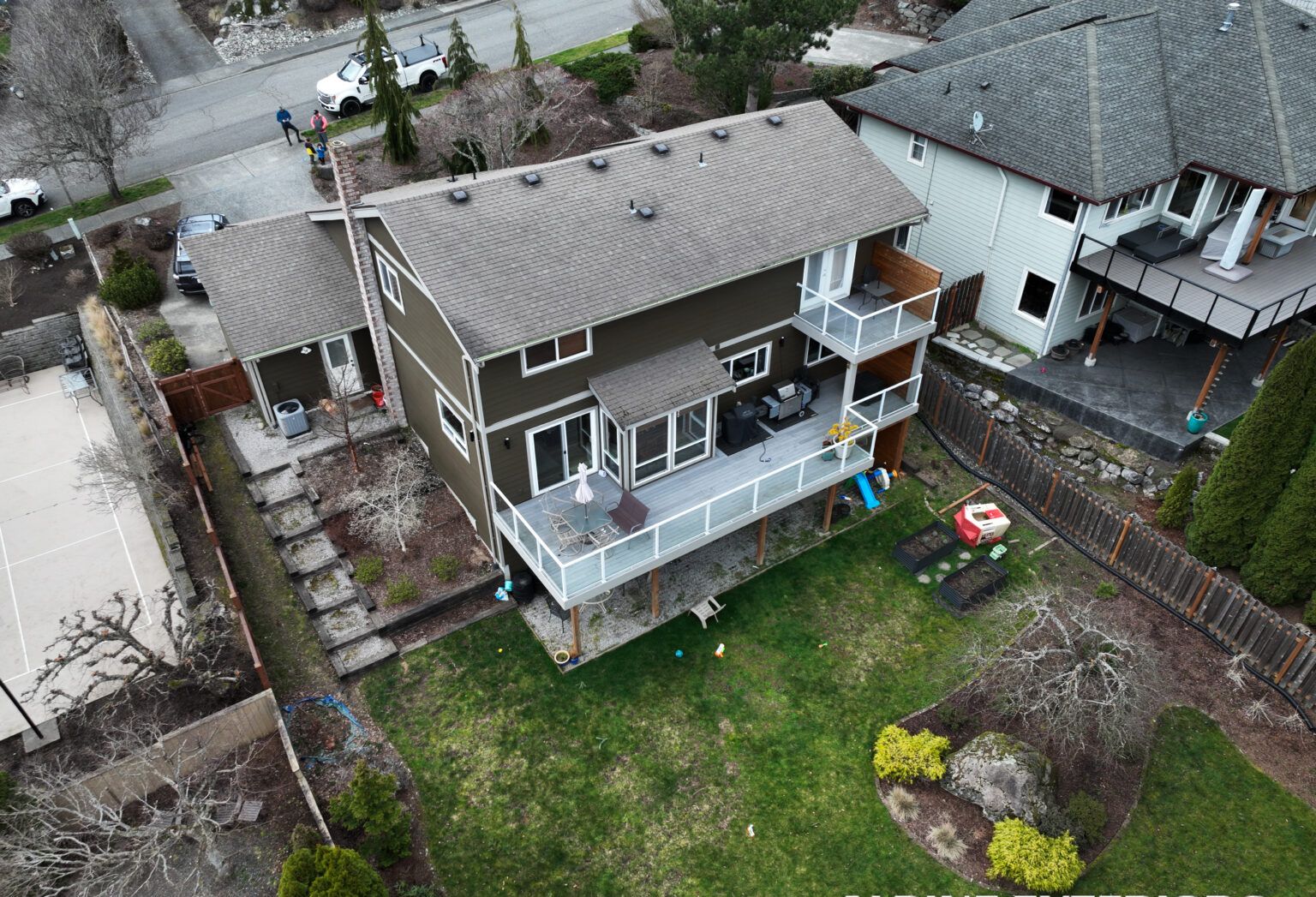
For most homes in Bellingham, Ferndale, Lynden, Blaine, and the surrounding Whatcom County communities, Hardie panel siding is worth the investment — but only when it's detailed and installed correctly. Fiber cement resists rot, holds up to wind-driven rain, and doesn't feed moss and algae growth the way wood does, yet in a climate this consistently wet, the installation details matter almost as much as the product itself.
That two-sentence answer is the whole picture in miniature. Everything below explains the reasoning, the tradeoffs nobody advertises, and how to figure out whether it's the right call for your particular house rather than a generic recommendation.
Hardie panel siding is fiber cement — a mix of cellulose fiber, sand, and portland cement pressed into rigid sheets. It's a different animal from Hardie's more common lap siding: panels are typically installed as large vertical sheets, either left flat with battens over the seams for a board-and-batten look, or trimmed at the joints for a smoother contemporary elevation. That format shows up a lot on newer builds and remodels around Bellingham and Ferndale where homeowners want a modern facade without the upkeep of real wood.
The genuine advantages are real and worth stating plainly:
The drawbacks are just as real, and a page that only lists benefits isn't being honest with you:
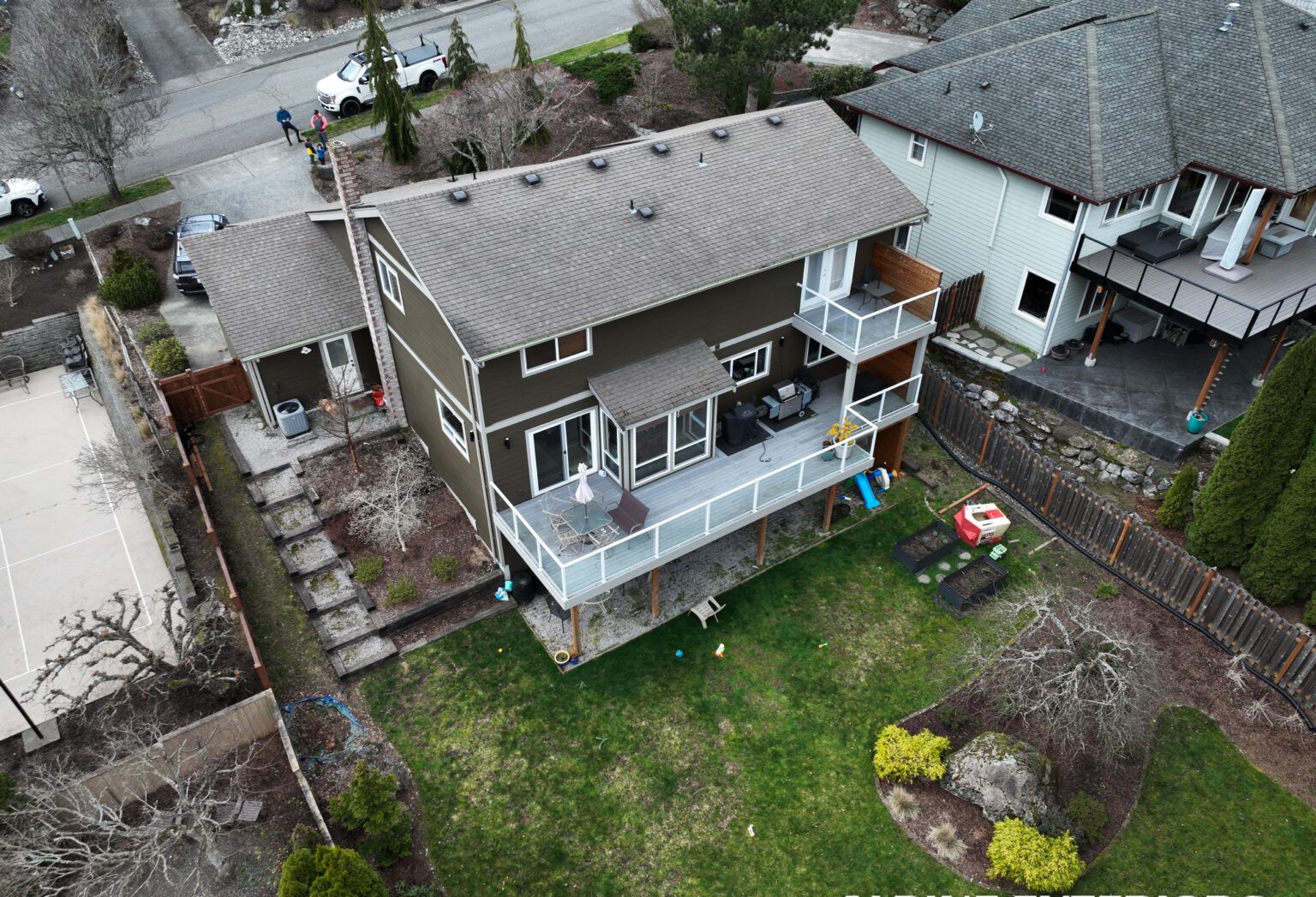
Siding advice that's written for a generic American climate doesn't hold up well here, so it's worth being specific about what this region actually does to a house.
The defining feature isn't intense storms — it's duration. Whatcom County gets long stretches of persistent, low-intensity rain rather than short, heavy downpours. That matters for siding because the material spends far more cumulative hours wet than it would in a drier or more storm-driven climate. Any weak seam, any gap in flashing, any spot where caulking has shrunk away from the joint gets far more exposure to find and exploit than it would somewhere with occasional hard rain and long dry spells between.
Moss and algae staining is a constant on north-facing and shaded walls throughout the county — under mature trees in Sudden Valley, on the shaded sides of homes tucked into the foothills, and anywhere gutters overflow onto a wall below. Wood siding feeds this growth directly as it weathers; fiber cement doesn't feed it the same way, but a factory finish that stays damp will still host surface growth that needs periodic washing.
Wood rot pressure here is genuinely high. Between the rain volume and the mild temperatures that never really dry a wall out for long, older wood siding, trim, and sheathing across Bellingham, Ferndale, and Lynden shows rot at a rate that would surprise homeowners moving from a drier state. This is the single biggest reason fiber cement gets recommended so often in this market.
Wind-driven rain off Bellingham Bay and the Strait of Georgia is a real and specific concern for homes in Blaine, Birch Bay, and on the islands. Rain that's being pushed horizontally by wind coming off open water finds gaps that vertical rain never would — around window flashing, at inside corners, behind loosely lapped trim. Homes closer to the water need siding installation details, not just siding material, that account for wind-driven moisture specifically.
Up toward the foothills near Deming, Sumas, and the approach to Mt. Baker, freeze-thaw cycling adds another layer. It's less severe than true mountain climates, but repeated freezing and thawing of any trapped moisture behind siding accelerates whatever damage a leak has already started. A wall that would just stay damp and slowly rot in Bellingham can crack and heave faster once ice starts forming and thawing behind it.
Finally, the Washington State Energy Code has real bearing on how siding gets installed here, not just what it's made of. Current code requirements around continuous insulation and weather-resistive barriers push most wall assemblies toward a rainscreen approach — a drainage gap behind the siding that lets any water that gets past the cladding drain and dry out instead of sitting against the sheathing. This matters for Hardie panel specifically, because a rainscreen gap does more to prevent hidden rot than the choice of cladding material does. A well-detailed rainscreen installation with fiber cement will outperform a face-nailed, no-gap installation of almost any siding material in this climate.
Before assuming new siding solves an existing problem, get the wall itself assessed. If your current siding has been failing for years, there's a real chance the sheathing behind it has soaked up damage that needs repair before anything new goes up — covering rotten sheathing with new panels just hides the problem for a while.
Insist on a rainscreen or drainage gap behind the panels, and ask the contractor to walk you through how they'll flash every seam, window, door, and penetration before work starts. This is the single detail that determines whether Hardie panel siding performs the way it's supposed to in a wet climate. A crew that can't explain their flashing plan in plain language is a red flag, regardless of what siding material they're proposing.
If your home sits under mature trees or faces north, plan for periodic washing of the siding surface rather than assuming fiber cement means zero maintenance. It's less maintenance than wood, not none.
Get quotes from installers who actually work in this climate rather than crews that mostly install in drier regions and treat Whatcom County jobs the same way. The Washington State Energy Code's rainscreen expectations and this region's rain volume both reward contractors who've built enough walls here to know where water actually gets in.
Consider a factory-applied finish over field-painted panels where the budget allows — factory finishes tend to hold up longer against the UV and moisture cycling this region delivers, which reduces how often you're back up on a ladder repainting.
Alpine Exteriors works on siding across Bellingham, Ferndale, Lynden, Blaine, Birch Bay, Sudden Valley, and the islands, and can walk a specific wall assembly with you before recommending fiber cement, wood, or anything else — the honest answer depends on the house, not a blanket rule. As a licensed Washington contractor (ALPINI751OW), Alpine Exteriors can also flag whether an existing wall needs repair work done before new siding goes up, which is often the more important conversation.
It reduces the problem but doesn't eliminate it. Fiber cement doesn't feed organic growth the way weathered wood does, and moss or algae sitting on a factory finish washes off more easily than growth embedded in wood grain. But any surface that stays shaded and damp for long stretches — which describes plenty of walls in Whatcom County — will still host some growth over time and need occasional cleaning.
For rot resistance, yes, fiber cement has a clear edge over cedar in a climate that stays wet for months at a time. Cedar can still be the right choice for homeowners who want the specific look and are willing to keep up with sealing and maintenance, but if rot has been an ongoing issue with your current wood siding, switching to fiber cement addresses that root cause directly.
Yes, and this is the part that gets overlooked. The panels themselves resist rot, but the caulking and flashing at seams, corners, and trim joints are what actually keep water out over the long run. Those details should be part of a periodic exterior check, especially on walls that take direct wind-driven rain in Blaine, Birch Bay, or the islands.
For a lot of homeowners here, yes — vinyl is less expensive upfront but performs worse against wind-driven rain, can warp under temperature swings, and doesn't hold up to impact as well. Fiber cement costs more initially but tends to need less frequent full replacement in a climate this consistently wet, which changes the math over the life of the siding rather than just the installation invoice.
Every wall in Whatcom County faces a slightly different mix of rain exposure, shade, and wind, so a real answer about whether Hardie panel siding is worth it for your house means looking at your specific walls, not applying a generic rule. Alpine Exteriors offers straightforward assessments for homeowners across Bellingham, Ferndale, Lynden, Blaine, Birch Bay, Sudden Valley, and the islands — including an honest read on whether fiber cement, wood, or another material actually fits your situation, and whether any existing rot needs to be addressed before new siding goes up. Reach out to schedule a walk-through and get a straight answer instead of a sales pitch.