
In Sumas, storm damage to siding usually isn't a single dramatic event — it's water finding a gap that wind pushed open, or moisture that sat behind a panel long enough to rot the sheathing underneath. The most common signs are lifted or cracked lap siding along the windward wall, dark streaking or soft spots near trim and window returns, and paint that's bubbling or peeling in patches rather than evenly across the wall.
Sumas sits at the base of the Nooksack River valley, right where wind funneling down from the foothills meets the flatter farmland along the Canadian border. That geography means storms here don't just bring rain — they bring rain moving sideways, which finds every weak seam, nail pop, and caulk gap that a calmer storm would leave alone. A roof that's perfectly sound can still let a house take on water damage at the siding level if the wall assembly behind it wasn't sealed and flashed correctly to begin with. This is why homeowners are often surprised that damage shows up as a slow, spreading soft spot rather than a hole — by the time it's visible from the outside, moisture has usually already been working on the wood or sheathing behind the siding for weeks or months.
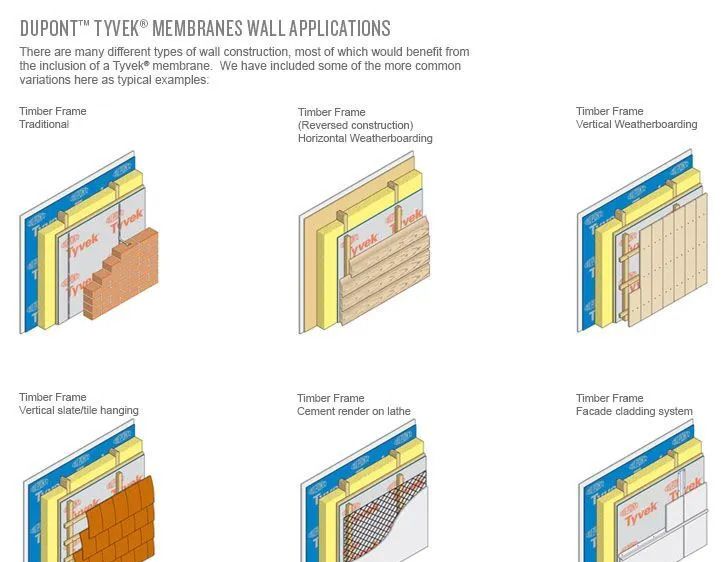
Siding is not, on its own, a waterproof barrier — it's a rain screen designed to shed the bulk of the water while a weather-resistive barrier (house wrap or building paper) underneath handles what gets through. Wind-driven rain defeats that system in a few predictable ways. It drives water up and under horizontal laps instead of letting it run down and off. It forces moisture sideways into vertical seams at inside and outside corners. And it pressurizes gaps around window and door trim, pushing water past caulk that's shrunk or cracked with age.
Once water gets past the siding, what happens next depends on the wall behind it. If the house wrap is intact and properly lapped, the moisture drains back out and the damage stays cosmetic — some staining, maybe a warped board. If the house wrap is torn, stapled through without sealing, or was never installed to current standards (common in older Sumas farmhouses and additions built before energy code updates), the water reaches the wood sheathing and framing directly. That's when you get real wood rot: soft, spongy trim; siding that flexes under light pressure; a musty smell near exterior walls on the inside. Fiber cement and vinyl siding resist rot themselves, but neither one stops water from damaging the wood framing behind it if the underlying barrier has failed — the siding material is often the last thing to actually fail, not the first.
A few conditions specific to this part of Washington shape how siding fails here, and they're different from what you'd plan for elsewhere in the state or country.
After a windy, wet stretch — or any time you notice something off about the siding — walk the exterior and look specifically at these things, starting with the walls that face west and northwest:
On insurance: most homeowner's policies in Washington cover sudden, storm-caused damage — a branch through a wall, wind that tears siding loose in a documented windstorm — but they generally do not cover damage that built up gradually from long-term water intrusion or deferred maintenance. That distinction is exactly why the inspection above matters: an adjuster is going to ask whether this happened in one event or crept in over time, and photos plus a clear timeline are what support your answer. If you're not sure which category your damage falls into, get a written assessment from a contractor before you file, not after — it's much easier to have that conversation with an adjuster once than to argue about it after a claim's already been partially denied. Keep any receipts, the contractor's written scope, and your own photos together as one file; it makes the claim faster whichever way it goes.
Alpine Exteriors, WA contractor license ALPINI751OW, inspects storm-related siding damage across Whatcom County — Sumas, Bellingham, Ferndale, Lynden, Blaine, Birch Bay, Sudden Valley, and the islands — and can put findings in writing for an insurance claim. We'll also tell you plainly when damage is cosmetic and doesn't need a claim at all; not every soft caulk line or moss patch is worth the deductible.
Sudden storm damage tends to look physical and localized — cracked or missing panels, siding torn loose at a corner, visible impact marks — and often lines up with a specific windy day you can point to. Gradual damage looks different: soft spots that have been there a while, moss buildup, paint failure spread evenly across a wall, or rot discovered only when a board is pried back. If you're unsure which you're looking at, an inspection before filing a claim will usually make it clear, and it gives you documentation either way.
It depends on the cause and your specific policy, but most standard policies cover sudden damage from a windstorm — siding physically torn off or broken by wind — while excluding damage attributed to long-term water intrusion, poor maintenance, or gradual deterioration. Wind-driven rain that gets in through an old crack over several wet months tends to fall into that excluded category even though wind was technically involved. Read your policy's water damage and maintenance exclusions, and when in doubt, ask your agent before assuming coverage.
North-facing and shaded walls dry out slower than walls that get direct sun, so any moisture on the surface — rain, condensation, or runoff — sits there longer and gives moss and algae time to establish. This is extremely common in Whatcom County given how much cloud cover and tree canopy we have. Moss itself isn't usually a structural problem, but it holds water against the siding longer than a bare surface would, so it's worth cleaning periodically (gently — pressure washing can drive water under laps if done carelessly) and checking underneath if it's thick.
If the damage is limited to a small area and the water-resistive barrier underneath tested dry and intact, a targeted repair is often reasonable and less expensive — repairs like this in our region commonly run somewhere in the low thousands of dollars depending on siding material and access. But if the damage came from a barrier failure — torn house wrap, missing flashing, an assembly that predates current energy code detailing — patching new panels over the same failed barrier usually just delays the same problem. In that case a full wall re-side, done to current Washington State Energy Code standards, tends to be the more honest long-term fix even though it costs more up front.
If a recent storm has you second-guessing a soft spot, a stain, or a section of siding that looks different than it did last fall, it's worth having someone look before it sits through another wet season. Alpine Exteriors serves Sumas and the rest of Whatcom County — Bellingham, Ferndale, Lynden, Blaine, Birch Bay, Sudden Valley, and the islands — and can walk your exterior, tell you honestly what's cosmetic versus structural, and put findings in writing if you need them for an insurance claim. Reach out to schedule an inspection; there's no obligation to move forward with repairs just because we came out to look.