
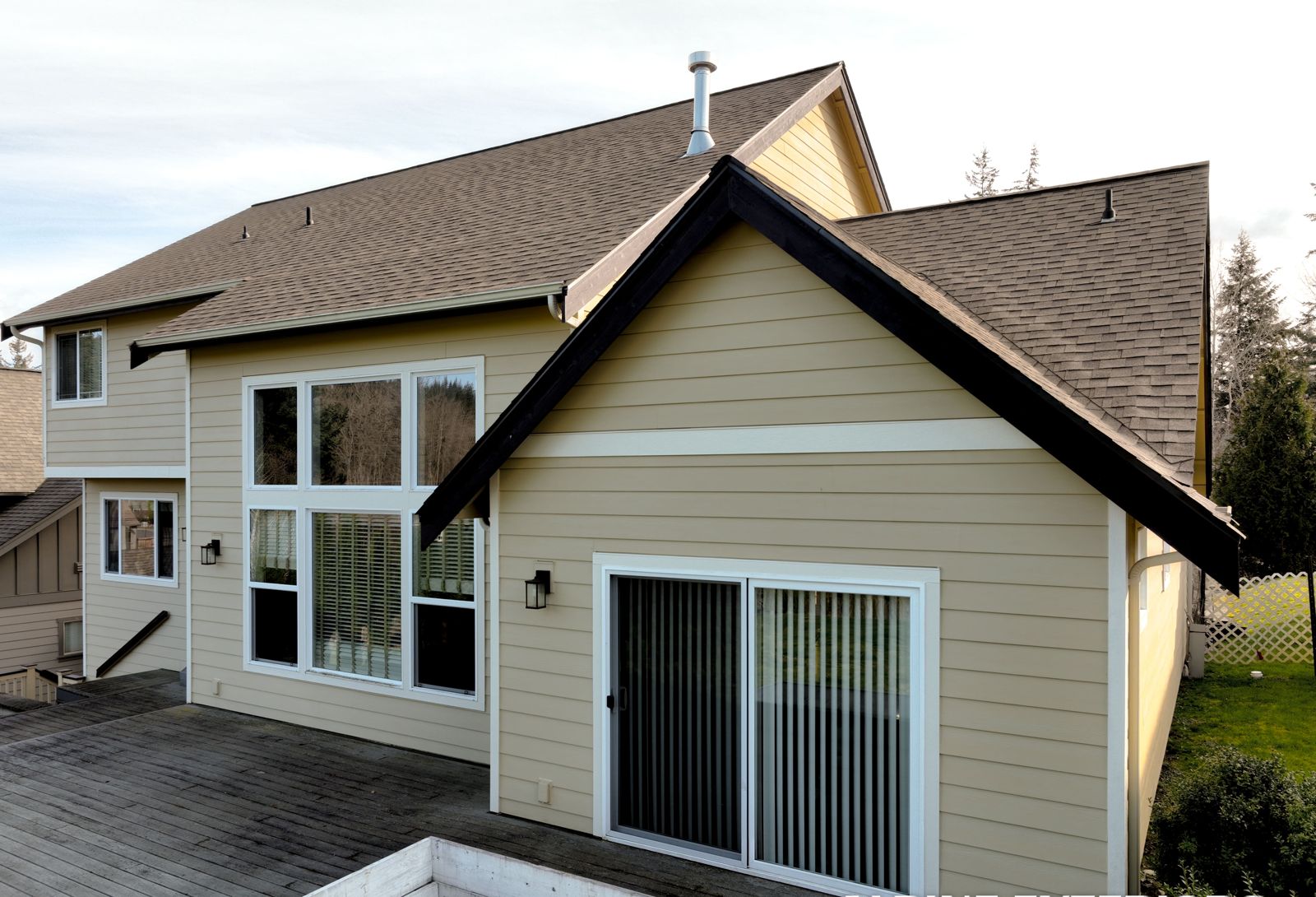
After a windstorm or a hard stretch of winter weather in Lynden, the siding damage worth worrying about is usually hiding in a handful of predictable places: corner boards, butt joints, and anywhere caulking has started to fail. Most of it isn't dramatic — a cracked panel, a lifted piece of trim, a soft spot near a downspout — but it lets water in, and in this climate, water that gets behind siding rarely dries out on its own before it causes rot.
Lynden sits inland from Bellingham Bay, closer to the Nooksack River floodplain and the foothills of the North Cascades than to the water, and that location shapes the kind of storm damage siding actually takes here. The town doesn't get pounded by surf or salt spray the way Blaine or Birch Bay can during a strong blow off the Strait of Georgia, but it sits in the path of Fraser Valley outflow events — the cold, gusty winds that funnel down through the Sumas Gap out of British Columbia in fall and winter. Those outflow winds hit lower Whatcom County from the northeast, a different direction than the typical southwest storm track, and they can drive rain sideways into wall assemblies that were never detailed to handle wind from that side. A house with siding, trim, and flashing installed with the usual southwest exposure in mind can end up with its weak points on the wrong wall when a Sumas Gap event rolls through.
Layered on top of that is the everyday reality of Whatcom County weather: long stretches of steady, low-intensity rain rather than isolated downpours. That kind of rain doesn't overwhelm siding the way a violent storm would, but it's relentless. It finds every gap in caulking, every place where a nail has backed out, every spot where flashing above a window or door was cut a little short. Once moisture gets behind lap siding or fiber cement panels, the wood sheathing, trim, and framing underneath stay damp far longer here than they would in a drier climate, because the air itself doesn't dry things out between rain events. That's the mechanism behind almost every serious siding failure we see in Lynden — not one big storm, but one small opening that persistent rain has months, sometimes years, to exploit.
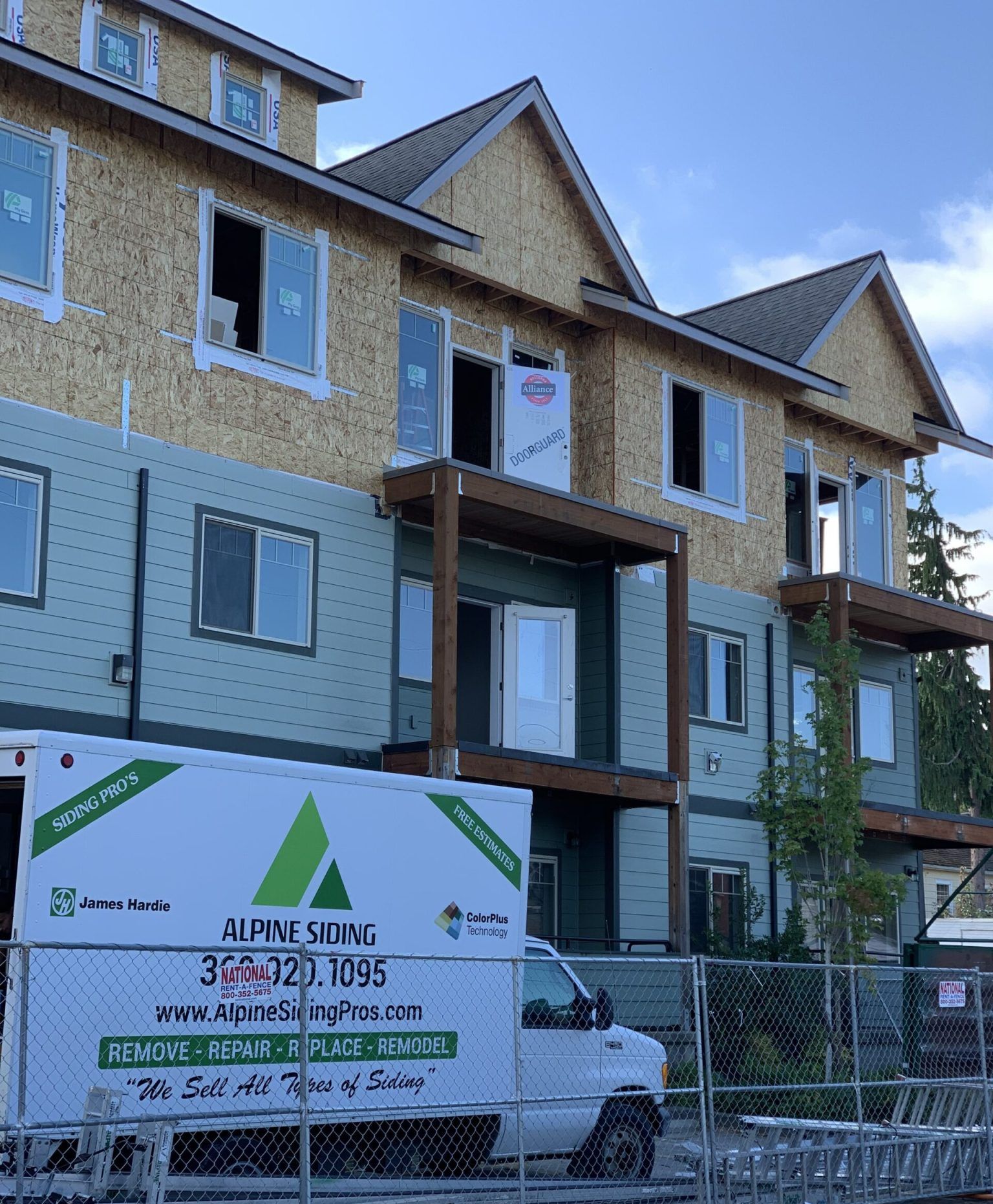
A few conditions specific to Lynden and the surrounding foothill communities change how storm damage shows up and how it should be handled:
The steps that matter most after a storm, or after noticing damage during a routine walk around the house, are less about the siding material itself and more about documentation and timing.
On cost: a spot repair to a section of damaged siding, corner trim, or flashing typically runs from a few hundred dollars up to around $1,500–$3,000 depending on how much sheathing has to be opened up and how much rot is found once the wall is opened. A full re-side of a house is a much bigger project, and pricing depends heavily on square footage, material choice, and how much of the wall assembly needs to be rebuilt — get a written, itemized estimate rather than relying on a rough number over the phone.
Be honest with yourself about scope, too. If a contractor tells you a "quick caulk and paint" fix is all a soft, rotted section needs, that's a red flag — caulk doesn't stop rot that's already active, it just hides it for another season. Alpine Exteriors, WA contractor license ALPINI751OW, opens up questionable areas rather than patching over them, because a repair that doesn't address wet sheathing underneath usually fails again within a year or two, and that second failure costs more than doing it right the first time.
One more thing worth planning for: if enough of a wall's siding is coming off anyway, the Washington State Energy Code's requirements for wall insulation and air/moisture barriers may apply to the portion being replaced, depending on the scope of work. That's not a reason to avoid a needed repair, but it is a reason to loop in a contractor who knows how re-siding intersects with current code requirements before work starts, rather than finding out mid-project.
It often does, but coverage typically hinges on whether the damage resulted from a sudden, identifiable event like a windstorm rather than gradual deterioration. Most policies exclude damage attributed to lack of maintenance, so a panel that cracked in a specific storm is a stronger claim than rot that's been developing quietly for a couple of winters. Documenting the storm date, photographing the damage promptly, and getting a contractor's written assessment of cause all help support the claim either way.
Storm damage tends to be sudden and visible in one area — a cracked or missing panel, a piece of trim pulled loose, a dent from wind-blown debris — often right after a specific weather event. Long-term rot usually shows up more gradually as soft or spongy spots, dark staining, or paint that's bubbling and peeling in the same spot over multiple seasons, frequently near ground level, under downspouts, or on north-facing walls that stay damp longest. In practice the two often overlap, since a storm can be the event that finally pushes water through an opening that had been slowly weakening for a while.
Within a few days if you can manage it, and sooner if you can already see or feel a gap where water is getting in. Whatcom County's rain doesn't let up for long stretches, so any opening in the siding keeps taking on moisture the longer it sits, and the sheathing behind it goes from damp to genuinely rotted faster than homeowners expect. An early inspection also gives you photo documentation closer to the storm date, which matters if you end up filing an insurance claim.
It depends on how much of the wall is being replaced and what's currently there. Small spot repairs generally don't trigger broader requirements, but if a significant section of siding and sheathing is coming off, the work may need to meet current Washington State Energy Code provisions for wall insulation and moisture control for that portion of the wall. A contractor familiar with local permitting can tell you early on whether your specific repair crosses that line, so it's worth asking before work begins rather than after.
If a recent windstorm or another season of Whatcom County rain has left you wondering what's really going on behind your siding, it's worth having someone look who knows how this specific climate — the outflow winds, the freeze-thaw in the foothills, the moss and the endless drizzle — actually breaks a house down over time. Alpine Exteriors serves Lynden along with Bellingham, Ferndale, Blaine, Birch Bay, Sudden Valley, and the islands, and can walk your home, tell you honestly what's storm damage versus what's been building for years, and put together a straightforward, written scope before any work starts. Reach out to Alpine Exteriors for an inspection — catching a small problem now is almost always less disruptive than waiting for it to become a wall-opening repair.