
For most homes around Acme — tucked into the foothills along the Nooksack River corridor, ringed by second-growth fir and the lower shoulders of Mount Baker — the colors that hold up best and look right longest are mid-tone, muted, and green- or gray-based: deep forest green, slate or charcoal gray, warm greige, and cedar-toned brown. These sit comfortably against the evergreen backdrop and gray sky that dominate this part of Whatcom County ten months out of the year, they hide the inevitable moss and pollen dust better than bright white or pastel tones, and they don't push vinyl siding panels into the heat-warping range the way true black or very dark navy can on a south-facing wall. Alpine Exteriors sees the same handful of color families chosen again and again on Acme remodels and new builds, not because they're trendy, but because they're the ones still looking good after a decade of Whatcom County weather.
Acme isn't Bellingham's waterfront and it isn't Lynden's open farmland — it's a river-valley community wrapped in timber, with homes set back among alder and fir, gravel driveways, and a lot of shade from tall trees on the north and east sides of most lots. That changes what "best" means here. We weighed each color option against five things that actually happen to a house in this part of the county:
A deep, slightly blue-leaning forest green is one of the most forgiving choices for an Acme property. It reads as intentional against a backdrop of Douglas fir and hemlock rather than fighting it, and because it's already a dark, saturated color, new moss growth on shaded elevations tends to blend in rather than stand out as a stain. Pros: low visual maintenance, complements the landscape instead of competing with it, works on both traditional and modern home styles. Cons: a true forest green can look almost black in deep shade or overcast light, which some owners find too heavy on a full elevation; and if the pigment is a cheaper vinyl formulation, sun-facing walls can fade toward an olive or gray-green over ten to fifteen years.
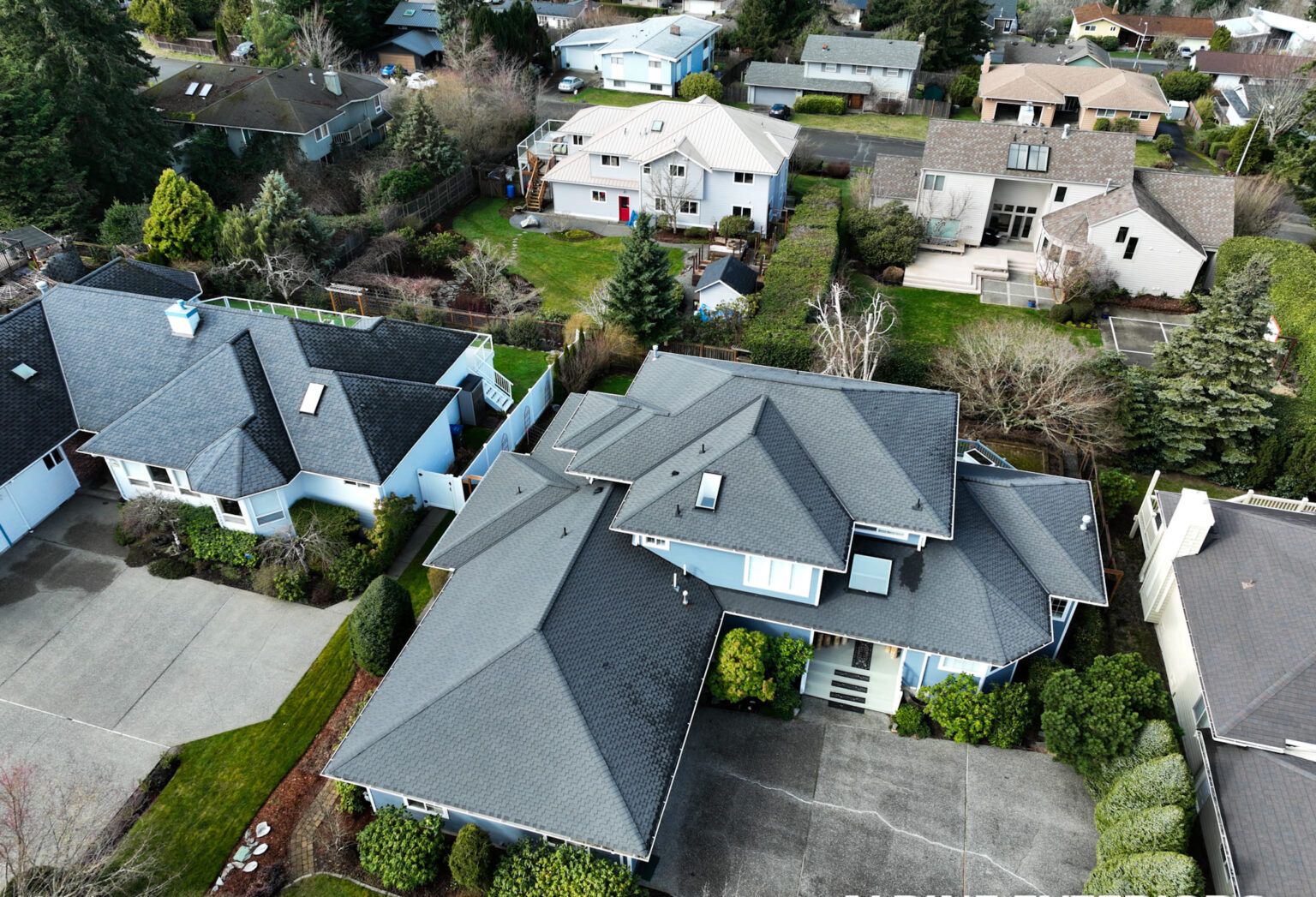
Charcoal and slate grays are probably the single most requested colors Alpine Exteriors installs in this part of the county right now. They pair well with the gray sky that dominates fall through spring, they photograph well against green landscaping, and they hide road dust and pollen film better than almost anything lighter. Pros: versatile with stone, black-frame windows, and metal roofing; doesn't show dirt streaks the way white does; timeless rather than trend-driven. Cons: on the darker end of the slate spectrum, full-sun elevations can run hot enough in summer to matter for vinyl panel expansion, so we pay close attention to installation clearances and fastening on those walls; also, if every home on a road picks the same charcoal, the neighborhood can start to look monotone.
A warm, gray-leaning taupe splits the difference between the moodiness of charcoal and the brightness of white. It's a practical middle ground for owners who want something that won't visibly show every bit of pollen or dust but still reads as light and welcoming from the road. Pros: flattering in both bright summer light and the flat gray light of a Whatcom County winter; pairs easily with warm wood accents, stone veneer, or a green front door; resells well because it's broadly likeable. Cons: the lighter end of greige can pick up a faint green or yellow cast from algae bloom on shaded north walls faster than a true gray does, so it needs a soft wash on those elevations more often than darker colors.
Warm cedar and walnut browns, especially in a woodgrain-textured fiber cement lap or shingle profile, fit the rural, forested character of Acme about as well as any color can — they essentially match the trees around the house. Pros: arguably the most natural fit for the setting; woodgrain fiber cement gives the look without the rot risk of real cedar siding, which struggles here specifically because of how long shaded walls stay damp after rain. Cons: real cedar siding, if that's the material rather than just the color, needs a maintenance schedule — re-staining and moisture checks at trim joints — or wood rot becomes a real and recurring repair; even fiber cement in a brown tone can look drab without enough contrast from trim or roofline to break it up.
A muted, low-saturation blue-gray brings a bit more personality than straight gray while still staying quiet enough for a wooded lot. It's more commonly seen closer to the water in Birch Bay or Blaine, where it nods to wind-driven rain off the Strait and Bellingham Bay, but a softened version works fine inland around Acme too. Pros: distinctive without being loud; ages gracefully; complements black or bronze window frames. Cons: in a shaded, forested setting it can read as slightly cold or out of place next to warm timber tones — it tends to suit open, exposed lots better than the closed-canopy lots common around Acme; and cheaper blue pigments in vinyl are among the more fade-prone colors on the market.
A warm cream (not stark white) still has a place on Acme homes with good sun exposure and larger open yards, especially paired with dark trim and a metal roof. Pros: brightens a lot that gets less direct light than it would in open country; classic look that never reads as trendy. Cons: this is the color most likely to show moss, algae streaking, and mildew bloom under eaves and on north-facing walls in a persistently damp, shaded climate — plan on more frequent soft-washing than any other option on this list, and expect visible green-black staining to reappear within a season or two of cleaning if the wall stays shaded and wet.
A handful of choices consistently disappoint owners once a Whatcom County winter and a few damp summers have had their way with the house:
Not directly. The Washington State Energy Code governs the insulation, air sealing, and vapor management of the wall assembly underneath your siding, not the color of the finish itself. Color has a minor secondary effect on how much a wall heats up in direct sun, but in a climate where heating load dominates far more than cooling load, that effect is small compared to what your wall's insulation and air barrier are doing. Pick your color for looks and durability, and make sure whoever installs the assembly behind it is meeting current code requirements.
On a shaded, north-facing wall, fade is rarely a major issue here regardless of color, because direct UV exposure is limited. On a wall that gets several hours of direct afternoon sun — common on south- and west-facing walls even on tree-covered Acme lots where the canopy has gaps — darker pigments do fade and chalk faster than mid-tone or light colors, because they absorb more heat and UV energy. If a specific elevation gets strong afternoon sun, it's worth choosing a slightly lighter shade for that side, or confirming the manufacturer's fade warranty covers the pigment you've chosen.
It depends entirely on the property. Much of the immediate Acme area is unincorporated and rural with no HOA at all, but some newer subdivisions and several communities elsewhere in Whatcom County that Alpine Exteriors serves do have covenants controlling exterior color. Check your title paperwork or plat covenants before ordering material, since a color swap after installation is far more expensive than a five-minute records check beforehand.
Fiber cement and factory-finished vinyl with a baked-on or fused pigment generally hold color longer than field-painted wood siding in a climate this wet and shaded, simply because there's no paint film sitting on the surface to crack, peel, or feed mildew. Real wood siding can still look excellent around Acme, but it needs a realistic maintenance plan — periodic re-staining or re-painting and attention to any spot where trim traps moisture — or the color (and the wood underneath it) will degrade faster than a fiber cement or vinyl equivalent.
Every lot around Acme gets a different mix of shade, sun, and moisture, and the right siding color depends as much on your specific trees and exposure as it does on personal taste. Alpine Exteriors, WA contractor license ALPINI751OW, works throughout Whatcom County — from Bellingham and Ferndale to Lynden, Blaine, Birch Bay, Sudden Valley, and the islands — and can walk your property, talk through material and color options suited to your site, and give you a straightforward estimate. Reach out to Alpine Exteriors to schedule a walkthrough before you commit to a color for your next siding project.