
For most homes in Bellingham, Ferndale, Lynden, and the rest of Whatcom County, HardiePlank fiber cement lap siding is worth the investment — it resists the moss, moisture, and wood rot that wear out cedar and engineered wood siding out here, and it holds paint far longer than most alternatives. It is not the cheapest option up front, and it is not the right fit for every house or every budget, but for a region that stays wet eight or nine months a year, it earns its keep.
HardiePlank is a fiber cement product — a mix of cement, sand, and cellulose fibers pressed into planks and kiln-cured. It is not plastic vinyl and it is not wood, and that middle position is exactly why it does well here. Vinyl siding can warp or crack when temperatures swing, and it never really solves the moss and algae staining problem that shows up on anything with a lot of seams and low-maintenance marketing behind it. Cedar and wood composite siding look beautiful for the first several years, but Whatcom County's damp climate is hard on any wood-based product — moisture gets behind laps and around fasteners, and once rot starts in a wall assembly it is expensive to chase down and repair, often meaning torn-out sheathing and framing repairs well beyond the cost of the siding itself.
Fiber cement doesn't rot, doesn't feed insects, and doesn't swell or shrink with moisture the way wood does. It holds a factory or field-applied paint finish for a long time compared to wood, which matters when you're the one paying for repaints every few years. It's also heavier and more rigid than vinyl, so it resists denting from hail, ladders, and the general wear and tear of yard work and landscaping equipment — though it is not indestructible, and a hard enough impact can still chip or crack a plank, especially near corners.
The honest drawbacks: HardiePlank costs more upfront than vinyl and often more than mid-grade engineered wood siding, with material and installed pricing that can run from around the high single digits to well over $10 per square foot depending on the trim package, paint finish, and how much of the old siding and sheathing needs to be replaced underneath. It is heavier to handle and cut, which means installation labor and equipment matter — cutting fiber cement improperly kicks up silica dust, so it needs to be done with the right saws, blades, and dust controls. It also needs to be installed with correct flashing, clearances, and caulking details, because fiber cement itself won't rot, but the wood sheathing and framing behind a poorly installed job absolutely can. A beautiful HardiePlank job with bad flashing details is still a wet-wall problem waiting to happen — the siding gets the credit, but the water management underneath does the actual work of keeping a house dry.
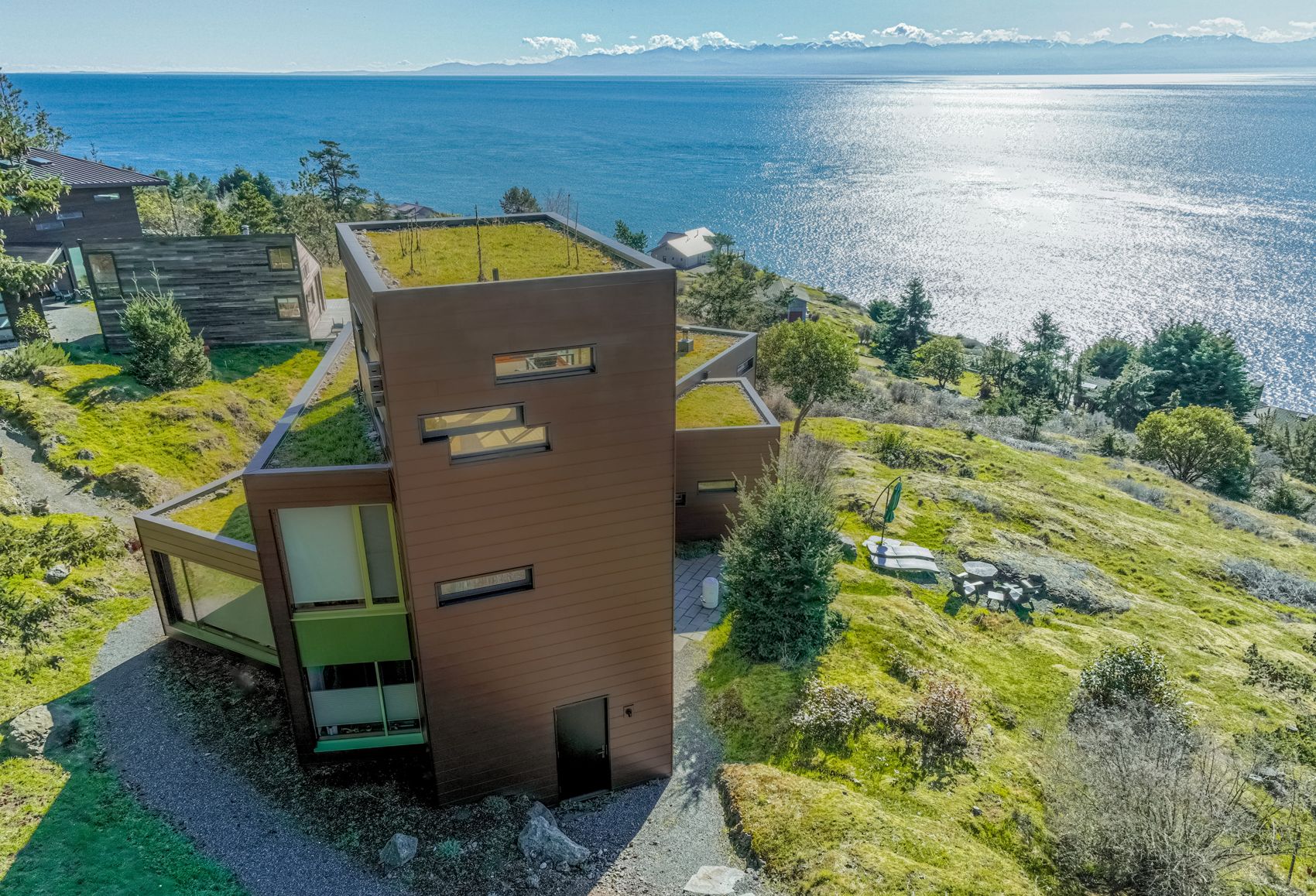
Whatcom County's siding conditions aren't dramatic, but they are relentless, and that's what separates it from drier parts of the state. Rain here isn't just frequent — it's often driven sideways by wind coming off Bellingham Bay, the Strait of Georgia, and the open water around Birch Bay and the approaches to the San Juan and Lummi Island shorelines. Wind-driven rain finds its way into siding assemblies that would hold up fine in a calmer inland climate, which is why lap orientation, overlap, and flashing at every window, door, and penetration matter more here than the siding material itself.
Moss and algae are a year-round fact of life on north-facing walls, under eaves, and anywhere shade and moisture combine — which describes a lot of Whatcom County given the tree cover in Sudden Valley, the Lynden and Ferndale farm country, and the wooded lots common on the county's island communities. Fiber cement resists the wood rot that moss and algae eventually cause on organic siding, but it still needs occasional washing to keep growth from staining the paint finish and dulling the color.
Move east toward the foothills — areas feeding into the Nooksack valley and the higher elevations around Sudden Valley — and freeze-thaw cycling becomes a real factor in a way it isn't right on the water in Blaine or Birch Bay. Trapped moisture that freezes and expands behind siding or trim can force gaps open over a few winters, which again comes back to installation detail rather than the plank material itself. A siding job that ignores this difference between the shoreline and the foothills is missing something a local crew should already know.
The Washington State Energy Code also plays into siding decisions more than most homeowners expect. Re-siding a home is often the practical moment to address exterior wall insulation and air-sealing, since the wall is already opened up and the labor to add continuous insulation is far cheaper than doing it as its own project later. Code-driven improvements to the water-resistive barrier, continuous insulation, and flashing integration at that stage can meaningfully improve both energy performance and how well the new siding holds up over time — it's worth asking your contractor how the project will handle those requirements rather than assuming siding is purely a cosmetic swap.
Start with the wall, not the siding sample. Before deciding on any product, have someone actually pull a section of existing siding and look at the sheathing and framing behind it, especially around windows, at wall bottoms, and anywhere staining or soft wood is visible. If there's already rot or long-term moisture damage, that needs to be addressed regardless of what siding goes back on — new fiber cement over a compromised wall just hides the problem for a while and can make it worse by trapping moisture that's already in the wall.
It's also worth being realistic about budget and scope. If the house has failing paint but a sound wall behind it, a full HardiePlank replacement may be more project than is strictly necessary, and a repaint or partial repair could buy several more years. If there's active rot, water intrusion, or repeated moss staining that keeps coming back no matter how often it's cleaned, that's a stronger case for a full fiber cement re-side done with proper flashing and drainage details from the start. A contractor who walks the house with you and points out both good and bad news — rather than pitching a full tear-off on sight, sight unseen, over the phone — is generally a better sign than one who quotes without ever setting foot on the property.
Alpine Exteriors, WA contractor license ALPINI751OW, works through this same process on homes across Bellingham, Ferndale, Lynden, Blaine, Birch Bay, and Sudden Valley: pull back the existing siding, assess the wall assembly, and only then recommend whether HardiePlank, another material, or a targeted repair actually fits the house and the budget.
Fiber cement siding is built to resist the rot, swelling, and insect damage that shorten the life of wood siding in a wet climate, and manufacturers back the material itself with long-term warranties. In practice, how long it looks and performs well in Whatcom County depends heavily on installation quality — correct flashing, proper clearances, and good caulking maintenance matter as much as the product choice, since even fiber cement can't compensate for water getting trapped behind it year after year.
Factory-finished boards typically hold their color longer than field-painted fiber cement, but no exterior paint finish lasts forever in a climate with this much rain and UV exposure over a full year. Expect to eventually repaint or touch up a HardiePlank exterior, though the interval is generally longer than what cedar or engineered wood siding needs in the same conditions, which is part of where the long-term savings come from.
Often yes, but the rot has to be dealt with first, not covered over. Replacing damaged siding with fiber cement without repairing the underlying sheathing or improving the flashing and water-resistive barrier just delays the same problem under a new surface. A proper re-side on an older home should include opening up the wall enough to confirm what's actually happening underneath before new siding goes back on.
In areas that get more wind-driven rain off the water, fiber cement generally holds up better than vinyl over time — it's heavier, more rigid, and doesn't develop the gaps and warping that vinyl can show after repeated temperature swings and sustained wind exposure. Vinyl is typically less expensive upfront, so the decision often comes down to how much of a priority long-term durability is versus initial cost.
If you're weighing HardiePlank against other siding options for a home in Bellingham, Ferndale, Lynden, Blaine, Birch Bay, Sudden Valley, or the islands, Alpine Exteriors can walk the exterior with you, take an honest look at what's behind the existing siding, and lay out real options and cost ranges before any work is scheduled. Reach out to schedule an on-site assessment and get a straight answer on whether HardiePlank is the right call for your specific house.