
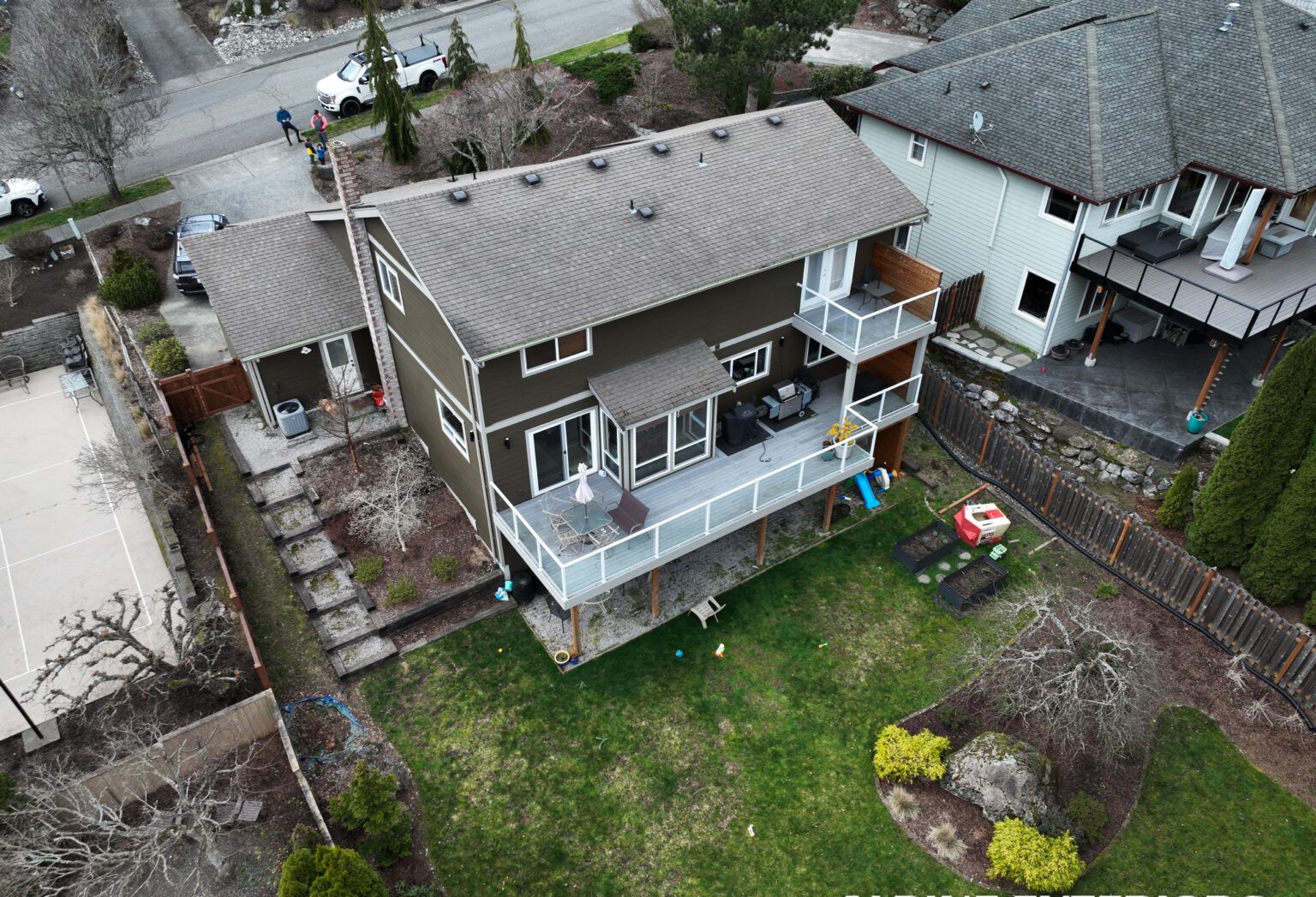
For a lot of homes around Bellingham, Ferndale, Lynden, and out toward Blaine and Birch Bay, metal siding is worth it if you want a material that holds up to constant moisture and doesn't feed moss and algae the way some other claddings do. It's not the right call for every house, though — homes with tight budgets, older wall sheathing that needs a closer look before anything goes up, or owners who want the look of traditional lap siding often end up better served by fiber cement or engineered wood instead.
Metal siding — usually steel or aluminum, formed into horizontal panels or vertical board-and-batten profiles — has moved well past the corrugated-barn look most people picture. Modern residential metal siding comes in a range of finishes, including options that mimic wood grain reasonably convincingly from the curb. That said, it's still a specialty product in this region compared to fiber cement or vinyl, and that shows up in both price and contractor availability.
The case for metal siding in a wet marine climate is straightforward: it doesn't absorb water, it doesn't rot, and it doesn't give algae and moss the porous surface they need to get a foothold the way untreated wood or some composite products can. On a house that sits under fir trees in Sudden Valley or faces the damp westerly weather coming off Bellingham Bay, that's a real advantage over a multi-decade ownership horizon. Properly installed steel siding also tends to hold its color and shape well, resists impact better than vinyl, and is non-combustible, which some insurers factor into premiums.
The drawbacks are just as real. Metal siding costs more up front than vinyl and is often priced close to or above fiber cement, depending on the profile and finish — budget in the higher range for materials and labor compared to standard lap siding, and get an actual quote before assuming a number. It dents from ladders, hail, or a wayward baseball more readily than fiber cement, and once a panel is dented there's no sanding it out — the panel gets replaced. Fastener and panel expansion also matter: metal moves more with temperature swings than fiber cement does, so installation detail around fastening and clearances is less forgiving of a rushed crew. And while metal itself doesn't rot, the fasteners, flashing, and any exposed cut edges can corrode over time if the installer doesn't handle sealing and drainage correctly — which brings the conversation back to installation quality more than the material itself.
There's also a practical availability question specific to this county: not every siding crew in Whatcom County installs metal regularly, so you may have a smaller pool of contractors to choose from, and inexperienced installation is where most of metal siding's real-world problems start. Alpine Exteriors works with metal siding as one option among several, and we're upfront when a house is a better fit for something else — the goal is a wall system that performs here, not a sale.
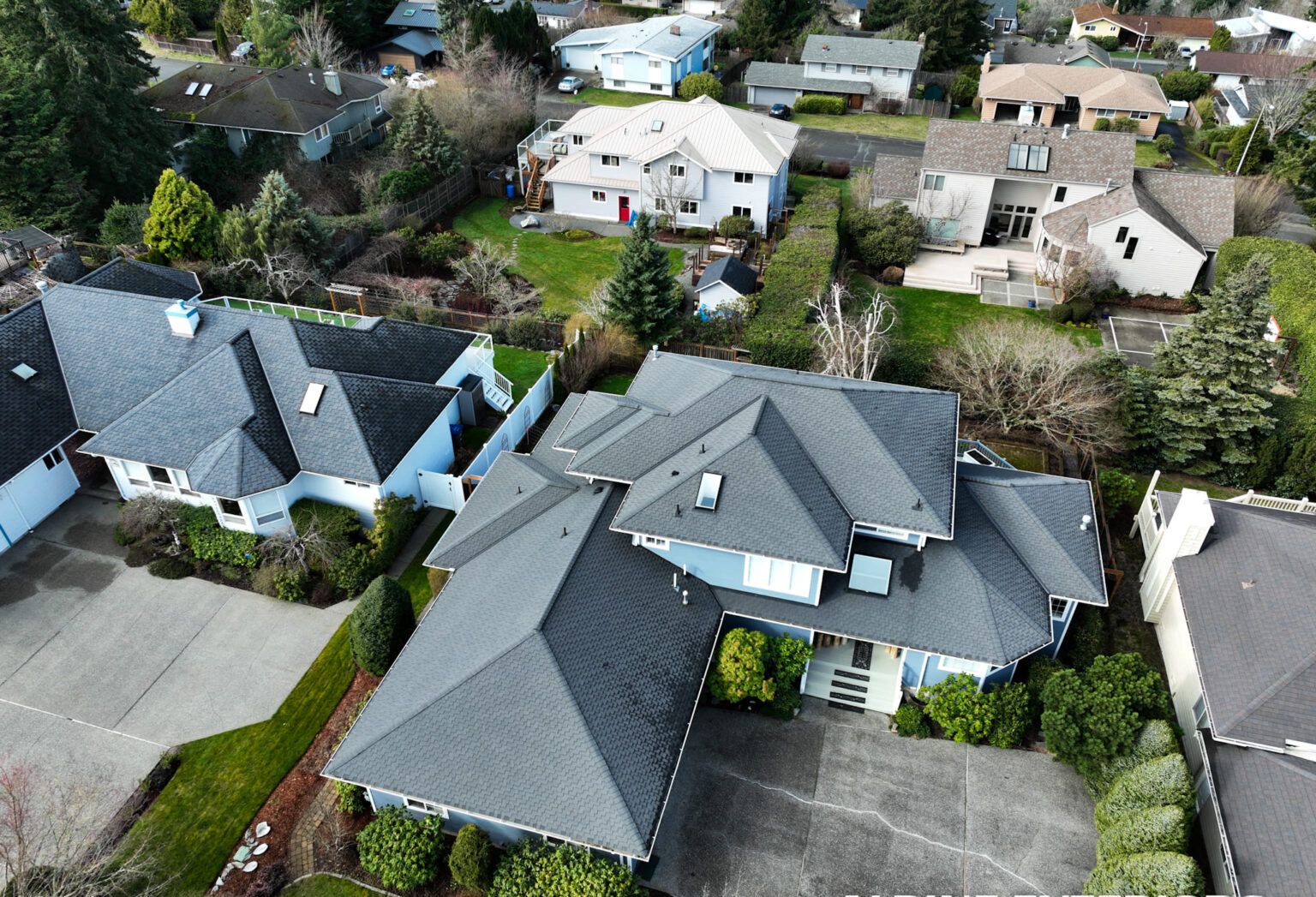
Whatcom County's siding decisions get made under conditions that don't look like most of the rest of the country, and definitely don't look like hurricane-belt considerations you'll see in siding advice written for other regions. Here's what actually matters locally:
Start with the wall, not the finish. Before deciding on metal, fiber cement, or anything else, have someone check the condition of the existing sheathing and any signs of past moisture intrusion — this matters more to long-term performance than which cladding you pick. If there's rot or water staining behind the current siding, that needs to be dealt with regardless of what goes on next.
Next, be honest about your maintenance tolerance and your timeline in the house. If you're planning to stay for decades and you're tired of pressure-washing moss off siding every couple of years, metal's low-maintenance surface is a legitimate long-term argument. If you're more price-sensitive, or you're not sure how long you'll own the home, fiber cement often gives a similar rot- and moisture-resistance story at a lower entry cost, with a more traditional look that's easier to touch up later.
Get quotes from more than one installer, and ask specifically about their metal siding experience — how they handle flashing at penetrations, how panels are fastened to allow for thermal movement, and what warranty covers the finish versus the installation. A material that performs well on paper can still fail here if it's installed by a crew that treats it like vinyl. Alpine Exteriors is licensed in Washington (contractor license ALPINI751OW) and installs across Whatcom County, so if metal siding is on your shortlist, we can walk your specific house — orientation, tree cover, elevation, and current wall condition — and tell you plainly whether it's the right fit or whether another material would serve you better.
Finally, don't treat the siding decision in isolation from the energy code question. If your project is triggering a Washington State Energy Code review anyway, it's worth pricing out added exterior insulation or improved air-sealing at the same time you're re-siding, since opening up the wall is the cheapest point in the home's life to make that upgrade.
It significantly reduces growth on the siding surface itself because metal doesn't hold moisture the way porous materials can, but it doesn't eliminate the problem entirely — moss and algae can still build up in shaded, damp spots like north-facing walls, behind trim, or where debris collects, so gutters and ground-level areas still need regular cleaning regardless of what your siding is made of.
It can be, but only after the existing sheathing and framing are checked for rot or moisture damage, since older wood-frame homes in this area sometimes have hidden water intrusion issues that need to be fixed before any new cladding goes up — putting metal siding over a compromised wall doesn't solve that underlying problem.
Well, as long as installation details are correct — the material itself doesn't absorb water, but wind-driven rain near the water pushes moisture into seams, fasteners, and flashing points, so an installer with real metal siding experience and careful attention to those details matters more here than in a sheltered inland lot.
Not by itself — metal siding is a cladding material, not an insulation layer, so if your project needs to meet or improve on Washington State Energy Code standards, that comes from the insulation, air-sealing, and wall assembly behind the siding, and re-siding is a practical time to address that work since the wall is already open.
If you're weighing metal siding against fiber cement or another option for a home in Bellingham, Ferndale, Lynden, Blaine, Birch Bay, Sudden Valley, or the islands, Alpine Exteriors can take a look at your specific house and give you a straight answer on what fits — no pressure toward the more expensive material if it isn't the better fit for your walls, budget, or timeline. Reach out to schedule a walkthrough and get a real quote based on your home's actual condition, not a generic estimate.