
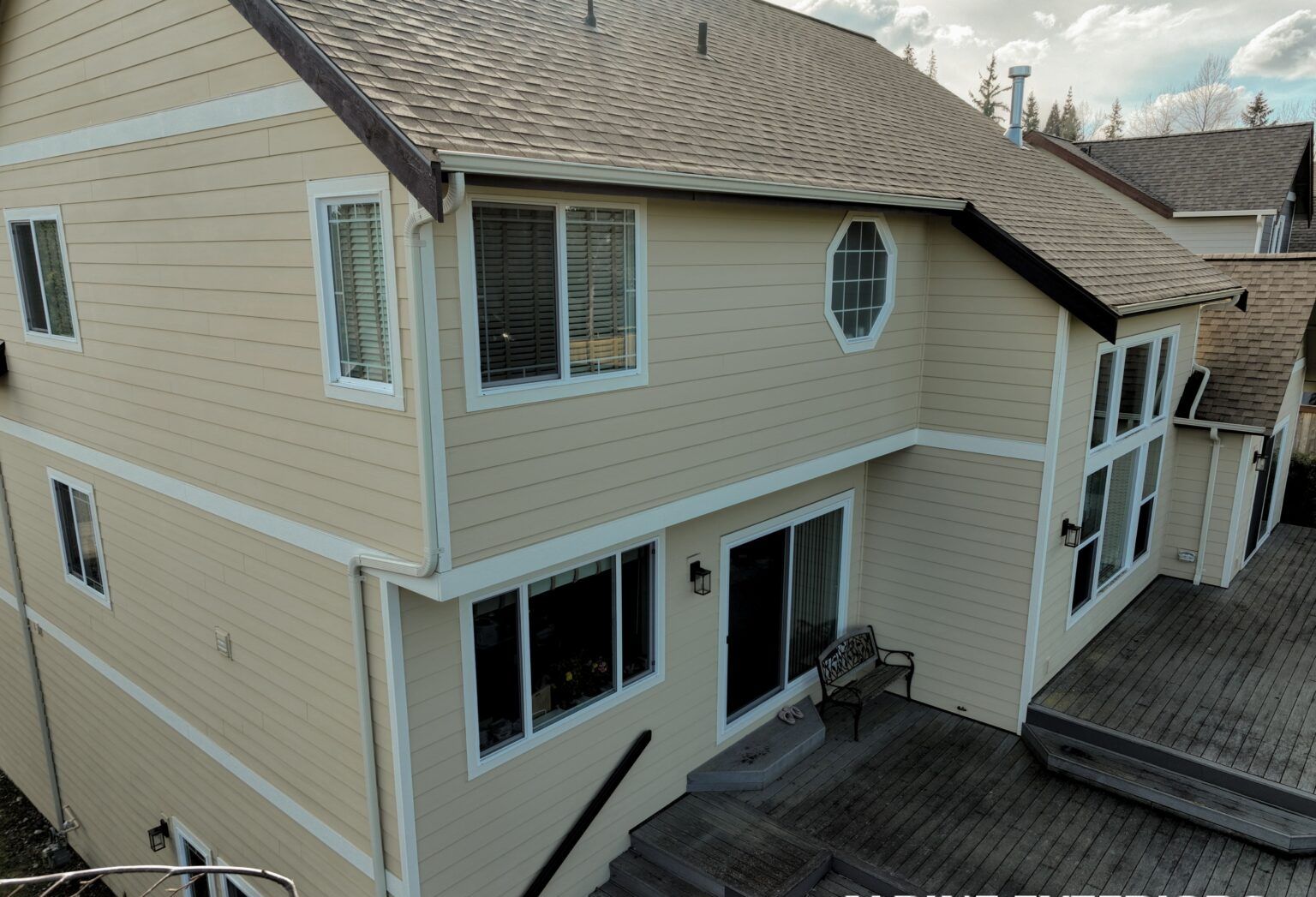
Siding installed anywhere in Whatcom County, including the homes ringing Lake Whatcom and up in Sudden Valley, has to be attached according to the manufacturer's tested installation instructions and the Washington State Building Code's adopted edition of the International Residential Code (IRC), not just nailed up by eye. That means the right fastener, the right spacing, the right weather-resistive barrier underneath, and in most cases a product with a recognized evaluation report backing its wind and moisture performance.
None of that is exotic engineering. It is mostly discipline: using the nailing schedule printed on the product's install guide, keeping fasteners out of the flex zone of vinyl panels, lapping housewrap correctly, and flashing every penetration so water sheds outward instead of behind the cladding. Where homeowners get into trouble is hiring a crew that skips those steps because the house "looks fine" once the siding is up, and the problems don't show for a year or two.
Washington doesn't run a separate statewide "siding approval list" the way some coastal states do. Instead, the code leans on product testing standards and the manufacturer's own installation instructions, which become part of the code requirement once referenced on the permit. For vinyl siding that generally means compliance with ASTM D3679, the standard that governs vinyl siding manufacture and includes wind-load testing. For fiber cement it's ASTM C1186 or the newer C1186-based testing most manufacturers now cite, plus an ICC-ES evaluation report (ESR) that documents how the product performs under wind pressure and what fastening pattern is required to hit that rating. Engineered wood and LP-style products carry their own evaluation reports as well. When an inspector in Whatcom County or the City of Bellingham asks for the installation instructions on site, this is what they're checking against — not a generic "code minimum," but the specific product's tested and approved method.
Wind load itself isn't usually calculated fresh for a re-side. Siding is classified as cladding, not a structural element, so the building official checks that the installed system matches a tested assembly rated for the site's wind exposure category rather than running new structural calculations. Exposure category matters here — a home sitting exposed on a bluff above Bellingham Bay or out toward Blaine and Birch Bay is a different exposure than a house tucked into trees on the north side of Lake Whatcom or deep in a Sudden Valley cul-de-sac. The same siding product can carry different allowable fastener spacing depending on which exposure category it's installed under, which is one more reason a generic install job isn't automatically a compliant one.
Fastening is where most of the actual code enforcement happens on a residential re-side. Inspectors are looking for: the correct nail or screw type and length specified by the manufacturer (not whatever was in the truck), penetration deep enough into solid framing or sheathing rather than just housewrap, fasteners driven straight and not overdriven (crushing the nail hem on vinyl siding voids its ability to move with temperature swings, which then telegraphs as buckling), and spacing that matches the tested pattern rather than "close enough." Where continuous rigid insulation goes under the siding to meet the Washington State Energy Code's continuous insulation requirements, fastener length has to increase to reach through the foam and still get full penetration into the studs — a detail that's easy to miss if a crew is used to installing straight over sheathing.
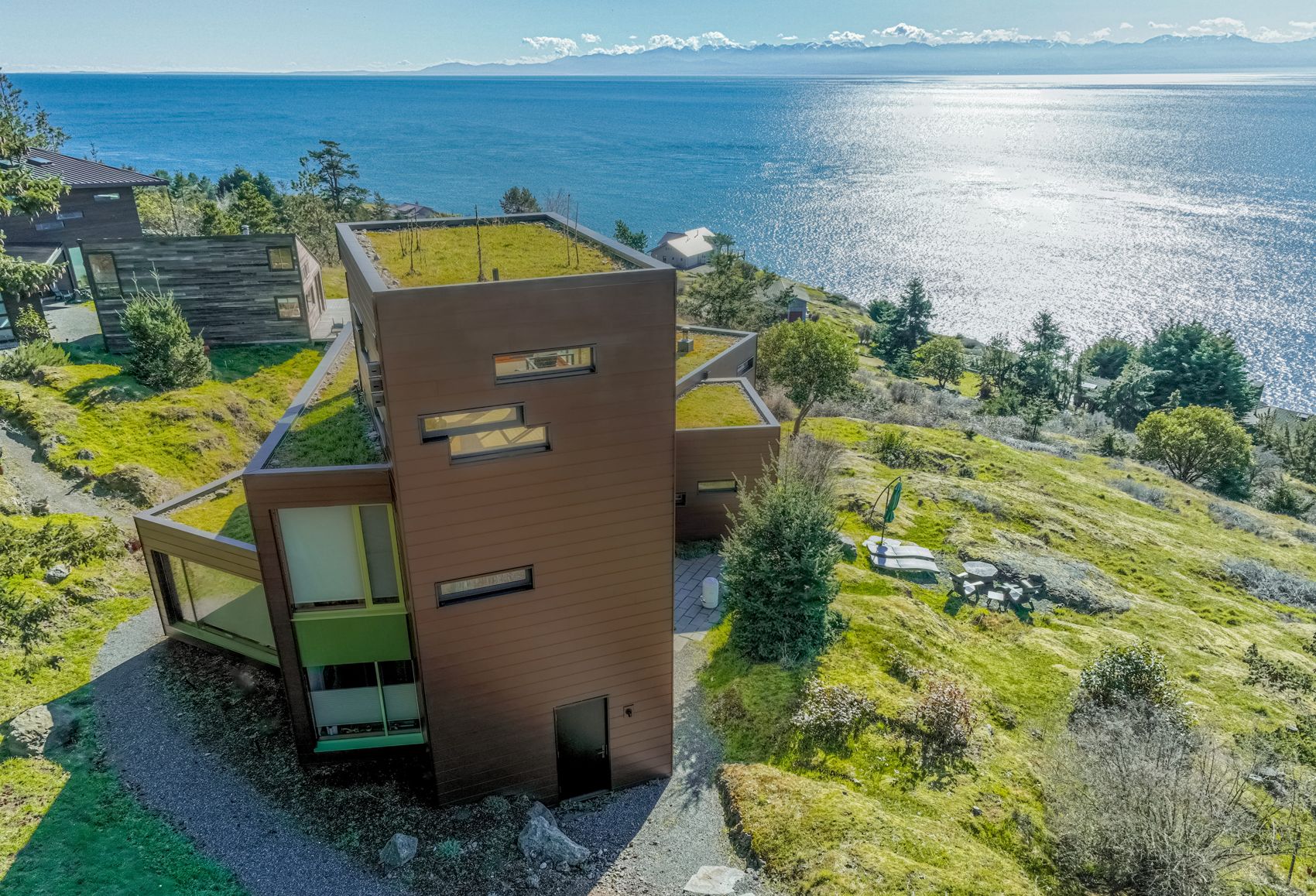
Whatcom County doesn't deal with hurricane wind speeds, and nothing here should be built or sold as if it does. What it deals with instead is persistent, driving rain, much of it arriving sideways off Bellingham Bay and the Strait of Georgia during fall and winter storms. That wind-driven rain is the real test of a siding installation here — not a single extreme gust, but months of moisture being pushed at the wall assembly at an angle, repeatedly, for years. A weather-resistive barrier that's lapped wrong, or flashing that was skipped at a window head because "the siding will cover it," tends to reveal itself as rot two or three winters later rather than as a dramatic failure during the install.
Homes right on the water in Blaine and Birch Bay get salt-laden air on top of that rain exposure, which argues for stainless steel or hot-dip galvanized fasteners and trim hardware rather than standard electro-galvanized. Lake Whatcom itself is fresh water, so that specific salt-corrosion risk eases up as you move inland toward Sudden Valley and the lake's north and south shores — but those same homes pick up a different problem: heavier tree cover, more shade, and slower drying between rain events, which is exactly the recipe for moss and algae growth on north-facing walls and for wood rot at ground contact points and behind poorly vented siding. The foothill lots around the lake also see more freeze-thaw cycling than downtown Bellingham, which stresses caulked joints and any trim that wasn't detailed to shed water on its own.
Put together, that means the practical risk profile splits by geography even within a fairly small service area: bay-facing and Blaine/Birch Bay homes need to think hardest about wind-driven rain and salt-air fastener corrosion, while Lake Whatcom, Sudden Valley, and the more wooded inland lots need to think hardest about drying time, moss/algae, and freeze-thaw at the trim and flashing details. A single generic installation approach doesn't serve both conditions equally well.
Ask any contractor bidding a re-side or new siding job to show the manufacturer's installation instructions for the specific product they're proposing, not a generic brochure. If they can't produce a nailing schedule and a stated wind rating for the product, that's worth a follow-up question before signing anything. Ask specifically what weather-resistive barrier they use and how they handle laps and seams — housewrap that's stapled on loosely or taped as an afterthought does more harm than good because it can trap moisture against the sheathing instead of directing it out.
For a full tear-off down to the sheathing, expect a building permit to be pulled through Whatcom County or the applicable city (Bellingham, Ferndale, Lynden, or Blaine), and expect an inspection that checks the weather-resistive barrier installation, flashing at windows, doors, and roof-wall intersections, and the fastening pattern before the siding is fully closed in. That inspection is a genuine safeguard, not a formality — it's the point where a bad install gets caught before it's buried behind the wall.
It's also fair to expect some honest tradeoffs. Higher wind-rated vinyl and heavier-gauge fastening patterns typically cost more than a stripped-down install, and a proper rain screen gap adds labor and material over face-nailing siding directly to housewrap. Alpine Exteriors, WA contractor license ALPINI751OW, walks homeowners through those tradeoffs product by product rather than defaulting to the cheapest assembly that will pass a casual glance, because the cheap version is usually the one that shows problems by year three.
Often yes, especially for a full tear-off that exposes the sheathing and weather-resistive barrier, since that work touches components the code regulates directly. A simple overlay in limited cases may not trigger the same permit requirement, but the safest approach is to ask Whatcom County or your city's building department directly rather than assume, since the answer can depend on scope and on whether structural sheathing or flashing is being disturbed.
Most vinyl siding sold today is manufactured to ASTM D3679 and carries a tested wind-pressure rating well within what Whatcom County's exposure categories call for, including exposed sites near the bay. The rating only holds if it's installed to the manufacturer's specified nailing pattern and fastener type, though — an under-fastened or overdriven installation can fail well below its rated wind pressure regardless of what the product itself is capable of.
Shaded, tree-covered lots around the lake dry out much more slowly after rain than open sites downtown or near the bay, and moss and algae take hold wherever moisture lingers on a wall surface for extended periods. A working rain screen gap behind the siding and adequate roof overhangs help, but on a heavily shaded lot some periodic cleaning is realistically part of the maintenance picture no matter how the siding was installed.
Washington doesn't operate a standalone state product-approval system the way some states do; instead, the Washington State Building Code (its adopted version of the IRC) requires that siding be installed per the manufacturer's tested instructions, typically backed by an ICC-ES evaluation report and relevant ASTM testing standards. In practice that report and the manufacturer's install guide function as the approval document an inspector will want to see referenced on site.
If you're planning a re-side anywhere from downtown Bellingham out to Lake Whatcom, Sudden Valley, Ferndale, Lynden, Blaine, Birch Bay, or the islands, Alpine Exteriors can walk the property, identify which of these regional risk factors apply to your specific site, and put together a written scope that names real products, real fastening schedules, and a clear permit path. Contact Alpine Exteriors, WA contractor license ALPINI751OW, for a straightforward assessment before work starts.