
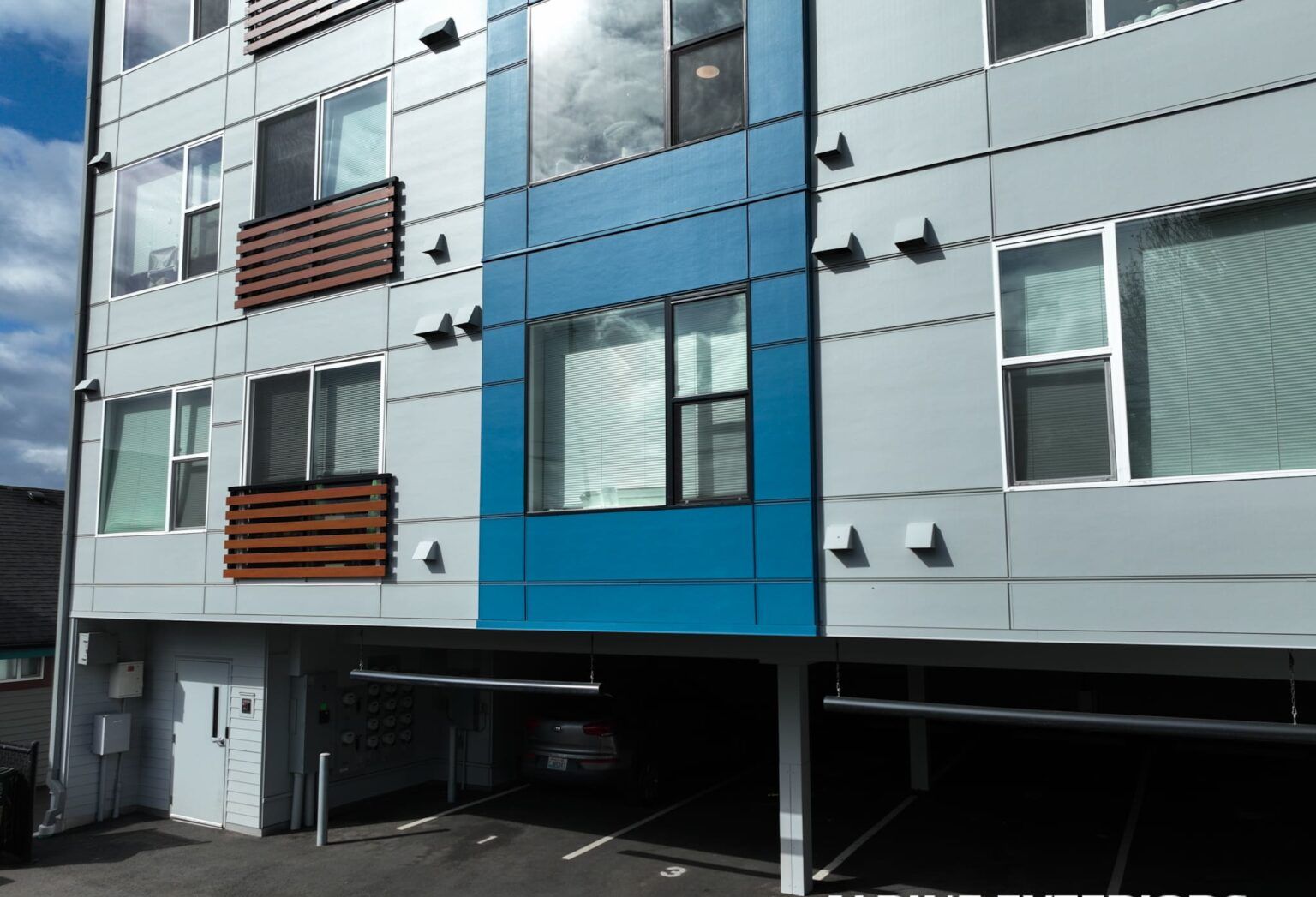
In Nooksack, building permits are administered through the City of Nooksack's building department, which — like several of Whatcom County's smaller cities — coordinates plan review and inspections through Whatcom County Planning & Development Services under an interlocal arrangement. Whether your siding project needs a permit at all depends on what you're actually doing to the wall: a straight material swap on sound sheathing is often exempt, while anything that touches structural sheathing, the weather-resistive barrier, or window and door flashing almost always requires one.
Washington's permit system is built around the state building code (the Washington State Building Code Council adopts the International Residential Code for one- and two-family dwellings, with state amendments) plus the Washington State Energy Code, which governs insulation, air sealing, and continuous exterior insulation requirements. Most Whatcom County jurisdictions, including small cities that contract out their building services, follow this same base code with only minor local amendments — so the rules that apply in Bellingham or Ferndale are close cousins of the rules that apply in Nooksack, even though the counter you walk up to is different.
For siding specifically, the trigger isn't really the word "siding" — it's what's underneath it. A permit is generally required when a project involves removing and replacing sheathing, altering the weather-resistive barrier system, changing the wall assembly's fire-rating or exterior wall covering type, adding or resizing window and door openings, or doing enough of the wall at once that the work counts as a substantial alteration rather than routine maintenance. Small patch repairs, replacing a handful of damaged boards with matching material, or refreshing paint and caulk typically don't need a permit. Where it gets murky is a full re-side: even if you're using a very similar product, most jurisdictions treat a full building re-side as permit-triggering because it exposes the sheathing and flashing details that inspectors care about, and it's also the point where energy code compliance for continuous insulation can come into play. If your project adds any exterior rigid insulation to meet current energy code targets, that's a code-driven change, not a cosmetic one, and it belongs in the permit application.
Once a permit is issued, expect at least one inspection tied to the sheathing and weather-resistive barrier stage — this is the point where the inspector wants to see the house wrapped and flashed correctly before it disappears behind the finish siding. Depending on scope, there may be a second inspection at close-in or final. Inspectors are checking things that matter enormously in this climate: proper lapping of the house wrap, correctly flashed and sealed window and door openings, weep paths at the bottom of the wall so trapped moisture has somewhere to go, and correct fastening schedules for the siding material itself. None of this is bureaucratic box-checking — it's the difference between a wall that sheds water for thirty years and one that starts rotting from the inside within five.
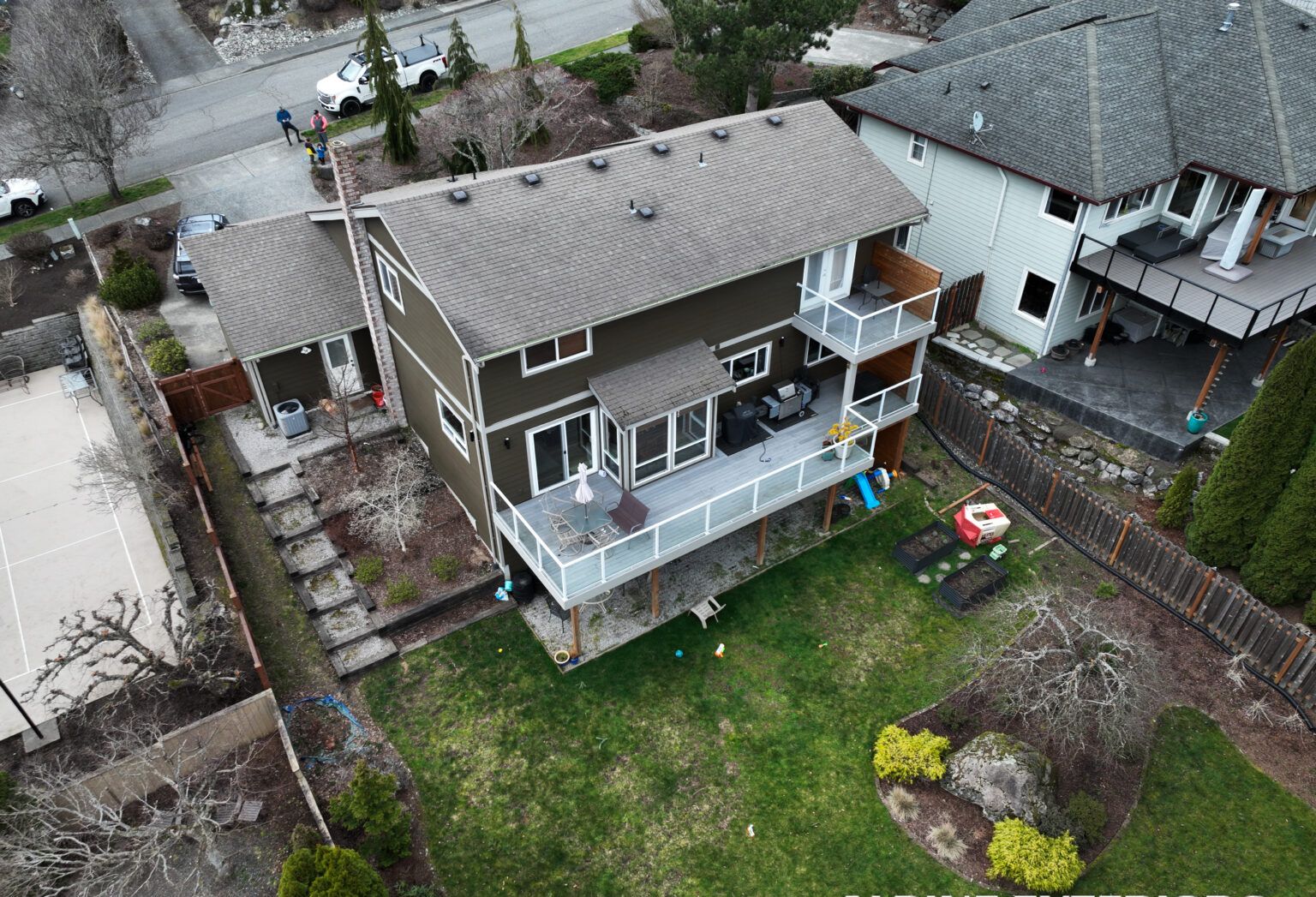
Whatcom County's building envelope challenges aren't hypothetical. Nooksack sits in a valley that gets steady, extended rain through fall, winter, and spring, and the broader county — from Birch Bay and Blaine up on the water to Sudden Valley and the foothills near Mount Baker — deals with wind-driven rain off Bellingham Bay and the Strait of Georgia that pushes moisture sideways into wall assemblies, not just straight down. That's exactly the failure mode building inspectors are screening for at the sheathing inspection: a house wrap lap facing the wrong direction or a window flashed without a sill pan can look fine for years and then let water track behind the cladding during one long wind-driven storm.
Add persistent moss and algae growth wherever siding stays shaded and damp — a near-constant maintenance issue on north-facing walls under mature trees, which describes a lot of lots around Nooksack, Lynden, and the county's rural pockets. Moss holds moisture against the surface longer than open exposure would, which accelerates wood rot on older cedar and hardboard siding and is one of the most common reasons a homeowner discovers a permit-triggering problem in the first place: what looked like a cosmetic re-side turns into sheathing replacement once the contractor pulls the old boards and finds soft, rotted OSB or plywood underneath.
The foothill areas around Sudden Valley and the county's eastern edge also see real freeze-thaw cycling in winter, which is harder on materials and fasteners than the milder marine-influenced weather closer to the water. It's a smaller factor than the rain exposure, but it's part of why material choice and installation detail matter more here than in a drier, milder climate — and why an inspector reviewing a Nooksack permit is looking at the same fundamentals as one reviewing a permit in Bellingham, just applied to a house that may sit a little farther from the moderating effect of the Bay.
Start by describing your project honestly to whoever pulls the permit, rather than trying to guess your way around the requirement. If a contractor tells you a full re-side doesn't need a permit in Nooksack, ask them to confirm that directly with the city or with Whatcom County Planning & Development Services before work starts — verbal assurances don't protect you if an inspector or a future buyer's inspector flags unpermitted work later. Here's a practical sequence:
Alpine Exteriors pulls permits as a normal part of siding projects that require one and works directly with local building departments on scheduling inspections, rather than treating the permit step as optional paperwork to skip past. It's worth saying plainly: permitted work costs a bit more in time and sometimes in fees, and it can occasionally surface a problem — like rotted sheathing — that a quick cosmetic re-side would have covered up. That's not a downside to hide from; catching it now is cheaper than catching it after the wall has failed.
It depends on the scope. Minor spot repairs using matching material generally don't require a permit, but a full re-side, any work that exposes or replaces sheathing, or changes to window and door flashing typically does. The safest approach is to confirm your specific project with the City of Nooksack's building department before work begins, since the line between exempt maintenance and permit-triggering alteration comes down to details a homeowner may not think to mention.
The City of Nooksack issues its own building permits, and like several smaller Whatcom County cities, it coordinates plan review and inspections through Whatcom County Planning & Development Services. In practice this means your application may be reviewed by county staff even though the permit itself is a city permit — worth clarifying up front so you know who to call with questions.
Mainly the layers you won't see once the finish siding goes up: correct lapping and sealing of the weather-resistive barrier, properly flashed window and door openings with functioning sill pans, adequate weep paths at the base of the wall, and correct fastening for the siding material. In a region with as much sustained and wind-driven rain as Whatcom County, these details determine whether the wall stays dry for decades or develops hidden rot within a few years.
You can, but it's a real risk — unpermitted work that should have been permitted can complicate a home sale, void portions of a warranty, and leave moisture problems undetected until they're expensive. If a contractor is uncertain, the right move is to confirm directly with the City of Nooksack or Whatcom County Planning & Development Services rather than relying on assumption. Alpine Exteriors treats that confirmation step as standard practice, not an extra.
If you're weighing a siding project in Nooksack, Lynden, or anywhere else in Whatcom County and aren't sure whether it needs a permit, Alpine Exteriors (WA contractor license ALPINI751OW) can walk your specific scope through the local requirements, handle the permit application where one's needed, and coordinate inspections so the project isn't held up mid-way. Reach out for a straightforward assessment of what your project actually requires before any siding comes off the wall.