
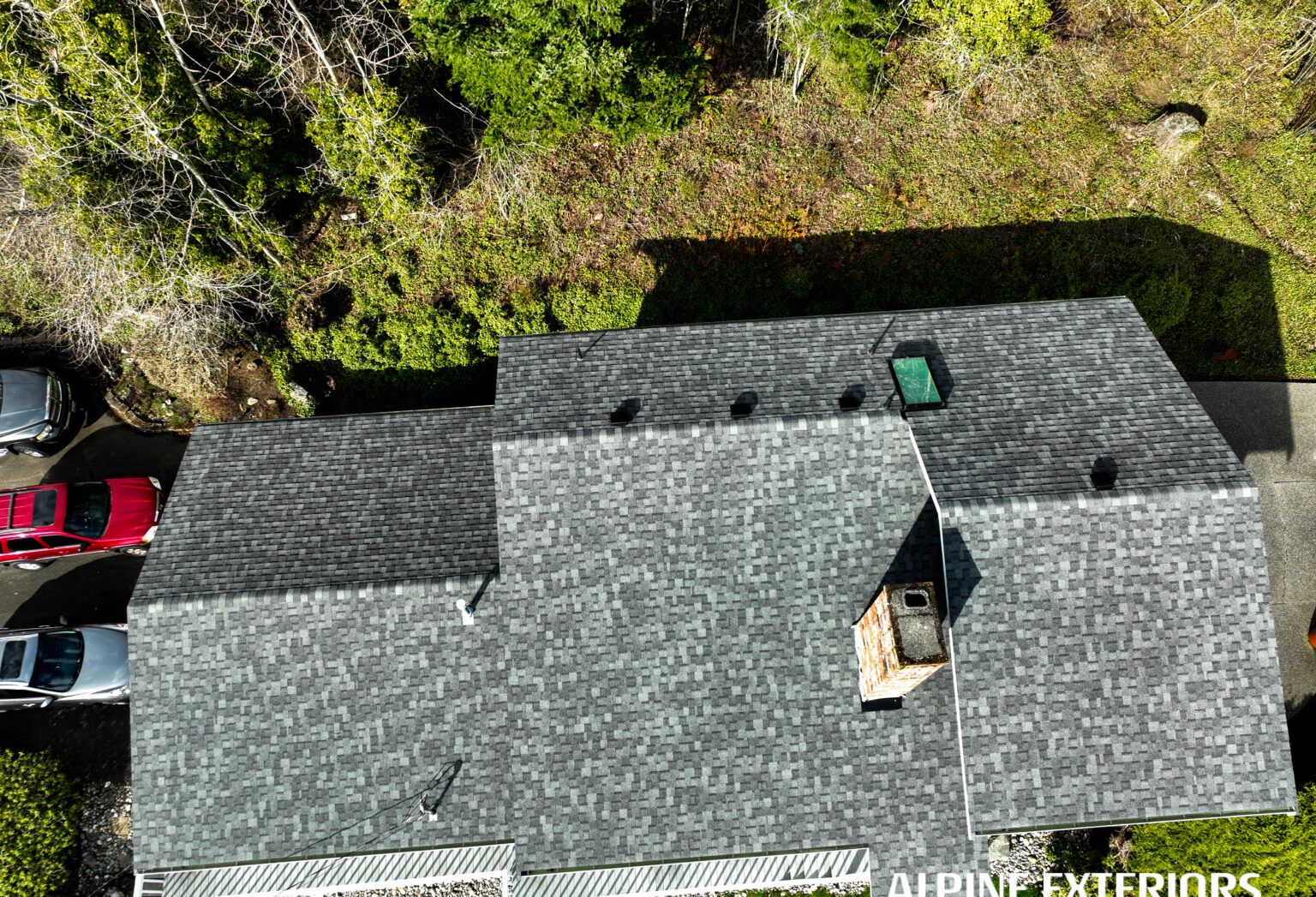
In Chuckanut, storm damage to siding is rarely one dramatic event — it's usually wind-driven rain off Bellingham Bay finding a small gap in flashing or caulking during a fall or winter blow, followed by weeks of ordinary Pacific Northwest rain pushing moisture into that gap before anyone notices. After a storm, check for soft or slightly bulging panels, dark streaking below butt joints and window trim, and moss lines that show exactly where water has been running down the wall.
Siding is designed to shed water moving straight down, not water being driven sideways or forced upward by gusts. On a normal rainy day in Whatcom County, water runs down the face of a wall and off at the bottom of each course. During a windstorm — especially one pushing in off Samish Bay or Bellingham Bay — rain can hit the wall almost horizontally, and enough wind pressure will drive it up and under the bottom edge of a lap, behind trim boards, or through a nail hole that was never fully sealed. Once water gets behind the siding, the weather-resistive barrier (house wrap or building paper) is supposed to catch it and route it back out. When that barrier is torn, improperly lapped, or simply worn out on an older home, water reaches the sheathing and framing underneath.
From there, the damage is slow and mostly invisible. Wood-based siding and the wood sheathing behind vinyl or fiber cement both absorb moisture and start to soften. Left wet for long stretches — which is easy to do here, given how many consecutive rainy days Whatcom County gets between October and April — that softened wood becomes wood rot. By the time rot shows up as a visibly spongy spot you can push a screwdriver into, the damage underneath is usually larger than what's visible from the outside. Add in freeze-thaw cycles, which happen more often at the elevations around Chuckanut Mountain and the foothills than they do right on the Bellingham waterfront, and any water trapped in a crack or seam expands when it freezes, widening the opening and letting in even more water the next time it rains.
Moss and algae aren't storm damage themselves, but they make storm damage worse. A wall coated in moss holds water against the siding surface far longer than a clean wall does, which keeps the material saturated and softens caulk and sealant faster. Homes tucked under madrona, fir, and cedar canopy — common all along Chuckanut Drive — tend to have heavier moss growth on north- and east-facing walls simply because those sides dry out the slowest.
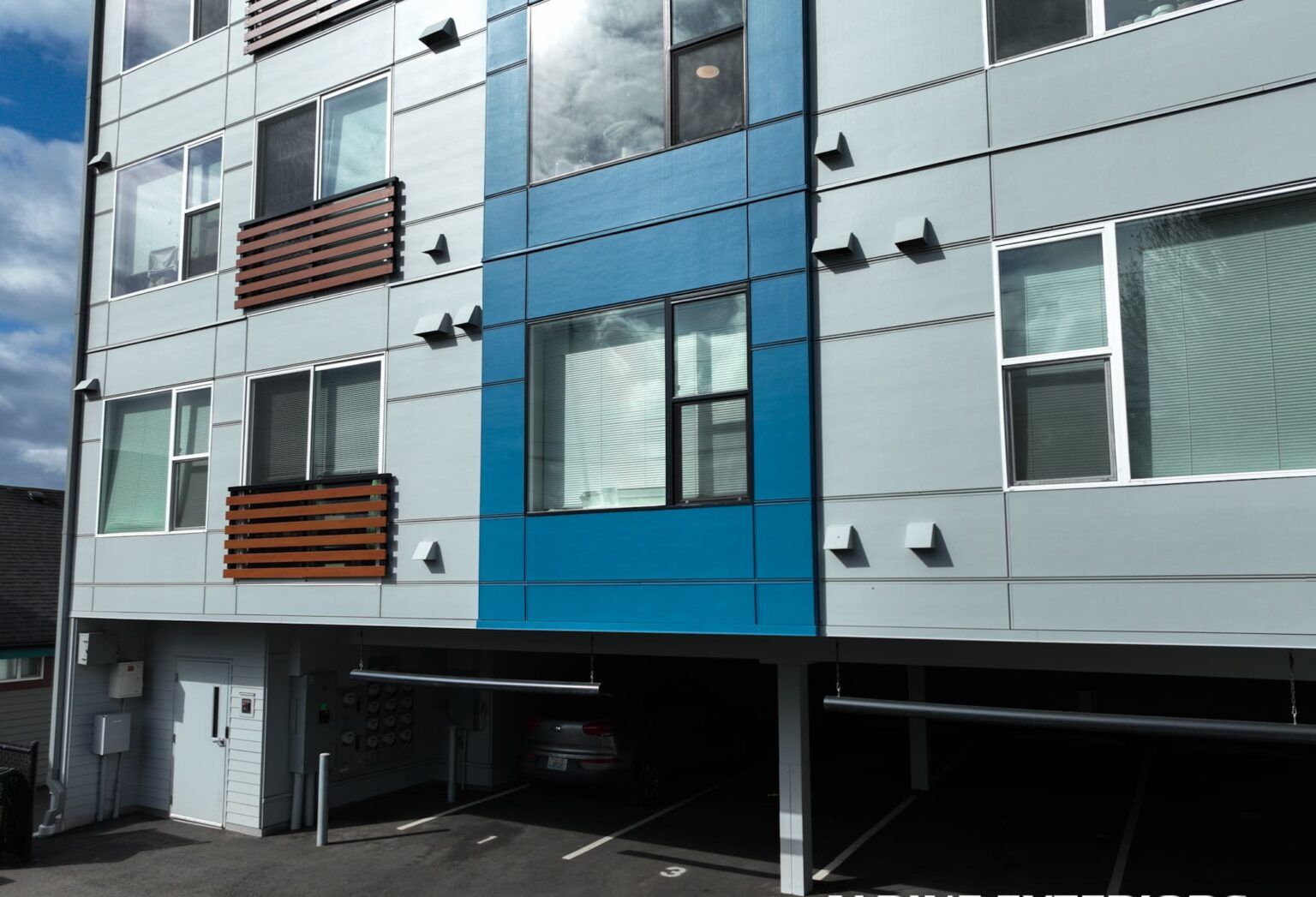
Chuckanut sits in a spot that combines several conditions most Whatcom County neighborhoods don't get all at once. Homes along Chuckanut Drive are often perched on bluffs or steep slopes with a direct, largely unobstructed line to wind coming off Samish Bay and the broader Bellingham Bay — there's little to break the gusts before they hit the house. At the same time, many of these same properties sit under dense, mature evergreen canopy, which blocks the sun that would otherwise dry the siding out between rain events. That combination — more wind exposure than a sheltered inland lot, but less drying time than an open one — is unusual, and it's one reason siding on Chuckanut homes can show wear faster than siding on a comparable house a few miles inland in Ferndale or Lynden.
Steep lots also complicate drainage. Gutters and downspouts on a hillside home have to manage more concentrated runoff, and a clogged or undersized gutter here doesn't just overflow onto a lawn — it can sheet directly down a wall section, soaking the same few feet of siding over and over during every storm. A number of homes in this area are also older, with original cedar siding installed decades ago; cedar performs well when maintained, but it needs re-staining or sealing on a schedule that a lot of owners lose track of, and once the finish fails, the wood underneath is exposed to exactly the wind-driven rain and freeze-thaw cycle described above. Finally, Chuckanut's distance from the Bellingham core means storm response — from tree service to roofing to siding repair — sometimes takes longer to reach these properties than it would for a house closer to town, which matters when a small leak is actively getting worse.
After any storm with sustained wind, walk the exterior once conditions are safe and look specifically for:
Photograph anything you find, with a date, right after the storm — this matters for insurance. Most standard homeowner policies in Washington cover sudden, storm-caused damage (a branch through a wall, wind tearing panels loose) but typically exclude damage from gradual water intrusion, deferred maintenance, or rot that built up over years — this is worth understanding honestly, because it's the most common reason a siding claim gets denied. Clear, dated photos taken close to the storm date help an adjuster distinguish a sudden event from long-term neglect. If you're not sure which category your damage falls into, an honest inspection from a licensed contractor before you file is usually more useful than guessing.
If the repair ends up being extensive enough to open up a significant section of wall, it's worth knowing that Washington State Energy Code requirements around insulation continuity and air sealing can apply once sheathing is exposed and being reworked — not a reason to avoid a needed repair, but a reason to have someone familiar with the code scope the job correctly the first time rather than have to redo work later. Alpine Exteriors handles that kind of scoping regularly for Whatcom County homes, from a single damaged section to a full re-side, and can tell you plainly whether what you're looking at is cosmetic, storm-related, or the result of moisture that's been working on the wall for a while.
Often yes, if the damage can be tied to a specific storm event — for example, wind that visibly tore, cracked, or dislodged siding. Coverage gets murkier for water that seeped in gradually over multiple storms or for rot that developed from years of moisture exposure, since most policies exclude damage attributed to lack of maintenance rather than a sudden event. Documenting damage with photos soon after a storm and getting a contractor's assessment of cause helps support a claim either way.
Storm damage tends to be localized and sudden — a cracked panel, lifted trim, or a new stain that wasn't there before the wind event. Moss and algae buildup, by contrast, develops gradually over a season or more and spreads across shaded or damp-prone areas rather than appearing in one spot overnight. The two are often connected, though: heavy moss coverage can hide storm damage underneath it, so it's worth clearing moss off a suspect area to see what the siding actually looks like before deciding it's just cosmetic.
It can, depending on the scope of the repair. Small patch repairs generally don't trigger code review, but once a significant section of wall is opened up and re-sided, Washington State Energy Code requirements for continuous insulation and air sealing at the wall assembly may apply to that portion of the work. This isn't a reason to put off a repair — it's a reason to have a contractor who understands the current code involved from the start, so the work is compliant the first time.
Faster than it feels urgent, given how much of the year Whatcom County spends in active rain. A cracked panel or open seam that seems minor right after a storm gives water a direct path to the sheathing every time it rains afterward, and wood rot can advance significantly over a single wet season. Getting even a temporary seal or tarp on an exposed area right away, followed by a proper repair, limits how much hidden damage accumulates while you're deciding on next steps.
If a recent storm left you wondering whether what you're seeing on your siding is cosmetic or the start of something worse, it's worth having someone look before another rainy season adds to it. Alpine Exteriors is licensed in Washington (ALPINI751OW) and works throughout Whatcom County — Bellingham, Chuckanut, Ferndale, Lynden, Blaine, Birch Bay, Sudden Valley, and the islands — and can walk your specific wall conditions with you, explain what's storm-related versus long-term wear, and lay out repair options and honest cost ranges before any work begins.