
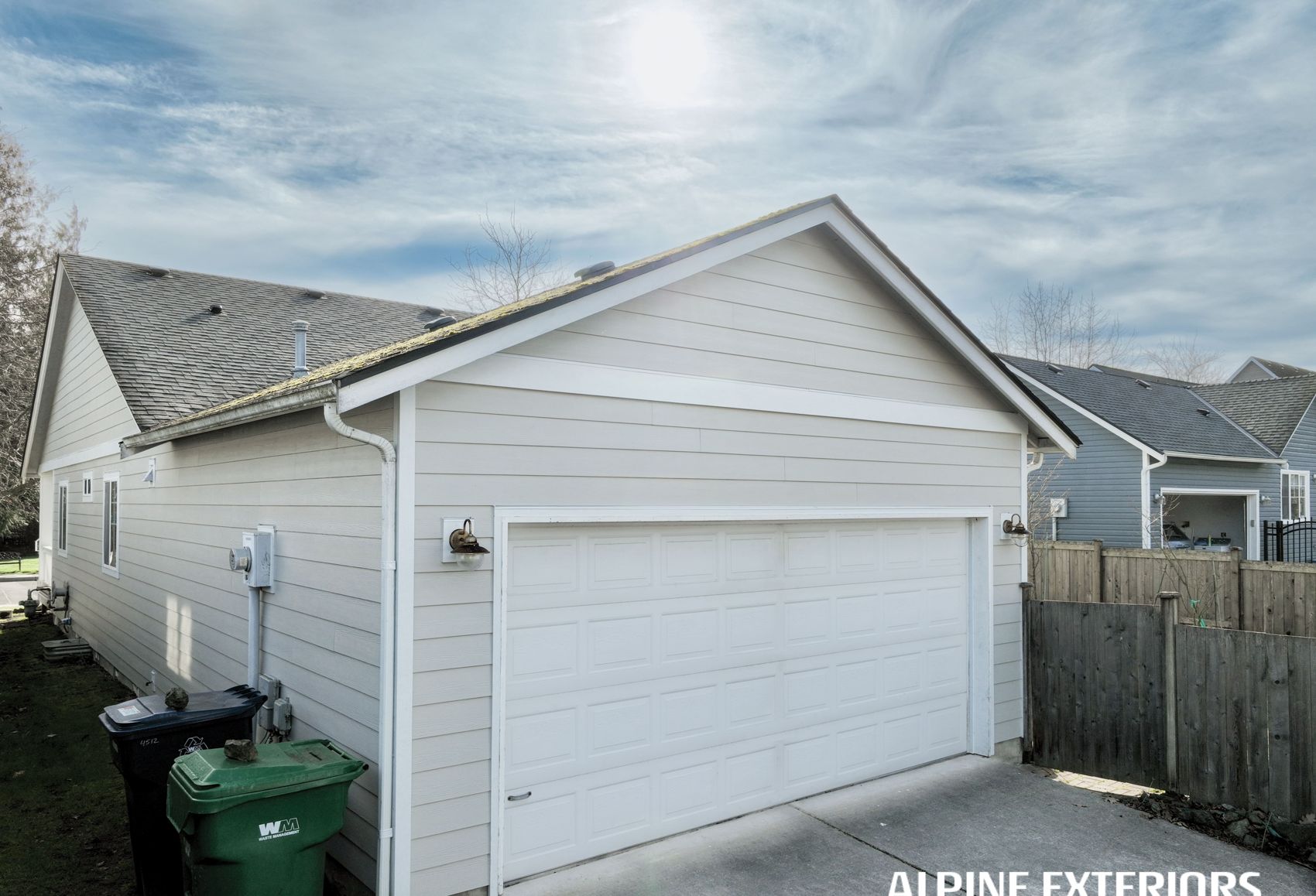
Custer sits out past Ferndale on the flats between Whatcom County's farmland and Birch Bay, close enough to the water that wind-driven rain off the Strait of Georgia and Boundary Bay is a real factor in how siding ages here. Homes in this area take a steady beating from moisture — not from any single dramatic storm, but from months of low, persistent rain that finds every gap in old caulking, every cracked lap of cedar, every seam where flashing was never installed correctly the first time. A siding replacement here is less about cosmetics and more about stopping water intrusion before it turns into rot in the sheathing.
For a typical single-family home in Custer, plan on the project itself — from the first delivery of material to the final walkthrough — taking somewhere between one and three weeks of active work, depending on square footage, the number of stories, how much trim and window flashing needs replacing, and how much hidden damage the crew finds once the old siding comes off. That's the on-site window. The bigger number to plan around is the total timeline from signed contract to finished job, which is often six to twelve weeks once you account for permitting, material lead times, and weather delays. Anyone who quotes a firm start date without first checking material availability and the county's permit queue is guessing. Alpine Exteriors builds a realistic schedule up front rather than promising a date that slips the moment fiber cement is backordered.
Rain is the variable nobody controls. Whatcom County doesn't get hurricanes or hard freezes most winters, but it does get long stretches of drizzle from fall through spring, and installers can't put siding over damp sheathing without risking trapped moisture. A well-run crew builds slack into the schedule for this rather than rushing panels onto wet walls.
Whatcom County requires a building permit for most siding replacement projects, particularly when the work involves removing sheathing down to the studs, replacing water-resistive barrier, or altering window and door flashing — which is common once old siding comes off and rot is discovered underneath. A straightforward re-side over sound sheathing may fall under a simpler permit path, but that determination should come from the county's permitting office, not from assumption. Alpine Exteriors pulls permits as part of the contract and handles inspection scheduling, so the homeowner isn't the one chasing down a building official.
If your Custer property is part of an HOA — some of the newer developments and a few of the waterfront-adjacent communities near Birch Bay Drive have architectural review committees — check your covenants before ordering material. Many HOAs require pre-approval of siding color, material type, and sometimes even the exact product line. Submitting samples early avoids a scenario where siding is delivered and installed only to be flagged during a later HOA walkthrough.
Material lead times are the single biggest schedule risk on most siding jobs right now. Fiber cement products, certain vinyl profiles, and specialty trim colors can run anywhere from a couple of weeks to over two months out, depending on the manufacturer's backlog. Cedar and other natural wood siding, if that's the chosen material, has its own sourcing timeline and is more sensitive to moisture content at the time of install — a real consideration in a climate this wet. Homeowners should expect to select material, sign off on color and profile, and then wait for a firm delivery date before a start date gets locked in. Ordering too far ahead of the crew's availability just means material sitting exposed on-site; ordering too late means a scheduled crew with nothing to install.
All new siding installations in Whatcom County need to meet the Washington State Energy Code's requirements for the building envelope, which affects decisions like whether rigid foam insulation goes under the new siding and how the water-resistive barrier and flashing details are integrated. This isn't optional paperwork — it affects the actual assembly of the wall and should be part of the estimate, not an add-on discovered mid-project.
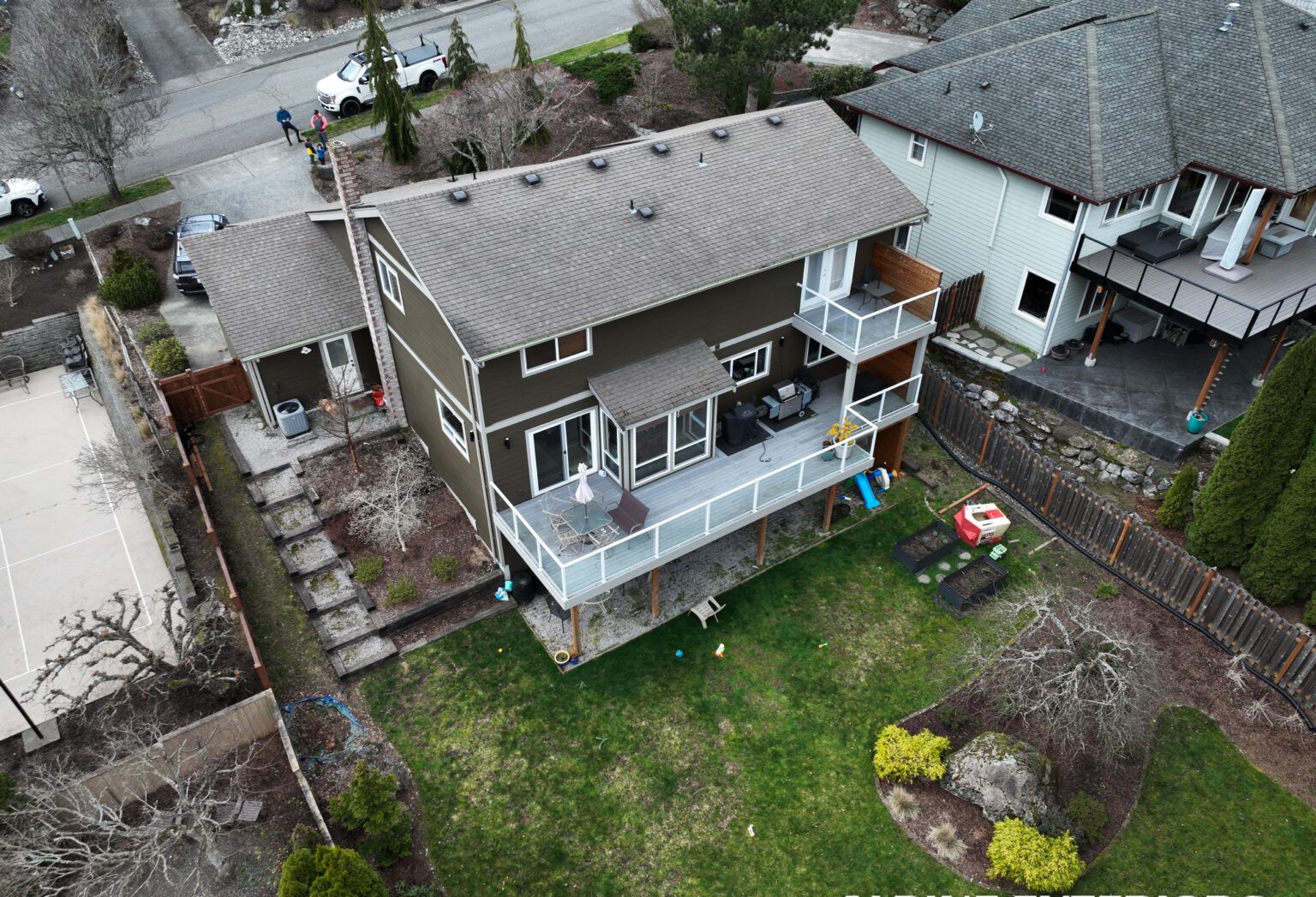
Most siding replacements in Custer follow a similar sequence, though the exact order shifts depending on whether trim, gutters, or window flashing are also being replaced:
Weather can pause work between stages, particularly during removal and sheathing repair, when the wall is most exposed. A crew that's used to Whatcom County conditions plans removal in sections precisely so a sudden rain event doesn't leave an entire wall open overnight.
A few things make the project go smoother on the homeowner's end. Move vehicles out of the driveway and garage access area for the duration of the job, since material staging and debris removal need that space. Anything hanging on exterior walls — house numbers, lights, mounted planters, security cameras — should come down ahead of time or be flagged for the crew to work around. Inside the house, expect noise and vibration during removal and nailing, especially in rooms along exterior walls; this isn't a good week to schedule quiet video calls in a home office that backs up to the work zone.
Pets are worth planning around too — crews are in and out of the yard constantly, and gates may be left open during active work hours. If irrigation or landscape lighting runs along the foundation near the work area, point that out during the walkthrough so it isn't damaged during removal or staging.
It's also worth having a conversation about what happens if rot is found. Reputable contractors, Alpine Exteriors included, build a contingency into the estimate for sheathing repair, but the exact extent isn't fully known until the old siding is off. Ask how change orders are documented and priced before work starts, so there's no ambiguity if the crew opens up a wall and finds more damage than expected.
Once the county-required inspections are signed off — typically at the sheathing/flashing stage and again at final — the crew does a full site cleanup. That means magnetic sweeps for stray nails and screws in the yard and driveway, removal of the dumpster or debris trailer, and a check that landscaping and hardscaping are put back the way they were found. This is also the point where any final caulking touch-ups or trim adjustments get handled.
The final walkthrough should happen in daylight, with the homeowner present, going wall by wall. This is the time to check seams, look at how corners and trim transitions were finished, confirm color consistency across panels, and verify that flashing at windows and doors looks correct and isn't just cosmetically covered. Any punch-list items get documented and scheduled before the job is called complete. Don't sign off on final payment until this walkthrough has actually happened — a rushed walkthrough is how minor issues turn into callback visits later.
New siding in this climate still needs some homeowner attention. Whatcom County's damp, shaded conditions — especially on north-facing walls or homes tucked under tree cover near Sudden Valley or the more wooded parts of Custer — are prone to moss and algae growth over time, even on quality siding. A soft wash with the right cleaner once every year or two, rather than a pressure washer aimed directly at seams, keeps growth from taking hold and avoids forcing water behind panels. Gutters should be kept clear so runoff doesn't sheet down the siding face during heavy rain.
Warranty coverage on a siding job typically has two layers: a manufacturer's warranty on the material itself, which varies by product and is worth reading rather than assuming, and a workmanship warranty from the installer covering the labor and installation details. Alpine Exteriors is licensed in Washington under contractor license ALPINI751OW, and stands behind its installation work — ask for the specific warranty terms in writing before the contract is signed, including what's covered, for how long, and what would void it (for example, pressure-washing directly into seams). A warranty is only as good as the company standing behind it, so it's fair to ask how callback service requests are handled after the crew has moved to the next job.
Active on-site work usually runs one to three weeks depending on the home's size and how much sheathing repair is needed, but the full process from signed contract to finished job — including permitting and material lead time — commonly stretches six to twelve weeks. Rain delays during removal and sheathing stages are common in this climate and should be built into the schedule rather than treated as a surprise.
It's common enough in Whatcom County that a reasonable estimate should account for the possibility, even on homes that look sound from the outside. Persistent rain and wind-driven moisture off the Strait and Bay find their way behind poorly flashed windows and aging caulk over the years. If rot is found, it should be documented with photos, discussed with the homeowner, and priced as a change order before repair work proceeds — not folded in silently.
Most projects in Whatcom County do require a building permit, especially any job that involves removing sheathing, replacing the water-resistive barrier, or altering flashing around windows and doors. The exact requirement depends on project scope, so this should be confirmed with the county and handled as part of the contractor's process rather than left to the homeowner to research alone.
There isn't one universal answer — fiber cement, engineered wood, and vinyl each perform differently against sustained rain, moss growth, and wind-driven moisture, and each has different maintenance needs and lead times. The more important factor than brand is installation detail: correct flashing, a properly lapped water-resistive barrier, and sealed seams matter more to long-term performance in this climate than which material is chosen.
If your Custer home has old, worn, or rot-prone siding and you want a straight assessment of what's underneath it, Alpine Exteriors serves Custer and the rest of Whatcom County, from Bellingham and Ferndale out to Blaine, Birch Bay, Lynden, Sudden Valley, and the islands. Contact Alpine Exteriors for a site visit and a written estimate that accounts for your home's actual condition, not a generic price per square foot.