
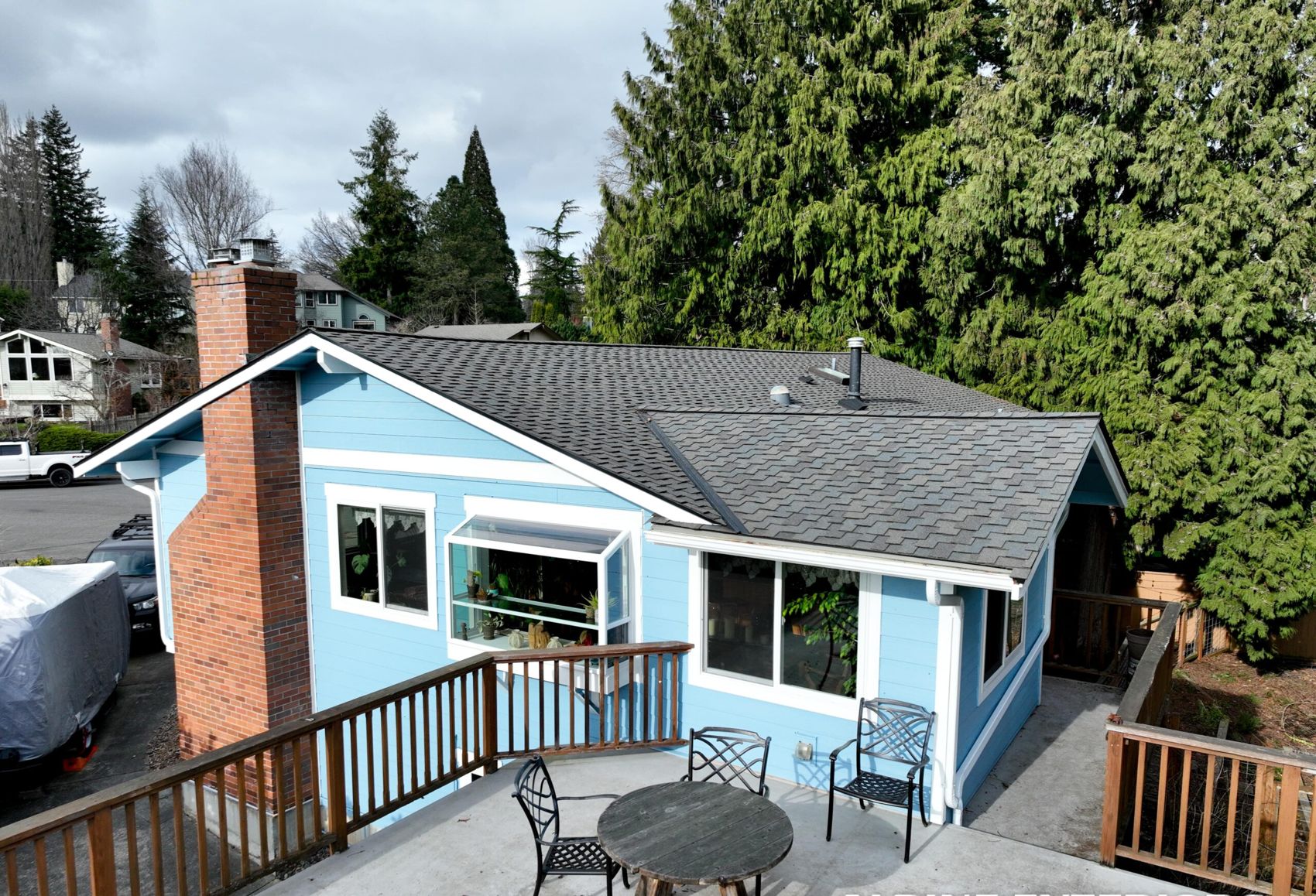
Yes. North Bellingham homes, especially those on open lots near Bellingham Bay, Marine Drive, and the flats between Birchwood and Cordata, sit in a wind exposure that the building code treats differently than a sheltered lot tucked into the trees near Lake Whatcom. Siding here has to be installed to a fastening pattern and product approval that accounts for sustained wind and wind-driven rain, not just nailed up by eye.
That doesn't mean North Bellingham needs storm-rated products built for hurricane coastlines — it doesn't, and any contractor who tries to sell you a hurricane-zone assembly for a Whatcom County house is overselling. What it does mean is that the fastening schedule, the water-resistive barrier behind the siding, and the manufacturer's own installation instructions all have to match the exposure category your specific lot falls into, and that a fair number of older re-sides in this area were done without that step ever being checked.
Washington has adopted the International Residential Code as the base of the Washington State Building Code, and siding falls under the exterior wall covering provisions in that code along with the Washington State Energy Code, which governs the wall assembly's water-resistive barrier, air sealing, and insulation continuity behind whatever siding goes on top. None of this is exotic — it's the same code framework used across the state — but two parts of it get skipped more often than they should on residential re-side jobs.
First, siding products are only code-compliant when installed per the manufacturer's published installation instructions, which is where the actual fastener spacing, nail penetration depth, and lap dimensions come from. A fiber cement or vinyl product that's rated for a given wind exposure only holds that rating if it's fastened the way the manufacturer's instructions say — swap in a lighter fastening pattern to save time and the product is no longer installed to its tested rating, even though it may look identical from the street. Second, the water-resistive barrier behind the siding has to be continuous and properly lapped, with flashing integrated at every window, door, and penetration. On a lot exposed to wind off the bay, wind-driven rain will find any gap in that barrier long before it ever threatens to peel the siding itself off the wall.
Permits and inspections in this area come from either the City of Bellingham's Permit & Development Services or Whatcom County Planning & Development Services, depending on whether the address falls inside city limits — parts of North Bellingham near the Cordata and Birchwood annexations are inside the city, while other nearby parcels remain unincorporated county. A siding re-side that changes sheathing, house wrap, or a meaningful share of the wall covering typically needs a permit either way, and it's worth confirming which jurisdiction applies before work starts rather than after an inspector shows up.
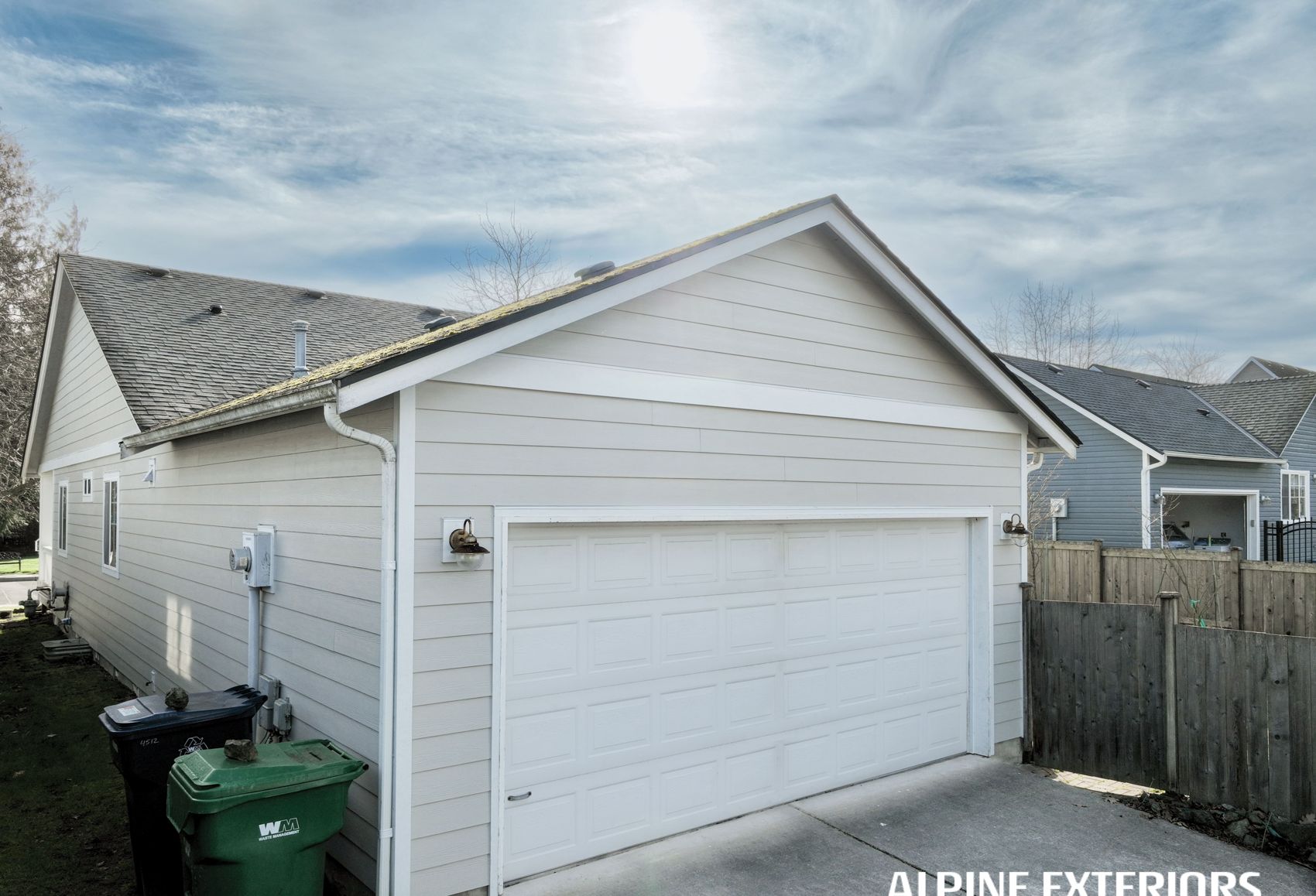
Whatcom County's coastal edge is not a hurricane risk, but it is a persistent-moisture risk, and that shapes siding decisions more than any single wind event does. A few things stack together here that don't apply the same way even one county south:
None of these are hurricane conditions, and no siding sold for this region needs to be rated for one. But together they mean the drainage plane and flashing details behind the siding do more of the real work protecting a North Bellingham house than the visible face material does — a point that's easy to miss when a sales pitch focuses only on the siding panel itself.
Start with the wall, not the color chart. Before choosing a siding product or a color, ask whoever is bidding the job to explain the wall assembly behind it: what water-resistive barrier is going on, how it laps with the flashing at windows and doors, and whether the fastening schedule matches the manufacturer's published instructions for your specific lot's exposure. A contractor who can answer that in specifics, rather than in general reassurances, is the one worth hiring.
Next, ask what permit path applies. If the project involves stripping siding down to the sheathing, replacing house wrap, or reflashing openings, it likely needs a permit through either the City of Bellingham or Whatcom County depending on the parcel, and that permit is what triggers the inspections that actually verify fastening and flashing before the wall gets closed back up. Skipping the permit doesn't just risk a fine — it means no one independent ever checks that the water-resistive barrier and fastening were done to code, which matters more here than in a drier climate because failures show up as rot rather than as an obvious leak.
Get an honest look at what's under the existing siding before committing to a full re-side. On older North Bellingham homes, Alpine Exteriors routinely finds soft trim, rotted sheathing at window sills, or a house wrap that was never properly lapped — problems that cost far less to fix while the wall is already open than to discover later as a callback. A reputable estimate should include a probe of visible trim and a frank conversation about what might be found once siding comes off, not just a per-square-foot number for new panels.
Finally, weigh material against maintenance, not just against upfront cost. Fiber cement holds up well against wind-driven rain and resists rot better than wood trim, but it's heavier to install correctly and costs more upfront, generally landing in a higher price range than vinyl per square foot installed. Vinyl is more affordable and low-maintenance against moisture, but it can look dated faster and isn't as rigid in high-wind lap conditions unless installed exactly to the fastening spec. Wood siding fits the character of some older Whatcom County homes but demands the most upkeep against moss, algae, and rot in this climate. None of these is the objectively correct choice — the right one depends on the specific lot's wind exposure, sun exposure, and how much maintenance the homeowner actually wants to keep up with over time.
No. Whatcom County is not a hurricane zone, and siding rated for hurricane wind speeds is unnecessary and overpriced for this area. What actually matters here is a product installed to its manufacturer's fastening instructions for the local wind exposure, paired with a properly lapped water-resistive barrier — that combination handles the wind-driven rain this region sees without needing storm-coast-grade materials.
In most cases, yes, if the work involves removing siding down to the sheathing, replacing the water-resistive barrier, or reflashing windows and doors — a simple like-for-like panel swap on an intact wall sometimes doesn't trigger the same permit, but the exact threshold depends on whether the property is inside Bellingham city limits or unincorporated Whatcom County. It's worth a call to the applicable permit office before work starts rather than assuming either way.
That's typically the north- or west-facing wall, which stays shaded and damp longer than sun-exposed walls in this climate, giving moss and algae more time to establish. It's a common pattern on North Bellingham homes near tree cover or facing away from direct sun, and it's more about wall orientation and shade than any flaw in the siding material itself.
Without pulling a section of siding, you generally can't tell by looking — undersized or under-spaced fasteners look the same from the street as a correct installation until wind actually tests them. If you're unsure about an existing install, a licensed contractor can pull a sample section to check nail spacing and penetration against the manufacturer's published instructions, which is the standard the code actually references.
If you're planning a re-side in North Bellingham, Ferndale, Lynden, Blaine, Birch Bay, Sudden Valley, or the islands, Alpine Exteriors will walk your specific wall — not a generic spec sheet — and explain what's actually behind your current siding, what the code requires for your lot's exposure, and what a permit-correct installation looks like before any panel goes up. Alpine Exteriors holds Washington contractor license ALPINI751OW; reach out for a walkthrough and a written estimate that spells out the wall assembly, not just the finish color.