
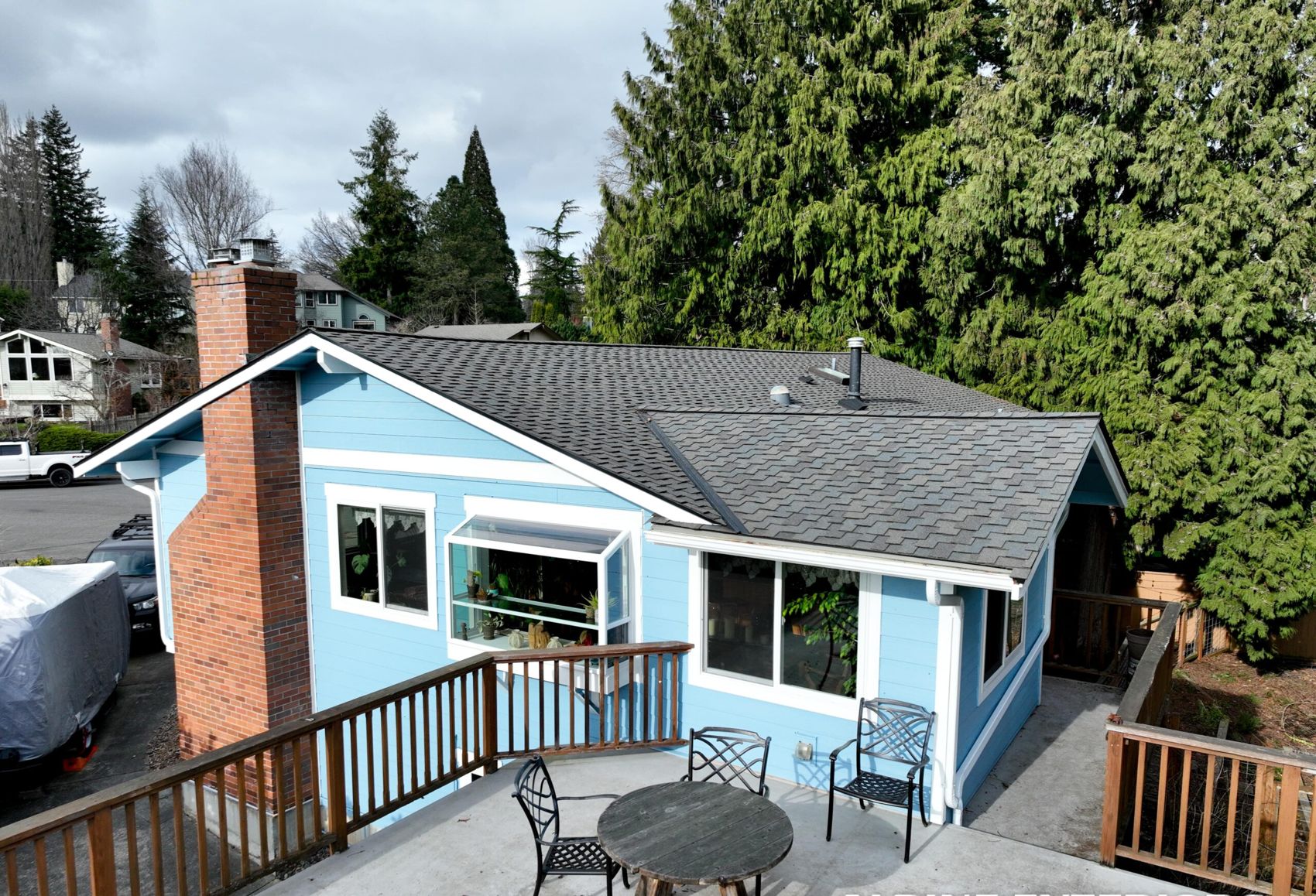
If you live in North Bellingham — up toward Birchwood, Alabama Hill, or out along Northwest Avenue — your siding does more work than siding in drier parts of the country. Whatcom County doesn't get hurricanes or hail the size of golf balls. What it gets instead is months of steady, low-grade moisture: drizzle that never quite stops from October through April, fog that rolls off Bellingham Bay and sits against north-facing walls, and wind-driven rain that comes sideways off the Strait during a winter blow. None of that is dramatic. All of it is patient. Siding failures here are rarely sudden; they're the result of small gaps and soft spots that went unnoticed for a season or two. This checklist is built to catch those early, before a $40 caulk job turns into a $4,000 sheathing repair.
Bellingham and the surrounding Whatcom County communities — Ferndale, Lynden, Blaine, Birch Bay, Sudden Valley, and the San Juan and Lummi Island shoreline properties — sit in a marine west coast climate that keeps humidity high for most of the year. Wood-based siding materials, and even the wood sheathing behind vinyl or fiber cement, stay damp longer here than they would in a dry, sunny climate, which gives rot fungus and mold more time to establish before anyone notices a problem. Add to that the moss and algae that thrive on north- and east-facing walls that rarely get direct sun, especially under mature evergreen canopy common in neighborhoods like Sudden Valley or the wooded lots around Lynden and Ferndale.
Homes closer to the water — Boulevard Park, Fairhaven, Birch Bay waterfront, and the islands — deal with an added factor: wind-driven rain coming off Bellingham Bay and the Strait of Georgia. During a southwesterly storm, rain doesn't just fall on siding, it's pushed horizontally into laps, seams, and trim joints that were never designed to shed water sideways. Inland toward the foothills near Lynden and the Mount Baker foothills, winters bring more freeze-thaw cycling — water gets into a crack, freezes, expands, and widens that crack a little more each time temperatures swing. And underneath all of it, any siding or re-siding work in Washington has to meet the Washington State Energy Code, which affects how wall assemblies are insulated and how water-resistive barriers and rainscreen gaps are detailed behind the finish material. A siding inspection here isn't just cosmetic — it's checking whether the building envelope is still doing its job in a climate that never really lets it rest.
Walk the full perimeter of the house on a dry day if possible, working section by section. A pair of binoculars helps for anything above the first story, and a flashlight is useful for shaded areas under eaves and decks.
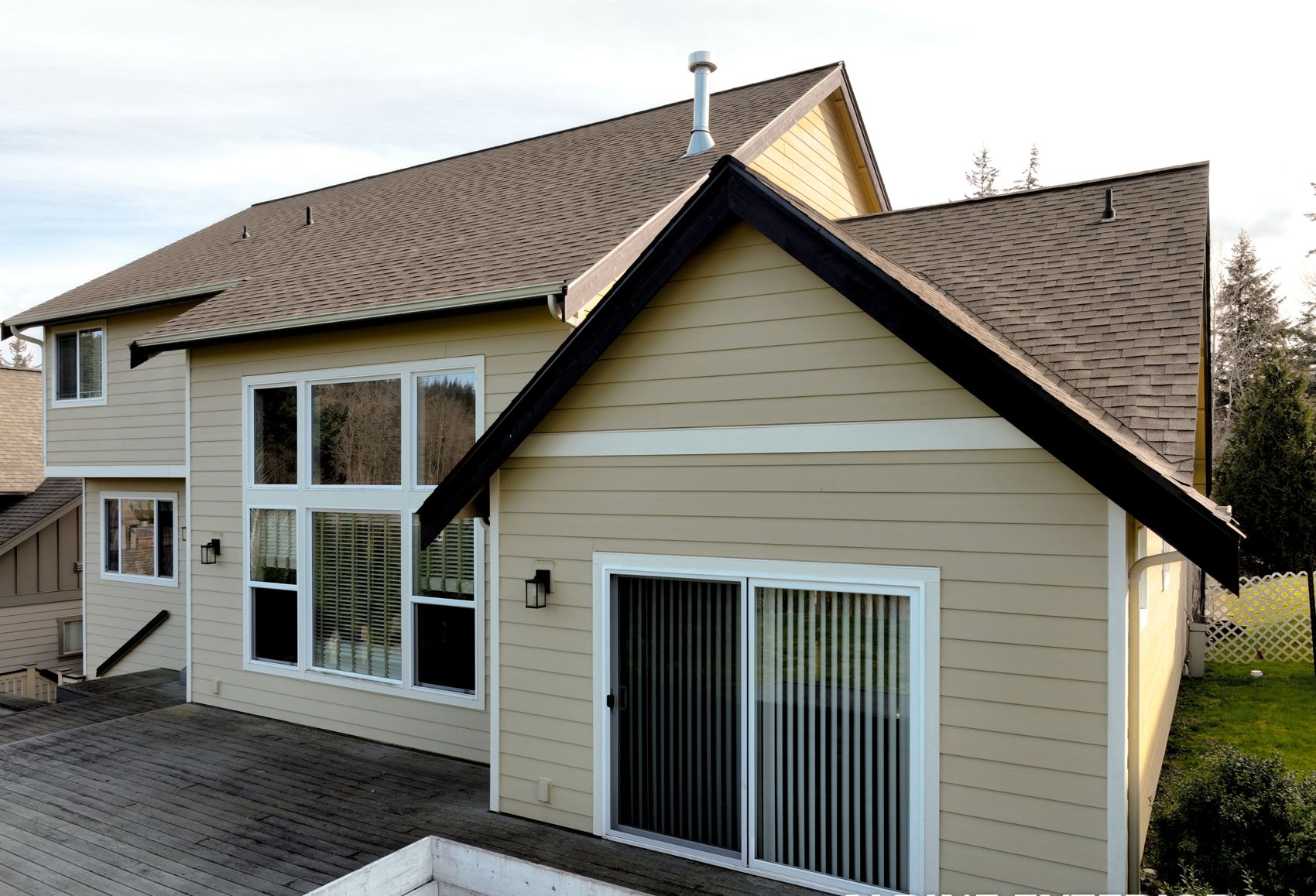
Not every failed item on this checklist means a full re-side. A cracked bead of caulk or a small patch of moss is a maintenance task — clean the affected area with a mild cleaner (avoid pressure washing directly into seams, which can force water behind the siding rather than remove it), let it dry fully, and reseal with a quality exterior sealant rated for the Pacific Northwest's wet cycle. Repainting or restaining exposed wood trim on a regular schedule, rather than waiting until it visibly fails, is one of the most cost-effective things a homeowner in this climate can do.
Soft or spongy wood, staining that suggests water has been present for a while, or siding that has visibly separated from the wall are different. These point to moisture that has already gotten past the surface, and papering over them with paint or caulk usually just hides the problem while it keeps spreading underneath. In these cases, the affected siding and often some amount of the sheathing behind it needs to come off so the extent of the damage can actually be seen. Trying to guess the extent of rot from the outside is unreliable — what looks like a small soft spot on the surface is sometimes a much larger area once the siding is pulled back.
A homeowner can reasonably handle surface cleaning, recaulking accessible joints, and touch-up painting. Call a licensed contractor when you find soft or rotted wood, siding that has pulled away from the wall, staining inside the house that lines up with an exterior wall, or any area where water damage seems more extensive than what's visible from outside. It's also worth having a professional look at older homes before a major repaint or re-side project, since what looks like a cosmetic job can turn into a structural one once the old siding comes off. Alpine Exteriors inspects siding throughout North Bellingham and the wider Whatcom County area, including Ferndale, Lynden, Blaine, Birch Bay, and Sudden Valley, and can tell you honestly whether you're looking at a repair, a partial re-side, or a full replacement — we don't have an incentive to oversell a job that a caulk gun and a weekend can fix.
One honest note: a visual inspection, even a careful one, can't always tell you what's happening inside a wall cavity. If there's a reasonable suspicion of hidden moisture — a musty smell, warped drywall inside, or a home that's had chronic gutter problems — moisture meter readings or a small exploratory opening may be needed to know for sure. That's a more invasive step than most homeowners want to take on their own, and it's a fair reason to bring in a contractor even before you're certain there's a problem.
A visual walk-around twice a year — once in early fall before the heavy rains set in and once in spring after the wet season has passed — is a reasonable baseline for most homes in this climate. Homes closer to Bellingham Bay or on exposed shoreline lots in Birch Bay or the islands may benefit from an additional check after any significant windstorm, since wind-driven rain can find gaps that were fine the week before.
Not necessarily. Moss and algae growth on shaded, north-facing walls is extremely common in this part of Washington and is often just a sign that the wall doesn't get much sun, not that the siding underneath is damaged. That said, moss holds moisture against the surface for longer periods, so it's worth cleaning periodically and checking the wood or substrate underneath for softness, especially if the growth has been there for more than a season.
Light rinsing with a garden hose and a soft brush is generally safe for most siding types. A pressure washer can be used carefully on some materials, but aiming it directly at seams, laps, or the bottom edge of siding panels can force water behind the siding rather than just cleaning the surface, which can create the very moisture problem you're trying to prevent. If you're not sure your siding material or its condition can handle it, a lower-pressure approach or a professional cleaning is the safer choice.
Yes. Any significant re-siding project in Washington is generally subject to the Washington State Energy Code, which governs things like wall insulation values, air sealing, and the water-resistive barrier behind the siding. It doesn't dictate what siding material you choose, but it does affect how the wall assembly behind it is detailed, which is part of why a proper re-side involves more than swapping old panels for new ones.
If your walk-around turned up soft spots, failed caulk, or siding that's simply reached the end of its service life after years of Whatcom County weather, Alpine Exteriors (WA contractor license ALPINI751OW) offers on-site siding inspections for homeowners throughout North Bellingham, Ferndale, Lynden, Blaine, Birch Bay, Sudden Valley, and the surrounding islands. We'll walk the exterior with you, point out what's cosmetic versus what needs attention, and give you a straightforward, no-pressure estimate for repair or replacement — with cost ranges based on the actual scope of work, not a one-size-fits-all quote. Reach out to schedule a walk-through before the next wet season sets in.