
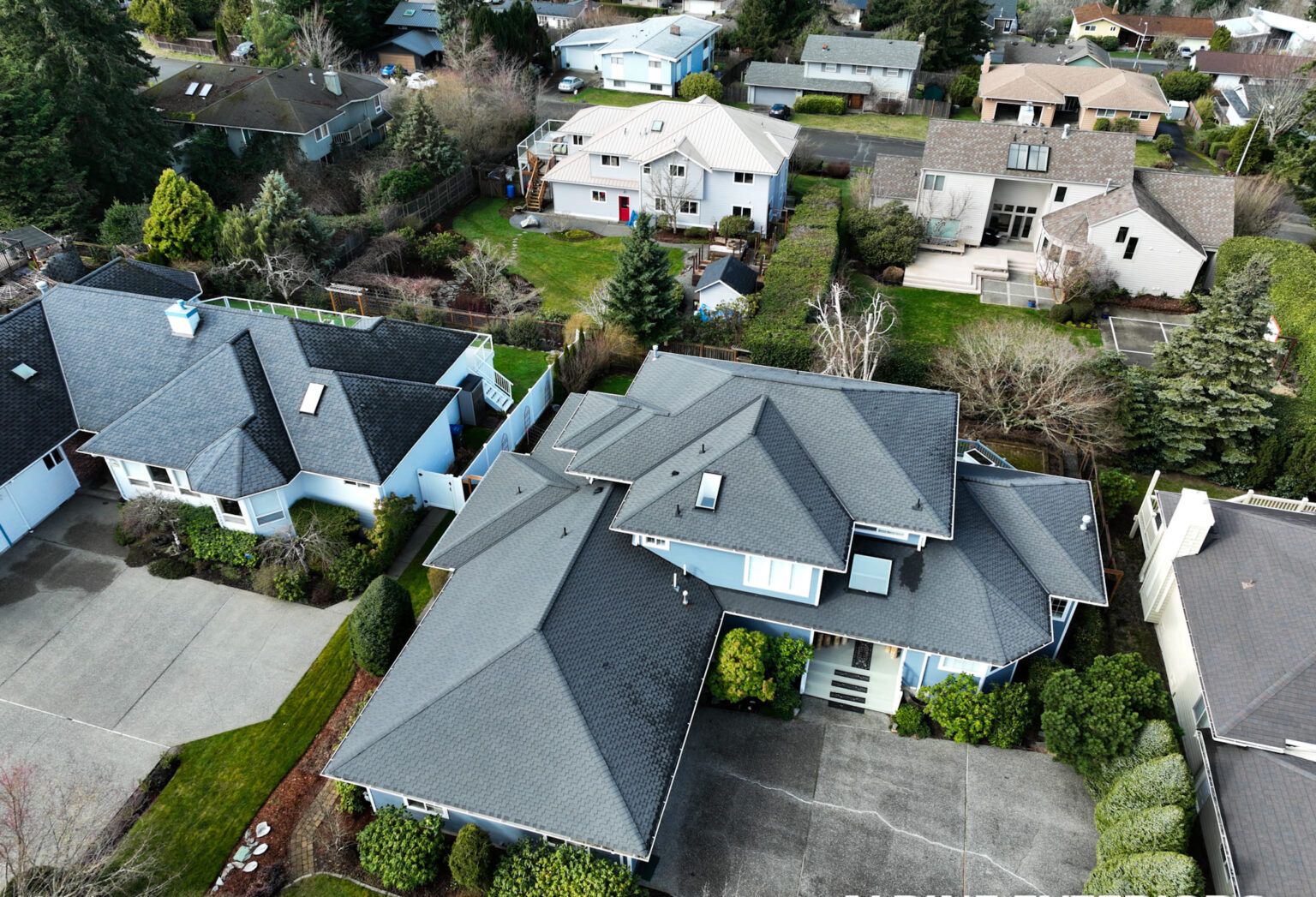
After a windstorm or a stretch of heavy rain in North Bellingham, siding damage usually falls into one of three categories: wind-lifted or cracked panels, water intrusion at trim and seams, or moss and algae buildup that looks alarming but is mostly cosmetic. Figuring out which one you're dealing with, before you call an insurance adjuster or a contractor, changes both the repair and whether it's likely to be covered.
Wind damage is the most obvious kind: a gust catches a loose or improperly nailed panel of lap siding, fiber cement, vinyl, or older cedar, and either cracks it, pops the fasteners, or tears a section off the wall entirely. You'll usually find this on the windward side of the house, near corners where wind pressure concentrates, or around gable ends. It's the easiest damage to document because it's visible and it's tied to a specific date and storm.
Water intrusion is quieter and more common. Whatcom County's siding problems rarely start with a single dramatic event. They start with water finding a gap at a butt joint, a window flashing detail that was never sealed correctly, or a corner board where caulking has failed, and then sitting there through weeks of drizzle. By the time a homeowner notices bubbling paint, a soft spot near a window sill, or a musty smell in an interior wall, the sheathing behind the siding may already be showing wood rot. This kind of damage didn't happen in one storm, even if a storm is what finally pushed water past the point where the wall could dry out between rain events.
Moss and algae are the third category, and they're the one homeowners worry about the most and usually need to worry about the least. Green or black streaking on north-facing walls, under eaves, or anywhere shaded by trees is a moisture and light issue, not a structural one, at least at first. Left alone for years, moss holds water against the siding surface and can eventually contribute to paint failure and rot at the point of contact, but a mossy wall by itself isn't storm damage and isn't usually an insurance conversation.
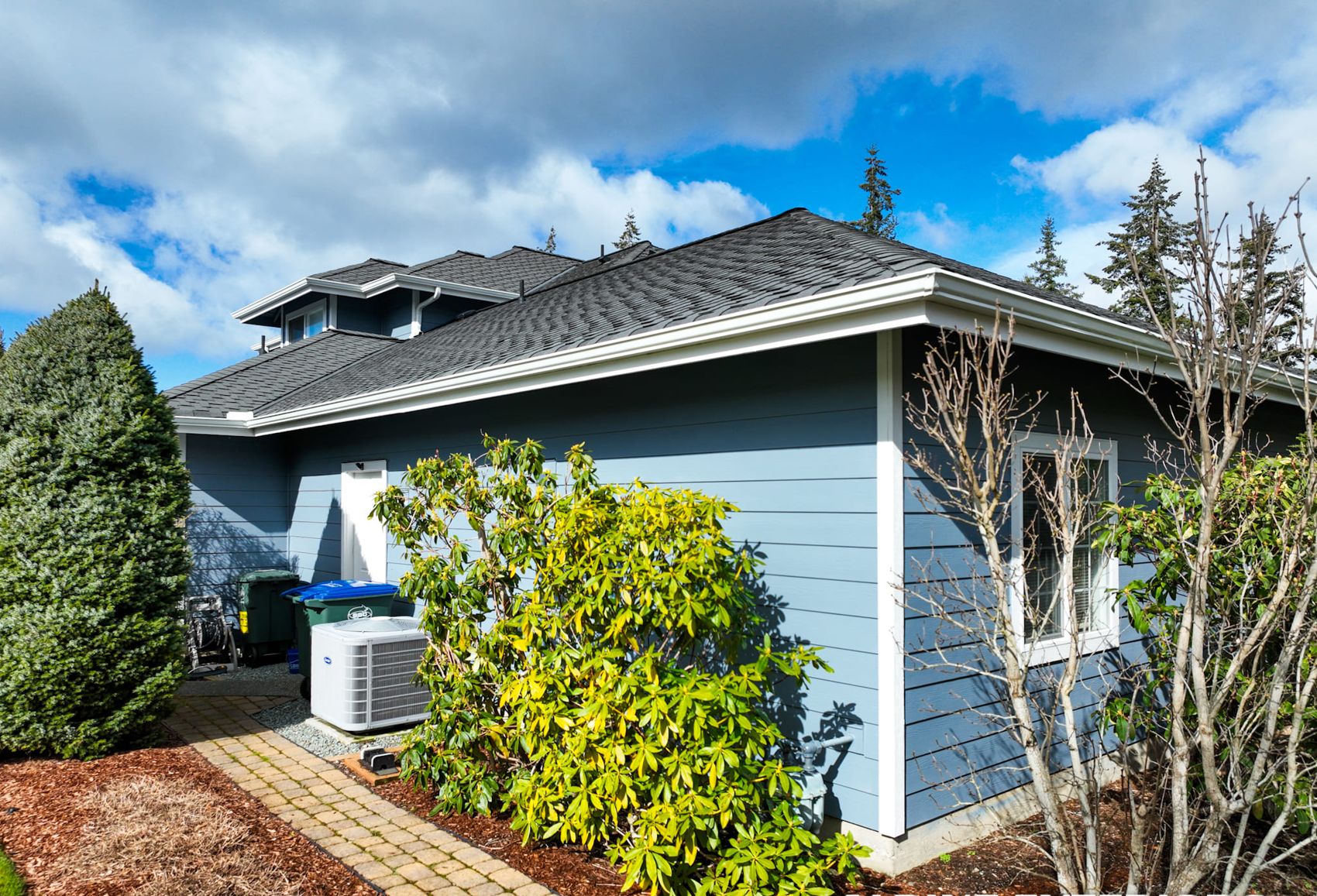
North Bellingham and the rest of Whatcom County don't see hurricane-force storms, but the combination of a wet marine climate and specific local geography creates its own version of the problem.
Rain here is persistent rather than intense. Whatcom County goes through long stretches, roughly October through May, where it rains on more days than it doesn't, not usually hard rain, but enough that siding, trim, and caulking rarely get a full drying cycle. That's the environment where minor installation flaws turn into wood rot: a wall that only gets soaked once a year can shrug off a bad flashing detail for a decade, but a wall that stays damp for six months straight can't.
Wind-driven rain off Bellingham Bay and the Strait of Georgia is the other half of it. Southeasterly storms funnel up the bay and hit homes along the North Bellingham waterfront and similarly exposed lots broadside, driving rain almost horizontally into siding on south and west-facing walls. That kind of wind-driven rain gets pushed under laps and around window trim in ways that straight-down rain doesn't, which is why storm damage in this area often shows up as water intrusion at specific elevations rather than uniform wear across the house. The same exposure pattern shows up along Blaine, Birch Bay, and the islands, where there's little tree cover or terrain to break up wind coming off the water.
Moss and algae growth is heavier here than in drier parts of the state simply because Bellingham stays overcast and moist for so much of the year, and because so many lots, especially around Sudden Valley and the wooded areas near Lake Whatcom, sit under mature conifers that keep north-facing walls shaded and damp long after a storm has passed.
Sudden Valley and the foothill neighborhoods add a wrinkle the lowland parts of the county don't deal with as much: freeze-thaw cycling. Elevation gain toward the foothills means colder overnight temperatures and the occasional snow or ice event that lowland Bellingham sees less often. Water that's worked its way behind siding or into a caulk joint can freeze, expand, and widen the gap, so a small leak that would just stay a small leak near the bay can turn into a bigger one after a hard freeze up in the foothills.
Any of these conditions, wind, standing moisture, or freeze-thaw, are also the reason storm-damage repairs in Whatcom County often turn into a conversation about the Washington State Energy Code. If a repair grows into replacing a full wall or side of siding rather than patching a few boards, that scope of work typically has to meet current WSEC requirements for the exterior envelope, including continuous insulation and air-sealing details, not just match what was there before.
Start outside, from the ground, before touching anything. Look for panels that are visibly cracked, buckled, or missing, and check corners, window trim, and the bottom courses near grade, which take the most direct hit from wind-driven rain. If you can safely walk the perimeter, look up at gable ends and any wall that faces open water directly, those are the areas most likely to show wind damage after a southeaster.
Photograph everything before you clean up or cover anything, and note the date. If the damage followed a specific windstorm, that timestamp matters. Insurers distinguish between damage from a sudden, identifiable event, wind, a falling branch, impact, and damage that built up gradually from ordinary weather exposure, and only the former is reliably covered under most homeowners policies. Gradual water intrusion and wood rot, even when a storm is what finally revealed it, often gets treated as a maintenance issue rather than a covered loss. That's not a technicality Alpine Exteriors invented, it's standard language in most policies, and it's worth reading your own declarations page before you assume a repair will be covered.
If the damage looks wind-related, call your insurer promptly and ask what documentation they need before repairs start. It's reasonable to also get an independent contractor assessment around the same time, rather than relying only on the adjuster's read of the damage. Adjusters see a lot of roofs and a lot of siding, but they're not always looking at your specific wall assembly, and a second set of eyes with photos and a written scope can matter if the claim gets disputed.
For anything that isn't an emergency, moss staining, minor caulk failure, a soft spot you're not sure about, it's worth having someone check moisture levels rather than guessing. Cutting into siding to check for rot is invasive and not something to do speculatively on your own; a contractor can often check with a moisture meter first and only open the wall where readings suggest they should.
Budget honestly for the parts insurance won't touch. Repainting, re-caulking, and moss treatment are maintenance, and even legitimate wind claims usually only cover the damaged sections, not a full re-side, unless the damage is extensive enough to justify it or matching materials are no longer available. A single-wall repair might run in the low thousands; a full re-side of a home after significant rot or storm damage is a bigger project, often well into five figures depending on size and siding material, so get a written estimate before assuming either direction.
Alpine Exteriors, WA contractor license ALPINI751OW, inspects storm and rot damage across Whatcom County, including Bellingham, Ferndale, Lynden, Blaine, Birch Bay, Sudden Valley, and Lummi Island, and can put findings in writing whether you're filing a claim or just deciding what to fix first.
Often, yes, if the damage is clearly tied to wind, cracked or missing panels, impact from a falling branch, or debris damage, and you can document when the storm happened. Coverage is far less certain for water intrusion and wood rot that developed gradually, even if it was a storm that made the damage visible, since most policies treat gradual deterioration as a maintenance issue rather than a covered peril. Read your specific policy's wording on wind versus water damage, and when in doubt, ask your adjuster directly how they're classifying it before repairs begin.
Storm damage tends to be sudden and physical: cracked, split, or missing panels, dented trim, or siding pulled loose at the nailing line, usually on the side of the house that faced the wind. Rain-related deterioration looks different: soft or spongy spots, paint that's bubbling or peeling in sheets rather than chipping, staining that follows a seam or window sill, or a musty smell inside near an exterior wall. It's common for both to be present at once, especially if wind exposed a section of siding that already had hidden rot behind it.
Moss needs shade and consistent moisture, so it concentrates on north-facing walls, sections under overhangs or mature trees, and anywhere that doesn't get direct sun to dry out between rain events, which is extremely common in Bellingham given how much of the year stays overcast. South and west walls that face open water or get more sun exposure tend to dry faster and stay cleaner, even on the same house. Moss by itself is mostly cosmetic, but a wall that's been moss-covered for years is worth checking underneath, since trapped moisture there can eventually contribute to paint failure and rot.
If the repair is limited to swapping out a few damaged boards or panels to match existing siding, it typically doesn't trigger a full code review. But once a repair grows into re-siding a full wall or the whole house, which happens more often than homeowners expect once rot is found behind storm-damaged sections, that work generally needs to meet current Washington State Energy Code requirements for the exterior wall assembly, including insulation and air-sealing details, not just look like what was there before. Your contractor or the local building department can tell you where that line falls for your specific scope of work.
If a recent windstorm left you wondering whether that cracked panel or water stain is something to worry about, it's worth getting an honest, in-person look rather than guessing from the ground. Alpine Exteriors, WA contractor license ALPINI751OW, inspects and repairs storm damage, wood rot, and moss-related siding issues throughout Whatcom County, including North Bellingham, Ferndale, Lynden, Blaine, Birch Bay, Sudden Valley, and the islands. Contact Alpine Exteriors for a straightforward assessment of what happened, what it will take to fix it, and what to expect if you're filing an insurance claim.