
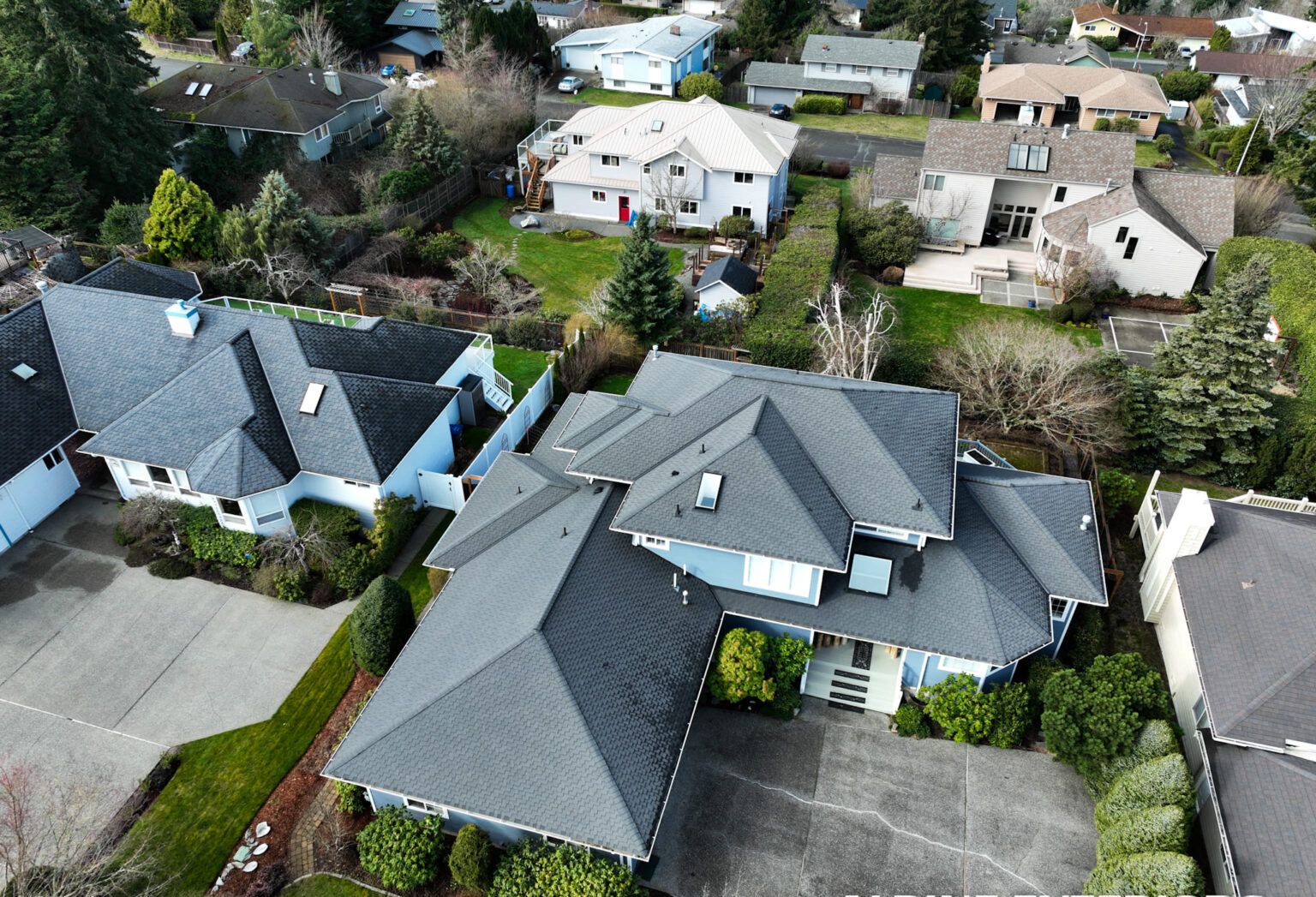
After a storm off the Strait of Georgia or Boundary Bay, check Point Roberts siding for lifted, cracked, or missing panels at corners, eaves, and window trim first — those are where wind pressure concentrates and water gets pushed up and under laps instead of running down and off them. Anything soaked or exposed needs to dry out or get temporarily covered quickly, because moisture trapped behind siding here doesn't evaporate fast in a Whatcom County winter, and that's what turns a cosmetic problem into a rot problem.
Point Roberts sits at the tip of a peninsula, exposed on three sides to open water, so storms tracking up the Strait of Georgia or pushing in off Boundary Bay don't lose much energy before they reach it the way they might after crossing several miles of land inland toward Lynden or Sudden Valley. That means rain frequently arrives sideways rather than straight down. Lap siding — whether it's fiber cement, vinyl, or cedar — is built to shed water moving downward across overlapping courses. Wind-driven rain works against that, forcing moisture up and under laps rather than over them. One storm rarely does visible damage. A winter of repeated events on a house with even minor caulk failures, nail pops, or open trim joints is different: water gets behind the cladding and stays there, because the siding itself is now blocking the airflow that would otherwise dry it out.
Once moisture is behind the siding, the damage shows up slowly. House wrap that was taped correctly the first time starts to sag or tear at fastener penetrations, sheathing swells and delaminates, and framing that stays damp for weeks supports rot fungi. None of this looks like an obvious hole in the wall at first. It shows up months later as a soft spot when you press near a window trim board, a discolored butt joint, or a musty smell in a closet on an exterior wall. Moss and algae on the north and west faces of a Point Roberts house are common and mostly cosmetic, but they're also a signal — if a surface stays wet long enough to grow moss, it's often staying wet long enough behind the siding too.
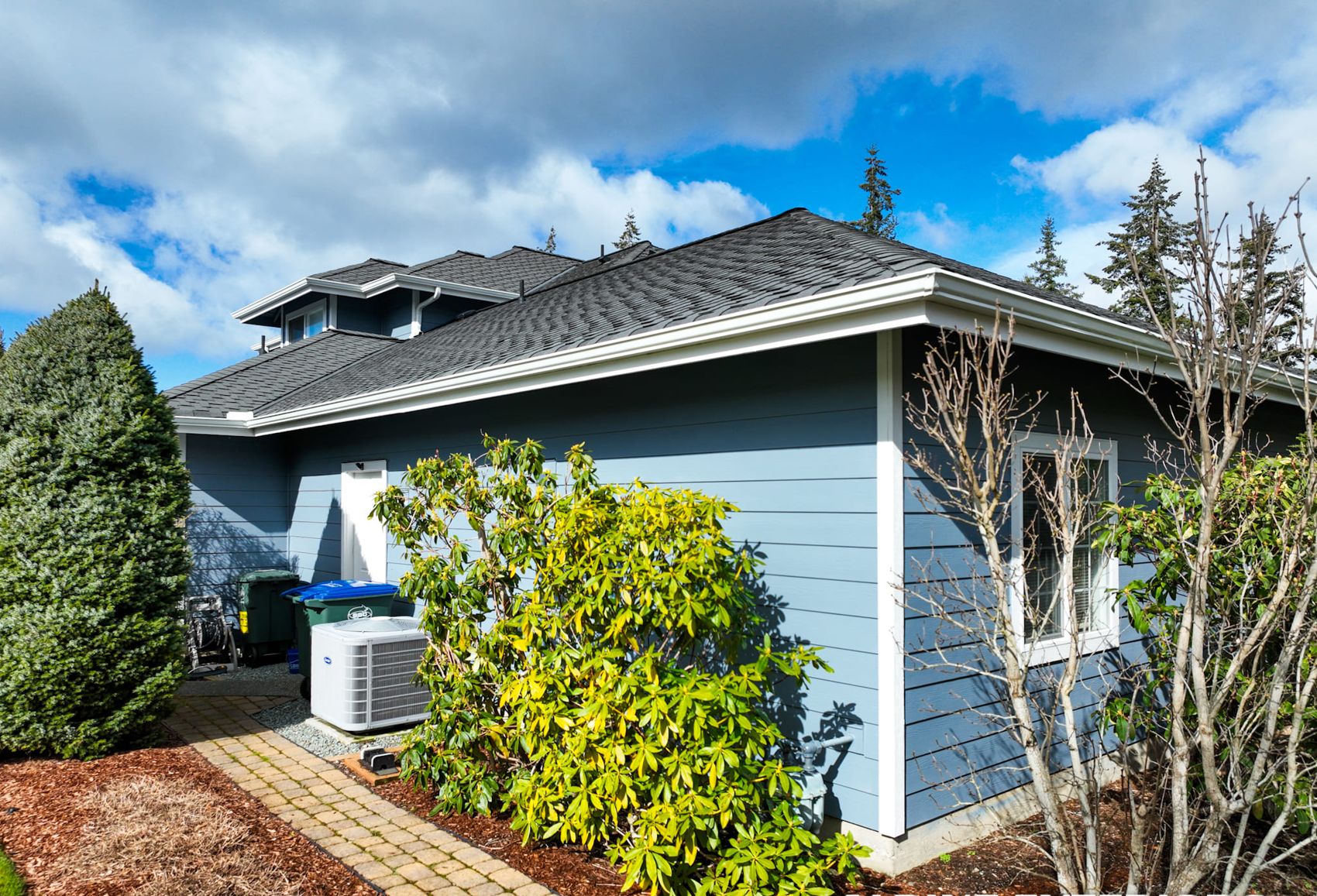
The wind and water exposure is part of it, but the bigger difference is logistics. Point Roberts is a geographic exclave — there's no direct road connection to the rest of Washington. The only land route in or out crosses the Canadian border through Tsawwassen and Delta, British Columbia, before re-entering the U.S. That matters after a storm in ways that are easy to underestimate. An emergency tarp or board-up that a mainland Whatcom County contractor could reach in Bellingham or Ferndale within an hour or two takes longer to get out to the Point, simply because of the border crossing and because fewer contractors work the area on a routine basis. Material orders follow the same path — if a repair needs a specific siding profile or color match, getting it across the border adds real time to a project that wouldn't exist for a similar job closer to Bellingham. Insurance adjusters covering Point Roberts are usually the same ones covering the rest of Whatcom County, which can also mean a longer wait for a scheduled inspection. None of this is a reason to wait to get damage looked at — it's the opposite. Since the whole timeline from storm to repair runs longer here, getting an inspection started early matters more on the Point than almost anywhere else in the county.
The rest of Whatcom County has its own version of these conditions without the border complication. Wind-driven rain off Bellingham Bay affects waterfront and near-shore properties from Fairhaven through Boulevard Park and out toward Chuckanut in a similar way. Freeze-thaw cycling is more relevant as you move up into the foothills around Sudden Valley and toward Mount Baker, where winter nights get cold enough for trapped moisture in siding seams to freeze, expand, and work joints and caulk loose over several seasons — a mechanism that's much less of a factor right at sea level on the Point itself. The persistent low-intensity rain that defines a Whatcom County winter, from Blaine to Birch Bay to Lynden, keeps moss and algae a year-round fact of life countywide, but the added wind loading right on open water is what pushes Point Roberts and other shoreline homes toward more frequent inspection than an inland property might need.
Walk the exterior in daylight, after the storm has passed, not during it. Start at the corners and the trim around windows and doors — these are where wind pressure concentrates and where caulking and flashing do the most work. Look for panels that seem slightly lifted or that flex more than the panels around them, and press gently on siding near ground level and around any past repair, since those spots are more likely to hide moisture already. Check the soffits and fascia for staining that trails down from the roofline, which usually means water is getting in above the siding rather than through it. Check gutters and downspouts — a clogged or disconnected downspout during a wind-driven rain event turns into a concentrated stream hitting one section of wall repeatedly instead of being carried away. Photograph anything new or changed, with a date stamp and a wide shot showing where on the house it's located, since this documentation matters if a claim gets filed later.
If siding is visibly cracked, missing, or hanging, get it covered as soon as it's safe to do so. Even a few extra days of continued rain getting behind exposed sheathing can turn a straightforward siding repair into one that also involves replacing wall sheathing and insulation.
Most homeowner policies in Washington cover sudden wind damage to siding, but claims processes usually distinguish between damage from a specific storm event and deterioration that built up gradually from things like trapped moisture, moss, or ordinary wear. That distinction is exactly why documentation and a prompt inspection matter more on Point Roberts than almost anywhere else in the county — the longer damaged siding sits, the more an adjuster may reasonably attribute some of the resulting harm to gradual deterioration rather than the storm itself, even when the storm caused it. A written inspection report from a licensed contractor describing the damage and offering a professional opinion on cause helps support a claim regardless of which insurer is involved. If a repair ends up replacing a significant section of wall, the Washington State Energy Code sets minimum requirements for wall insulation and air sealing on the reconstructed assembly — worth knowing going into the job, since it can affect what goes back in behind the new siding, not just what the siding looks like once it's up.
Storm damage tends to be localized and sudden — a cracked or missing panel, a corner trim piece pried loose, staining that appeared right after a specific weather event. Ordinary wear from Whatcom County's wet climate, like moss growth or slow caulk breakdown, tends to be spread across the whole exterior and develops gradually over multiple seasons. Both can end up looking similar once water has been behind the siding for a while, which is why a hands-on inspection soon after a storm is more reliable than trying to judge it from a distance.
Coverage depends on the specific policy, but most Washington homeowner policies cover sudden wind damage, including wind-driven rain that gets forced behind siding during a storm. What they generally don't cover is damage that resulted from long-term neglect or deferred maintenance rather than a discrete storm event. Getting an inspection and documentation soon after the storm helps establish which category the damage falls into.
Point Roberts is a geographic exclave connected to the rest of Washington only by a route through Canada. That adds travel time for crews and material deliveries that a mainland Whatcom County job doesn't have, and fewer contractors work the area on a regular basis. It doesn't make repairs impossible, but it does mean advance notice matters more than it would for a similar job closer to Bellingham.
Less so. Point Roberts sits at sea level with a maritime climate moderated by the surrounding water, so hard freezes are less frequent than they are up in the foothills around Sudden Valley or toward Mount Baker. The bigger risk on the Point is wind-driven rain and the trapped moisture it can leave behind, rather than freeze-thaw cycling working joints loose over the winter.
If a recent storm has left siding cracked, lifted, or missing anywhere on Point Roberts or elsewhere in Whatcom County, it's worth having someone look at it before the next system rolls through. Alpine Exteriors inspects and repairs storm-damaged siding across Whatcom County, including Point Roberts, and holds Washington contractor license ALPINI751OW. Because of the travel involved in reaching the Point, scheduling a repair crew there typically needs more advance notice than a comparable job in Bellingham or Ferndale, which is one more reason to reach out as soon as damage is noticed rather than waiting to see if it gets worse. Alpine Exteriors can walk the exterior, document what's damaged for an insurance claim, and put together a repair plan that accounts for what's actually happening behind the siding, not just what's visible from the ground.