
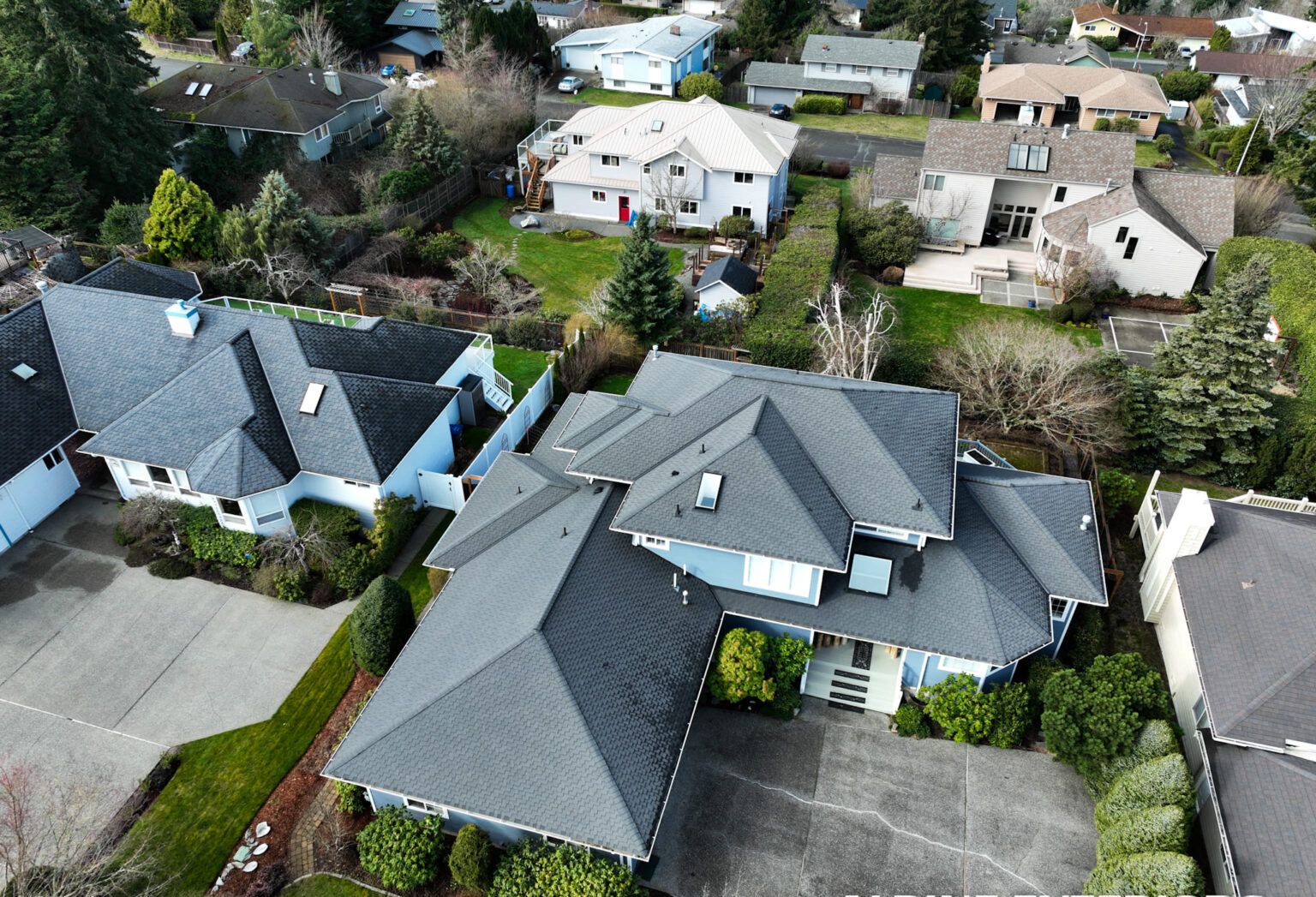
If your home sits along Chuckanut Drive, up on the wooded bluffs above Samish Bay, or anywhere exposed to wind-driven rain coming off Bellingham Bay and the Strait, James Hardie fiber cement is usually the better long-term match. It shrugs off constant moisture, resists the moss and algae that thrive under the fir and madrona canopy along the mountain, and holds up to decades of soaking without swelling or rotting at the edges. Vinyl siding is not a bad product — it's a reasonable choice for a more sheltered lot, a rental property, or a tighter renovation budget — but it asks more of the substrate underneath it to keep water out, and it behaves differently in the cold snaps that occasionally settle into the foothills east of town. Neither option is wrong in every case. The right call depends on how exposed your specific site is, how long you plan to own the home, and how much maintenance you're willing to do.
James Hardie's HardiePlank and HardieShingle lines are made from cement, sand, and cellulose fiber, pressed and cured into planks that are dense, heavy, and dimensionally stable. That density is exactly what matters in a place like Chuckanut, where homes sit under near-constant tree drip, fog, and driving rain for most of the year. Fiber cement doesn't absorb water the way wood does, so it doesn't swell, cup, or rot at butt joints and corners the way older cedar siding often did on these same lots. It also doesn't feed mold and algae the way some organic siding materials do, which matters on the shaded, north-facing walls that never fully dry out between storms.
Hardie's ColorPlus factory finish is baked on rather than field-applied, which holds up well against the UV bounce off the water and against the constant damp without the chalking and fading you sometimes see on site-painted siding after a decade or two. Fiber cement also carries a Class A fire rating, which is worth noting for homes tucked into the tree line on Chuckanut Mountain, where wildfire risk is lower than in dry eastern Washington but not zero during late-summer dry spells.
The drawbacks are real. Fiber cement costs more upfront than vinyl, both in material and in labor — it's heavy, it has to be cut with the right blade to control silica dust, and it needs to be installed with correct clearances, kickout flashing at roof-wall intersections, and a proper weather-resistive barrier behind it. Installed poorly, fiber cement can trap moisture just like anything else; installed correctly, it's one of the more forgiving claddings for a wet marine climate. Caulked joints and trim will eventually need attention, and although ColorPlus finishes last a long time, the siding will likely need repainting at some point over a multi-decade lifespan.
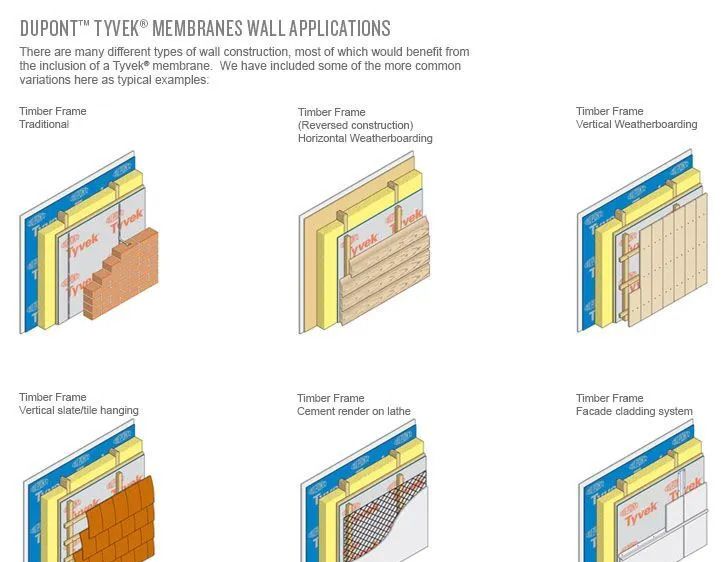
Vinyl siding's appeal is straightforward: it costs less to buy and install than fiber cement, it never needs painting, and modern profiles — including thicker, insulated panels — look considerably better than the vinyl of decades past. For a budget-conscious remodel, a rental you're maintaining from a distance, or a home on a more sheltered interior lot away from direct bay exposure, vinyl can be a sensible, low-drama choice. It resists rot outright since it has no organic material to break down, and a yearly rinse handles most surface grime.
Where vinyl asks more of you here is at the margins. Whatcom County does get occasional hard freezes and cold snaps, particularly up toward the foothills and on clear winter nights when temperatures drop well below freezing after a rain. Vinyl becomes more brittle in cold weather, and panels that get struck — by a falling branch, a ladder, or hail — during a cold snap are more prone to cracking than they would be in milder weather. Vinyl also relies entirely on the weather-resistive barrier and flashing details behind it to keep water out, since the panels themselves are not a sealed membrane; on a wind-exposed bluff lot where rain is driven sideways into the wall, that installation quality matters even more than the siding choice itself. Moss and algae will still colonize shaded vinyl over time, just as they will any exterior surface in this climate — vinyl doesn't feed it, but it doesn't repel it either. And while vinyl won't rot, it can fade unevenly over many years of sun and salt-tinged air near the water, and it's harder to repaint later if you want to change the home's color.
| James Hardie Fiber Cement | Vinyl Siding | |
|---|---|---|
| Installed cost | Higher upfront — heavier material, slower install, specialized cutting and fastening | Lower upfront — lighter material, faster install, widely available crews and product |
| Typical lifespan | Several decades when properly installed and periodically recaulked/repainted | Multiple decades, but service life shortens with repeated cold-snap impacts or long-term UV/salt exposure |
| Maintenance | Occasional rinse for moss/algae; recaulk trim joints over time; eventual repaint on older finishes | Occasional rinse for moss/algae/grime; no painting, but cracked or faded panels are harder to spot-repair invisibly |
| Appearance | Crisp shadow lines, wood-look grain options, factory color depth that reads as a premium finish | Wide color and profile range at a lower price point; can look flatter or more uniform up close |
Chuckanut is one of the more demanding microclimates in Whatcom County for exterior cladding. Homes along Chuckanut Drive and up the bluff face a combination of near-daily marine moisture, dense tree cover that keeps north and west walls perpetually damp, and open water exposure that turns ordinary rain into wind-driven rain during a southwesterly blow off Bellingham Bay or Samish Bay. Add in the freeze-thaw swings that show up in the foothills a few times most winters, and you have a wall assembly that has to manage water intrusion, biological growth, and occasional cold stress all at once. On sites like these, we generally steer homeowners toward James Hardie fiber cement, installed with a proper rainscreen gap, correct flashing at every penetration, and a weather-resistive barrier detailed the way the Washington State Energy Code and current best practice call for on coastal wall assemblies. The material's resistance to moisture-driven rot and its dimensional stability under repeated wet-dry and freeze-thaw cycles line up directly with what this stretch of coastline throws at a house year after year.
That said, not every Chuckanut property is equally exposed. A home tucked well back from the water, sheltered by terrain and mature trees from direct wind-driven rain, doesn't face the same stress as a bluff-front lot, and vinyl can be a perfectly reasonable, lower-cost option there — especially on a secondary structure, a rental, or a project where the budget has to stretch further. What matters most in either case is the assembly behind the siding: correct house wrap or building paper, properly lapped and taped, flashed window and door openings, and a drainage plane that lets any water that does get past the cladding find its way back out. Alpine Exteriors has installed both materials across Whatcom County, from exposed Chuckanut and Birch Bay waterfront to more sheltered lots in Ferndale and Lynden, and the recommendation always starts with a look at the specific site's exposure, not a blanket answer.
Vinyl itself doesn't rot or absorb water, so it can handle a wet climate reasonably well on a site that isn't taking direct wind-driven rain. The real question is whether the weather-resistive barrier and flashing behind it are installed correctly, since vinyl panels aren't a sealed water barrier on their own — on exposed bluff or waterfront lots, that installation detail matters more than on a sheltered inland property.
Neither material feeds moss or algae the way untreated wood can, but both will collect surface growth over time on shaded, damp walls under tree canopy, which is common around Chuckanut. Fiber cement's factory finish tends to resist staining a bit longer between cleanings, but both materials benefit from an occasional gentle rinse to keep growth from taking hold.
Vinyl becomes more brittle as temperatures drop, so during the occasional hard freeze or cold snap that reaches the foothills and higher elevations around Chuckanut, panels are more susceptible to cracking from impact — a falling branch or ladder strike, for example — than they would be in milder weather. It's not a constant problem, but it's a real trade-off compared to fiber cement, which isn't affected by cold in the same way.
The Washington State Energy Code governs the wall assembly as a whole — insulation levels, air sealing, and moisture management details like weather-resistive barriers and drainage planes — rather than mandating one cladding material over another. Both fiber cement and vinyl can be installed in a code-compliant assembly; what changes is how the rainscreen and flashing details are executed behind each material, which is where a lot of long-term performance is actually decided.
Every lot along Chuckanut Drive and the surrounding bluffs handles wind, rain, and shade a little differently, so the right siding choice really does depend on walking the property. Alpine Exteriors, WA contractor license ALPINI751OW, works throughout Whatcom County — Bellingham, Ferndale, Lynden, Blaine, Birch Bay, Sudden Valley, and the islands — and can look at your home's exposure, existing siding condition, and budget before recommending James Hardie fiber cement, vinyl, or a mix of the two across different elevations. Reach out for a straightforward, on-site assessment and an honest read on what will actually hold up on your particular stretch of coastline.